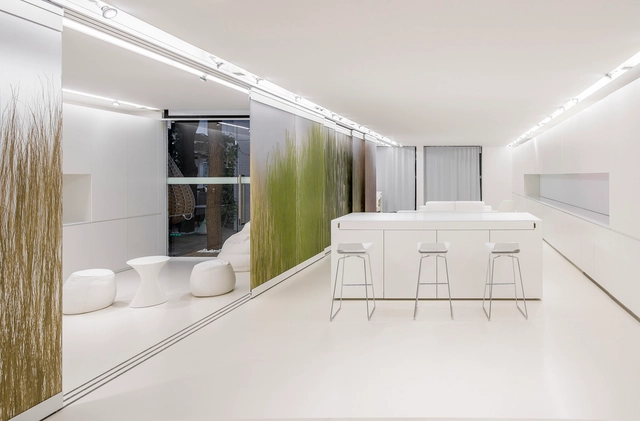
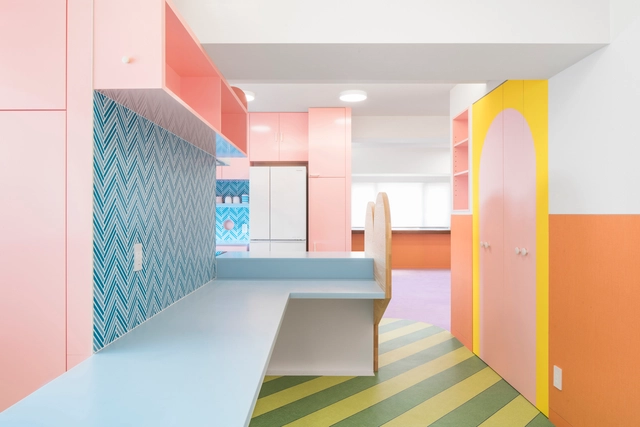
Architecture and interior design constantly evolve to meet the needs of society and part of its social role is to assist the well-being of those who transit and use their spaces daily. Hospital architecture is a niche responsible for the development of projects focused on the health area, based on specifications, requirements, and regulations that guarantee and ensure the comfort of patients - it is continuously studying intrinsic issues of how a sick body behaves in space, in order to create environments that assist in the rehabilitation process.
Over the last three months, Coronavirus has spread to more than 100 countries and claimed more than 3,800 lives (as of 8th March 2020). It has also plunged many global industries into a paralysis, from canceled flights and mass quarantines to disruptions in supply chains and financial markets. Setting aside the serious health implications of the outbreak, the coronavirus epidemic has, in an unorthodox way, amplified a debate over the future of work. With millions of people around the world working from home as a result of the outbreak, whether through quarantine or as a company precaution, the question is being asked by outlets around the world: are we seeing the beginning of the end of the traditional office typology?
Color-tunable lighting is an exciting and relatively new lighting technology that allows users to control the color of light anytime after installation and attune lighting to individual preferences or specific application needs.
https://www.archdaily.com/934845/how-color-tunable-lighting-improves-productivityDavid Hakimi
From academic institutes in North America to residential projects in the Middle East, the various disciplines of Bauhaus and its influence on architecture and design are noticeably present in projects all over the world. While most projects acquired the school's universal language, a few unique ones combined Bauhaus' theory and design principles with the site's cultural and climatic specificity.
This article is a collaboration between ArchDaily and the Arieh Sharon Org. All historical images were shared by the organization.
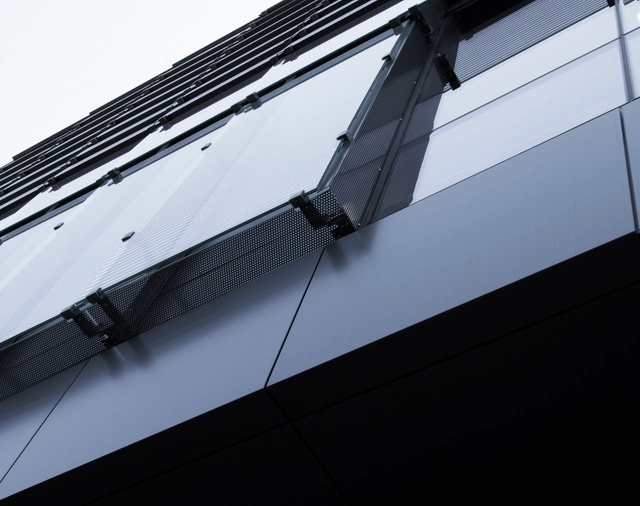
In an effort to avoid disruptions to the coming football season (and by extension, any frustration among the passionate University of Iowa Hawkeyes’ fans), the challenge facing Iowa City architecture firm Neumann Monson was to rapidly deliver and install Kinnick Stadium’s new custom glass facade, all during the team’s off-season. Ranked top among Big 10 stadiums, Kinnick opened the 2019 football season with an expanded North End Zone after careful coordination by the design, manufacturing, and construction teams throughout the project.
In honor of International Women’s Day celebrated on March 8, it’s important to reflect upon and acknowledge the progress that women across all design professions have made over the last several years. From more women being appointed to leadership roles in prominent academic institutions around the world, Jeanne Gang being named to Time 100’s Most Influential People in 2019, the all-female team of Counterspace being awarded the design of the Serpentine Pavilion in London, and the first female practice winning the prestigious Pritzker Prize only a few days ago, more women in architecture are gaining the recognition that they deserve in this traditionally male-dominated profession.
Which is more male: a stadium or a nursery? Hannah Rozenberg, a recent graduate of the Royal College of Art, says that it’s the former—and she has an algorithm to prove it.
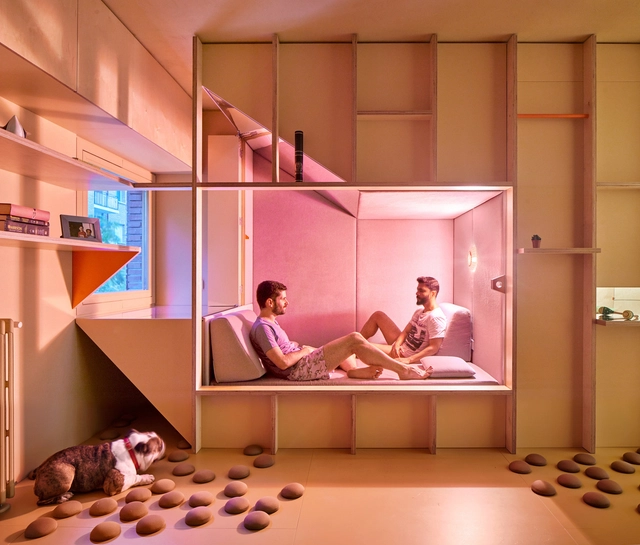
As walls and slabs, furniture may delimit and define a space. However, opposite to constructive elements, which distinguish the rooms in a more permanent way, furniture may create useful boundaries between one space and another in an easily adaptable way.
via Cities for Play. Designing Child Friendly High Density Neighbourhoods
'Cities for Play' is a project whose main objective is to inspire architects and urban planners to create stimulating, respectful, and accessible cities for children.
Natalia Krysiak, its creator, is an Australian architect who believes that children's needs should be placed at the center of urban design to ensure resilient and sustainable communities. In 2017, she produced 'Cities for Play,' studying examples of cities that are concerned with providing environments that are capable of promoting the health and well-being – physical and emotional – of children through a focus on play and "active mobility” in public spaces.
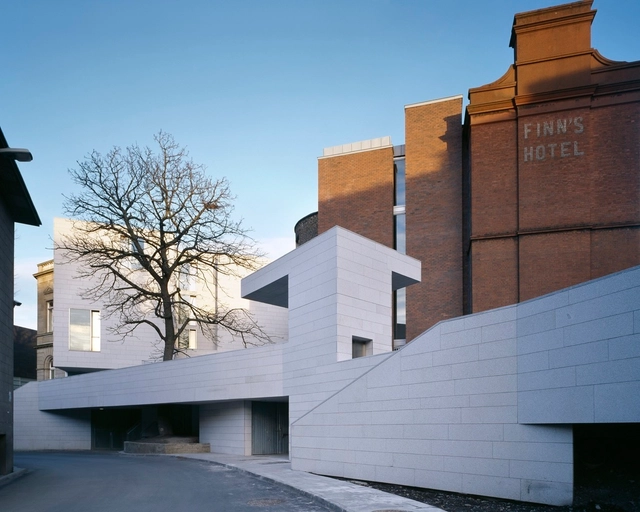
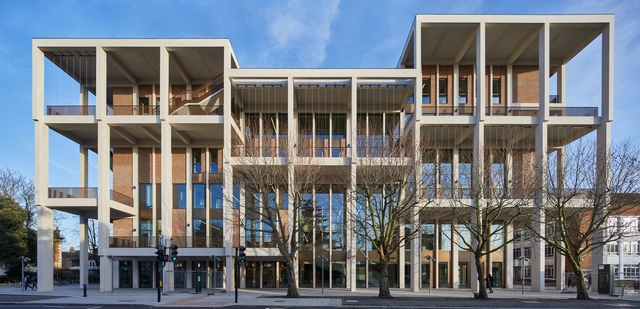
Pritzker Prize 2020 Laureates, Irish architects Yvonne Farrell and Shelley McNamara are known for their powerful yet delicate approaches. In this exclusive video for ArchDaily, Martha Thorne, executive director of the Pritzker Architecture Prize and Dean of IE School of Architecture and Design, shares some of the reasons why Grafton Architects has won the Pritzker Prize 2020.
“When you read Love in the Time of Cholera you come to realize the magic realism of South America.” Yvonne Farrell, Shelley McNamara and I were in a corner of the Barbican Centre’s sprawling, shallow atrium talking about the subject of their most recent accolade, the Royal Institute of British Architects inaugural International Prize, awarded that previous evening. That same night the two Irish architects, who founded their practice in Dublin in the 1970s, also delivered a lecture on the Universidad de Ingeniería and Tecnologia (UTEC)—their “modern-day Machu Picchu” in Lima—to a packed audience in London’s Portland Place.
Space Saloon and Designers on Holiday have announced DeSaturated, a week-long interdisciplinary community-in-residence design festival in California's Cuyama Valley. Following the success of the first two iterations, LANDING and FIELDWORKS, the team is returning to California once more. The community-in-residence program will bring together designers, artists and researchers to address issues of water scarcity.
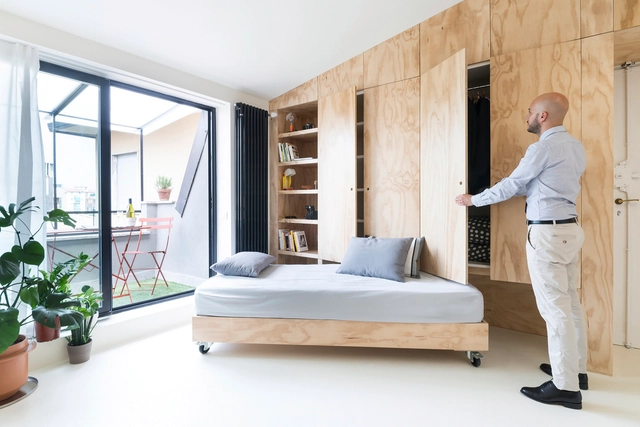
With residential developments offering ever-smaller housing units, the challenge for architects and interior designers to develop compact and multifunctional solutions for interior projects increases. From this perspective, it is increasingly common for professionals to focus on their clipboards in creating new solutions for joinery and multifunctional furniture that allow the space to transform completely in a few seconds, such as strategic cabinets and bookcases to supply the lack of storage space; sliding furniture on rails or pulleys; cabinets that turn into beds through vertical rotation; drawers in stairways, etc.
With more than 40 years of professional experience, Yvonne Farrell and Shelley McNamara, partners and co-founders of Dublin-based Grafton Architects, are the first women to be jointly awarded the architecture’s highest honor, the Pritzker Prize. In addition to a very welcoming breath of hope towards greater female representation in the field, the selection also cast light over an equally urgent theme in the profession: recognizing architecture practice as a collective effort.
Yvonne Farrell and Shelley McNamara founded Grafton Architects in 1978, after they met each other at the School of Architecture at University College Dublin. The practice, named after the street where the duo's first office was located, has been awarded this year’s prestigious 2020 Pritzker Award. Grafton's built work reflects the continued search of architectural excellence, in buildings ranging from small scale housing to large public volumes.
https://www.archdaily.com/934727/grafton-architects-get-to-know-2020-pritzker-winners-built-workAD Editorial Team
Australian architecture is rooted in the land. From environmental and climatic concerns to the country's unique cultural background, the built environment down under is defined by a history of connections to local contexts. Today, Australian architecture has also come to embrace a multicultural identity, with a new class of cultural projects showcasing how contemporary buildings and structures are being designed for the future.
Door handles are a ubiquitous part of daily life, being used constantly in almost every space but rarely given thought by the passing user. Nevertheless, the chosen material of each handle can vary widely in terms of aesthetics, durability, and sustainability, with good choices going noticeably right and poor choices going noticeably wrong. For objects that are seen and used multiple times every day without fail, it’s imperative that designers get the choice right.
To deepen this topic, FSB helps us to lay out the properties of four of the most common handle materials below, allowing you to make an informed decision on which material aligns best with your project’s needs.
https://www.archdaily.com/929360/stainless-steel-bronze-brass-or-aluminum-how-to-choose-handle-materialsLilly Cao
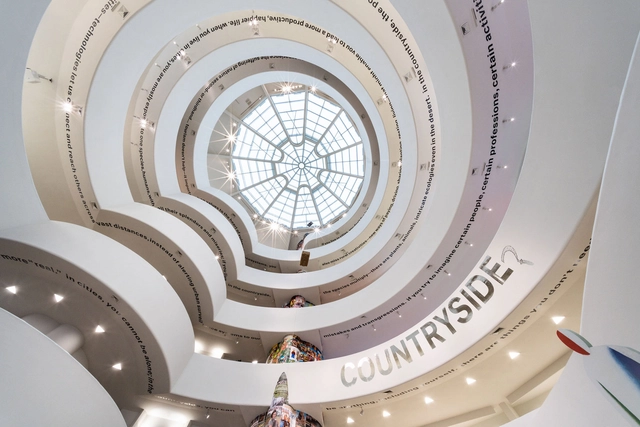
Entering the Guggenheim Museum, visitors find themselves surrounded by a feast of vivid colors and mismatched fonts. Passing the gigantic green tractor at the entrance, they move across the ground floor, littered with stickers, like a lunchbox, or a lid of a laptop. A thick pillar that pierces the internal atrium has become a garish advertising column. A bale of hay, a drone, and some other object (impossible to identify) levitate high overhead. A cardboard cutout of Joseph Stalin on robot wheels moves down the ramp, scaring off visitors. Big reflective letters say: “Countryside, The Future”.
Architect Rem Koolhaas, the founder of the Office of Metropolitan Architecture (OMA) and Samir Bantal, director of OMA’s internal think-tank AMO, created this utterly confusing environment to exhibit years of research on the space beyond the boundaries of the 21st-century city.
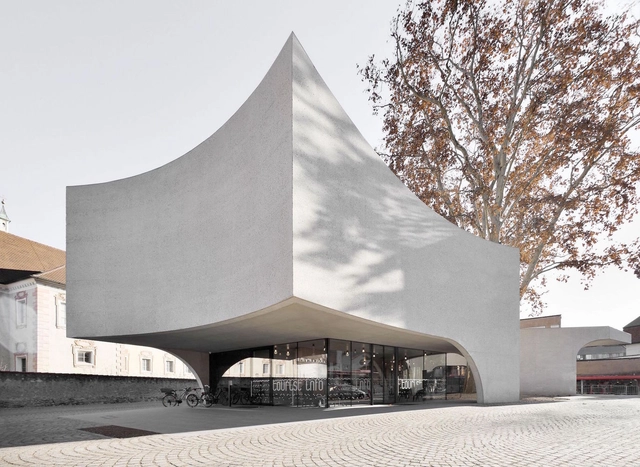
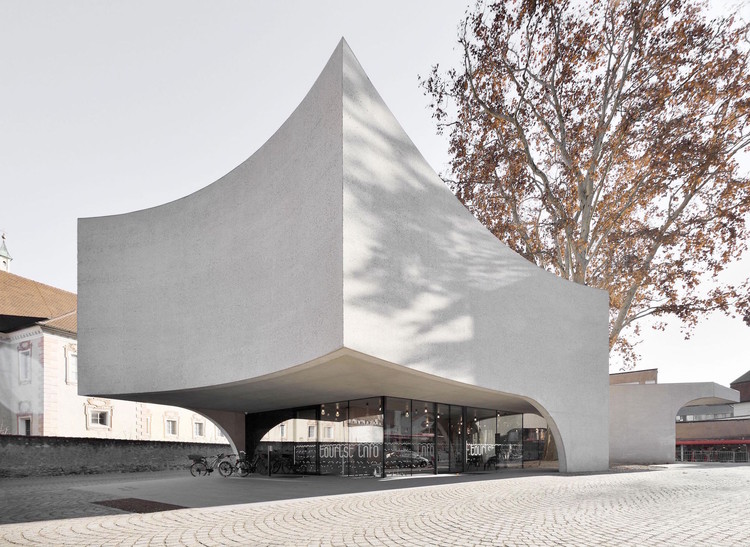
Tourist Information Center by MoDus Architects, awarded selection in the ICONIC AWARDS 2019: Innovative Architecture. Image Courtesy of German Design Council
Today marks the start of the registration phase for the international ICONIC AWARDS 2020: Innovative Architecture. These awards recognize the best of architecture and innovative interior and product design, as well as outstanding communication concepts and singularly innovative materials. The winners will be honored at the awards ceremony on 5 October 2020 at the Pinakothek der Moderne, Munich, where they will have ample opportunity to network with other players on both the national and international scene.
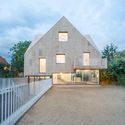
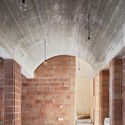
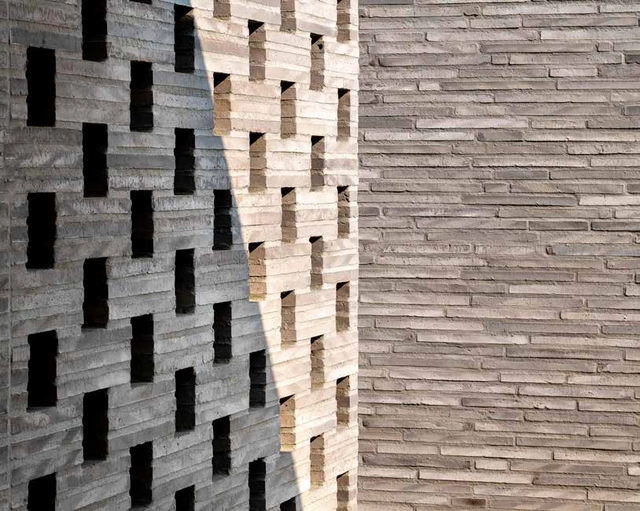
As one of the oldest building materials, dating back to at least 7500 BCE, brick is often thought of as a traditional, classic option for a building facade. Throughout its long history, however, the brick industry has changed and modernized to remain architecturally relevant. Innovations in brick construction continue to provide new opportunities for designs that combine the warmth and character of a natural material with the efficiency and aesthetics of a modern building.
Robotics and automation are a staple of any vision of how we will live in the future. Among architects and designers, this trend crosses a variety of scales, from smart cities to smart kitchens. As we outlined in our Trends That Will Influence Architecture in 2019, recent years has seen a strengthening in how interior spaces are being transformed by technologies, with searches for Domotics soaring by 450% in twelve months.
Concealed City, mixed-media composite drawing by Monica Hutton.
Deception, concealment, camouflage. Nature's numerous examples of disguising as a strategy to survive have provided humankind with plenty of inspiration for military unobtrusiveness throughout history. Today, disguise appeals as a way to protect one's private life in the City with Eyes. In a time when monitoring and surveillance systems are increasingly pervasive, Monica Hutton reflects on concealment strategies that are being developed, and which agencies they can deploy as part of complex urban ecologies.
On Design with Justyna Green brings you insightful conversations with the arts & design's most inspiring figures - from designers to architects, editors to creative directors and everybody in between. If you want to know what inspires them, how they work and how they see the world, this is the podcast for you. Listen to the On Design podcast now on Apple Podcasts, Spotify and Google Play.
On Design podcast host, Justyna Green met Adam Nathaniel Furman at his apartment in the vicinity of Regent's Park. In their conversation, they discuss Furman’s multicultural upbringing and its effects on his notions of identity. With roots in Argentina, Japan and Israel, Furman’s views on design, aesthetics and the society derive from numerous cultures, traditions, and religions, resulting in an open mind and a wealth of informed viewpoints.












.jpg?1578857650 "© Neumann Monson")







.jpg?1484680102&format=webp&width=640&height=580)























.jpg?1581563559 "Fredrikstad office. Image © Randers Tegl")
.jpg?1581563494 "Mosevænget. Image © Randers Tegl")
.jpg?1581563220 "Eufemia. Image © Randers Tegl")