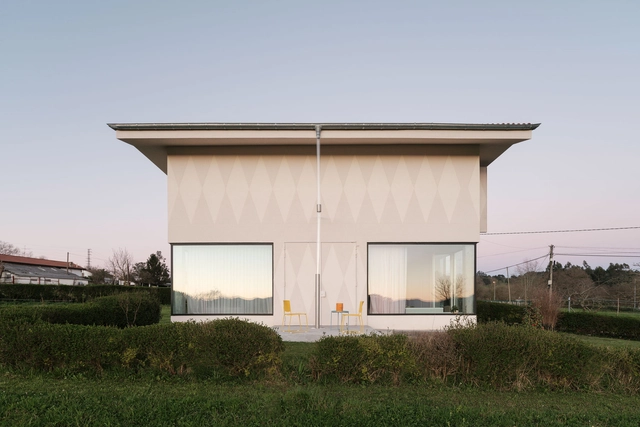
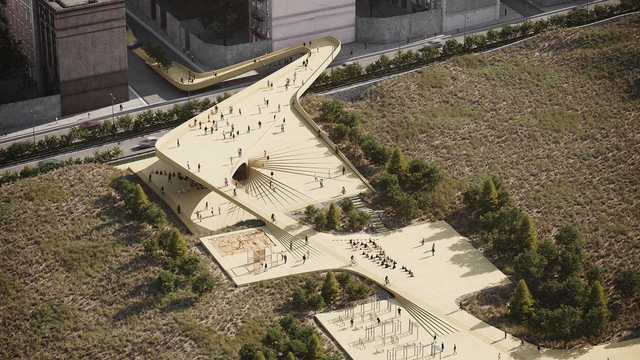
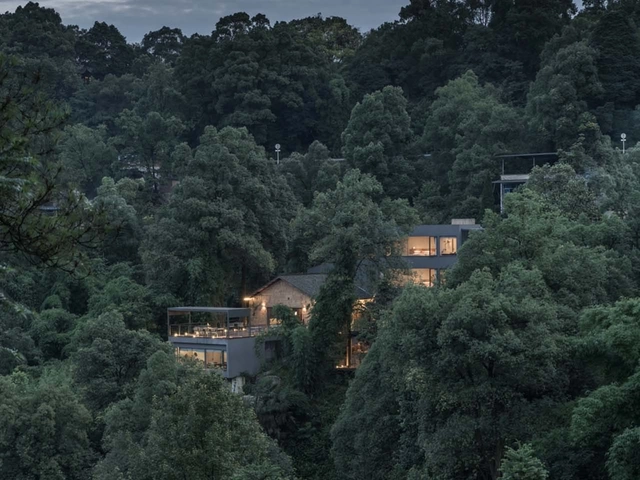
Four emerging architecture studio profiles from Switzerland, Germany, and Spain have been chosen by New Generations, a European platform that analyses the most innovative emerging practices at the European level, providing a new space for the exchange of knowledge and confrontation, theory, and production. Since 2013, New Generations has involved more than 500 practices in a diverse program of cultural activities, such as festivals, exhibitions, open calls, video interviews, workshops, and experimental formats.
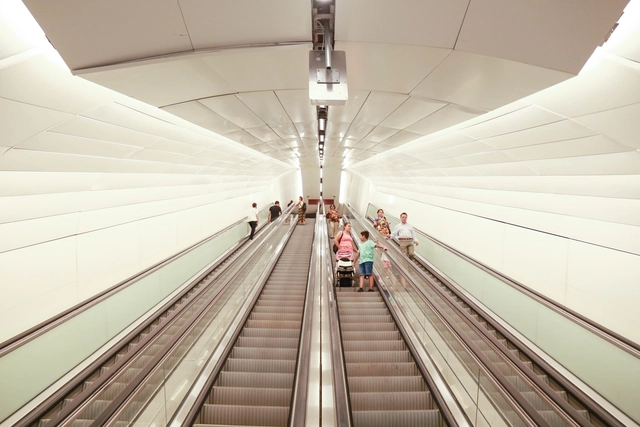
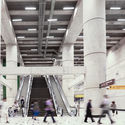
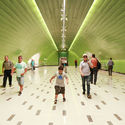
Rumor had it that behind the walls of historic subway station Cal y Canto in Santiago de Chile, a hidden ghost station would eventually link to Line 3—a planned route that was part of the original Metro master plan designed in the 60s. Its construction would have been shelved after the magnitude-7.8 1985 earthquake that forced public resources to be redirected for the reconstruction of the Chilean central valley.
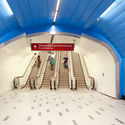
34 years later, the Cal y Canto Metro station finally opened its connection with Line 3, the most recent addition to the rapid transit system, thus becoming the seventh line of Santiago after lines 1, 2, 4, 4A, 5, and 6.
Recent extreme weather events and the acceleration of climate change, paired with decarbonization efforts that are not on track, make climate-related disruption unavoidable for urban environments, raising the issue of climate-risk adaptation. Moving past what can be done to prevent climate change, there is a strong imperative to develop strategies to prepare urban environments to cope with inevitable challenges such as sea-level rise, floods, water scarcity or extreme heat. The following discusses how cities can build resilience and adapt to undergoing and expected future climate threats.
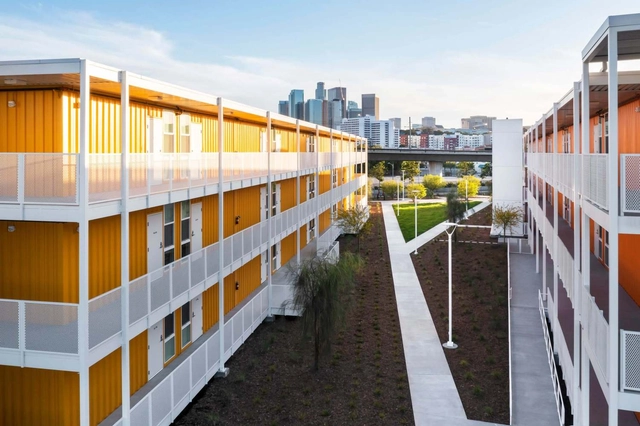
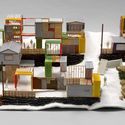
The Hilda L. Solis Care First Village (HSCFV), a large-scale interim housing project providing a wide range of amenities for both the unhoused and those in transition, recently opened in Downtown Los Angeles.
When we think of migration, we think of movement. We think of the movement of people simply looking for greener pastures – a better life for themselves. But we also think of war, of conflict, of an unstable situation in a specific place forcing the hand of a location’s residents to seek safety elsewhere. Historically and into present day, war has been the reason for the increased presence of refugees. Instability in places such as Syria, Iraq, or the Central African Republic have caused millions to flee their homes. Lurking amongst this migration due to conflict, however, is the migration of people at mercy of the changing environmental conditions of the Earth – climate migration.
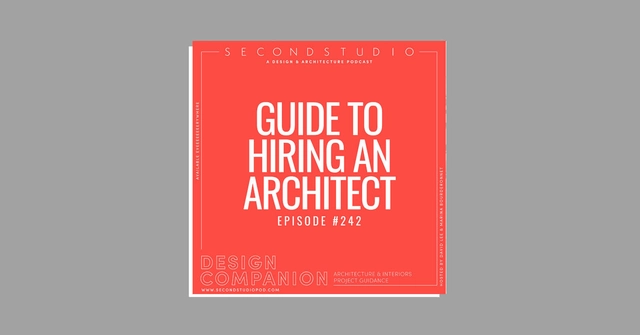
The Second Studio (formerly The Midnight Charette) is an explicit podcast about design, architecture, and the everyday. Hosted by Architects David Lee and Marina Bourderonnet, it features different creative professionals in unscripted conversations that allow for thoughtful takes and personal discussions.
A variety of subjects are covered with honesty and humor: some episodes are interviews, while others are tips for fellow designers, reviews of buildings and other projects, or casual explorations of everyday life and design. The Second Studio is also available on iTunes, Spotify, and YouTube.
This week David and Marina discuss the different reasons for hiring an architect and establishing a good client-architect relationship: The pros and cons of hiring an interior designer or contractor instead of an architect, design-build services, the difference between drafting and designing, whether or not a licensed architect is needed for certain projects, common fee structures, finding the right architect and what to look for in an architect, why the client and architect relationship is important to the project, and common problems that occur when the right architect is not hired and tips for avoiding them.
https://www.archdaily.com/965936/the-second-studio-podcast-on-why-hire-an-architectThe Second Studio Podcast
The Resor House was a hugely pivotal project for Mies van der Rohe, in both his life, and his career. It was his first commission in the United States and prior to landing in Chicago, he lived for two months on the site of the house near Jackson Hole, Wyoming. Its design was unique for Mies in its rural landscape setting and material choices, mainly its wood-clad exterior and interior. While it was never constructed due to cost overruns, the design documents and working models were collected by MoMA in NY, where the client, Helen Resor was on the Board of Directors. This video traces a digital reconstruction of the house — using those archival documents — to serve as the subject of an in-depth tour and analysis. What sorts of discoveries are to be found inside this unbuilt masterpiece?
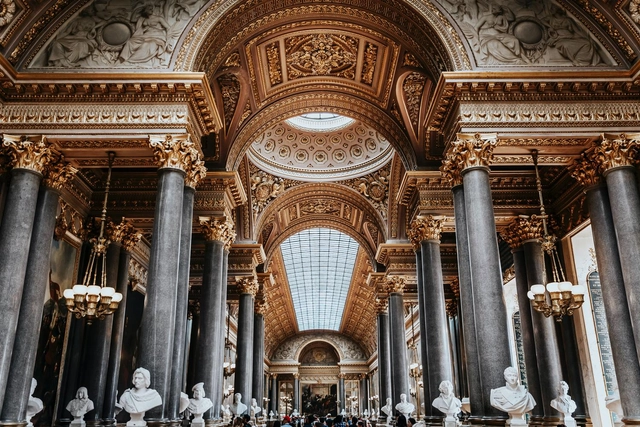
Architecture is perhaps the most expressive forms of culture, representing the zeitgeist of a particular location, and telling the story of how it evolved over time. It allows visitors to transport themselves back in history to understand the influences that shaped the world we once lived in. Baroque architecture, in particular, was one of the most ornamental and decorative architectural styles. Translating to “curious or strange” in French, it was once used as a derogatory word, meaning noisy, eccentric, and excessive- and Baroque architecture was truly just that.
Plan B Guatemala / DEOC Arquitectos. Image Cortesía de DEOC Arquitectos
"Here in the tropics, it's the shade not the stove that refreshes and brings people together," says Bruno Stagno about tropical architecture.
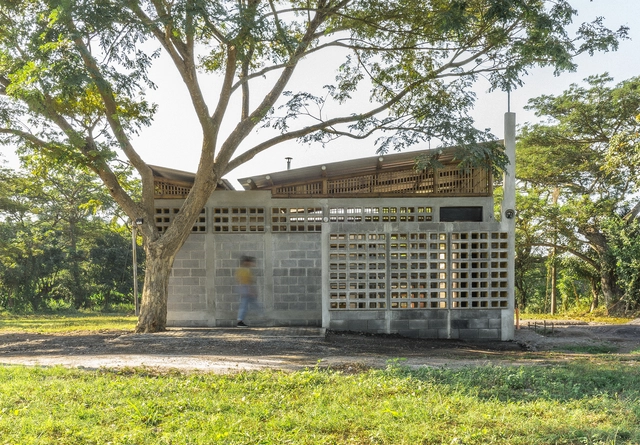
Guatemala ha estado construyendo su sombra a lo largo de los años. Nos encontramos con 3 ejemplos que proponen interesantes respuestas a este clima. Proyectos que materializan tanto grandes cubiertas con pendientes para dar sombra y evacuar el agua de lluvia con rapidez, como fachadas perforadas que permiten el ingreso de la brisa y la ventilación interior.
Jeffry Burchard explores in his essay the "opportunity found by extending the life and purpose of viable existing buildings", that have shaped our cities. Arguing that "we have an abundant supply of buildings", the author proposes four essential steps to transform existing buildings.
How materials move shapes both architecture and how we design. While architects often consider both material sourcing and manufacturing, the physical products and assemblies themselves also move and adapt as they cross geographic and national lines. How materials migrate, and in turn design ideas themselves, tells a story of architecture that transcends construction and climate, as well as borders both real and imagined.
By defining sexuality as one of several sexual technologies, Michel Foucault has expanded our understanding of sex. This way, the relationship between architecture and the body is shaped not only by the built object, with its various spatial mechanisms for the production of bodies, but also by thinking, in the form of academic discourse. And vice versa, since gender and sexuality also impact architectural theory. One way or another, these relationships are very rich and capable of expanding our knowledge about architecture and the creation of generic sexed bodies.
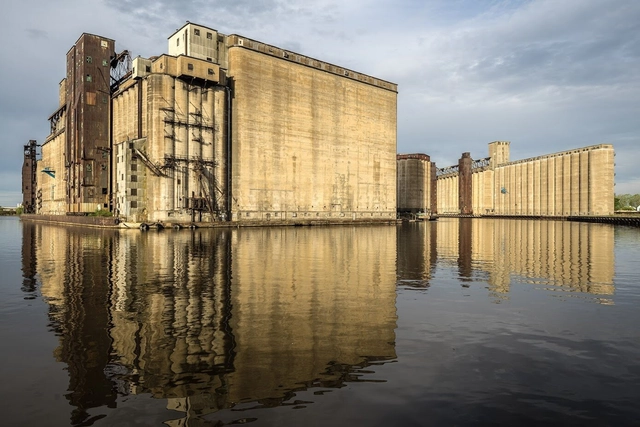
This week's reprint from Metropolis explores the ongoing renovation and transformation of an iconic site in Buffalo, Silo City, in order to create ambitious residential and public projects.
https://www.archdaily.com/965933/the-transformation-of-silo-city-signals-a-new-future-for-buffaloOsman Can Yerebakan
Sustainable, hard-wearing and decorative, Cosentino’s new Silestone collection Sunlit Days represents the company’s most radical commitment to the circular economy. Image Courtesy of Cosentino
With its highly innovative HybriQ technology, the family-run Spanish surface specialist Cosentino makes a radical contribution to the circular economy – and offers harmonious colour designs for kitchens and bathrooms.
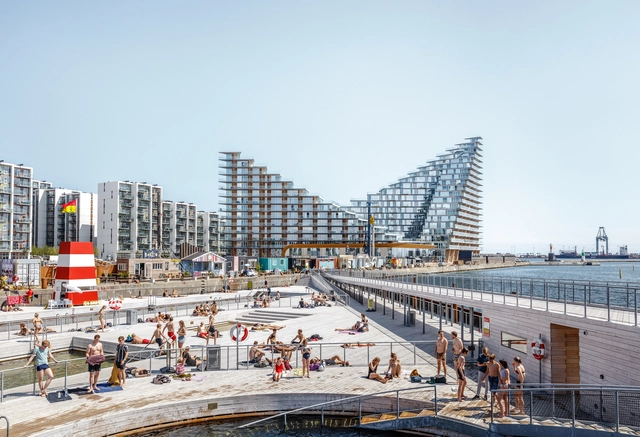
AARHUS, Image by Rasmus Hjortshoj . Image Courtesy of BIG
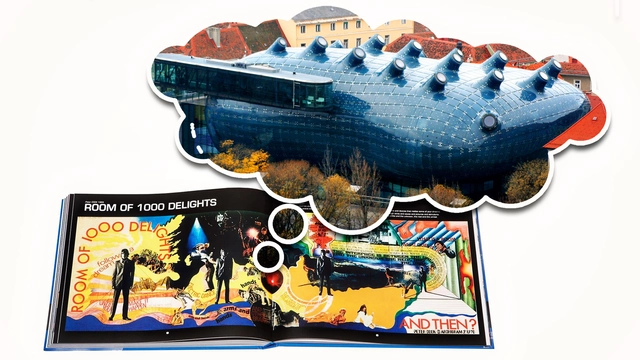
"The future is already here, it's not just very evenly distributed". Starting off with this William Gibson quote, BIG’s latest publication Formgiving looks at the past and present in order to determine the future. Talking of predictions that aren’t so far down the road, but rather than could occur in 5, 10, or 50 years, the book seeks to “give form to the future”, or to what has not taken shape yet.
ArchDaily had to chance to interview Kai-Uwe Bergmann, Partner at BIG-Bjarke Ingels Group, and discuss not only the firm’s latest manuscript but the trilogy of publications: Yes is More, an “Archicomic on Architectural Evolution”, Hot to Cold an “Odyssey of Architectural Adaptation”, and Formgiving, an “Architectural Future History”.
Claude Monet and Vincent van Gogh used the impasto technique extensively in their paintings. Both applied thick layers of oil paint over the canvas, usually one shade at a time, and it was up to the viewer's brain to mix the colors and create the desired effects. When dry, the paint forms reliefs and textures on the canvas, evoking a sense of movement. Even without being able to touch the screen, the texture of the brushstrokes gives a three-dimensionality to the painting, something that can only be fully observed by seeing the artwork live, looking at it from more than one angle and actually experiencing it.
In his famous book “The Eyes of the Skin: Architecture and the Senses,” Juhani Pallasmaa points to "a predilection in favor of vision and in detriment of the other senses in the way architecture was conceived, taught and criticized, as well as the consequent disappearance of sensory and sensual characteristics in arts and architecture." According to the author, "an architectural work is not experienced as a series of isolated retinal images, but in its fully integrated material, corporeal, and spiritual essence."
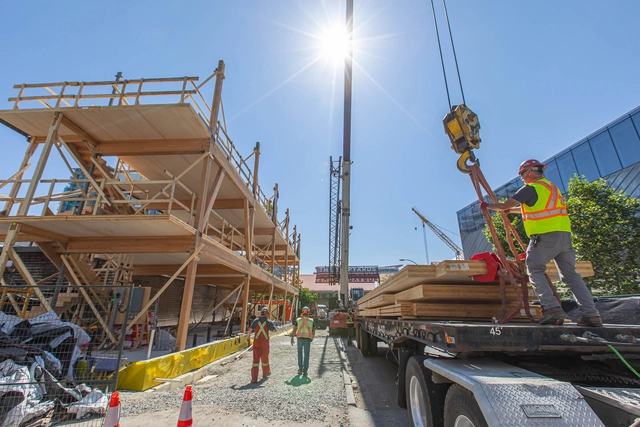
Mass timber components for this project were prefabricated offsite which not only aids in the ability for on-site assembly but also aids in the disassembly of projects in the future if needed. Timber's versatility allows it to be disassembled and then reassembled into other buildings and furnishings, sequestering carbon for longer so long as it stays out of the landfill. Photo: PH1 construction by Naikoon Contracting, KK Law. Image Cortesia de naturallywood.com
The first Shikinen Sengu was held in the year 690, in the city of Ise, Mie Prefecture, Japan. It consists of a set of ceremonies lasting up to 8 years, beginning with the ritual of cutting down trees for the construction of the new Ise Shrine and concluding with the moving of the sacred mirror (a symbol of Amaterasu-Omikami) to the new shrine by Jingu priests. Every 20 years, a new divine palace with exactly the same dimensions as the current one is built on a lot adjacent to the main sanctuary. Shikinen Sengu is linked to the Shinto belief in the periodic death and renewal of the universe, while being a way of passing on the ancient wood construction techniques from generation to generation.
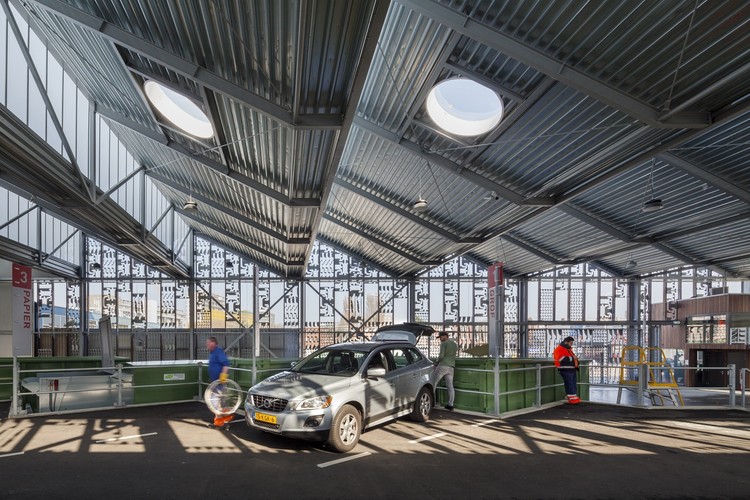
The idea of creating a building that will have an expiration date is not a common one. In fact, the useful life of a structure is often given little consideration. When demolished, where will the materials go? Will they be disposed of in landfills or could they be reused in new projects? There are certain construction methods and materials that make this process easier. Others make reuse unfeasible, due to several factors.
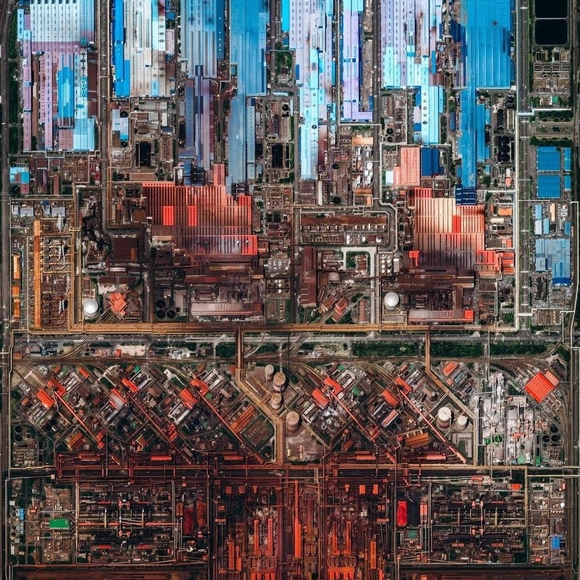
Created by @overview Source imagery @maxartechnologies
Historically, industrialization means a process of economic change that transforms an agrarian society, with mostly handicraft techniques, into an industrial society to increase productivity and economic growth. This mechanization and mass production leads to deep social transformations, but the most significant consequence is an enormous change in the urban landscape.
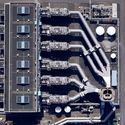
SANLIURFA, TURKEY - February 19, 2014: Aerial view of Akcakale Refugee Camp. Approximately 28.000 Syrian people reside in Akcakale Tent Camp in Urfa.. Image via Shutterstock/ By answer5
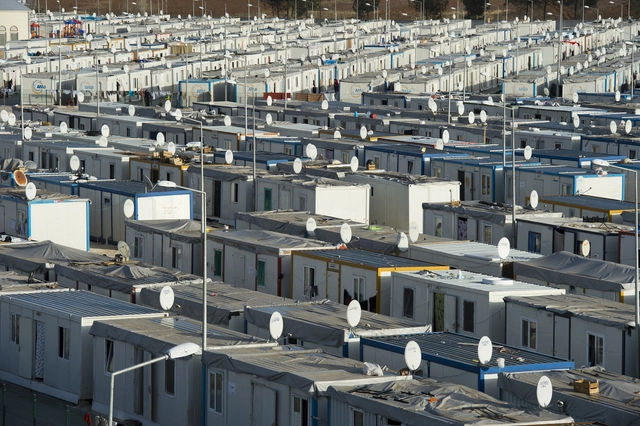
With more than 70 million forcibly displaced people worldwide, according to the UNHCR, and nearly 25.9 million refugees, the time has come to reconsider the traditional emergency camp approach. Although the concept is temporary by definition, in real life the lifespan of these refugee camps exceeds the planned and the expected.
Ranging from seven to seventeen years, most of these settlements surpass their expiry dates. Actually, on average, according to the United Nations High Commissioner for Refugees (UNHCR) in Kenya, "many displaced persons spend more than 16 years living as refugees in temporary shelter."
This week's curated selection of Best Unbuilt Architecture highlights different competition-winning designs submitted by the ArchDaily Community. From large scale urban developments to small interventions in the landscape, from commercial projects to public spaces and urban planning strategies with an environmental focus, this article showcases a variety of design approaches, programs and scales. The proposals featured are the results of local and international competitions, either creative concepts or projects currently in progress.
The award-winning entries include a range of different projects, designed by both young architects and established firms. An adaptive reuse project for office towers in New York, the redevelopment of an industrial site in China, an abstract installation for a Russian festival, or a masterplan focused on climate resilience and ecosystems protection are a few of this week's highlights.
NanShan B&B Hotel / Priestman Architects. Image Courtesy of Luyi Photograph
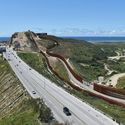
A border city can be classified as an urban agglomeration close to the boundary of two countries, states, or regions. Nowadays, as our cities are rapidly expanding and our transportation modes continually upgrading, the boundary between cities and rural areas has been constantly pushed and redefined.
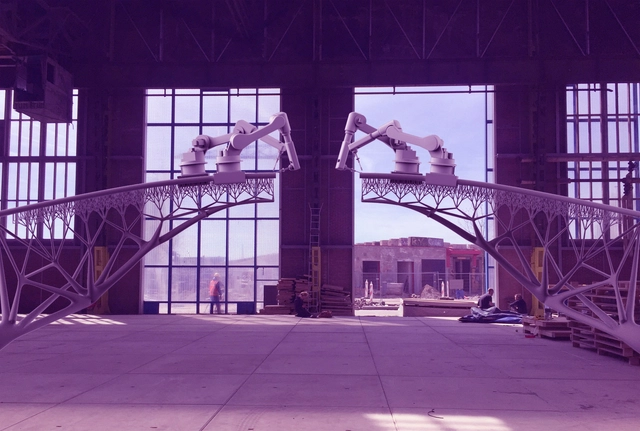
Architecture is a long-standing profession, one that has produced the iconic landmarks we admire around the world, monuments which we revere around the world, and played a part in establishing the organisation of the cities we live in today. This description, however, is architecture in the traditional sense - and there are numerous examples of individuals and firms who have strayed away from traditional architectural practice, either through delving into adjacent fields or 'disrupting' the field with the harnessing of new technologies.
Today, worldbuilding is an important part of creative thinking in a wide array of activites. From successful film franchises, to video games, and to comics, worldbuilding is what draws in audiences and allows multi-part productions to cohere around a shared setting. Of course, architecture factors into this too, it is the creative and technical discipline concerned with building the world, after all. This video breaks down how worldbuilding applies to architecture and focuses on comics as a case study to explore the opportunities in its consideration. Lastly, the video includes an interview with the designer of the exhibition ‘Chicago Comics’ currently on display at the Museum of Contemporary Art. Thomas Kelley discusses how worldbuilding factored into the relationship between architecture and comics in the design of the show with regards to scale, entry sequences, and color.
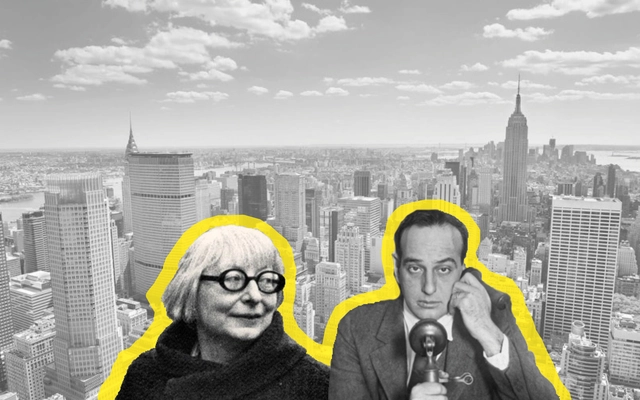
The development of cities has historically been a slow-moving process. In the everchanging urban landscape that faces the pushes and pulls of a variety of social, economic, and financial factors, it’s been hard to pinpoint just one main reason over another why each city has evolved over time into the way that we experience it today. And as designers and planners speculate about what the future of our cities should be, sometimes the reason that our cities look and operate in the way that they do has come down to a few famous battles between individuals with competing schools of thought.