Last year, I wrote about doing away with the title “intern,” saying the word “should be banished from the profession.” The post, titled, No More Interns, caused quite a flurry of responses, some quite angry, in fact. Some respondents defended the title, saying a title is just a title; others launched attacks against it, saying it connotes someone unskilled or untrained.
For the record, I still think we should get rid of it — not simply because it is demeaning and diminishing to individuals who have gone through the rigorous educational stages of the profession, but because it makes the profession look antiquated. Think about where you find “intern” used today and what it generally implies: volunteer, unpaid/low-paid, student, temporary, trainee, to name a few. Imagine how clients from progressive business cultures view it. Also, from the standpoint of business, doesn’t it make sense that people would pay more for architecture not done by “interns”? I would pay more for “associates.”
The Graduate Architecture, Landscape, and Design Student Union (GALDSU) at the University of Toronto recently published the results of its first mental health survey, which asked students to reflect on their experience at the John H. Daniels Faculty of Architecture, Landscape, and Design. Many past and present students have met the findings, which paint a blatantly bleak picture of the architecture student experience, with little to no surprise. The report brings the issue of poor mental and physical health in architecture schools to the forefront of our consciousness; however, the cool response it has elicited undercuts the initiative and raises important questions. If we were already aware of the problem, why hasn't change already been initiated? Will this always be the accepted, brutal reality of architecture education?
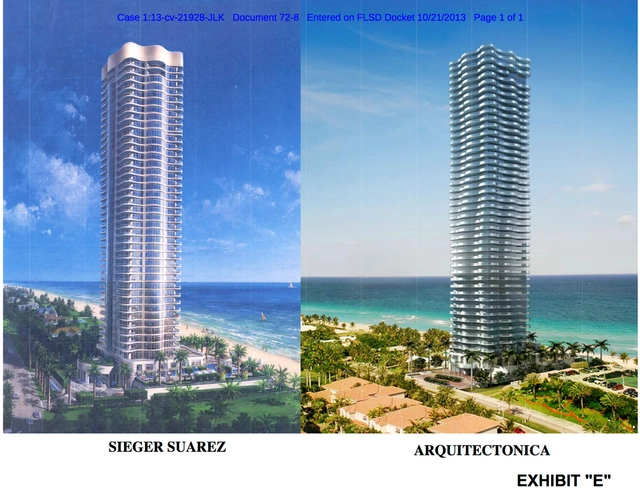
Courtesy of Mitch Tuchman. Source of images: U.S. District Court for the Southern District of Florida, Miami Division
When an eminent jurist asks, “What does a copyright of an architectural work truly protect?” you may be certain the question is not rhetorical. The U.S. Copyright Act does provide protection from infringement for architectural works, but it does so in terms so ambiguous that a judge might wonder, as did federal district court judge James Lawrence King in a case he decided earlier this year, whether broadly applicable standards for determining infringement even exist. Finding “the usual analysis … too vague and the language misleading,” King blazed a trail of his own in Sieger Suarez Architectural Partnership v. Arquitectonica International Inc., 2014 U.S. Dist. LEXIS 19140, proposing detailed guideposts for future courts to follow.
Sieger Suarez involved two Miami architectural firms and a 43-story condominium tower nearing completion in suburban Sunny Isles. The Sieger Suarez firm was engaged in 2000 by the project’s first owner. When the project, now known as Regalia, changed hands, the new owners dropped Sieger Suarez and engaged Arquitectonica in 2006. This is a scenario made familiar in scores of disputes involving allegations of infringement of architectural works.
Befitting a beachfront property with floor-through units starting at $7 million, both designs present dramatic, undulating exteriors. “When facing any of the buildings' four sides,” King wrote in his opinion, “the façades create the impression of a wave rippling horizontally across the sides of the buildings.” Further, in cross-section, both buildings reveal what King described as a “flower shape,” “a stylized rectangle, with gently rounded corners and an outward bulge more-or-less in the center of each of the four sides.” Should this flower shape, combined with the wavelike exteriors, have been enough to sustain Sieger Suarez’s claim of infringement against its competitor and the property’s owners?
The results of this Court Case, and what they could mean for architectural copyright in general, after the break...
A few weeks ago, ArchNewsNow carried an article from the Orange County Register about the increasing popularity of “crowdsourcing” architectural design. You might already be familiar with the crowdsourcing concept: using the Internet to gather solutions to virtually any problem or task from people all over the world. The idea has been used to generate solutions to provide clean drinking water in third-world countries, to creating entire websites such as Wikipedia. Such activities are generally regarded as “disruptive,” in the parlance of the moment, in that they offer alternative ways of achieving a result that has traditionally been accomplished through other means. (ArchNewsNow is “disruptive” in the sense that it offers an alternative outlet for architectural news that impacts the traditional architectural publishing world of print media.)
Read on to find out why this "disruptive" new trend is nothing to fear
https://www.archdaily.com/497828/why-criticisms-of-crowdsourcing-don-t-add-upMichael J. Crosbie
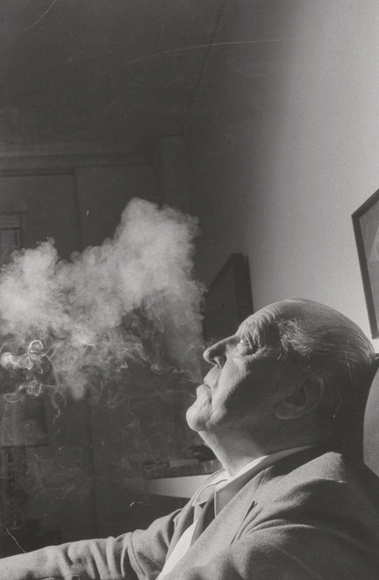
Mies van der Rohe with smoke, 1957; photographed for Life magazine. Image Courtesy of Frank Scherschel/Time & Life Pictures/Getty Images
This review of Detlef Mertins' book "Mies" - by Thomas de Monchaux - originally appeared in Metropolis Magazine as "Mies Reconsidered". According to de Monchaux, Mertins reveals the modernist master as a voracious reader who interpreted a wide variety of influences to arrive at his stripped-down style.
The quintessential page of the 528 that make up Detlef Mertins’s monumental new monograph on Ludwig Mies van der Rohe—entitled simply Mies (Phaidon, 2014)—is 155. There, you will find a reproduction, a page within a page, of page 64 of Romano Guardini’s 1927 book Letters from Lake Como—a book about modernity and human subjectivity—with Mies’s own annotations penciled in the margins, in a surprisingly ornate and delicate hand.
And there, you will find Mertins’s notes on Mies’s notes on Guardini: “Of all the books in Mies’s library, Guardini’s Letters is the most heavily marked. Mies highlighted passage after passage with bold and rapid margin strokes and wrote key words diagonally and in large script across the first pages of many of the chapters: Haltung (stance), Erkenntnis (knowledge), Macht (power).” Mertins’s vivid marginality, his attention to the divine details along edges, recalls the experience of reading the Talmud, that commentary on Jewish law and scripture in which, by marking and emending earlier readers’ marks and emendations, generations of rabbis enacted an intimate conversation across time and space.
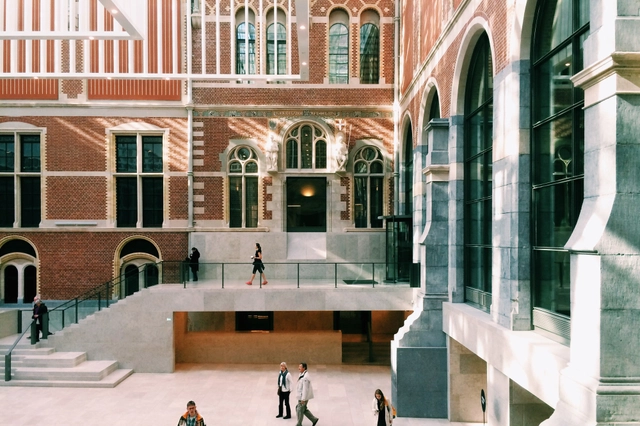
The Rijksmuseum, which reopened last year after a decade of restoration and remodelling, is a museum dedicated to “the Dutchness of Dutchness.” Pierre Cuypers, the building's original architect, began designing this neogothic cathedral to Dutch art in 1876; it opened in 1885 and has stood guard over Amsterdam'sMuseumplein ever since.
Over the centuries, the building suffered a series of poorly executed 'improvements': intricately frescoed walls and ceilings were whitewashed; precious mosaics broken; decorative surfaces plastered over; and false, parasitic ceilings hung from the walls. Speaking in his office overlooking the Rijksmuseum’s monumental south west façade, Director of Collections Taco Dibbits noted how the most appalling damage was incurred during the mid-20th century: “everything had been done to hide the original building […but] Cruz y Ortiz [who won the competition to redesign the Rijks in 2003] embraced the existing architecture by going back to the original volumes of the spaces as much as possible.”
For Seville-based Cruz y Ortiz, choosing what to retain and what to restore, what to remodel and what to ignore were, at times, difficult to balance. Cruz y Ortiz found their answer in the mantra: 'Continue with Cuypers'. They threw the original elements of the building into relief but did not act as aesthetes for the 'ruin'. In contrast to David Chipperfield and Julian Harrap's restoration of Berlin'sNeues Museum, for instance, Cruz y Ortiz rigorously implemented a clean visual approach that favoured clarity over confusion. What is original, what is restored, and what is new mingle together in a melting pot of solid, understated architectural elements. Sometimes this approach contradicted Cuyper's original intentions; however, more often than not it complements them in a contemporary way.
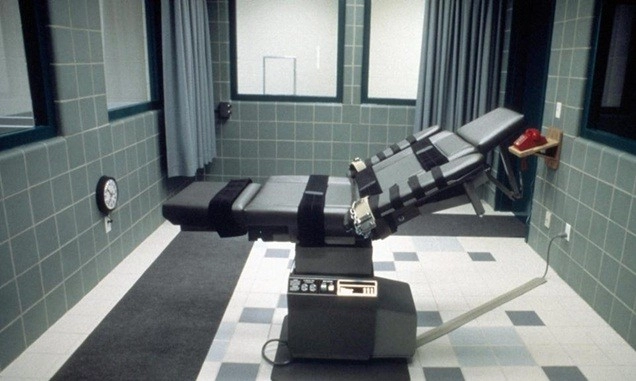
We think of architectural regulations as being there to ensure that buildings are safe for the public. But what if a building’s harm is not caused by unexpected structural failure but by the building performing exactly as intended? Can a building designed to facilitate human rights violations amount to a violation in itself? And what is the responsibility of the architects involved? These are the questions at the centre of the current debate in America around the architectural profession’s involvement in prison design.
Read on for more on the ethics of prison design after the break
In this article, originally appearing on the Australian Design Review as "Tolerance and Customisation: a Question of Value", Michael Parsons argues that the complex forms made possible by digital fabrication may soon be victims of their own popularity, losing their intrinsic value as they become more common and the skill required to make them decreases.
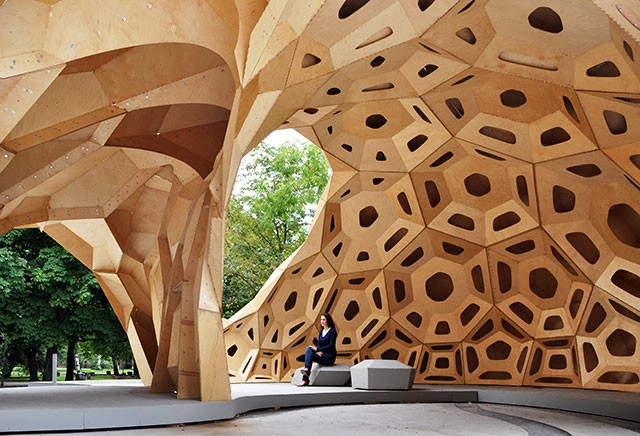
The idea of tolerance in architecture has become a popular point of discussion due to the recent mainstreaming of digital fabrication. The improvements in digital fabrication methods are allowing for two major advancements: firstly, the idea of reducing the tolerance required in construction to a minimum (and ultimately zero) and secondly, mass customisation as a physical reality. Digital fabrication has made the broad-brushstroke approach to fabrication tolerance obsolete and now allows for unique elements and tolerance specific to each element. The accuracy that digital fabrication affords the designer, allows for the creation of more complex forms with greater ease and control. So far, this has had great and far reaching implications for design.
Read on to find out how this ease of form-making could diminish the success of complex forms.
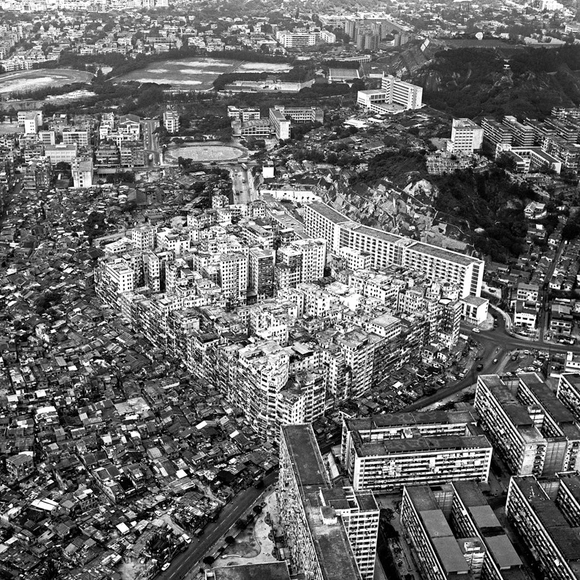
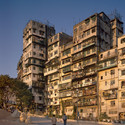
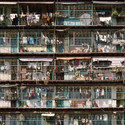
The early phases of the Walled City were characterised by predictable building typologies and the buildings were constructed on the principle of squatters’ rights, with random construction on spots of available land by whoever got there first. Alleyways and passages evolved – unplanned – into the established ‘map’ of the City, which would remain until it came down. A basic electric supply existed, increasingly burdened by illegal connections that frequently overloaded the system, and the few standpipes supplied the only water. As the need to accommodate the ever growing residential and commercial populations forced it to in the 1960s, the building typology of the Walled City made the leap from two- to three-storey residential structures to taller, six- to seven-storey ones. This represented an important threshold, because at these greater heights the buildings unavoidably became more complex and required greater labour to realise, reinforced concrete, more investment, and so on. They also required a different way of living. Water had to be transported up to the higher floors by hand. Likewise the propane gas canisters that furnished fuel to cook or heat water.
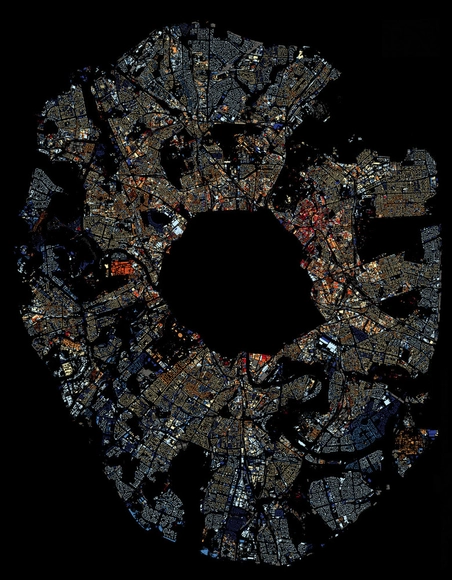
In Archaeology of the Periphery, a publication emerging out of the Moscow Urban Forum, a variety of specialists tackle the issue of a strategy for the development of Moscow's metropolitan area. As one of the best examples of urban concentric development, teams of engineers, architects, planners, economists and sociologists, studied the Russian metropolis with a pointed focus on the periphery—specifically the territory between the Third Ring Road and the Moscow Ring Road. Using an "archaeological" approach, the study reveals entrenched and hidden planning structures in order to increase the awareness and attractiveness of the periphery. Archaeology of the Periphery argues that examination of the city's fringe requires different methods of analysis than would be applied to traditional city centers.
"As the centre sets a certain quality of life and serves as a benchmark for the entire city, the high "gravitation" of the centre makes the signs of urban life invisible on the outskirts. Different optics are required in order to work with the non-central urban space. The tactic of "taking out" the centre and "sharpening the focus" on the peripheral territory will reveal what has been obscured and help identify the processes that take place, study potential, support or control the current forces at play.
The term "periphery," which is based on the opposition to a semantic centre is used in a wide range of scientific fields. The myriad of approaches underlines the ambiguity of the phenomenon and at the same time provides a base for an multidisciplinary research. This research was performed by experts in sociology (S), politics (P), architecture and urban planning (A), culture (C), economics (E) and big data (D). Methodology — SPACED — allows a broader view of the actual and potential intersections, going."
Dauphin Island, located off the coast of Alabama in the Gulf of Mexico, is known for experiencing perpetual and catastrophic hurricanes. When a storm hits the small island of around 1,200 people, it often washes away much of the coastline with it, leaving residents to rebuild their homes again and again following every big storm.
Artist Dionisio González became fascinated by this society's ability to endure creation and destruction in such rapid succession, willingly succumbing to the whims of nature's cycles time and time again. The artist, who has always held an interest in architecture, embarked on a mission to design surreal structures that would better suit the fraught island's populous, fusing fantasy with the inhabitants' inevitable reality.
More on González's surreal architectural images, after the break...
https://www.archdaily.com/494404/surreal-renderings-of-disaster-resistant-structuresPriscilla Frank
"the architectural establishment continues to ignore indigenous building cultures and the human value of what they represent. For example, traditional building and urban geometry in sub-Saharan Africa is now revealed to be essentially fractal, thus revising our customary (and totally erroneous) conception of those cultures as mathematically under-developed." Image of El Molo Hut, Lake Turkana, Kenya.. Image Courtesy of shutterstock.com
As you may have seen, ArchDaily has been publishing UNIFIED ARCHITECTURAL THEORY, by the urbanist and controversial theorist Nikos A. Salingaros, in serial form. However, in order to explain certain concepts in greater detail, we have decided to pause this serialization and publish three excerpts from another of Salingaros’ books: A THEORY OF ARCHITECTURE. The first excerpt explained the difference between “Pattern Language” and “Form Language,” while the second established how these languages can combine to form the “Adaptive Design Method.” The following, final, excerpt distinguishes between viable, complex form languages that have evolved over time and primitive, “non-languages” that have come to dominate the 20th century due to their iconic simplicity (and despite their non-adaptive characteristics).
Independently of their technological achievements, all groups of human beings have developed a richly complex spoken language. Differences arise in specificities, in the breadth of vocabulary for concepts important to that culture, and in their transition to a written language, but those do not affect the general richness of the language. Every language’s internal structure has to obey general principles that are common to all languages. A primitive language or non-language, by contrast, is characterized by the reduction or absence of such internal complexity and structure. The complexity of human thought sets a rather high threshold for the complexity that any language has to be able to express through combinatoric groupings.
Turning now to architecture, a viable form language is also characterized by its high degree of internal complexity. Furthermore, the complexity of different form languages has to be comparable, because each form language shares a commonality with other form languages on a general meta-linguistic level. A primitive form language severely limits architectonic expression to crude or inarticulate statements.
Originally posted under the title "Well-Oiled Machine" on Metropolis Magazine, this fascinating article by Ian Volner profiles the international behemoth that is SOM, exploring how the practice has remained so prominent - and relevant - after 78 years, and what it is that stylistically unites a practice spread across five continents with more than 10,000 buildings to their name.
Frank Lloyd Wright called them the “Three Blind Mies.” Louis Skidmore, Nathaniel Owings, and John O. Merrill were the architectural troika whose namesake firm—founded in Chicago in the mid-1930s—became something like the Julia Child of postwar design, delivering European sophistication to middle America at midcentury. Through hundreds of buildings in cities all across the country (and, later, around the world) the office turned the stringent aesthetic of German master builder Ludwig Mies van der Rohe into an architectural metonym for big business. Whether you look at rows of sleek glass skyscrapers and see grace and economy, or only the “thousand blind windows” of Allen Ginsberg’s monstrous “Moloch,” it’s no stretch to say that you have Skidmore, Owings & Merrill (SOM) to thank for them.
This article by Ross Wolfe, originally posted on Metropolis Magazine as "Cultural Divide: The 'Paper Architecture' of the USSR" explores the complexity of various Soviet architecture movements through the lens of paper architecture.
In the history of 20th-century Russian architecture, there exists a central struggle. In one corner, the Constructivists, champions of light, airy, and functional buildings that drew their power from the social and aesthetic revolutions of the 1920s; in the other, the Stalinist architects, whose thuggish hybrids and clumsy pastiche became the predominant vernacular throughout the Soviet republics. The latter, as we know, eventually came out on top.
This article by Marc Kristal from Metropolis Magazine, originally titled "Digital Details," looks at the work of NRI, a New York company that is leading the way when it comes to 3D Printing (or rather, additive manufacturing) - finding that there is a craft in these machine-produced models after all.
First things first: The term “3-D printing” is a misnomer according to Arthur Young-Spivey, the digital fabrication specialist at NRI—a 116-year-old, New York–headquartered supplier of reprographic services to architects and their tradespeople. “The correct term is ‘additive manufacturing,’” he explains. “People call it 3-D printing because it enables you to wrap your head around it, but in some ways it’s confusing.”
Young-Spivey has a point, as the process by which a digital file is converted into an object isn’t “printing” in the commonly understood sense of applying pigment on a substrate. With 3-D printing, he says, “Instead of using paper, you’re printing with powder or plastics. It’s all one layer at a time.” The thinner the layer, the better the quality, and the longer the process takes. “And there’s always post-production processing, to clean up the model,” he adds. “That’s why ‘additive manufacturing’ is a more accurate description.”
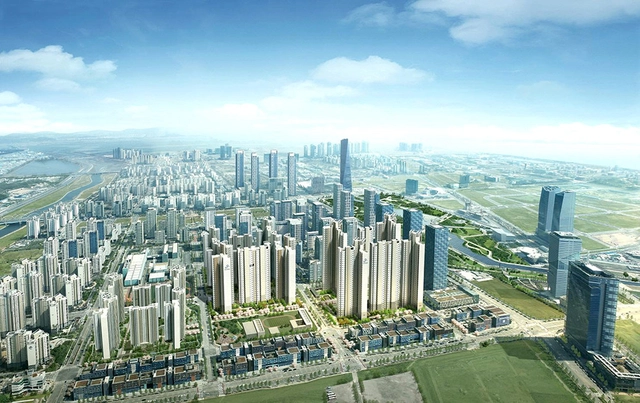
Songdo In South Korea is a brand new city founded on smart city principles. Image Courtesy of Cisco
This article by Carlo Ratti originally appeared in The European titled "The Sense-able City". Ratti outlines the driving forces behind the Smart Cities movement and explain why we may be best off focusing on retrofitting existing cities with new technologies rather than building new ones.
What was empty space just a few years ago is now becoming New Songdo in Korea, Masdar in the United Arab Emirates or PlanIT in Portugal — new “smart cities”, built from scratch, are sprouting across the planet and traditional actors like governments, urban planners and real estate developers, are, for the first time, working alongside large IT firms — the likes of IBM, Cisco, and Microsoft.
The resulting cities are based on the idea of becoming “living labs” for new technologies at the urban scale, blurring the boundary between bits and atoms, habitation and telemetry. If 20th century French architect Le Corbusier advanced the concept of the house as a “machine for living in”, these cities could be imagined as inhabitable microchips, or “computers in open air”.























.jpg?1396007056)