1. ArchDaily
  2. Articles

Articles

Why Architects Must Lead on Sustainable Design

Subscriber Access | 

This article, which originally appeared on GreenBiz, is by Lance Hosey, the chief sustainability officer of the global design leader RTKL.

Sustainability leader Hunter Lovins once called the building industry "dynamically conservative — it works hard to stay in the same place."

But old habits cannot fully address new challenges. According to 350.org, fossil fuel corporations currently have in their reserves five times the amount of carbon that, if burned too quickly, may raise atmospheric temperatures to a catastrophic level where Hurricane Sandy-scale storms could become the norm. Quicker, deeper progress is imperative.

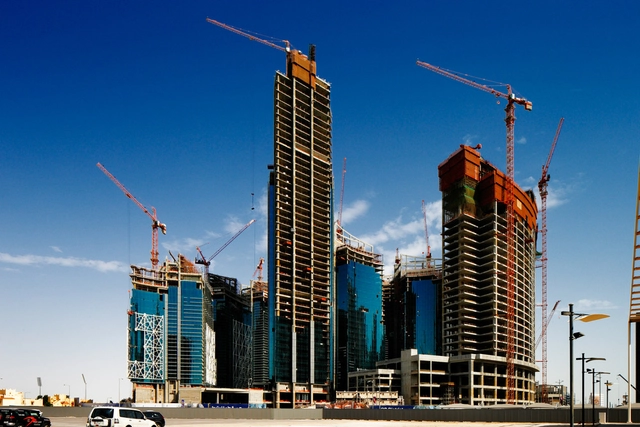
Architecture is an essential arena for sustainable innovation. Buildings represent about half the annual energy and emissions in the U.S. and three-quarters of its electricity. With the built environment growing — the U.S. building stock increases by about 3 billion square feet every year — architects have a historic opportunity to transform its impact for the better.

Keep reading to find out the 6 Steps architects can take to transform the profession, after the break...

AD Recommends: Best of the Week

Subscriber Access | 
AD Recommends: Best of the Week - Image 2 of 4
© Toshiyuki Yano

Kickstarter: New Model Library in Africa

Subscriber Access | 

With only 3% of Africa’s 1 billion population capable of accessing broadband internet and the wealth of information it provides, a multidisciplinary team, led by a strategic partnership between Architecture for Humanity, Gensler, Son & Sons, Librarians Without Borders, has embarked on an ambitious Kickstarter campaign to create a network of low-cost, digitally powered, revenue-generating libraries “deployed along the expanding fiber optic infrastructure in the developing world.”

If successful, Librii will become the first library to actively engage users as content creators, while operating on a sustainable business model and maximizing the potential of high-speed information exchange in developing markets.

Learn more about this initiative and support their Kickstarter campaing here.

Architecture by Robots, For Humanity

Subscriber Access | 

Architecture is quickly adopting the popular technology of robots. Although it is slightly hard to define what “robot” really means, for architecture, it tends to refer to anything from robot arms to CNC mills to 3D printers. Basically, they are programmable, mechanical, and automated instruments that assist in processes of digital fabrication.

So, what might robots mean for architecture? A more precise architecture which could contribute to a more sustainable building life cycle? More innovative design derived from algorithmic processes? A more efficient prefabrication process that could reduce the time and cost of construction?

Probably a mix of all three. But more importantly, what might robots mean for humans? Robotic replacement for the construction worker? Loss of local craftsmanship and construction knowledge? Maybe. But I might reformulate the question. Asking what robots mean for humans implies passivity.  

What I ask, then, is what can robots do for humans?

Cities Without Ground: A Guide to Hong Kong's Elevated Walkways

Subscriber Access | 

As a city, Hong Kong doesn't have it easy; impossibly dense and smothered by unsympathetic hilly terrain, the gymnastics that it performs to survive has lead to the growth of unique urban spaces. Cities Without Ground deconstructs the unfathomable spaghetti of pedestrian bridges, tunnels and walkways, which make up pedestrian Hong Kong. The book, created by motley trio of architects and academics: Jonathan Solomon, Ciara Wong and Adam Frampton, graphically dissects this labyrinth in a series of snappy axonometric drawings of 32 various routes through the city.

Read more about the story of Hong Kong's pedestrian maze after the break...

The Indicator: Architecture’s 1979

Subscriber Access | 

The forthcoming Pacific Standard Time exhibition, A CONFEDERACY OF HERETICS: THE ARCHITECTURE GALLERY, VENICE, 1979, which runs from March 29 – July 7, 2013 at SCI-Arc, would like us to believe that there are “pivotal moments” in the architectural zeitgeist—that there are zeitgeists at all might even be worth questioning.

Pivotal moments are constructed after the fact. Zeitgeists are consumed by invested audiences and forced upon the non-cognoscenti as evidence. What we are talking about are discourses. Los Angeles, 1979 is one of architecture’s minor discourses, a pulse that warped the major discourse into something else, the anti-. By saying it is minor does not undermine its cultural significance.

Films & Architecture: "Cloud Atlas"

Subscriber Access | 

Cloud Altas is the adaptation of David Mitchell's novel by the same name. It follows six different story-lines, each taking place in a different time period, ranging over hundred of years (from our past to future). Each era gets a careful development of space, and, as usual, the Watchowski Brothers show their unique way of imagining the city of the future.

In fact, the story lines were filmed separately: while Tom Tykwer was working on those stories that take place in the 1930's and 1970's, the Watchowski Brothers were filming all the futuristic ones (which take place in the year 2321). Several famous buildings were utilised - let us know if you recognise any of them. Enjoy and as always, comment!

UCLA’s cityLAB at the School of Architecture and Urban Design

Subscriber Access | 
UCLA’s cityLAB at the School of Architecture and Urban Design - Featured Image
Backyard Homes Conceptual Rendering, image courtesy Daly Genik Architects

What makes an architecture school worth consideration are its special programs and initiatives. These programs, often run by a few faculty members, vary from addressing human rights and legal issues to working with local communities to remedy social and economic issues.

UCLA's Architecture and Urban Design (AUD) school has just such a program. Called cityLAB (not to be confused with the student-run, science-based UCLA CityLab), it is in many ways unique to a university setting. Run by founder/director Professor Dana Cuff and co-directed by Professor Roger Sherman. It’s name is well-suited: a laboratory to test ideas and address issues arising from city conditions in ways that cannot be done by profit-driven firms. These issues include housing, commercial revitalization, and community and municipal collaboration. These projects have operated successfully on grants that support not just the work being done by the professors, but by staff and Graduate Student Researchers who are paid to work in all aspects of the projects.

Giveaway: Win a signed copy of 'Stadia: The Populous Design and Development Guide'

Subscriber Access | 

Thanks to the courtesy of our good friends at Populous we are giving you the chance to win a signed copy of 'Stadia: The Populous Design and Development Guide', the fifth edition on this essential and long-established guide to stadia design (see our review here). All you have to do to participate is become a registered user (if you’re not one already) and answer the following question in our comments:

Through the Lens: Art Deco's debt to Agatha Christie

Subscriber Access | 
Through the Lens: Art Deco's debt to Agatha Christie - Image 2 of 4
Screenshot from "Evil Under the Sun." Image Courtesy of Carnival films, LWT & Picture Partnership Productions

This article comes courtesy of Charlotte Neilson, the author of the fascinating design blog Casting Architecture. Her column, Through the Lens, will look at architecture and production design in TV and film.

The categorisation of period architecture generally remains firmly in the realm of the professional or amateur enthusiast - let’s face it, you can go through life without knowing the difference between a Corinthian and Ionic column without too much inconvenience. Oddly, however, most people are able to name a few of the main features of Art Deco architecture fairly easily - the curved corners, stylised forms, the use of bakelite and chrome, the transport motifs.

It’s interesting that this period is so much more familiar to us, considering it spanned quite a short timeframe compared to other architectural styles; the Arts and Crafts and Art Noveau movements, for example, which both occurred in a similar time frame to Art Deco, are much less known to the wider community.

It’s possible of course that Art Deco is just more omnipresent because of its universal appeal, or its uniqueness, but I think most of the credit should go to Monsieur Hercule Poirot.

Learn more about Agatha Christie’s contribution to Art Deco, after the break...

Heineken WOBO: When Beer Met Architecture

Subscriber Access | 

A very wise man, Homer Simpson, once described alcohol as “the cause of, and solution to, all of life’s problems.” While this may not necessarily be true for all problems, fifty years ago it seemed that beer was going to play a part in solving a housing shortage on the Caribbean island of Curaçao, thanks to a bizarre, yet socially conscious, piece of design.

The Reality Behind those UK Unemployment Statistics

Subscriber Access | 
The Reality Behind those UK Unemployment Statistics - Image 2 of 4
"John Morefield, laid off twice in the past year, took a novel approach to find work." Photo © Jim Bryant/Seattle Post-Intelligencer

The findings of the recent BD employment survey in the UK, revealing that 22% of British architects are unemployed, certainly makes for unpleasant reading, but it is important to look beyond the upsetting numbers to figure out what they mean.

Much more than a simple number showing the rate of UK unemployment, a closer look at the results highlights problems, exposes trends, and dispels myths - from the assumed truth that London is an employment "oasis" to the supposed strength the profession has shown in this economic crisis.

Read more analysis of the survey results, after the break...

The Indicator: Oblique Strategies for Architects

Subscriber Access | 
The Indicator: Oblique Strategies for Architects - Featured Image
Peter Schmidt with Brian Eno. What would it be like to sit at that table in that room. Via revelinnewyork.com

In 1975 Brian Eno and the artist Peter Schmidt came out with a deck of cards designed to help artists and musicians push through creative blocks by offering alternative scenarios, methods, and perspectives. They called the set Oblique Strategies.

Think of them as a way to Dada your brain from the everyday realism in front of you to something more abstract. But this then takes you back to an alternate reality you couldn’t have experienced otherwise. They are traveling without moving. They have also been compared to the ancient Chinese book of divination, the Yi-jing, or Book of Changes. They are to be used in cases of creative emergencies.

Can We Please Stop Drawing Trees on Top of Skyscrapers?

Subscriber Access | 
Can We Please Stop Drawing Trees on Top of Skyscrapers? - Image 1 of 4
Peruri 88 / MVDRV. Rendering © RSI-Studio

Tim De Chant is the senior digital editor at NOVA and editor of NOVA Next. He also writes at Per Square Mile, the blog where this article originally appeared.

Just a couple of years ago, if you wanted to make something look trendier, you put a bird on it. Birds were everywhere. I’m not sure if Twitter was what started all the flutter, but it got so bad that Portlandia performed a skit named, you guessed it, “Put a Bird on It.” (“What a sad little tote bag. I know! I’ll put a bird on it.” Etc.)

It turns out architects have been doing the same thing, just with trees. Want to make a skyscraper look trendy and sustainable? Put a tree on it. Or better yet, dozens. Many high-concept skyscraper proposals are festooned with trees. On the rooftop, on terraces, in nooks and crannies, on absurdly large balconies. Basically anywhere horizontal and high off the ground. Now, I should be saying architects are drawing dozens, because I have yet to see one of these “green” skyscrapers in real life. (There’s one notable exception—BioMilano, which isn’t quite done yet.) If—and it’s a big if—any of these buildings ever get built, odds are they’ll be stripped of their foliage quicker than a developer can say “return on investment.” It’s just not realistic. I get why architects draw them on their buildings. Really, I do. But can we please stop?

Find out why it's not a good idea to put trees on skyscrapers, after the break...

Where Did All the Patrons Go?

Subscriber Access | 

At the close of the 19th century, the funding of architecture was enriched by a new paradigm: that of the wealthy patron and philanthropist, who financed buildings through a sense of moral and social duty. This resulted in a number of grand public buildings, spanning cultural, educational and political institutions: the Museum of Modern Art, Carnegie Music Hall, a huge number of Carnegie Libraries and even the UN Headquarters would not have been possible without the generosity of these men.

Where are gifts like these today? Are there modern versions of people like Carnegie and Rockefeller? In the 21st century, an age of encroaching corporatism and “the one percent”, it might be easy to believe that this form of construction funding is dead. This interpretation, however, does not reflect the reality at all. In fact, the recent history of the 'wealthy patron of architecture' is more interesting than you might think, and is rooted in the lessons learned from the pioneers of the past century.

Discover more about the fate of the architecture patron after the break.

Light Matters: What Media Facades Are Saying

Subscriber Access | 
Light Matters:  What Media Facades Are Saying - Featured Image
© Patrick Bingham-Hall

Light matters, a monthly column on light and space, is written by Thomas Schielke. Based in Germany, he is fascinated by architectural lighting, has published numerous articles and co-authored the book „Light Perspectives“.

Today we have permanent media façade installations worldwide that call for attention. With size, tempo, colour and brightness they stand up as individuals within the urban nightscape. Many of them send out their luminous messages in a broadcast mode. For this reason, neighbours, on occasion, demand an intense dialogue with regard to content and form of the media façade, especially as it’s often unclear whether light installations are architecture or advertisement.

However, in the same way a good book requires a storyteller, media facades demand curators to arrange exciting stories that fit into the site and suit the client. The following four examples show how media facades reflect the story of the buildings themselves - see them all, after the break...

Giveaway Winners: iOS and Android Apps

Subscriber Access | 
Giveaway Winners: iOS and Android Apps - Featured Image
Courtesy of The Mobile Engineer

Last week, along with our friends from The Mobile Engineer, we started a giveaway so 15 iOS users and 3 Android users could win $30 worth of apps for architects. All you had to do was answer the following question:

2013 Pritzker Prize: Toyo Ito

Subscriber Access | 

“Although Mr. Ito has built a great number of buildings in his career, in my view, he has been working on one project all along, -- to push the boundaries of architecture. And to achieve that goal, he is not afraid of letting go what he has accomplished before.” -- Yung Ho Chang, Member of the Pritzker Jury for 2013

Toyo Ito has been announced as the Pritzker laureate for 2013. Ito is the thirty-seventh recipient of the Pritzker Prize and its sixth Japanese recipient.

The Pritzker jury applauded Ito for his ability to synthesize many architectural languages and functionalities in the expression of one personal “syntax,” inspired by the organic structures found in nature and the sensual nature of the human user. 

Calling him a “creator of timeless buildings,” the Pritzker Jury further praised Ito for “infusing his designs with a spiritual dimension and for the poetics that transcend all his works.” Among those works, the Jury singled out his Sendai Mediatheque, whose innovative use of structural tubes “permitted new interior spatial qualities,” TOD’S Omotesando building in Tokyo, “where the building skin also serves as structure,” and Tokyo’s Tama Art University Library as particularly inspiring.

In response to the accolade, the highest award in the profession of architecture, Ito humbly expressed that, with each project, he only becomes more “painfully aware of [his] inadequacy, and it turns into energy to challenge the next project.” For that reason, Ito professed, “I will never fix my architectural style and never be satisfied with my works.”

Read more of the Jury’s selection of Toyo Ito as the 2013 Pritzker Laureate, after the break...