With the first weekend of the Venice Biennale in the books, over the past few days reviews from critics have been flooding in. Each is eager to dispense their opinions on what has been one of the most highly anticipated Biennales in recent memory, and it seems that the event has not disappointed. From reviews of the festival as a whole to individual takes on the National Pavilions, read on after the break as we take a look at some of the most intriguing reviews so far.
Stanley Kubrick has been called many things: pretentious, unpretentious, alienated, ambiguous, audacious, empty, disturbing, outrageous, devilish, soulless, patient, unflinching, impersonal, arrogant, calculated, paranoid, aloof, visionary, genius, tyrant, misogynist, cineaste, original, and in the immortal words of Kirk Douglas, a “talented shit.”
It’s interesting to note then, when asked about his film, 2001: A Space Odyssey (1968), Stanley Kubrick himself said, “It's not a message that I ever intend to convey in words.” The film itself is a “nonverbal experience.” There are no words – or dialogue – for more than two-thirds of the film. Stanley Kubrick is a visual storyteller; in his films, words are secondary.
We will be publishing Nikos Salingaros’ book, Unified Architectural Theory, in a series of installments, making it digitally, freely available for students and architects around the world. The following chapter discusses our society’s phobia against natural, local forms - our “ecophobia” - and the need for the architecture discipline to counter this fear by adopting a more scientifically-rigorous, intellectual structure. If you missed them, make sure to read the previous installments here.
The 21st century has begun with a continuation, and perhaps intensification, of the worst prejudices seen in the twentieth. Those prejudices include a disdain of traditional cultures, and all that links a human being to his/her local history.
Similarly, most building and planning today follow unwritten rules that have no empirical foundation, being based strictly upon visual/ideological constructs from the early twentieth century. Contemporary design avoids any criterion of quality that draws upon evolved precedent and tradition from a prior era, and thinks that this refusal is a great virtue. In this way, architects and urbanists end up obeying simplistic criteria for design, rejecting any sense of beauty that links human beings with their land, tradition, and culture.
The term “ecophobia” refers to an unreasonable but deeply conditioned reaction against natural forms. It has also been used in clinical psychology to denote a phobia against one’s dwelling, but that specific use now appears to be antiquated. However, we believe that these two terms “ecophobia” and “oikophobia” may in many cases be used interchangeably. (Linguistically, the common Greek root for “house” can be written either as ecos or oikos).
https://www.archdaily.com/512714/unified-architectural-theory-chapter-5Nikos A. Salingaros & Kenneth G. Masden II
A portrait of Moore, who was always more interested in how people moved through spaces—and the resulting fragmentary views—than a single beauty shot. Image Courtesy of Charles Moore Foundation
“Who threw this tantrum?” This question sums up how Charles Moore’s peers reacted when they saw his Lovejoy Fountain project for the first time. Moore was always a bit unconventional by contemporary standards – he designed what others would not dare, creating a body of work that alludes to everything from Italian baroque forms to Mexican folk art colors to Japanese wood construction. Originally published as Why Charles Moore (Still) Matters on Metropolis Magazine, check out Alexandra Lange’s thoughtful piece on the influential architect after the break.
“Stop work. It looks like a prison.” That was the telegram from the developers in response to Moore Lyndon Turnbull Whitaker’s (MLTW) first design for the Sea Ranch, which celebrates its 50th anniversary this year. Architects Charles Moore, Donlyn Lyndon, William Turnbull, and Richard Whitaker, working with landscape architect Lawrence Halprin, had used sugar cubes to model the 24-foot module for each of the condominium’s original ten units. And that boxy choice, combined with the simplest of windows and vertical redwood siding, produced something more penitentiary than vacation (it’s sited on a choice stretch of Sonoma coast).
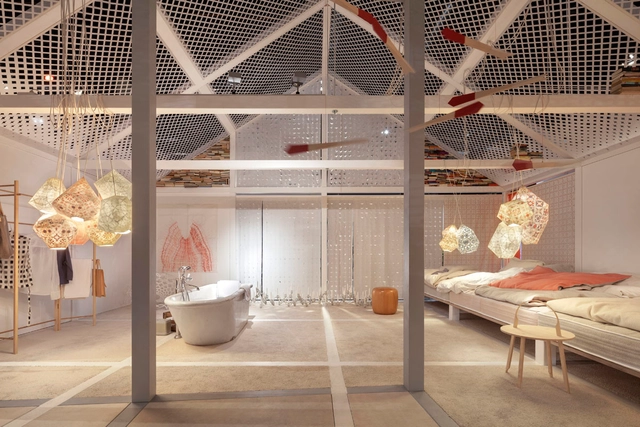
The space is filled with inventive details, including a 100-year-old stoneware tub (above) and a wall of 573 tools for the kitchen-cum-workshop (below). Image Courtesy of Constantin Meyer/Koelnmess
If you could design the ideal house of the future, what would it look like? Given the opportunity to answer this question, interior and product designer Louise Campbell turned to an unlikely source – Alice in Wonderland. To learn how the fairytale influenced the design, check out the following article, originally published as Through the Looking Glass on Metropolis Magazine.
Every year, the imm Cologne furniture fair hosts Das Haus, a life-size model of an ideal future house. In the past, architects and product designers—such as Zaha Hadid and Naoto Fukasawa in 2007— have teamed up to design their dream house, without pesky constraints like clients or budget. This year, Louise Campbell wore both hats. An interior and product designer, Campbell created what looked like a machine for communal living (or maybe the dwelling of a well-heeled Scandinavian commune).
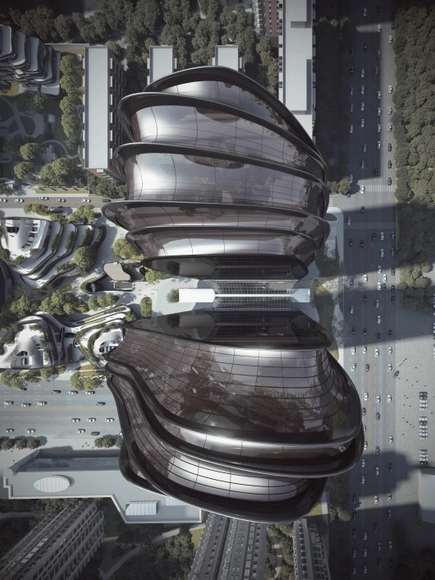
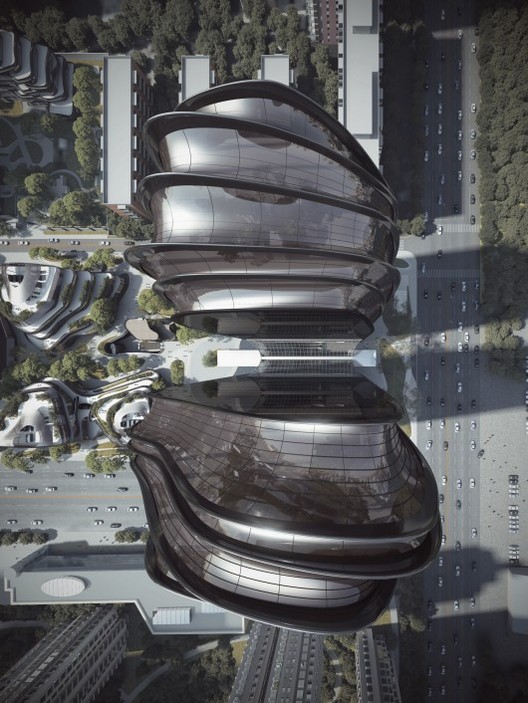
When you think about the future, how do you envision the built environment? According to this article, originally appearing on The Huffington Post as The Architecture of the Future is Far More Spectacular than You Could Imagine, the future is closer than we might think – current projects are already answering the imagined needs and desires of the next generation. From a tower with rotating floors to a park with the ability to cleanse raw sewage, check out fourteen projects believed to embody the architecture of tomorrow, after the break.
The Brussels-based design initiative MANIERA invites emerging architects to design series of limited edition furniture. This April, their first show opened with works by the Belgian architects OFFICE KERSTEN GEERS DAVID VAN SEVEREN and the Dutch artist and architect Anne Holptrop. The objects are on view in the loft-like living space of Kwinten Lavigne and Amaryllis Jacobs, the couple who founded MANIERA. Since both have a background in the art world, it’s not surprising that the design objects shown at MANIERA are more than just furniture, but rather a deliberate search for collisions between the realms of architecture, design and art.
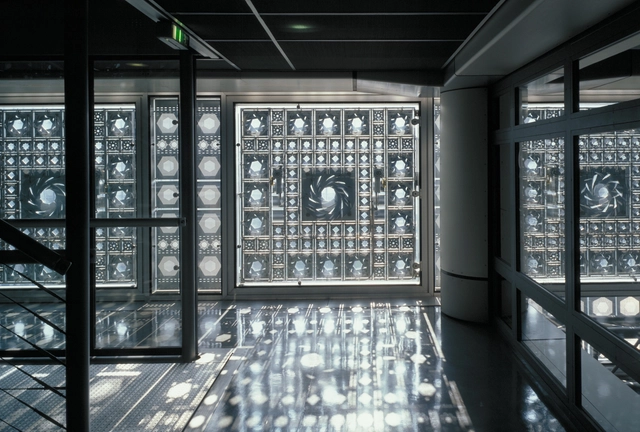
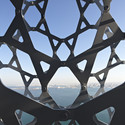
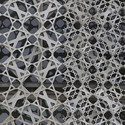
The delicate mashrabiya has offered effective protection against intense sunlight in the Middle East for several centuries. However, nowadays this traditional Islamic window element with its characteristic latticework is used to cover entire buildings as an oriental ornament, providing local identity and a sun-shading device for cooling. In fact, designers have even transformed the vernacular wooden structure into high-tech responsive daylight systems.
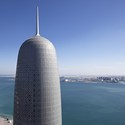
Jean Nouvel is one of the leading architects who has strongly influenced the debate about modern mashrabiyas. His Institut du monde arabe in Paris was only the precedent to two buildings he designed for the harsh sun of the Middle East: The Doha Tower, which is completely wrapped with a re-interpretation of the mashrabiya, and the Louvre Abu Dhabi museum with its luminous dome.
Videos
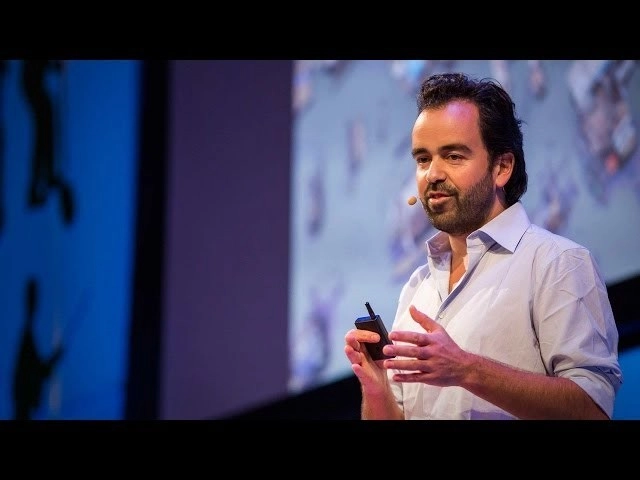
Iwan Baan on the unexpected in his travels as an architectural photographer and documenter. Image via TED Talk on YouTube
Are you feeling short on inspiration today? For a jump-start, try watching one of these twenty TED Talks – a follow-up to last year's post "The 10 Most Inspirational TED Talks for Architects." Wherever your interests lie, the passionate people featured in these videos - from WikiHouse founder Alastair Parvin to famed photographer Iwan Baan and architectural great Moshe Safdie - will get your creative juices flowing. See them all, after the break.
Leadership in Energy and Environmental Design (LEED), with its advantages and disadvantages, has dominated the green building certification market for a long time. But now alternatives - like the GBI's Green Globes, the Living Building Challenge, and Build It Green – are beginning to emerge. So how does a competitor like Green Globes shape up in comparison to LEED? And what does this developing competition mean for green rating systems in general? To learn more, keep reading after the break.
The Brooklyn based firm The Principals are known for their interactive design, industrial design and installation work. The video above hi-lights their latest "bionic" installation, which actually responds and reacts to human movement thanks to myoelectric sensors that pick up voltage increases on the skin when a muscle contracts. To learn more head over to their website - and make sure to check out all of The Principals other installations featured on ArchDaily.
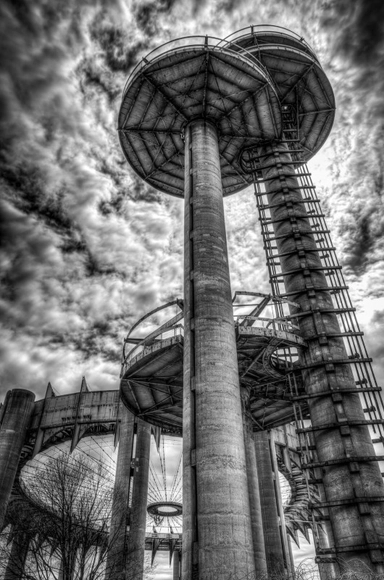
If you haven't heard of CyArk yet, make sure to check out their recent Kickstarter project. The not-for-profit company digitally preserves some of the world's most important sites: including Easter Island, Mt. Rushmore and The Pantheon, to name a few. Now the group is headed to New York to preserve Philip Johnson and Lev Zetlin's 1964 World’s Fair New York State Pavilion. Since the fair ended, the pavilion has fallen into disrepair and been heavily vandalized. With assistance from the University of Central Florida, they plan to release the digitally preserved 3D files to the public, for free. To help preserve this "National Treasure," check out their Kickstarter page.
We will be publishing Nikos Salingaros’ book, Unified Architectural Theory, in a series of installments, making it digitally, freely available for students and architects around the world. The following chapter discusses the complexity of form languages and describes how to use the form language checklist to measure these complexities. If you missed them, make sure to read the introduction, Chapter One, Chapters 2A and Chapter 2B, and Chapter 3 first.
There exists a volume of writings by architects in the early 20th century, and we can look through them for the form languages of Modernism. Unfortunately, the useful material turns out to be very little, most of it describing not a form language but rather marketing and declarations of a political nature. Moreover, those pieces of very personal form languages are presented as normative theories: a prescription of what to do and what not to do, with the weight of universal ethics, even though they are based solely on opinion, not empirical observations or systematic study.
In this article, first published by Indochino as “What makes some buildings happy?” architect Bruce Haden, principal at DIALOG in Vancouver, discusses why some places feel good to be in and why some just have that awkward, quiet feeling.
Award-winning architect and urban planner. Dad. Researcher on happy vs. lonely cities. We talked to Bruce Haden about why some places feel good to be in, and some just have that awwwkward, quiet feeling.
Bruce Haden has only been an architect and a bartender. So ask him what he likes about it, and his answer is he doesn’t really know anything else. In high school, he didn’t want to pick between calculus and woodshop, so he ended up in a profession that’s part art, part engineering (and a fair amount of politics). Now, he works on a lot of large, public buildings. But he also spends a lot of time thinking about happy and lonely cities. He talks about how working with a client is like dating, why some buildings are worth being in and others are just empty, and whether adventure or luxury wins.
The following six "miracle" materials could be headed straight into your home, office, car and more. Dina Spector at Business Insider recently rounded up the six most promising materials. As of now, their potential applications have just scratched the surface, but the possibilities are endless. Presented by AD Materials.
Scientists are constantly on the look out for lighter, stronger, and more energy-efficient materials. Here's a glance at some materials that will change the way we build things in the future.
https://www.archdaily.com/508576/six-miracle-materials-that-will-change-their-industriesDina Spector, Business Insider
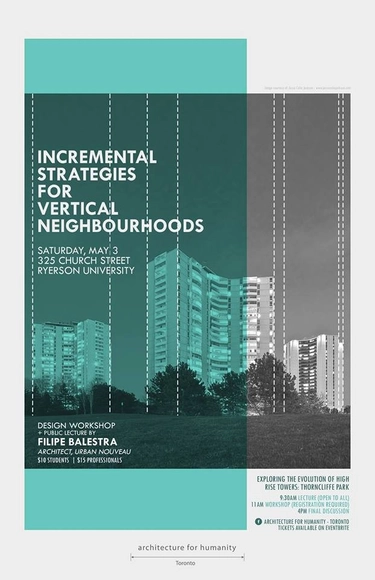
According to the most recent national census in Canada, almost half of Toronto residents are immigrants, one-third of whom arrived in the past ten years. To allow the city to adapt to this surging flow of immigrants, Architecture for Humanity Toronto (AFHTO) has called upon students and professionals from various backgrounds to rethink Toronto's urban fabric - and, in particular, its high-rise developments - by establishing a series of lectures and workshops entitled "Incremental Strategies for Vertical Neighborhoods."
At the inaugural event a few weeks ago, Filipe Balestra of Urban Nouveau* was invited to speak about his work and contribute to a design charrette inspired by the City of Toronto's Tower Renewal program. For more on Balestra and the event, keep reading after the break.
The largest private project New York City has seen in over 100 years may also be the smartest. In a recent article on Engadget, Joseph Volpe explores the resilience of high-tech ideas such as clean energy and power during Sandy-style storms. With construction on the platform started, the Culture Shed awaiting approval, and Thomas Heatherwick designing a 75-Million dollar art piece and park – the private project is making incredible headway. But with the technology rapidly evolving, how do investors know the technology won't become obsolete before its even built?
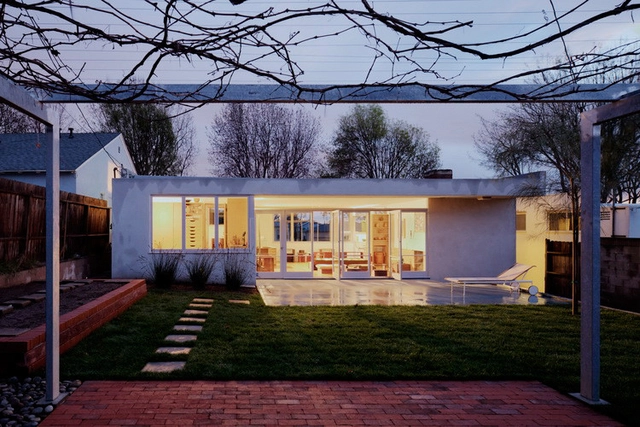
How do you make a space more livable by current standards, while simultaneously upholding the original architect's design intentions? It's a delicate endeavor, but one that was recently accomplished by a couple of architects in Southern California. Originally published by AIArchitect as "Pacific Coast Sun Rises on Modernist House Restorations," this article investigates the thoughtful restorations of three homes designed by the pioneering modernists Rudolph Schindler, John Lautner, and Charles and Ray Eames.
Los Angeles’ early Modernist pioneers are no longer around to oversee the restoration of homes they designed more than a half-century ago, but their landmark projects are offering a new generation of designers historic case studies in Modernist preservation that grow more and more significant with each passing day. Vintage architectural renderings and drawings, photos, and notes are all ingredients these architects use to summon the spirits of Rudolph Schindler, John Lautner, and Charles and Ray Eames, to name a few, bringing their early works of California Modernism back to life.