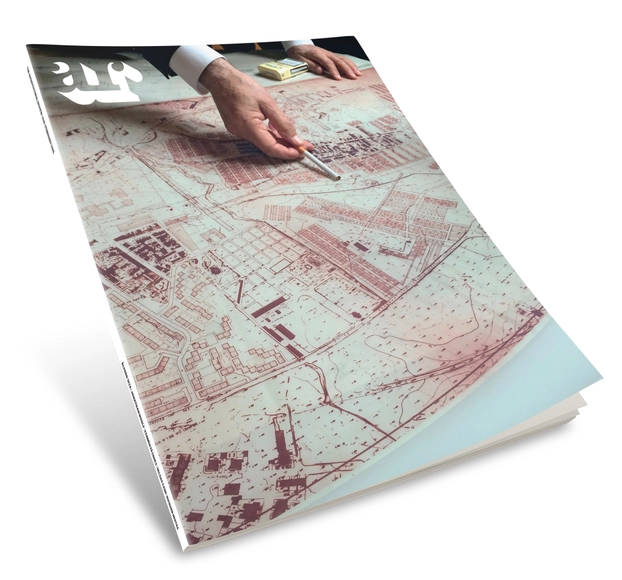
Public/Private, the Spring 2015 issue of ArchitectureBoston (out now) examines current trends in how we view public and private space and the effect these have on architecture. Tackling spaces as diverse as social space, the workplace, residential life, transportation, or civic territory, the issue examines what happens when notions of public an private space intersect. In the following article, originally published under the title "Quiet, please," Laura Wernick FAIA explores the need for enclosed, private spaces within educational facilities.
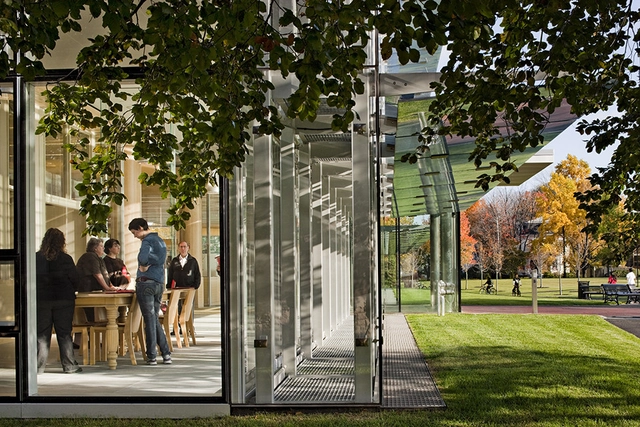
I walk by William Rawn’s Cambridge Public Library extension twice a day on my way to and from work. I love the transparency of the south façade. It is sharp and crisp, and I can see right through to all of the exploring, socializing, reading, and working taking place within. When I go into the library for research or study, however, I tend to move quickly away from the openness of the new building into the old one. I find a semi-enclosed quiet spot away from the crowds, turn off social media, and get to work.
We will be publishing Nikos Salingaros’ book, Unified Architectural Theory, in a series of installments, making it digitally, freely available for students and architects around the world. The following chapter expands on the phenomenon of “life” in buildings introduced in Chapter 3, and also introduces a simple test which can be used to determine the degree of “life” in a structure. If you missed them, make sure to read the previous installments here.
Approaching architecture from the entirely new perspective of organized coherence — what Christopher Alexander calls “wholeness” — unifies many phenomena. The traditional distinctions between ornament and function, between buildings and ecology, and between beauty and utilitarian structure are blurred. We can look for the “life” in artifacts and structures, which explains our experience of them.
Later in this course we are going to count features, and measure parameters that contribute to our impression of “life” in an object. These measures will show that the phenomenon of life is not idiosyncratic, but is, to a very large degree, shared among all people.
A casual observer might be forgiven for wondering how Thomas Heatherwick has developed such a reputation among architects. A scan of the works of Heatherwick Studio reveals relatively few completed buildings, and many of those that do make the list are small projects: kiosks, retail interiors, cafés. Indeed, to the average Londoner he is probably better known as the designer of the new homage to the iconic red Routemaster bus and as the creator of the wildly popular cauldron for the London 2012 Olympics - both unveiled in a year in which Heatherwick all but officially became the state-approved designer of 21st century Britain.
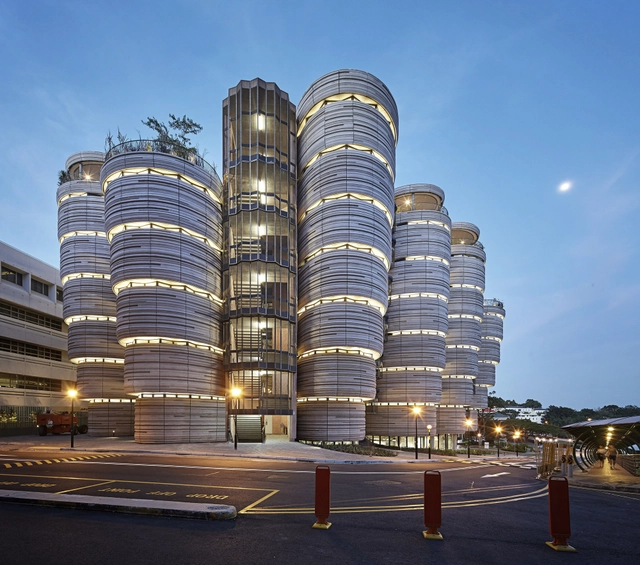
A look at the website of Heatherwick Studio sheds some light on this conundrum. With projects separated into “small,” “medium” and “large,” it is clear that a progression in scale is mirrored by a progression in time, with many of the smallest projects completed in the Studio’s early years, and most of those in the “large” category either recently completed or (more frequently) still on the drawing board. Their most recently completed project is also one of their largest, a “Learning Hub” for Nanyang Technical University in Singapore. How does a design studio that made its name in small projects adapt to such scale? ArchDaily spoke to Thomas Heatherwick about the Learning Hub and the increasing size of his projects to find out.
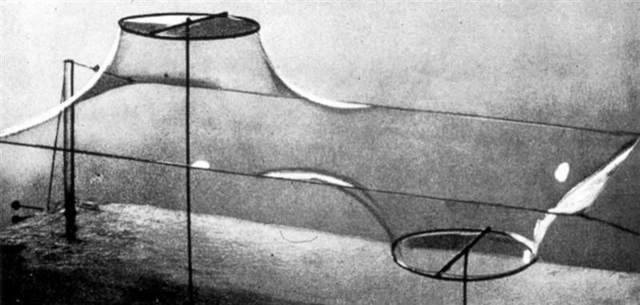
In their notes on the selection of Frei Otto as the 2015 Pritzker Prize Laureate, the jury described him as an architect that took his work beyond the boundaries of the discipline, as an architect who was also a “researcher, inventor, form-finder, engineer, builder, teacher, collaborator, environmentalist, [and] humanist.”
To learn more about Otto’s multidisciplinary approach to architecture as well as his emphasis on experimentation, we turned to an interview he did with Juan María Songel in 2004, published in the book A Conversation with Frei Otto. In the interview, Otto discusses numerous topics of interest and relevance to architecture in the 21st century, and in particular the importance of experimentation and research, declaring: “Productive research must be brave!”
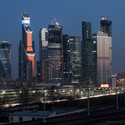
The Moscow International Business Center (Also known as Moskva-City) was meant to be Russia’s ticket into the Western world. First conceived in 1992, the district at the edge of Moscow’s city center is intended to contain up to 300,000 inhabitants, employees and visitors at any given moment and, when completed, will house over 4 million square meters of prime retail, hotel and office space to create what the Russian government desired most from this project: an enormous financial district that could dwarf London’s Canary Wharf and challenge Manhattan. Twenty three years later though, Moscow-based real estate company Blackwood estimates that as much as 45% of this new space is entirely vacant and rents have plummeted far below the average for the rest of Moscow. The only press Moskva-City is attracting is for tenants like the High Level Hostel, a hostel catering to backpackers and other asset-poor tourists on the 43rd floor of the Imperia Tower, with prices starting at $25.50 for a bed in a six-person room. This is not the glittering world of western high finance that was envisioned back in the post-Soviet 90s; but what has it become instead?
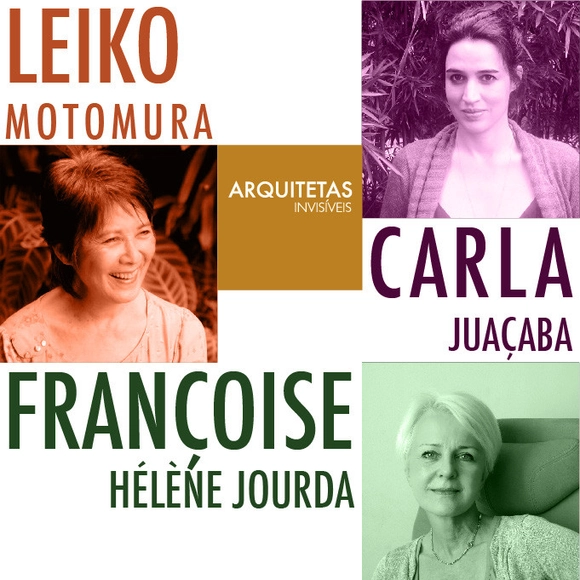
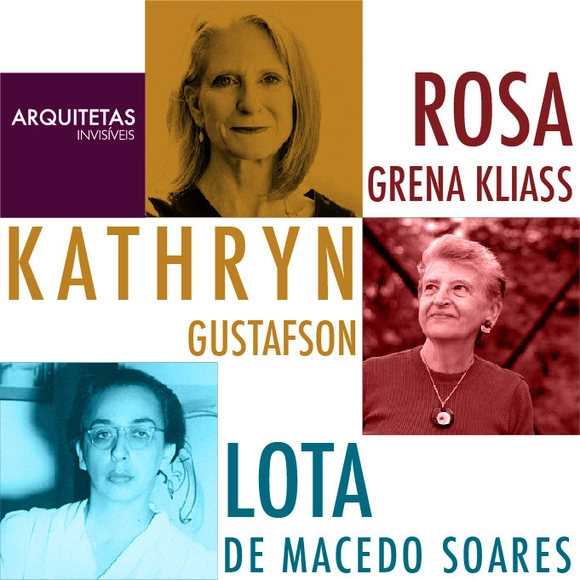
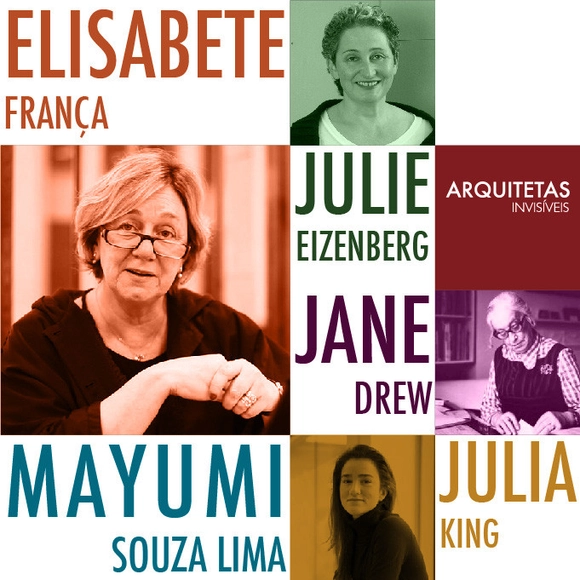
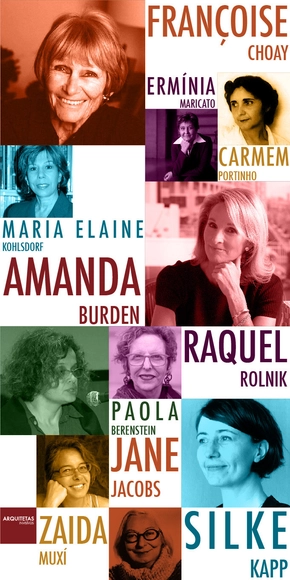
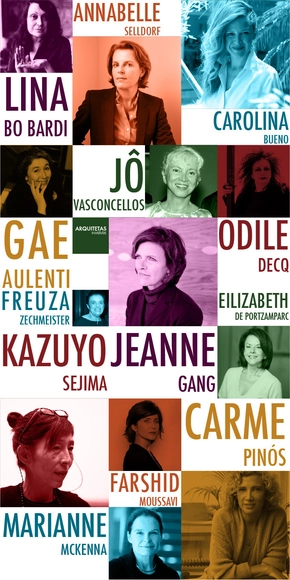
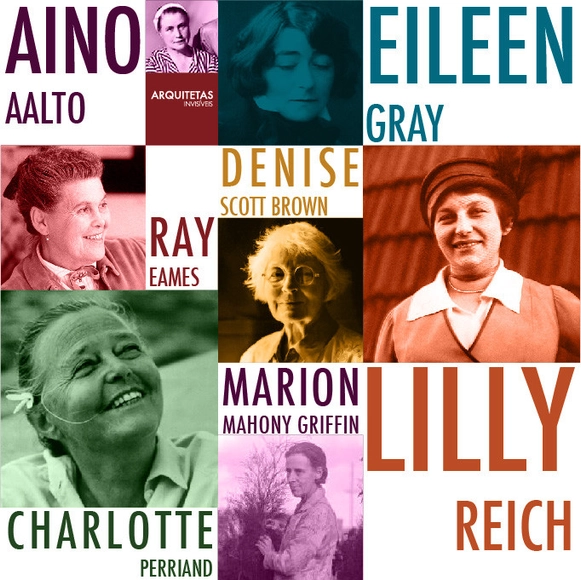
To celebrate International Women’s Day, we asked the Brazilian non-profit group Arquitetas Invisíveis to share with us a part of their work, which identifies women in architecture and urbanism. They kindly shared with us a list of 48 important women architects, divided into seven categories: pioneers, “in the shadows,” architecture, urbanism, social architecture, landscape architecture and sustainable architecture. We will be sharing this list over the course of the week.
Today, in the last post of the series, we present the female architects who put an emphasis on sustainability.
Gordon-Van tine’s ready-cut homes (1918). Image Courtesy of Openlibrary.org
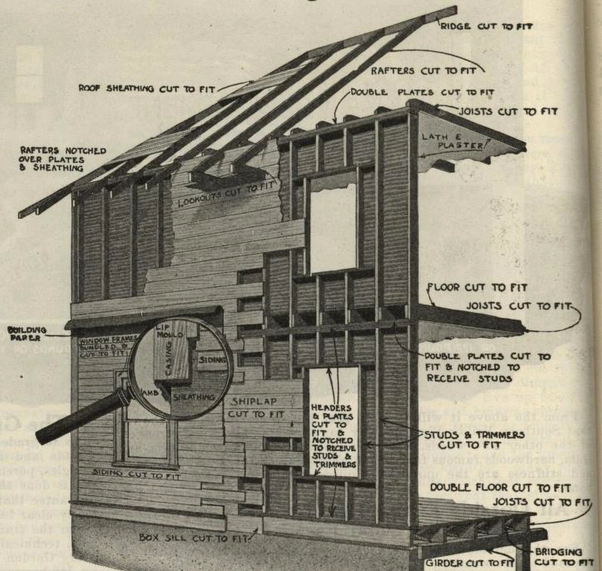
Housing is one of the most persistent challenges faced by the construction industry, and over the course of decades certain trends rise and fall, as entrepreneurial housing providers carve out new niches to provide for expanding populations and changing demographics. Originally published by BuzzBuzzHome as "The Rise and Fall of The Mail-Order House," this article explores the craze of so-called "catalogue homes" - flat-packed houses that were delivered by mail - which became popular in North America in the first decades of the 20th century.
The testimonials make it sound effortless: building your own house is no sweat.
In the front pages of a 1921 Sears Roebuck catalogue for mail-order homes, a resident of Traverse City, Michigan identified only by the pseudonym “I Did Not Hire Any Help” wrote to the company: “I am very well pleased with my Already Cut House bought off you. All the material went together nicely. In fact, I wish I had another house to put up this summer. I really enjoyed working on such a building, and I do not follow the carpenter trade either.” It’s estimated that more than 100,000 mail-order homes were built in the United States between 1908 and 1940. It was the IKEA of housing, but instead of spending an afternoon putting together a bookshelf, buyers would take on the formidable task of building a house. Or, more commonly, get a contractor to do it. Homebuyers would pick a design of their choice out of a mail-order catalogue and the materials – from the lumber frame boards to the paint to the nails and screws – would be shipped out to the closest railway station for pickup and construction.
To celebrate International Women’s Day, we asked the Brazilian non-profit group Arquitetas Invisíveis to share with us a part of their work, which identifies women in architecture and urbanism. They kindly shared with us a list of 48 important women architects, divided into seven categories: pioneers, “in the shadows,” architecture, urbanism, landscape architecture, social architecture, and sustainable architecture. We will be sharing this list over the course of the week.
Yesterday we brought you The Urbanists, and today we present women leaders in landscape architecture.
To celebrate International Women’s Day, we asked the Brazilian non-profit group Arquitetas Invisíveis to share with us a part of their work, which identifies women in architecture and urbanism. They kindly shared with us a list of 48 important women architects, divided into seven categories: pioneers, “in the shadows,” architecture, urbanism, social architecture, landscape architecture and sustainable architecture. We will be sharing this list over the course of the week.
Yesterday we brought you the urbanists, and today we present women leaders in social architecture.
To celebrate International Women’s Day, we asked the Brazilian non-profit group Arquitetas Invisíveis to share with us a part of their work, which identifies women in architecture and urbanism. They kindly shared with us a list of 48 important women architects, divided into seven categories: pioneers, “in the shadows,” architecture, urbanism, landscape architecture, social architecture, and sustainable architecture. We will be sharing this list over the course of the week.
Yesterday we brought you The Architects, and today we present women leaders in the field of urbanism.
To celebrate International Women’s Day, we asked the Brazilian non-profit group Arquitetas Invisíveis to share with us a part of their work, which identifies women in architecture and urbanism. They kindly shared with us a list of 48 important women architects, divided into seven categories: pioneers, “in the shadows,” architecture, landscape architecture, social architecture, urbanism and sustainable architecture. We will be sharing this list over the course of the week.
Today we present women architects who stand out for the quality of their work.
The sudden and unexpected announcement of the Pritzker Prize yesterday evening sent shockwaves through the architecture world. With the sad death of the Prize's latest laureate Frei Otto on Monday, the Pritzker made the unprecedented decision to announce the winner two weeks early, ensuring that Otto's final, crowning achievement would make its way into the obituaries of this great man.
Of course, despite the sudden nature of the announcement, the many critics on Twitter were on hand to lend their initial thoughts in what was an interesting mix of congratulations, sadness and nostalgia. Read on after the break for all the reactions.
To celebrate International Women's Day, we asked the Brazilian non-profit group Arquitetas Invisíveis to share with us a part of their work, which identifies women in architecture and urbanism. They kindly shared with us a list of 48 important women architects, divided into seven categories: pioneers, "in the shadows," architecture, landscape architecture, social architecture, urbanism and sustainable architecture. We will be sharing this list over the course of the week.
Yesterday we brought you The Pioneers, and today we present the women architects that have lived in "the shadows" of the some of the great names in the architecture world.
Videos
Courtesy of Office for Political Innovation
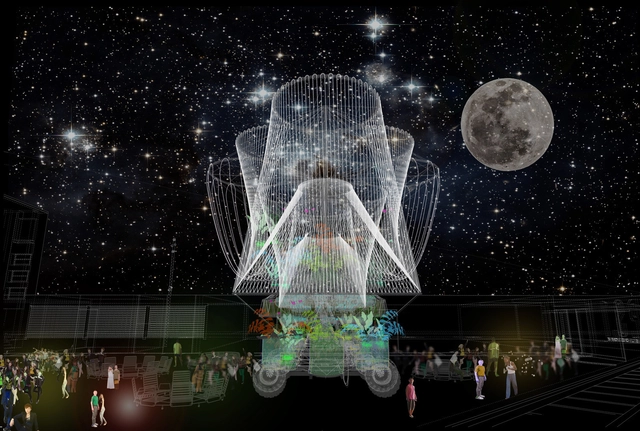
In the grand tradition of MoMA PS1's Young Architects Program winners, Andrés Jaque's plan for "COSMO" addresses an ecological need through installation architecture. While 2014's "Hy-Fi" by the living explored organic bricks and 2012's "Wendy" by HWKN addressed airborne pollution, Jaque has set his targets on something that is apparently much more political: water. This article, originally published by Metropolis Magazine as "The Politics of Water: Andrés Jaque on His 2015 MoMA PS1 YAP Winning Design," examines how Jaque hopes to turn his installation into a political talking point.
At first glance, Bill Gates’s robotic Janicki Omniprocessor and Andrés Jaque’s winning proposal for the 2015 MoMA PS1 Young Architects Program (YAP) share a similar goal—they each tackle the problem of global water scarcity, which has become exacerbated by climate change, political strife, and a host of other factors. But while the Omniprocessor looks like a cement factory in miniature, Jaque’s project melds its profoundly social objective—to change the way we understand contemporary water infrastructure—to an almost psychedelic aesthetic.
"I cannot, in whole conscience, recommend architecture as a profession for girls. I know some women who have done well at it, but the obstacles are so great that it takes an exceptional girl to make a go of it. If she insisted on becoming an architect, I would try to dissuade her. If then, she was still determined, I would give her my blessing–she could be that exceptional one." – Pietro Belluschi, FAIA from the 1955 New York Life Insurance Company brochure, “Should You Be an Architect?”
International Women’s Day, now celebrated on March 8, was first commemorated in the early 1900s, as women across the globe were actively campaigning and protesting for equal rights. What began as small protests, rose to a global scale and trigged over a period of time a series of political, labor and social advancements for women. Unfortunately, these achievements do not always guarantee gender equality in practice (and in some countries laws still exist that favor men). Women still suffer from physical and psychological violence, lower salaries, and a lack of recognition, among other things. While this is the situation for women around the world, there are also specific statistics that show how women in architecture are not valued socially and professionally. There are few women who gain international recognition, making them unknown to many professionals and architecture students, and making it seem as if they do not exist.
To celebrate International Women’s Day, we asked the Brazilian non-profit group Arquitetas Invisíveis (Invisible Architects) to share with us a part of their work, which identifies and recognizes the work of women in architecture and urbanism. The result is this list of 48 women divided into seven categories: pioneers, “in the shadows,” architecture, landscape architecture, social architecture, urbanism and sustainable architecture.
The Artworks Elephant by Harper Downie. Image Courtesy of The Architectural Review
As one of the first organizations to implement a regular award for young architects, The Architectural Review has had its eye on youth for over a decade and a half. But with awards, exhibitions and media coverage of those conspicuously labeled as "Young Architects" proliferating in the years since, has the concept now been co-opted by those who merely seek to monetize and exploit architecture's most precarious practitioners? In this polemical article, originally published by The Architectural Review as "The problem with 'Young Architecture'," AR Assistant Editor Phineas Harper and Phil Pawlett Jackson unpick how the cult of "Young Architecture" has been absorbed into the profession, with potentially harmful ramifications.
When the romantic notion of the architect as auteur, a high priest in the cult of culture, is married to the virginal myth of untainted youth, a potent marketable commodity is brewed: the "Young Architect". All but invisible when the AR launched its Emerging Architecture prize at the end of the 20th century, this breed is now celebrated in numerous awards, exhibitions and published collections. But beware the cult of youth − there is a broad landscape of risks as well as opportunities facing designers who choose this identity willingly or have it thrust upon them.
https://www.archdaily.com/606167/why-young-architecture-is-a-detriment-to-the-professionPhineas Harper & Phil Pawlett Jackson
ArchDaily is continuing our partnership with The Architectural Review, bringing you short introductions to the themes of the magazine’s monthly editions. In this editorial from AR’s February 2015 issue, AR Editor Catherine Slessor reflects on Álvaro Siza's ouevre, from his early work in Évora to his latest effort in China. Though the latter is admittedly elegant, Slessor concludes that in comparison to his older transformative designs the recent incarnation of "brand Siza" is a "predictable triumph of style over content."
The great Portuguese Modernist Fernando Távora once remarked "Style is not of importance; what counts is the relation between the work and life, style is only the consequence of it." His friend and protégé Álvaro Siza echoed this sentiment when he said: "Architecture does not have a pre-established language nor does it establish a language. It is a response to a concrete problem, a situation in transformation, in which I participate. In architecture, we have already passed the phase during which we thought that the unity of language would resolve everything. A pre-established language, pure, beautiful, does not interest me."