With the daily distractions of Facebook, emails and calls, it can become difficult to keep your eye on the ball. This is why having an app that tracks habits and helps you stay organized can make a huge impact on your professional and personal success.
There are numerous digital tools dedicated to optimizing workflow, communication and time management, helping business owners and freelancers realize their full potential. This can also apply to goal setting. Goals are closely connected to our daily habits. Whether you’re looking to start a new project, learn to use a new tool or launch a product, your habits will play a crucial role in moving things forward. This is why we have compiled a list of great apps and tools that will help you keep track of your work dynamic and make good habits while breaking bad ones.
https://www.archdaily.com/803660/10-apps-that-can-help-you-be-more-productive-and-make-better-architectureLidija Grozdanic for Archipreneur.com
For all the work you do in Revit, there’s a keyboard shortcut that can help you do it faster.
Here’s a roundup featuring some of my favorite Revit keyboard shortcuts to create and organize your model. Keep reading to learn how to create your own shortcuts.
This shortcut cheat sheet is also available in a convenient pdf form; simply sign up here to download it.
As editors on the Projects Team at ArchDaily, we wanted to reflect on the projects published in 2016—and, based on those submissions, to consider what we hope to see from the submissions we will publish in 2017.
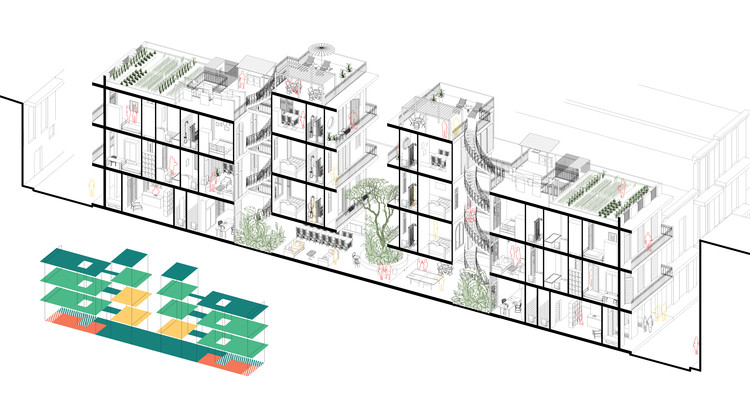
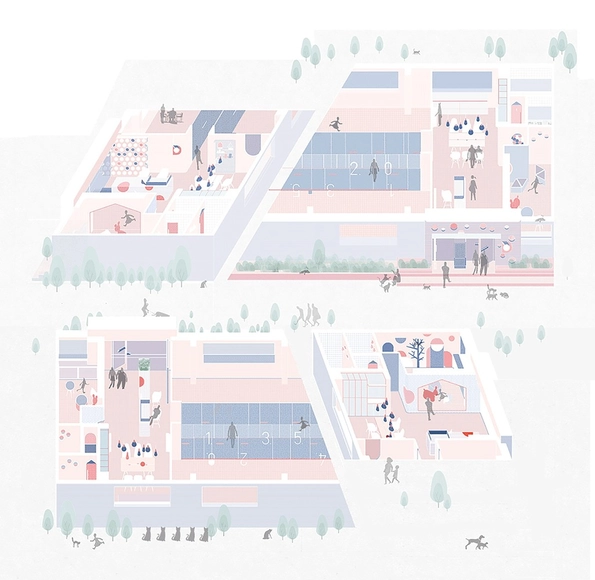
During 2016, the projects we published had a high level of visual impact. Axonometric views were part of the vast majority of our publications, democratizing understanding by creating easily accessible views which closely resemble reality. Secondly, the development of immersive video technology has allowed us to publish full 360-degree tours through the interiors of works of different sizes, generating images which are increasingly representative of the physical reality of the work in question.
https://www.archdaily.com/802583/guide-to-getting-your-work-publishedAD Editorial Team
Architecture salary. Perhaps one of the most talked about and passionately debated topics in the design community. I receive more emails on this subject than almost anything else.
Previously, in 5 Factors Affecting Your Architecture Salary, I covered several variables that contribute to your income. However, for this article I want to highlight the areas that will produce the best return on your investment of time and money.
While earning six figures doesn't mean what it used to, it is still a very admirable (and achievable) goal. So how do you go about reaching this significant architecture salary milestone? Let's discuss.
Architecture, as a profession and discipline, has come a long way since Vitruvius. It continues to evolve alongside culture and technology, reflecting new developments and shifting values in society. Some changes are conscious and originate within the field of architecture itself, made as acts of disciplinary or professional progress; others changes are uncontrollable, arising from architecture's role in the wider world that is also changing. Below are just some of the changes that have taken place in recent decades:
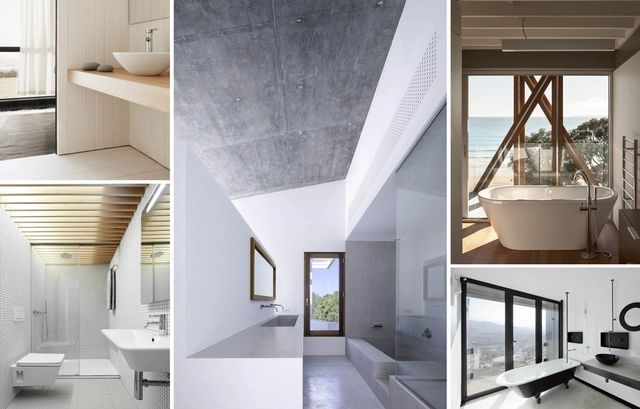
Besides the kitchen, the bathroom often takes top priority when building or renovating a home. However, choosing a look is not always easy, so here we have gathered 13 stunning bathrooms from previously published projects to provide inspiration in your own designs. Each is filled with inspiring ideas for your own project; from relaxing tubs to sleek showers, one of these bathrooms is sure to suit your style.
https://www.archdaily.com/801913/detail-washrooms-restrooms-bathrooms-lavatories-and-toiletsArchDaily Team
As the common phrase attests, “history is written by the victors.” We therefore know that the story of the West is that of Europe and the United States, while the other actors in world history are minimized or invisible: it happened to the Chinese and Japanese during World War II, to the Ottoman Empire in sixteenth-century Europe, and to racial majorities in the common reading of Latin American independence. The same thing happens in architecture.
The current boom of the Global South is based not only on new work, but rather on the recognition of an invisible architecture which was apparently not worthy of publication in the journals of the 1990s. The world stage has changed, with the emergence of a humanity that is decentralized yet local; globalized, yet heterogeneous; accelerated, yet unbalanced. There are no longer red and blue countries, but a wide variety of colors, exploding like a Pollock painting.
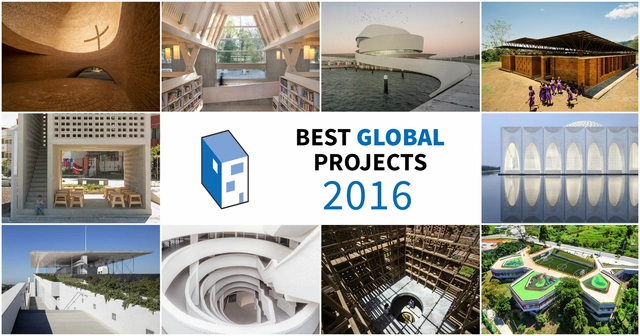
This serves as a preamble to consider the outstanding projects of 2016 according to the British critic Oliver Wainwright, whose map of the world appears to extend from New York in the West to Oslo in the East, with the exception of Birzeit in Palestine. The Global South represents more than 40% of the global economy and already includes most of the world’s megacities, yet has no architecture worthy of recognition? We wanted to highlight the following projects in order to expand the western-centric world view, enabling us to truly comprehend the extent of architectural innovation on a global scale.
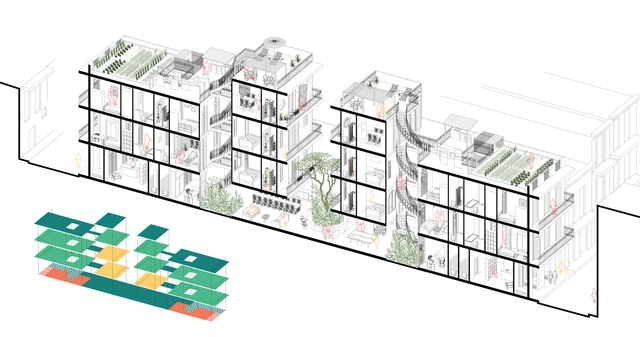
The largest of the Caribbean islands, Cuba is a cultural melting pot of over 11 million people, combining native Taíno and Ciboney people with descendants of Spanish colonists and African slaves. Since the 1959 revolution led by Fidel Castro, the country has been the only stable communist regime in the Western hemisphere, with close ties to the Soviet Union during the Cold War and frosty relationship with its nearby neighbor, the United States, that has only recently begun to thaw. While the architecture in the capital city of Havana reflects the dynamic and rich history of the area, after the revolution Havana lost its priority status and government focus shifted to rural areas, and the buildings of Havana have been left to ruin ever since. Iwo Borkowicz, one of three winners of the 2016 Young Talent Architecture Award, has developed a plan that could bring some vibrancy, and most importantly some sustainability, back to Havana, the historic core of the city.
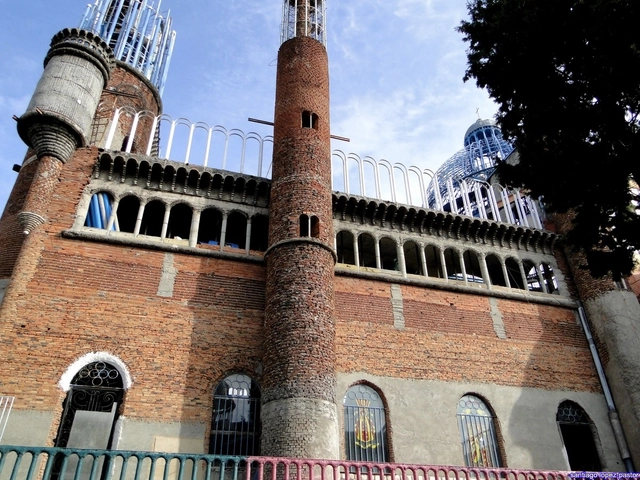
A huge cathedral with tall towers and a magnificent dome rises slowly in the municipality of Mejorada del Campo, 20 kilometers from Madrid. It seems like a common occurrence, but it is not. The building has been under construction for 50 years - brick by brick - by one man: Justo Gallego Martínez, farmer, ex-monk and a self-taught architect of 91 years of age.
Learn about his life's work (literally) after the break.
We experience our cities daily through ordinary acts, whether it’s commuting, looking for a quiet place, having lunch downtown, or even exercising. However, one of the most exceptional ways to experience the different roles of a city's urban space is through traditional festivals, rooted in local cultures presented through different clothing, culinary arts, dances and other arts.
Through these festivals, one can see the uses and the demands of the urban public space, in which cultural actions offer new ways to take over the city - at a time when the streets are no longer just a transit space and become a space of leisure and residence, overtaken by a different atmosphere.
New cultures are built on new practices. Through travel, architects can expand their repertoire and gain new influences for their projects. Here, we take a look at some traditional festivals around the world that serve as a good excuse to unveil new ways of thinking about a city and, as a result, to see great architectural works.
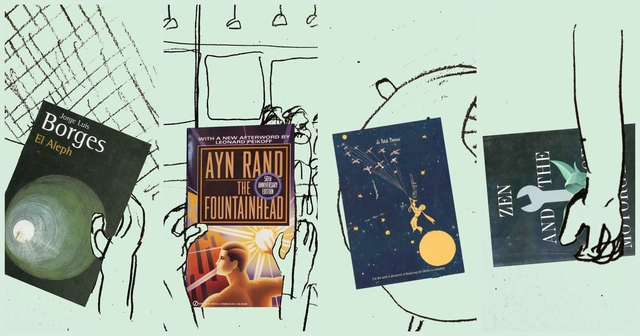
Great architects are like great writers. Our abilities to observe the world around us down to the tiniest details, and then make the most remarkable connections, have in time given humanity great stories and experiences - whether through imagined or real spaces. As Charles Eames put it, "Eventually everything connects - people, ideas, objects. The key to quality of the connections is the key to quality per se."
As architects, we have a nearly endless succession of connections to make, from materials, to geography, to time, to people, to experiences and statements of our own beliefs, all coming together in the design of a space. Novels are therefore a great way to remind yourself of the creative possibilities that architecture holds, encouraging you to dream about what architecture could be; and what experiences could be. These 7 non-architectural novels each have their own qualities that could open up the architectural world (and provide you with an enjoyable reading list in your time off). Enjoy!
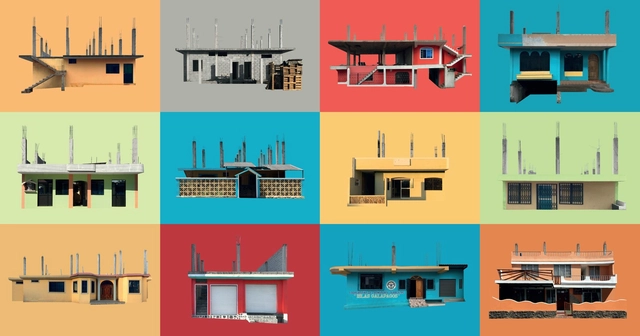
Most visitors to the Galapagos Islands point their cameras towards the exotic animals and away from the local people. They direct their full attention to the natural landscape, as if to intentionally deny the existence of the urban space of the city, since the presence of any form of architecture would seem in logical conflict with the islands’ identity as a protected wildlife reserve.
The architecture of the Galapagos is both a conceptual and physical contradiction. Like a Piranesian joke, the San Cristobal typology of the proto-ruin falls somewhere on a spectrum between construction and dismantlement. With their “permanently unfinished” construction state seemingly in flux, it is unclear whether many of these buildings display a common optimism for vertical expansion or are instead symptoms of a process of urban decay.
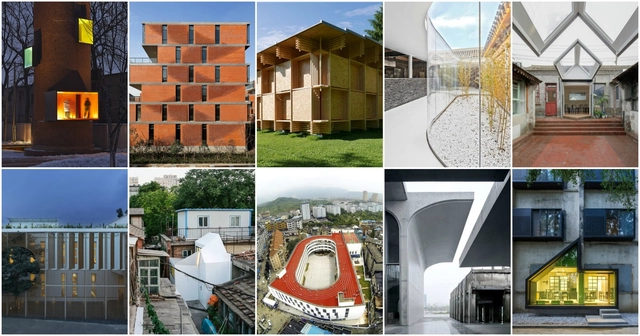
Since we’ve started to branch out into China, the ArchDaily China team has been able to discover the rich layers beyond just these rising Chinese stars. As part of the country's large-scale urbanization process, last year, we posted some of the large-scale projects designed by China’s (largely unknown) Design & Research institutions such as train stations and cultural centers.
In addition, we’ve also come across a series of smaller, lesser known, younger practices that focuses more on small-scale experimental work. Here are our top ten favorites:
Designing and building a project is a challenge in itself. However, once the project is complete there are also challenges in expressing the project so that it can be understood by a new audience. This is especially true in digital media, where online readers don't necessarily spend the same time reading an article as in print media. Drawings and all new forms of visual representation – such as animated Gifs – play an important role in the project's understanding.
At ArchDaily we push ourselves as editors to look for the best drawings from the architects that work with us. We are constantly looking to get the best out of the projects we receive to share with the world and deliver knowledge and inspiration to millions of people. The drawings we have chosen are not only visually entertaining but they serve as a way of educating and learning fundamental architectural representations.
Regardless if they are digital or hand-drawn, all the architectural drawings we have selected this year have a sensitive expression, whether it be artistic, technical or conceptual, and they all aim to express and explain the project using simplicity, detail, textures, 3D and color as main tools.
This year we want to highlight a selection of 90 drawings arranged under eight categories: Architectural Drawings, Axonometrics, Context, Diagrams, Sketches, Animated Gifs, Details and Other Techniques.
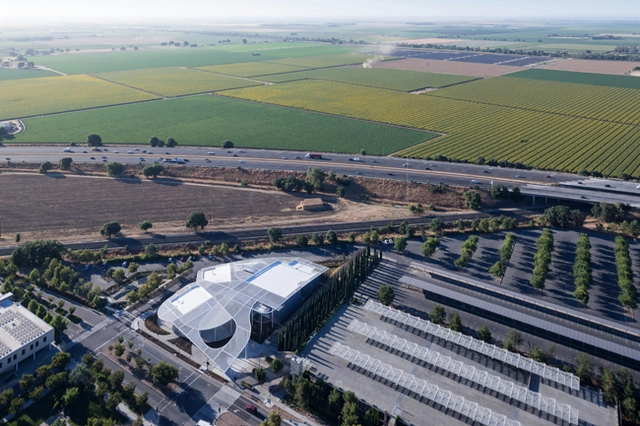
This November, the Manetti Shrem Museum on the University of California, Davis, campus opened to the public. Designed by New York City–based SO-IL with the San Francisco office of Bohlin Cywinski Jackson, the museum pays homage to the agricultural landscape of California’s Central Valley with an oversize roof canopy. The steel members of the 50,000-square-foot (4,650-square-meter) shade structure, nearly twice the size of the museum itself, reference the patterning of plowed fields and create a welcoming outdoor space for visitors. It is both expressive and practical, but getting that balance wasn’t easy.
SO-IL, founded by Florian Idenburg and Jing Liu in 2008, has a portfolio filled with smaller projects, installations, and exhibition-related work. The Manetti Shrem Museum is easily the firm’s largest work to date, demanding a rigorous design-build process while maintaining a strong conceptual vision. In short, it required architecture.
The "living memories" of Los Angeles are seen and sensed in the way that space is occupied in the city; the traces left behind by what has been. "Lost Hills," a short documentary by LA-based television station KCET, is a snapshot of LA’s lost neighborhood, Bunker Hill, that in 1955 was approved for “slum clearance.” As a result, the entire area was removed almost without a trace - Angels Flight, a funicular railway that transported residents from Bunker Hill to the city center, is the only remaining structure after reopening half a block away from its original location in 1996.
Bunker Hill was originally an area inhabited by upper-middle class people, but that changed in the 20th Century when those people began to move away. This made it somewhat easier for LA to erase the history of the Hill in order to make way for functionality, following late 20th Century modernist thinking. Illustrating how space is so strongly tied to memory and emotion, the video depicts what one interviewee calls an “absence [that] makes a presence”; the city is the materialization of memory, partial and partly erased.
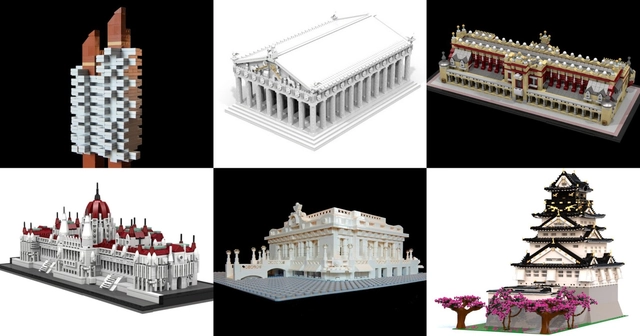
A lot of architects love LEGO—but few may be aware of the LEGO Ideas platform, which allows LEGO fans to submit their own ideas for future sets, and if they gather enough support, be considered for production as a real LEGO product. Here we’ve created a selection of our favorite architectural proposals from the platform; though some have already expired due to a lack of votes, many others included here are still open for voting to become a real set if you so desire. If on the other hand, you feel that our list is lacking a particularly LEGO-worthy building, this could be your time to shine; design your own set and gather support! One day soon, thousands of LEGO enthusiasts could be puzzling over your little architectural gem.
This episode of Monocle 24'sOn Design podcast, which briefly surveys the state of Indian architecture and suggests a blueprint for a 21st Century vernacular, was written and recorded by ArchDaily's European Editor at Large,James Taylor-Foster.
In the first half of 2016 an exhibition was opened in Mumbai. The State of Architecture, as it was known, sought to put contemporary Indian building in the spotlight in order to map trends post-independence and, more importantly, provoke a conversation both historical and in relation to where things are heading.
https://www.archdaily.com/802970/is-india-building-the-wrong-sort-of-architectureAD Editorial Team