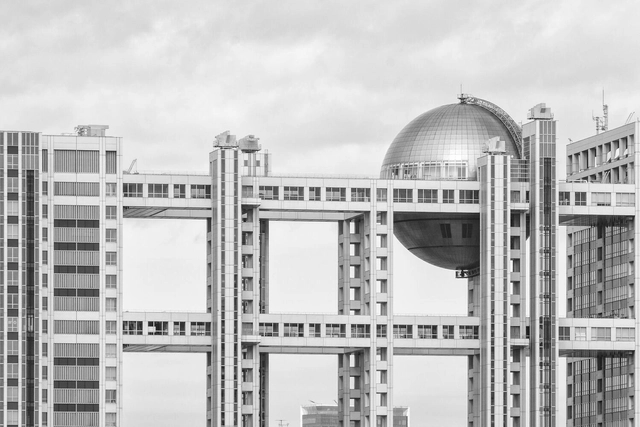
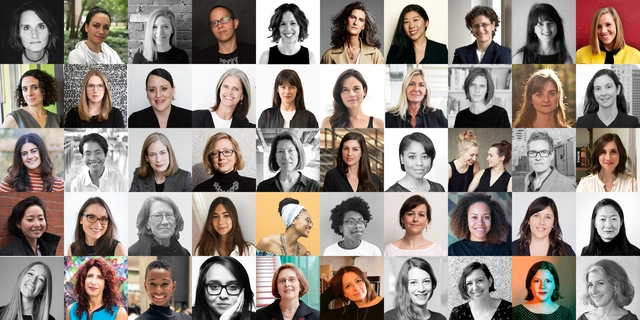
Madame Architect, the platform dedicated to the built environment and to the empowerment, advancement, and visibility of the women who work in it, has just reached a milestone, publishing over 250 interviews with the females who shape our world. “Designed to break the architect’s mold”, the website was founded 3 years ago by Julia Gamolina, an architect that shaped her own path in the field, becoming Director of Strategy at Trahan Architects, focusing on the business, its development, growth, and evolution.
Archdaily's Christele Harrouk had the chance to speak to Julia Gamolina, Founder, Editor-in-Chief of Madame Architect, and one of Professional Women in Construction's "20 Under 40", to discuss her career choices, the online magazine, the business of architecture and communication.
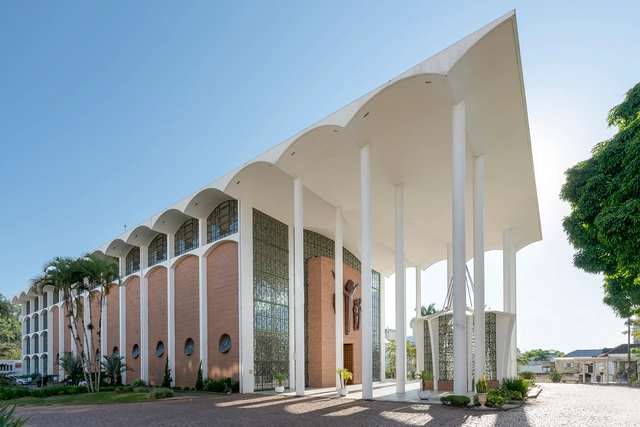
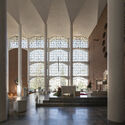
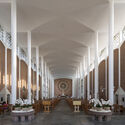
In the hilly landscape of Blumenau, a city located in the state of Santa Catarina, in southern Brazil, stands a gem of modern religious architecture by Gottfried Böhm, who recently passed away at the age of 101: the Mother Church of São Paulo Apóstolo, built from 1953 to 1963.
The São Paulo Apóstolo Church was built before the São Luiz Gonzaga Church in Brusque - two religious temples designed by Böhm with the office he inherited from his father, the architect Dominikus Böhm (1880-1955).
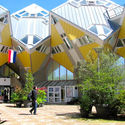
In this week's reprint, author Walter Jaegerhaus explores the U.S. housing challenge, drawing a timeline of the evolution of different architectural solutions, from around the world. Seeking to "inspire designers today to create new housing options", and hoping "that the U.S can again embrace its experimental origins and try out new ideas and methods", the article highlights examples from Europe and the Americas.
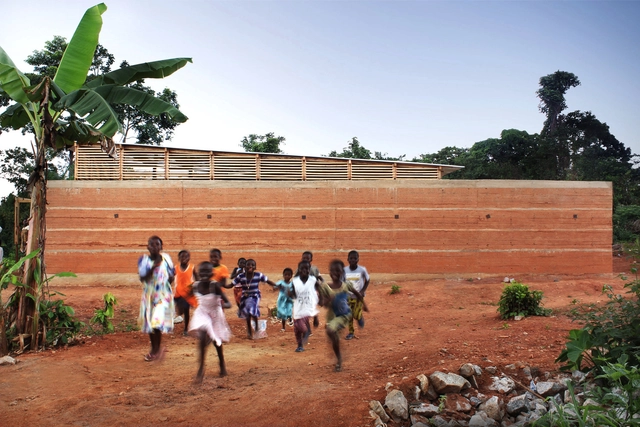
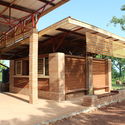
Ghana's architecture has long been tied to local building materials. From traditional thatch roofs and mud walls to contemporary concrete and glass structures, the country's built environment is a refection of the surrounding context. This is true for urban and rural projects alike, and as new educational buildings are created across Ghana, these spaces reflect the country's landscape as they look to the future of learning.
As Francis D. K. Ching explains in his book Architectural Graphics, unlike the traditional, two-dimensional orthographic drawings used to represent layouts, sections, and floorplans, which only allow a project to be glimpsed through a series of fragmented images, axonometries, or axonometric projections, offer unique, simultaneous three-dimensional views of a project with all the depth and spatiality of tried and true technical illustrations.
Automation is everywhere around us - our homes, furniture, offices, cars, and even our clothing; we have become so accustomed to being surrounded by automated systems that we have forgotten what life was like without them. And while automation has noticeably improved the quality of interior spaces with solutions like purified air and temperature control, nothing compares to the natural cool breeze of mother nature.
But just like everything else in architecture, there is no one size fits all; what works in Tanzania cannot work in Switzerland or Colombia. This is due to several reasons, such as the difference in wind direction, average temperature, spatial needs, and environmental restrictions (or lack thereof). In this article, we take a look at natural ventilation in all its forms, and how architects have employed this passive solution in different contexts.
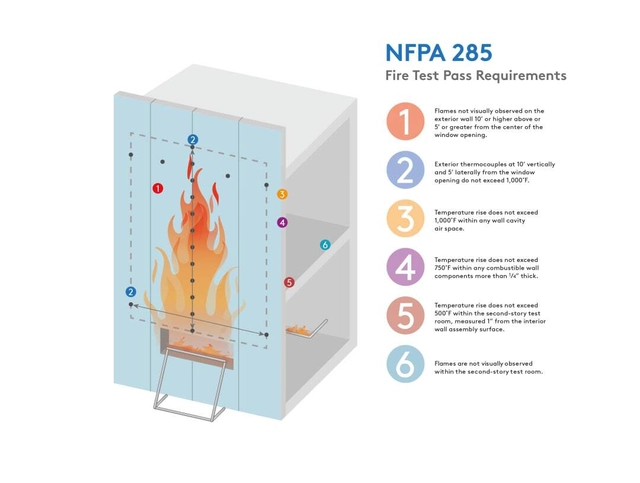
The way in which a fire evolves largely depends on the materials that constitute the building, as well as how it is designed. For this reason, there exist a number of fire safety requirements in building codes that must be followed during the initial design stages, as well as the physical construction of a building. In addition to these building codes, there are other considerations that must be taken into account such as thermal comfort, acoustics, and accessibility. When specifying a material or product for part of a building, the architect or design professional must pay close attention to meeting these demands. An example of a suitable material choice is the Insulated Metal Panel (IMP), which can have superior thermal properties, various appearance possibilities and good fire resistance.
Stilt houses are houses raised on piles over the surface of the soil or a body of water. Dating back to the Neolithic and the Bronze Ages, a wide variety of raised dwellings have been identified in a variety of forms worldwide, designed with several diverse and innovative methodologies. Stilt houses are well suited to coastal regions and subtropical climates. More than just a distinctive structural design resolution, they also protect against floods, maximize views and allow homeowners to build on rocky, steep, or unstable land. They also serve to keep out animals and vermin, provide ventilation from underneath, and minimize a house’s ecological footprint.
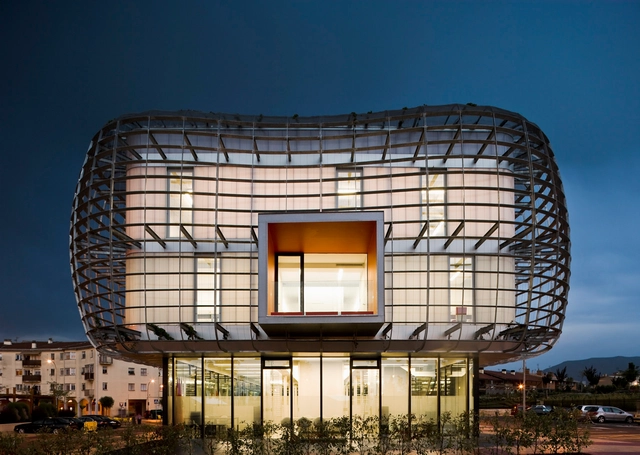
Town halls and civic architecture are defined by spaces for gathering and focused work. Located in urban centers, they bring systems and people together. As one of the most diverse nations in the world, Spain balances a respect for history with an optimism for the future. Exploring environmental, social and economic impact, town halls represent emerging Spanish design culture and local values.
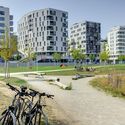
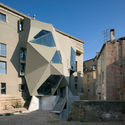
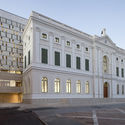
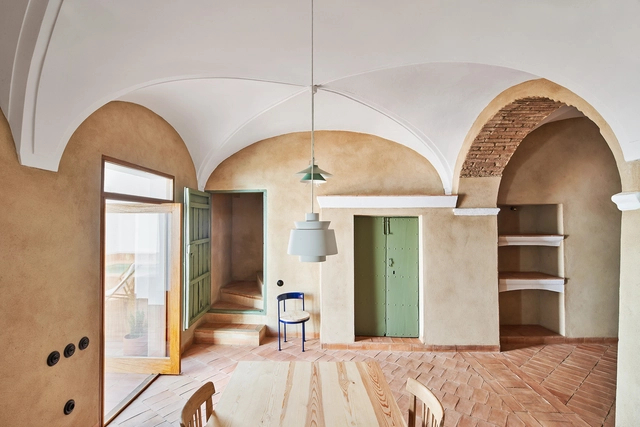
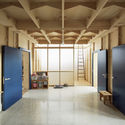
In the last few years, Europe has become a leader in refurbishment architecture by renovating and remodeling buildings and historic city centers. These initiatives have halted horizontal expansion and promote equitable city development.
This trend has not only become a contribution towards the densification and revitalization of underserved sectors but has also allowed families who had been displaced to the periphery to inhabit city centers and improve their quality of life.
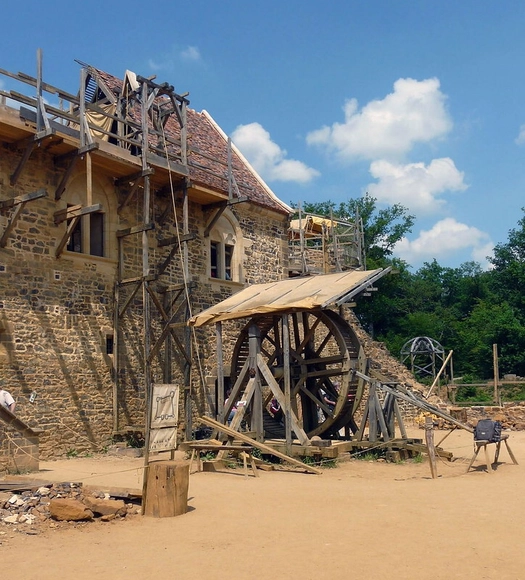
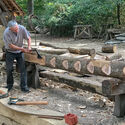
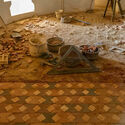
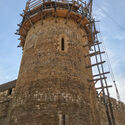
The building site is perhaps one of the most meaningful spaces for architects, as it is where the project comes to life, where techniques are actually applied, putting the project and the designer to the test. Many building sites are affected by work alienation, but they were once a place where craftsmen could learn and pass on knowledge. Today, with the evolution of construction techniques, centuries-old methods are in danger of being forgotten. This brings us to Guédelon Castle, located near the French village of Treigny.
The little-known and remote area of North Caucasus is an intricate assemblage of territories, ethnicities, languages, religions, and, consequently, architectures, from Tsarist-era buildings to mosques, traditional bas-reliefs, and Soviet Modernism. The setting of controversial events and a heterogeneous cultural environment, in many ways, North Caucasus is a borderland between Europe and Asia, the former USSR and the Middle East, Christianity and Islam. Photographs by Gianluca Pardelli, Thomas Paul Mayer and Nikolai Vassiliev provide an introduction to the architectural landscape of the region.
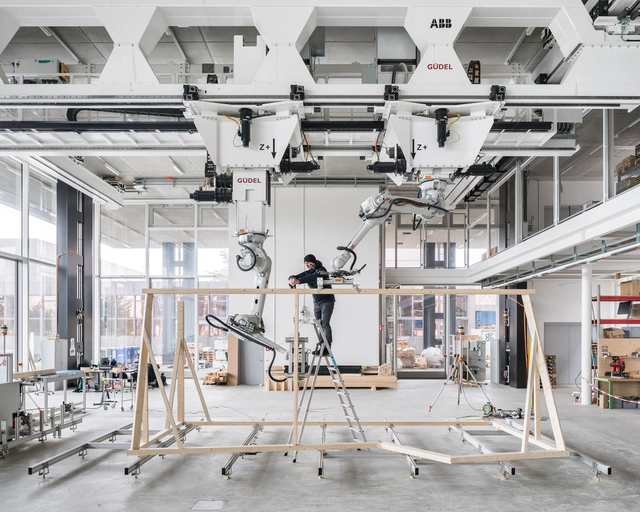
By now, it is clear that technology has taken over almost every aspect of our lives. It has changed the way we communicate, how we connect, how we work and study, and has even modified our buying and eating habits. Architecture and construction were not the exceptions, and technology is also now present in the way it is being thought, designed, and built.
We’re in an age of unprecedented technological innovation. The architecture and construction industries are increasingly becoming more and more automated, as firms seek to take full advantage of new machinery and new ways of working to make the design process more efficient. With this increase in automation, however, comes lots of questions too. Will robots ever replace architects?Will the near future see a fully automated construction industry? A pertinent question, too, is the complicated case of automation and the individuality of design – does automation take away from the individuality of design?
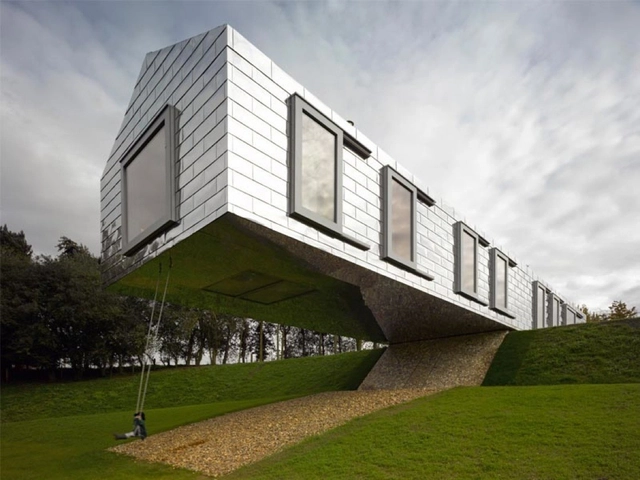
As a design feature, cantilevers can exist for any number of reasons, as rational results of form-making, impressive feats of engineering, or just unnecessary spectacles. Either way, they often result in buildings that appear both heavy and light at the same time and they present safely precarious situations for their inhabitants. The video describes what cantilevers are as well as some of the structural principles which govern their design like tension, compression, moment, and shear. It also goes over some great examples by architects like MVRDV, Rem Koolhaas, Ensemble Studio, and Richard Rogers. Finally, it concludes with appreciation for structural engineers and lists a few of the ones responsible for some of the most daring of delicate dangles.
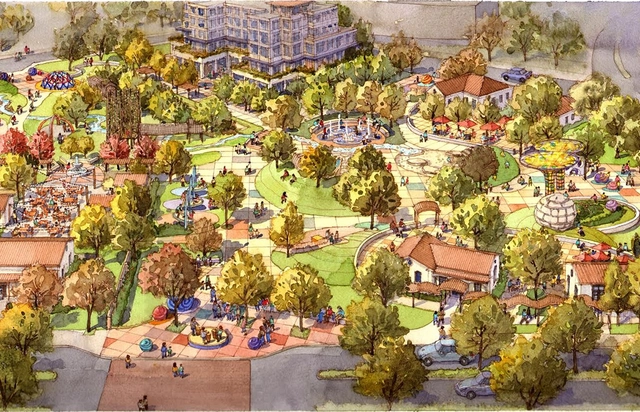
The discussion around how we plan the cities we want to live in is a never-ending conversation. As our world experiences shifts that impact urban designs in both predictable and unpredictable ways, some principals have held true- that cities that rely less on private transportation, create walkable neighborhoods, boast a multitude of public parks and spaces, and are designed at a more human scale tend to be favored and well-recieved by the people who inhabit them. Enter the concept of New Urbanism. Backed by these ideologies with a modern spin on is how they might apply to our 21st-century lifestyles, New Urbanism a planning strategy that has been both praised and critiqued since its implementation.
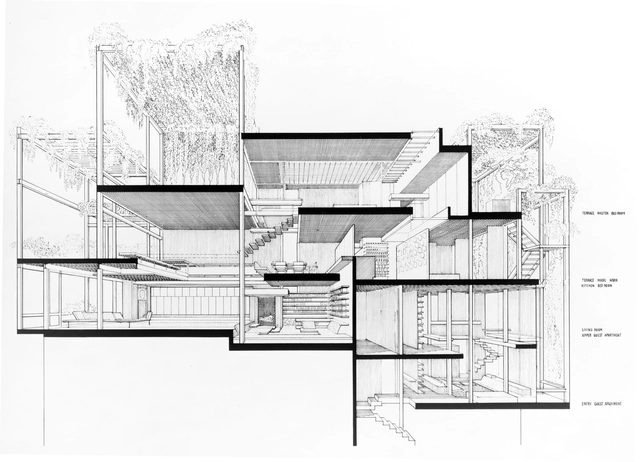
Paul Rudolph, Rudolph Apartment at 23 Beekman Place, New York (1977-1997). Perspective Section, 1997. Digitized drawing | 4732 x 3416 px. The Paul Rudolph Archive, Library of Congress, Print and Photograph Division, LC-USZ62-123771. The cut shows the complexity of the space that Timothy Rohan describes as exemplary of Rudolph's approach to the private domain.
A growing number of theorists and practitioners have been discussing the impact of gender and race on the profession and theory of architecture. Issues linked to the relationship between the built environment, sexual orientation, and gender identity, however, remain particularly understudied, perhaps because of their relative invisibility and less clearly identifiable discriminatory consequences. Moreover, they are also completely neglected by design theory in the Francophone world. This article partially remedies the situation.




















_Roman_Keller.jpg?1623778755 "© Roman Keller")
_courtesy_ICD_ITKE.jpg?1623779114 "Courtesy of ICD / ITKE")
_courtesy_Professor_XU_Weiguo's_Team_02.jpg?1623779045 "Courtesy of Professor XU Weiguo's Team")