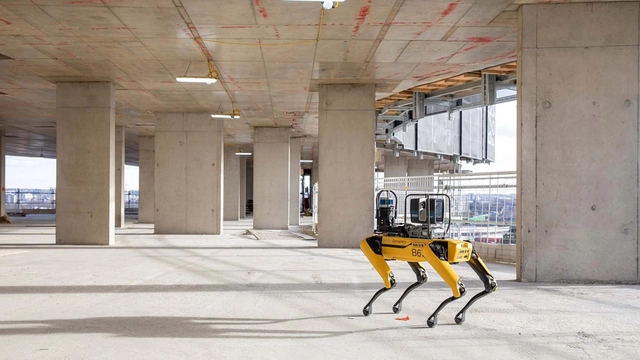
For several years, the construction sector has been facing a labour shortage, generating a growing interest in automation. The health crisis has only exacerbated the trend, prompting automation companies to turn their focus from car manufacturing to the construction industry, for which automation is expected to grow up to 30% within the next few years. The following explores present capabilities and future possibilities of automation within the construction process, its integration within the mainstream practice and the impact on design.
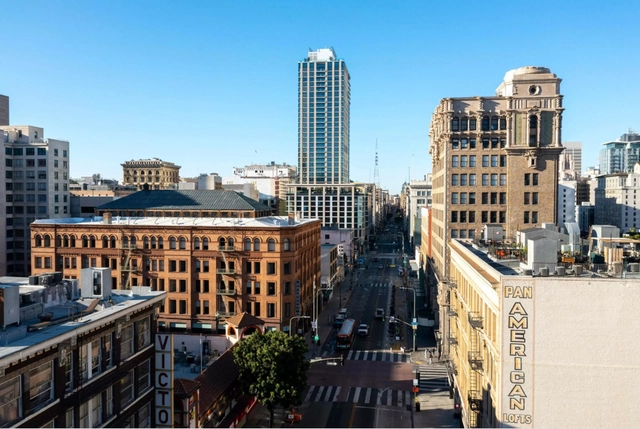
Perla on Broadway is the first new high-rise to be constructed in Los Angeles’s Broadway Theater District. Designed by CallisonRTKL, the tower will be the first addition within the district in over a century. Matt Hickman explores the latest addition to Downtown L.A.'s skyline in a piece originally published in The Architect's Newspaper.
Responding to “How will we live together” in 115 different ways, the 2021 Venice Architecture Biennale welcomed, physically, the large public, on May 22nd, 2021. Opening up furthermore to the world, the timeless yet context-sensitive theme engendered a collective imaginary, highlighting a world that would rather come together than stay apart. Building an architectural narrative of the present that reflects on a resilient future, the interrogation, first asked in 2019, gained more relevance with the pandemic that paused the world for a while. With a lot of optimism and love for the craft, the architectural exhibition opened its doors to a longing public and revealed recurring qualities in the showcased interventions.
The Second Studio (formerly The Midnight Charette) is an explicit podcast about design, architecture, and the everyday. Hosted by Architects David Lee and Marina Bourderonnet, it features different creative professionals in unscripted conversations that allow for thoughtful takes and personal discussions.
A variety of subjects are covered with honesty and humor: some episodes are interviews, while others are tips for fellow designers, reviews of buildings and other projects, or casual explorations of everyday life and design. The Second Studio is also available on iTunes, Spotify, and YouTube.
This week David and Marina are joined by Archie Lee Coates IV, a Co-Founder of the extremely multi-disciplinary design studio PLAYLAB. Archie discusses the evolution and future of PLAYLAB, naïveté in design and art, social equity in design practices and design, believing in humanity, design office as permeable amoeba, working with Virgil Abloh for the Louis Vuitton Show, and more.
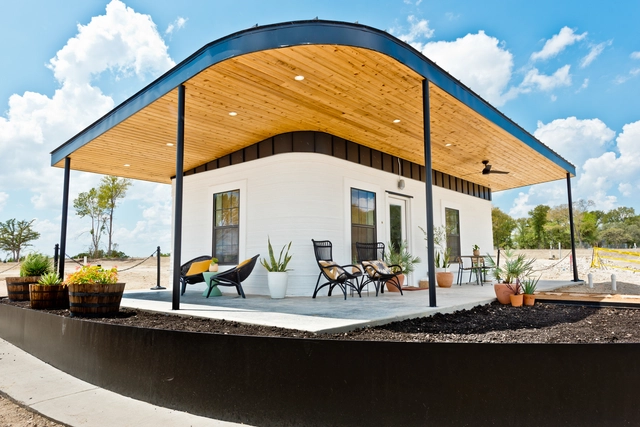
The viability of 3D Printing in architecture – has, at the very least – seen a seismic shift over the past few years. Usually relegated to prototypes or conceptual models, 3D Printed building designs are increasingly being actualised as physical projects. In 2013, WinSun, a Chinese company – was able to print 10 houses in a 24-hour period, becoming one of the first companies to achieve this feat using 3D Printing technology. More recently, in 2018, a family in France became the first in the world to live in a 3D Printed house. The city of Dubai is also seeking to have a quarter of its buildings be 3D Printed by 2025. These examples display the upwards category of this technology, and how it is very likely, as the years go by, this automation of building fabrication is even more integrated into the construction process than it is right now.
The first house ever built in the United States made entirely out of only concrete and glass is no longer standing. It was demolished in 1999, but that doesn’t mean we can’t visit it virtually to witness what it would have been like to be inside. This video and link below focuses on a single house — the Lincoln House — designed by Mary Otis Stevens to resurrect and explore. It uses the program Enscape to walk through the building and resurrect the experience of what it would have been like to be inside. The video offers a timeline to contextualize the role of the house in the career of the architect and the evolution of Brutalism in Architecture, an analysis of the building, and initial reactions to walking through the building for the first time. What magic and other lessons are lurking in the design, hidden until we could experience it?
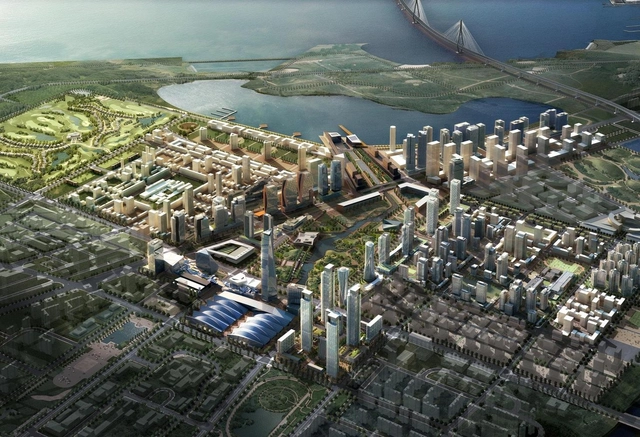
What does it take to build a smart city from nothing? Or maybe the better question is, what does it take to build a smart city from nothing and make it successful? For over a decade, architects and urban planners worked hand in hand to create Songdo, a brand new business district that sought to represent South Korean advancements in technology and infrastructure. Songdo was once a model for how we would live in cities of the future- but now, the reality of what this smart city quickly became has us rethinking how the combination of technology and community might have gone wrong.
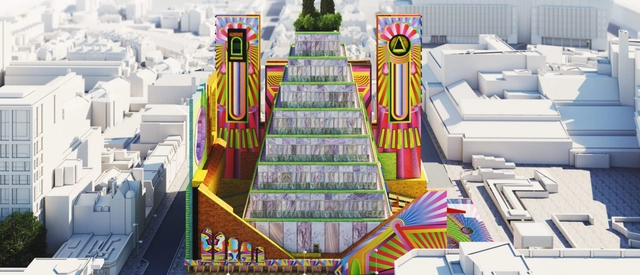
Stefan Fuchs & Raphael Dillhof interview Adam Nathaniel Furman and discuss the role and importance of facades in today's urban fabric, "in the context of a broader range of social, economic, and political issues". Part of a more in-depth study examining the role of facades in the 21st century, this discussion also raises the question of why buildings always embody the values of their creators.
https://www.archdaily.com/963168/adam-nathaniel-furman-buildings-always-embody-the-values-of-their-creatorsRaphael Dillhof, Stefan Fuchs
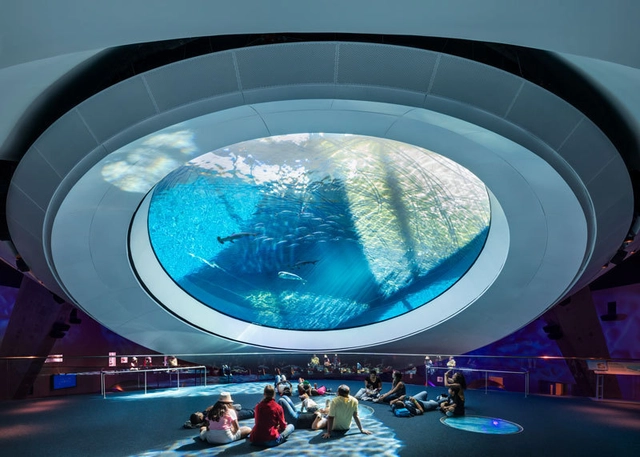
Aquariums are built to reshape expectation. Giving visitors a new vantage point to observe freshwater and marine life, these structures range in scale from simple exhibits to elaborate public aquaria. With a diversity of programming, they often include facilities for rehabilitation and conservation, as well as educational spaces to support learning and discovery. Today, modern aquariums offer glimpses into aquatic life both above water and below the surface.
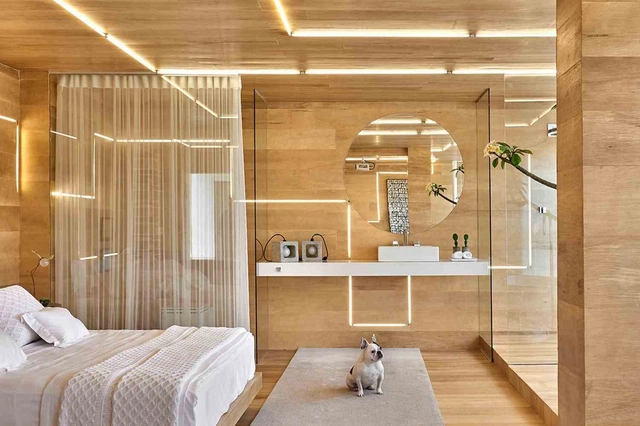
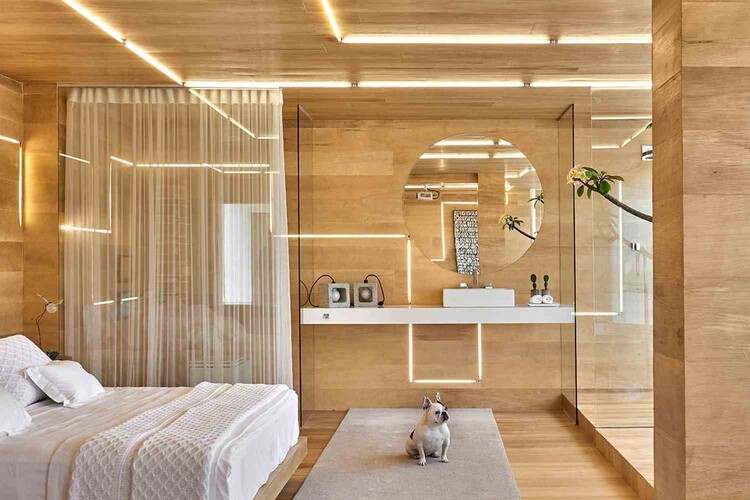
Natural or artificial, lighting is one of the most important elements in architecture, directly affecting our perception of spaces. It is capable of defining volumes, enhancing colors, textures, and therefore, contributing to the overall relationship between dimension, proportion, and contrasts. One of the many challenges of architecture is to shape spaces based on light and shade, and sometimes natural light is not enough, requiring additional light sources to be installed and controlled.
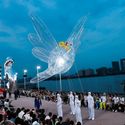
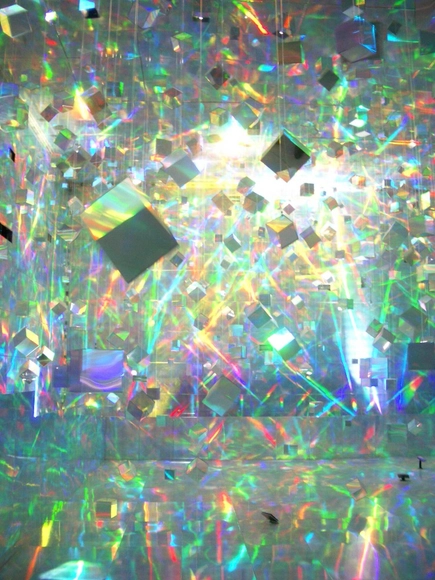
Although holograms have been a possibility for decades—the first hologram was developed in the early 1960’s following the development of laser technology—many might still associate them more with science fiction, the term conjuring up images of high-tech superhero gadgets and spaceships in the distant future. Yet as we inch closer to the reality of a hyper-technologized future, and a variety of industries—including architecture and construction— begin to embrace new forms of increasingly advanced technology, holography, too, has a chance of completely reshaping the way we conceptualize and experience architecture. While it is impossible to predict exactly how holographic technology will be used in the future, below, we list several examples of existing projects that use holograms and other types of holography to create atmospheric environments, fantastical scenes, and practical visualizations. These examples move beyond the use of holograms to visualize structures and sites during the design phase; they utilize holography to shape the completed architectural space itself, completely altering the sensory and spatial experience of their environment.
https://www.archdaily.com/963011/holography-how-it-could-change-architectural-spaceLilly Cao
In this week's piece by Metropolis, author Kelly Beamon explores in her original article "the patriotism associated with pitched roofs and shares how architects are reimagining this staple of suburban house styles". According to its definition, a gable roof is a classic roof shape, usually in cold or temperate climates, consisting of two roof sections sloping in opposite directions and placed such that the highest, horizontal edges meet to form the roof ridge. Emblematic of the US, this article discusses its return to the urban fabric.
Platform lifts. Swedish manufacturer ARITCO shows how architects can integrate them into residential properties without them looking like an afterthought – but rather a serious design statement.
The 17th Venice Architecture Biennale invited architects to ponder the question “How will we live together”, eliciting a variety of answers, readings and interpretations. The International Exhibition unfolding in Giardini, the Arsenale and Forte Maghera presents 112 participants in the competition, coming from 46 countries, whose contributions are organized into five scales: Among Diverse Beings, As New Households, As Emerging Communities, Across Borders, and As One Planet. Answering “How will we live together as a community? “ is Chilean office ELEMENTAL and Archdaily met in Venice with Alejandro Aravena to discuss the idea behind the project KOYAÜWE, which creates a space that recovers the tradition of parleys, as a means to address the historical Chilean-Mapuche conflict.
For this month, The Dirt and author Jared Green share with us a study about urban heat islands, exploring new approaches that have been designed to both reduce urban temperatures and help communities adapt to a hotter world, In three cities: New York City, Copenhagen, and Abu Dhabi.
https://www.archdaily.com/962913/urban-heat-islands-are-increasingly-dangerous-but-planners-and-designers-have-solutionsJared Green
A circular economy is an economic system aimed at eliminating waste and the continual use of resources. Looking beyond the current take-make-waste extractive industrial model, a circular economy aims to redefine growth, focusing on positive society-wide benefits. It entails gradually decoupling economic activity from the consumption of finite resources and designing waste out of the system. Underpinned by a transition to renewable energy sources, the circular model builds economic, natural, and social capital.
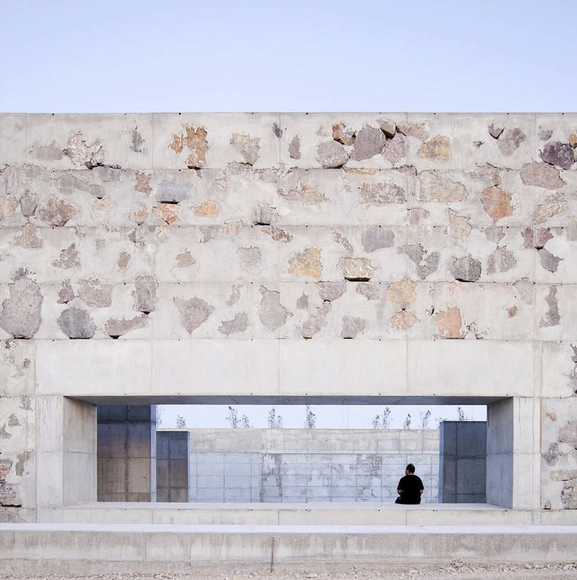
Historically, "cyclopean" referred to a building technique that superimposed large stone blocks together without any mortar. This allowed for a diverse array of structures across various civilizations, including defensive walls, talayots, navetas, nuraghes, temples, tombs, and forts. Nowadays, the term applies to any ancient structure consisting of large stones superimposed to form a polygonal shape.





.jpg?1622015464&format=webp&width=640&height=580)
.jpg?1622029620 "Argentina: La casa infinita by Gerardo Caballero. Image © Laurian Ghinitoiu")
.jpg?1622015439 "Germany: 2038. The New Serenity by 2038. Image © Laurian Ghinitoiu")
.jpg?1622015472 "Mexico: Desplazamientos / Displacements by Isadora Hastings, Mauricio Rocha, Elena Tudela. Image © Laurian Ghinitoiu")
.jpg?1622015529 "Spain: Uncertainty by Domingo Jacobo González Galván, Sofía Piñero Rivero, Andrzej Gwizdala, Fernando Herrera Pérez. Image © Laurian Ghinitoiu")
.jpg?1622015464)












.jpg?1623242708)

.jpg?1620086762&format=webp&width=640&height=580)