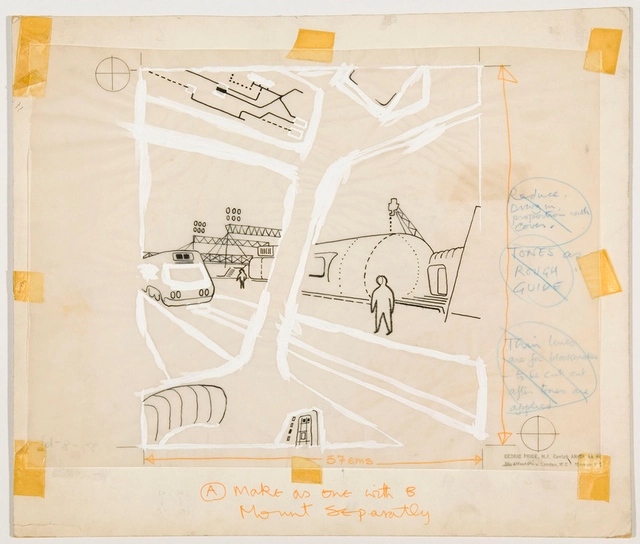
Market Street East (1960-62), Philadelphia Civic Center (1956-57).. Image Courtesy of Lars Muller Books, The Architectural Archives at the University of Pennsylvania, Sue Ann Kahn, and the Museum of Modern Art.
In an age of ebooks and web-first publishing, Louis Kahn: The Importance of a Drawing (Lars Müller Publishers) is a defiant throwback: a lavish, 500-plus-page book, very much an object befitting its subject, whose buildings had a weight, both literal and figurative, that was part of their power and appeal. Conceived and edited by Michael Merrill, the book is both a deep examination of Kahn’s creative process, as told through the medium of the hand drawing, as well as a revealing portrait of the man behind those buildings and illustrations. Merrill is an architect and educator and currently serves as director of research at the Institute for Building Typology at the Karlsruhe Institute of Technology in Germany. He’s also the author of two previous books on the master architect, Louis Kahn: Drawing to Find Out and Louis Kahn: On the Thoughtful Making of Spaces.
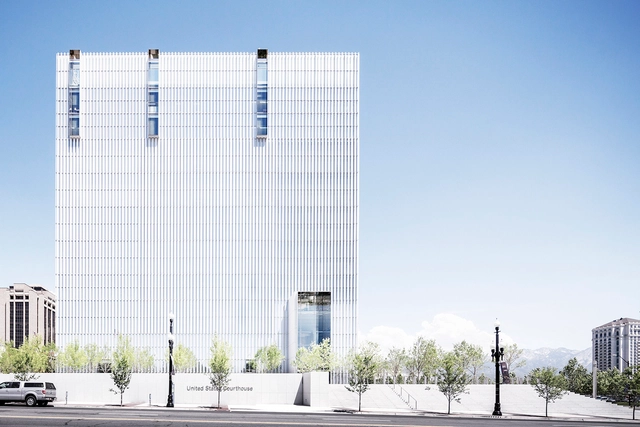
Courthouse architecture is defined by civic and monumental designs. These projects establish contemporary expressions that move beyond vernacular traditions to explore modern aesthetics and new forma approaches. As prominent landmarks in a city, courthouses reflect the beliefs, priorities, and aspirations of a people. They are also a meeting ground, cultural hub, and social gathering place.
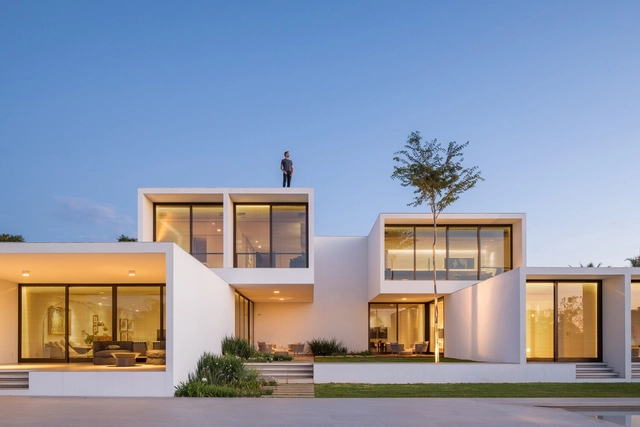
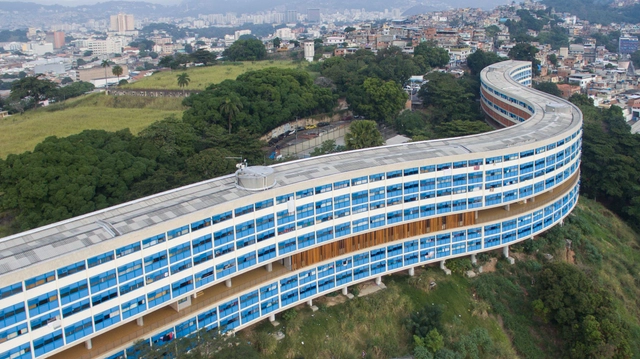
Each project can be a powerful context transformation tool. This is one of the conceptual bases of BLOCO Arquitetos, founded by Daniel Mangabeira, Henrique Coutinho and Matheus Seco. Based in Brasília, the Brazilian capital and a symbol of modern architecture worldwide, the office works at different scales and programs, and is characterized by its multidisciplinary work that encompasses initiatives to value Brazilian architectural culture and the profession itself.
Videos
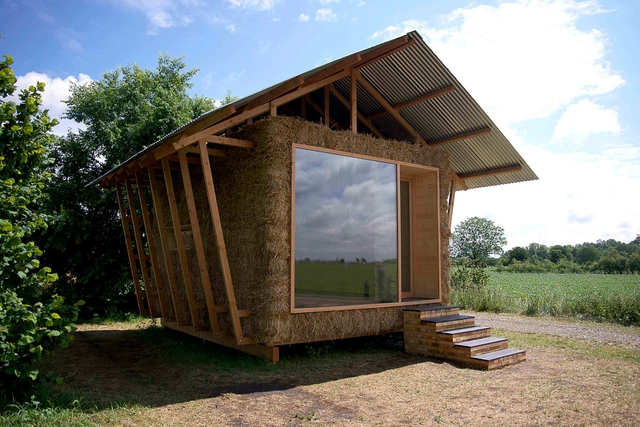
Ecologic Pavilion In Alsace / Studio 1984. Image Cortesia de Studio 1984
The concept of upcycling refers to taking an item that would be considered waste and improving it in order to make it useful again, adding value and new functionality to it. This is a common word in several industries, such as fashion and furniture. In civil construction, this concept can also be incorporated, making the waste generated by the industry itself recirculate or even bringing what would be discarded from other industries to be processed and incorporated into constructions. This is the case of transforming agricultural waste into building materials, bringing a new use to discards, reducing the use of raw materials and creating products with excellent characteristics.
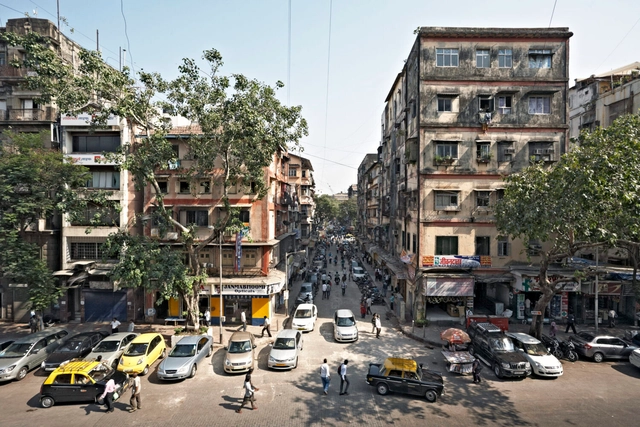
Kinetic Cities, courtesy RMA Architects. Image Courtesy of RMA Architects
Rahul Mehrotra is an urbanist, educator, and founding principal of Mumbai- and Boston-based Rahul Mehrotra Architects (RMA Architects). Across India, Mehrotra has designed projects that range from master plans to weekend houses, factories, social institutes, and office buildings. Over decades, his endeavors in urban activism have culminated in the founding of the firm’s Architecture Foundation, which focuses on creating “awareness of architecture in India” through research, publication, exhibitions, and inclusive public dialogue surrounding architectural ethics and values.
After a year delay due to the Covid-19 pandemic, Tokyo Olympics started at the end of July. In this edition, three new modalities debuted in the biggest competition in the world: 3x3 basketball, surfing and skateboarding. Bringing medals to countries such as Japan, United States, Brazil, Australia, Russia, Serbia, China and Latvia, and involving a large number of athletes and nations, these sports carry urban culture in their movements and histories and are an important part of relationships in the city.
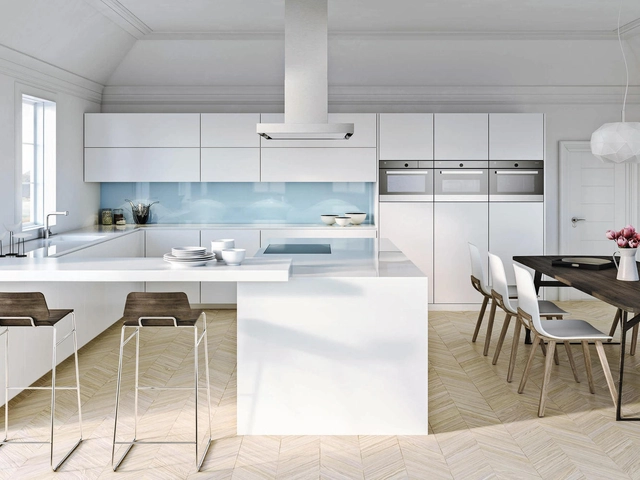
Whether it's by sharing a meal at a restaurant or preparing a home-cooked meal together, food does in fact, bring people together. With that in mind, architects placed kitchens at the heart of homes, giving residents a space to cook, dine, and spend quality time with their families and friends. However, not all homes can fit spacious kitchens, some are too small and others don't have the proper spatial configuration for it. In this interior focus, we will explore how architects and designers opted for different kitchen layouts based on different spatial and user needs.
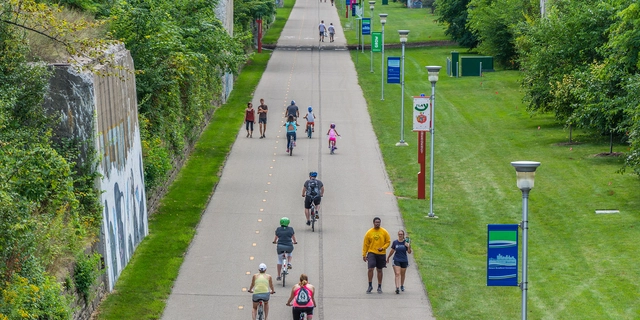
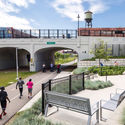
Dequindre Cut, Detroit / The High Line Network, SmithGroup. Image Courtesy of The Dirt
Decades of redlining and urban renewal, rooted in racist planning and design policies, created the conditions for gentrification to occur in American cities. But the primary concern with gentrification today is displacement, which primarily impacts marginalized communities shaped by a history of being denied access to mortgages. At the ASLA 2021 Conference on Landscape Architecture in Nashville, Matthew Williams, ASLA, with the City of Detroit’s planning department, said in his city there are concerns that new green spaces will increase the market value of homes and “price out marginalized communities.” But investment in green space doesn’t necessarily need to lead to displacement. If these projects are led by marginalized communities, they can be embraced.
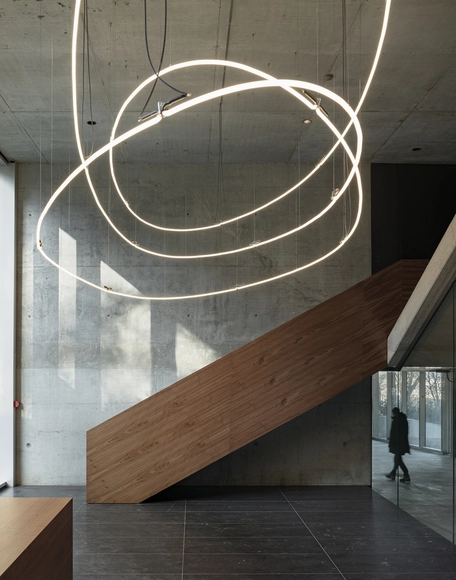
Light serves an essential purpose in architecture: to help us see. Whether it be through natural or artificial methods, rooms must be illuminated accordingly so occupants can safely inhabit them and fulfill their daily functions. When the right system is selected, light can also contribute to energy efficiency and sustainability within the building as a whole. However, apart from its evident functional and environmental value, lighting design can vastly impact the visual comfort and aesthetic tone of interiors by drawing attention to textures, enhancing colors and defining volumes. Therefore, of the many pieces involved in interior design, lighting is certainly one that can enhance or destroy a space and even affect users’ well-being, which is why it should be considered a crucial design element by itself.
In the early 1920s, a time when women could not even work without their husband's authorization, Carmen Portinho started an engineering course at the Polytechnic School of the University of Brazil. At the vanguard of the profession, as one of the first three women to graduate as engineers in Brazil, she was opening up a field in a space dominated entirely by men.
At its heart, extreme-minimalism is a rebellion against consumerism, it’s a cathartic process of learning to live without. But it’s also a decorative style in its own right – a clean world for a clean mind.
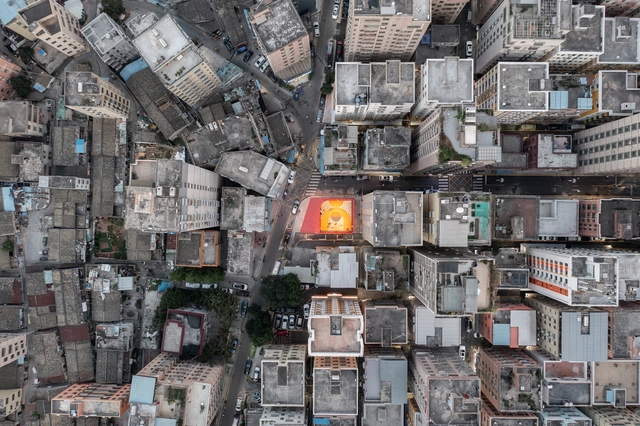
Cities face much criticism with how they handle their car population, but have you ever thought about how much land use is dedicated to surface parking lots? In fact, it may be one of the most prominent features of the postwar city in the United States. Housing, community facilities, highway infrastructure, often garner much attention, but the amount of land dedicated just to park cars is astounding.
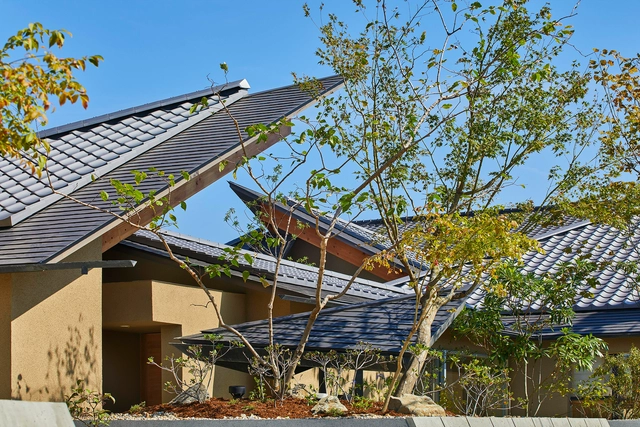
Roofs often play important roles in a project's identity. In addition to the aesthetic aspect, they play a fundamental role in protecting and closing the building. Of the existing types of coverage, pitched roofs are the most common in homes and buildings all around the world, therefore, it is necessary to ensure that they are within the parameters set out in the technical standards.
Instant City - ICSID 1971. Image Cortesía de OAB Office of Architecture in Barcelona
André Ricard and Daniel Giralt-Miracle, the member responsible for ADI/FAD, proposed the island of Ibiza as the venue for the ICSID Biennial Congress in 1971. That's how the story began. At that time, the so-called "Urquinaona Open Design Group" already existed in Barcelona. From the group, and with Carlos Ferrater at the head, they offered their help to the organization of the congress. They refused, as everything seemed to have already been organised. Together with Fernando Bendito, Ferrater asks about accommodation for the students. They still had nothing. They get the opportunity they were waiting for. Thousands of invitations are sent out to students all over the world. The number of replies was greater than the number of registered students.
The built environment we inhabit can be hostile, both on an individual architectural scale and in a wider urban context. Homeless people, for instance, are dissuaded from resting on public benches by the menacing presence of spikes and other forms of exclusionary design. From a global lens, we see the impact that borders have amidst anti-immigration hostility, imposingly exemplified by the Melilla border fence on the Morocco-Spain border. This “hostility” can be found in a large number of settlements around the world, settlements that have been formed as a result of organic migration or settlements predicated on control – like company towns.
The Thermal Energy Center at Microsoft’s headquarters in Redmond, Washington, powers the campus almost entirely through electricity provided by geothermal energy exchanges. The project acts as a pilot program for the Embodied Carbon in Construction Calculator (EC3), a free database of construction EPDs and matching building impact calculator.. Image Courtesy of NBBJ
The growing consumer demand for transparency—especially around sustainability and environmental practices—has implications for industries from apparel to healthcare products. Mars Inc. recently released a cocoa sourcing map to tackle deforestation and increase accountability, and the Fashion Transparency Index pushes apparel companies to be more forthcoming about their social and environmental efforts.
Now it’s time for the building industry, characterized by a lack of information around the materials and practices used in construction and throughout a building’s lifecycle, to catch up. The cost of inaction is too high to ignore. That’s because buildings account for 39 percent of total global carbon emissions. Traditionally, most carbon reduction efforts in the building sector focus on operational carbon—a building’s everyday energy use, which accounts for roughly 28 percent of emissions. The remaining 11 percent comes from what is often ignored: embodied carbon.
https://www.archdaily.com/976015/strategies-to-reduce-embodied-carbon-in-the-built-environmentPeter Alspach, Margaret Montgomery
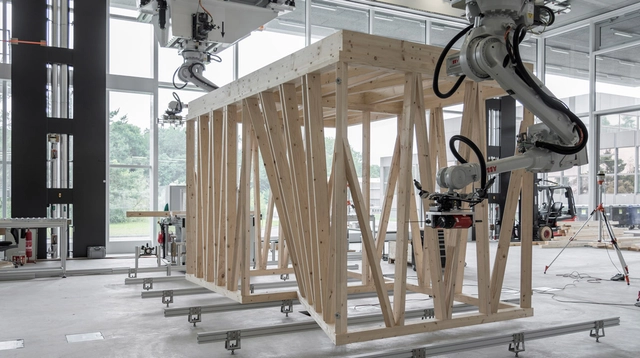
Robotic Collaboration. Image Courtesy of ETH Zurich
Digital spaces and fabrication technology have become as prominent as ever within the current state of our post-pandemic society, becoming increasingly more accessible and enabling quick and spontaneous acts of iteration and evolution. These technologies have resulted in the ability to mass-produce non-standard, highly differentiated building components within the same facility as their standardized counterpart, transforming how buildings and their respective components are conceived, designed, and represented, and how they are manufactured, assembled, and produced.
The beauty of digital fabrication is its ability to blend aspects of mass and artisanal production to the point where costs nearly disappear. Technology’s capacity to fabricate so simply and almost seamlessly raise the issues for its potential to significantly alter our current perception of architecture, thus producing the question: has the influence of mass production in architecture resulted in a loss of intentional design?
Videos
Cedric Price. Potteries Thinkbelt. Cedric Price fonds, Canadian Centre for Architecture, Montréal. Image Courtesy of CCA
All buildings move — of course, some more than others. There are a host of design considerations that architects keep in mind that allow for, or even promote movement in almost every building. But some architects fall back on their training as broad-based thinkers and problem solvers to devise solutions that literally roam the earth. From tiny homes on wheels, to train-based educational institutions, to design programs in a truck, sometimes buildings and architecture need to travel to the people it serves or to other environments. This video features a few examples on this spectrum, beginning with how architects typically deal with movement in structures and foundations, to Cedric Price’s Potteries Thinkbelt, and finally Chicago Mobile Makers, a traveling maker workshop for children founded by Maya Bird Murphy.






















.jpg?1643423986 "Villa Savoye, Le Corbusier, 1929. Image © Flickr User: End User")
.jpg?1643425181 "Villa Savoye, Le Corbusier, 1929. Image © Flickr User: End User")
_V%C3%ADctor_Pati%C3%B1o_George.jpg?1643424298 "Villa Stein, Le Corbusier, 1927. Image © Víctor Patiño George")