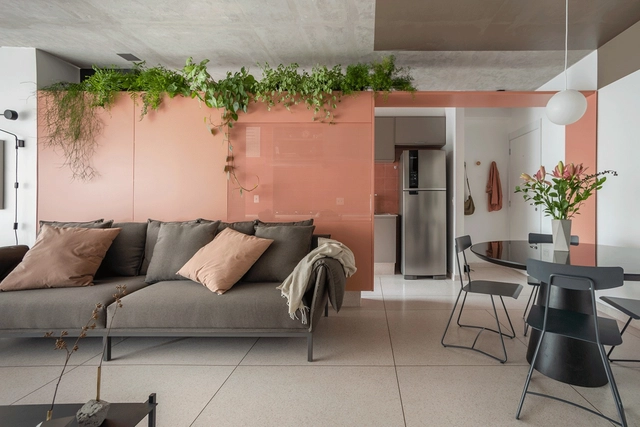
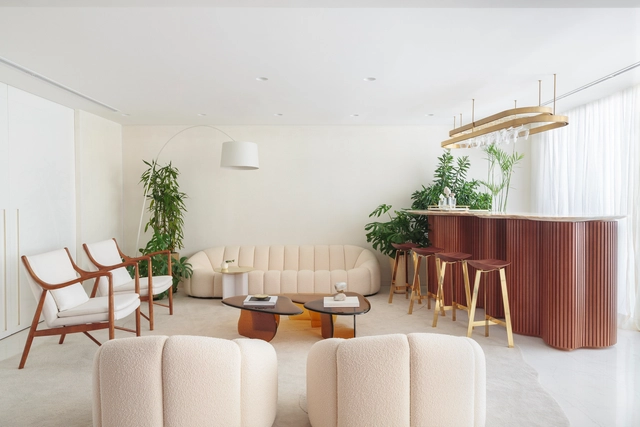
One plant makes all the difference with its color, texture, movements, and the celebration of its flowering. The green inside the homes offers several benefits. However, besides knowing which species are easier to grow, looking for more effective ways to blend the plants with the room can enhance the spatial experience. That is why we've selected some tips for placing the vases and planters around the house (or not).
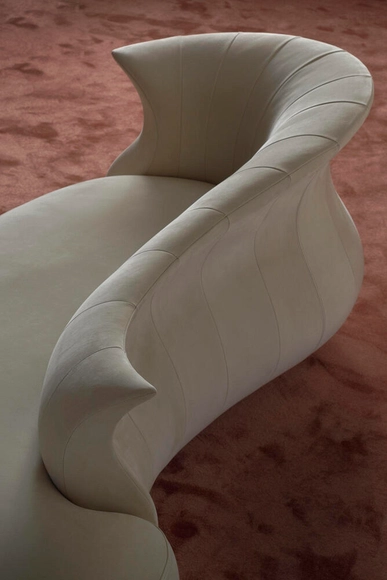
Set in open space, Desforma’s sinuous shifting designs are furniture as landscape. Image Courtesy of Desforma
The Desforma range is quite unique in the design world. It doesn't do reheated mid-century modern or strict straight lines or no-nonsense functionalism in powdered steel. Desforma does swooping, fluid lines and organic curves, sofas composed of sine waves that seem shaped by natural forces and summon up swaying sea life, chairs that might have blossomed into being.
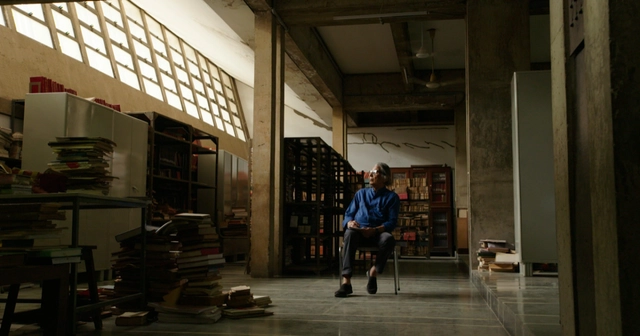
“I am not an architect,” he says with a sparkle in his eyes, “I am merely a person seeking out their destiny.” To the late pioneer of Indian modernism, Balkrishna Vithaldas Doshi, architecture was a practice of self-discovery. The veteran’s stellar works of poetic functionality resulted from a humanist philosophy bearing the influence of modernist principles, Mahatma Gandhi, and Indian spiritual texts. Doshi believed that architecture was synonymous with life - a vehicle for constant celebration; a medium for heightened experiences. His greatest contribution to the architecture community was his powerful words of wisdom that echo the timelessness of his structures.
In a new series entitled "Opening Up", Dutch manufacturer of pivot door hinges FritsJurgens embarks on a series of video stories that explore the world’s most captivating pivot door projects. Every last Monday of the month, FritsJurgens releases a new episode in which architects, door manufacturers, and pivot door owners talk about their pivot door projects.
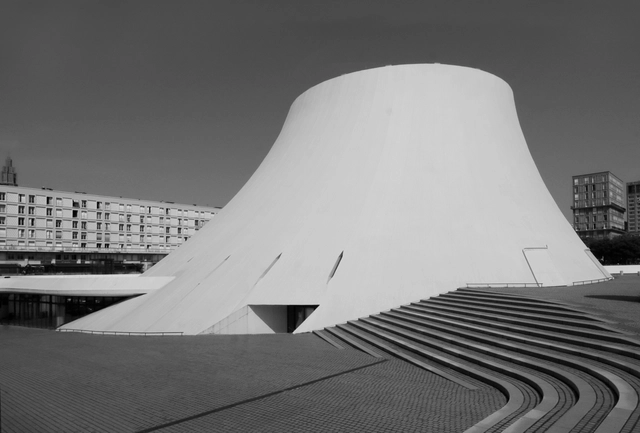
Espace Oscar Niemeyer is a cultural center designed by Oscar Niemeyer in the port city of Le Havre, France. The project’s location is inside the urban reconstruction area conceived by the rationalist architect Auguste Perret after the destruction of the city’s downtown area in World War II.
Somewhere between 1914 and 1915, Le Corbusier designed the Maison Dom-Ino, a groundbreaking modular structure that replaced the heavy load-bearing walls with reinforced concrete columns and slabs. The open floor plan with minimal thin elements, coupled with large glass facades, would ensure healthy natural daylight for the interior spaces as well as desirable architectural transparency that could blur the boundaries between interior and exterior —at least metaphorically.
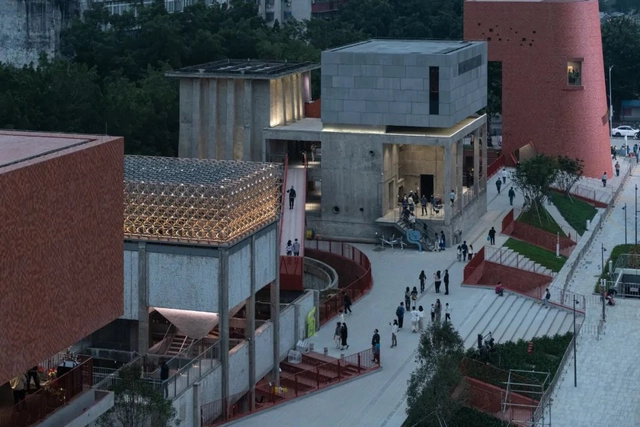
The 9th edition of the Urbanism\Architecture Bi-City Biennale (UABB) of Shenzhen and Hong Kong opened on December 10, 2022. Curated by Lu Andong, Prince Gong, and Aric Chen, the exhibition features hundreds of artists, designers, and architects from fifteen countries. The exhibition will last for three months.
The Biennale's theme, "Urban Cosmologies," encompasses both spatial symbiosis and the temporal rhythms of life. It is a source of ancient Chinese wisdom as well as a cosmology that looks to the future. The "Cosmology of the City" is a field of symbiosis, a part of the "community of life between man and nature".
The rationality of orthogonal shapes dominates architecture, despite grand gestures that have sought to oppose themselves throughout history. In large-scale production, the right angles, repetition and modularity of the block or grid of pillars help in the efficiency of construction, despite reproducing the same spatial solutions. Unlike buildings, interior architecture can propose alternatives to break this rationality, whether from partitions or decorative objects.
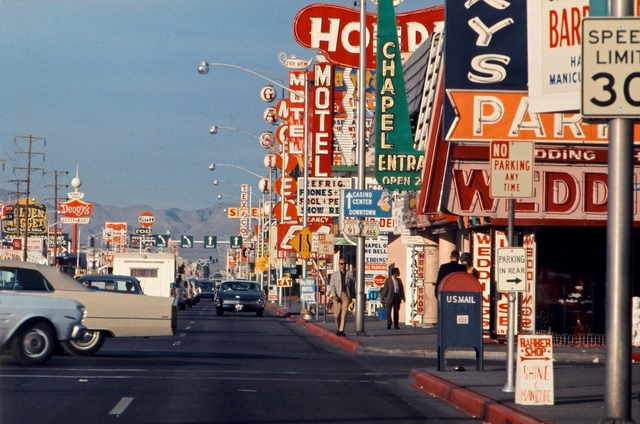
Las Vegas, sometimes known as Sin City, is perhaps the most famous desert metropolis where people gamble, and indulge in entertainment, and other vices. Each year, the city is visited by hundreds of millions of tourists who come to see its flashing lights and round-the-clock nightlife. Las Vegas has garnered so much attention that even Robert Venturi and Denise Scott Brownsought to study its urbanism, concluding with their theories on duck and decorated shed buildings in the early 1970s. But 50 years later, Vegas is still a city that constantly reinvents its architectural identity.
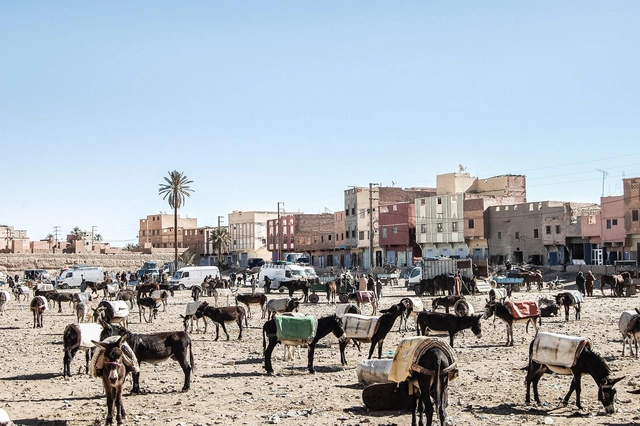
As populations continue to migrate from rural to urban areas, space is at a premium. Many settlements are becoming ever-more congested – with adequate, affordable housing in short supply and transport systems struggling to serve their respective residents. But as much the conversation about urbanization is about people, it is sometimes also about the animals that come with those people – urban livestock that play a key role at providing sustenance on an individual level, in addition to becoming an avenue for communal trade.
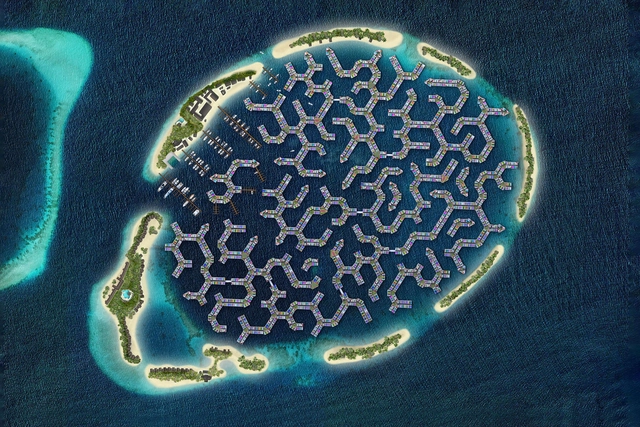
The threat of climate change is looming before us. Sea level rise concerns over 410 million people at risk of losing their livelihoods. Coastal cities are choked with high-rise buildings and traffic-laden roads, consuming land insufficiently. Synthesizing these problems, architects across the world have proposed a potential answer - floating cities. A future of living on water seems like a radical shift from how people live, work, and play. Vernacular precedents prove otherwise, offering inspiration for what our cities could morph into. As world leaders discuss courses of action to tackle climate change at the COP27 climate summit in Egypt, ArchDaily dives into the concept of radical water-based settlements.
Imagine that you have scheduled a visit to an important building for the history of architecture, a reference work for all enthusiasts. Probably you would equip yourself with a camera or a good cell phone, take a pencil, notebook and even a measuring tape to record all its aspects.
However, this is not the only way to “visit” a building of historical importance nowadays or, at least, that is what some researchers are trying to show. The metaverse is being explored for its role in architecture and culture preservation, embracing different generations.
In recent years, the term “co-creation,” a buzzword in the business and management sector, has made its way into the architecture and urban planning discourse. The termis used to define a large concept that describes working intentionally with others to create something jointly. But architecture is already the result of a collaboration between multiple actors, architects, clients, investors, developers, and local administration, to name a few. Can the term still apply to this field, can it bring forth new forms of knowledge, and does it differ from the concept of participatory design?
Abandoned house in "Touki Bouki". Image Courtesy of Janus Films
Simultaneously gripping, disconcerting, and chaotic, Djibril Diop Mambéty’s Touki Boukiis an exhilarating cinematic ride. The 1973 drama — the first full-length film by the Senegalese director — is the fantastical narration of a young couple in Dakar, eager to escape the Senegalese capital for the allure of Paris. It’s a character-driven film in many ways, primarily centered on the couple’s adventures, but it is also a subtle visual examination of the urbanism of post-independence Dakar, where the city and its architecture are essential fixtures in a surreal storyline.
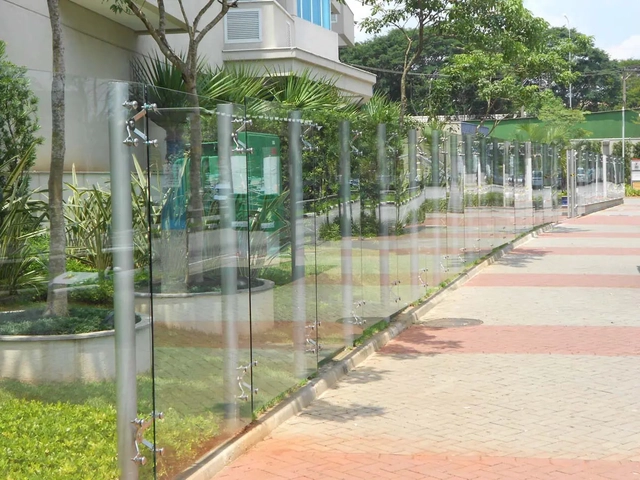
Via construcaoemvidros.com.br. Image used under fair use terms.
In the past, in a less densely populated urban context, houses and buildings were built with a direct connection to the street, with no need for walls and front fences. Over time, the urban fabric was transformed, and the division between public and private spaces became increasingly evident and — under the argument of public safety — necessary. Although this division occurs in different ways in Brazilian cities, in general, walls, fences and railings are used on the facades, creating a transitional space between the building and the street, transforming the relationship between them.
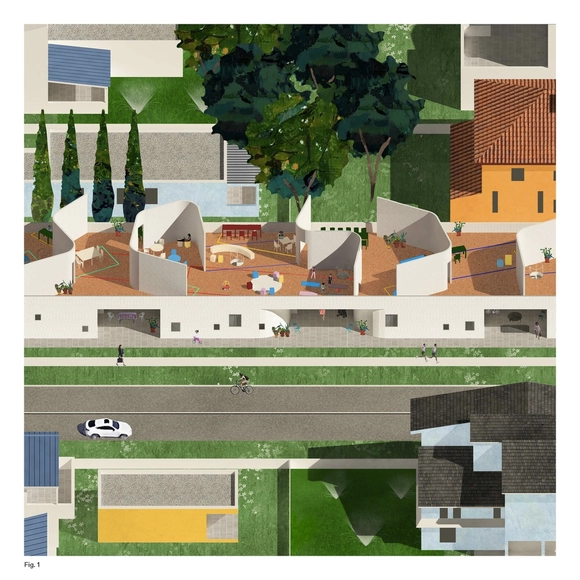
Overall Winner- Shadow Housing- Jeffrey Liu and Haylie Chan. Image Courtesy of Arch Out Loud
A home is one of the most significant architectural typologies that we experience throughout our lives. Largely serving as a significant private space, a home represents safety, ownership, and a sense of respite away from the rest of the world. It’s also historically been a place of routine, where we both begin and end our day, following the same patterns through different rooms of a home that we utilize. We can expect to sleep in our bedrooms, relax in a living room, cook in a kitchen, and eat in a dining room.
About 50 years ago, the renowned architect, educator, and author Charles Moore was hired by Frederick and Dorothy Rudolph to design a vacation house on Captiva Island, Florida, and about a decade later, in the late 1970s, they hired him again to design their permanent residence in Williamstown, Massachusetts.
Moore was often called the father of Postmodernism and was a prolific proponent through such books as The Place of Houses. With the exception of his small houses, however, I was never a big fan of his work. But I still have a tattered copy of that book, because when I read it, it was the first time that someone had articulated the process of designing a house, including a programmatic checklist to follow.
A new platform launched by 3D Agora is looking to revolutionize the architectural visualization industry by sweeping out all of its cluttered corners. Finding the most suitable 3D Artist for a project, exchanging large files of various kinds with them and keeping track of all versions, requests and changes are said to become much easier with 3D Agora's worldwide database, smart filtering system, feedback panel and the industry-specific project collaboration board.