1. ArchDaily
  2. Architecture News

Architecture News

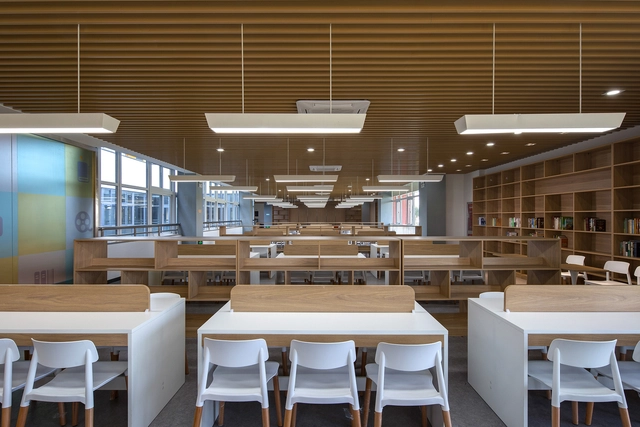
Survey: How Do Architects and Industry Professionals Specify Materials and Products?

The choice of materials and products made by an architect during their design and specification process is key to defining how a project will look after its completion and over time, as it ages. Choosing materials that are not appropriate could result in projects with both aesthetic and functional issues.

This is what makes the specification stage so essential in achieving expected results. During this phase, the professional in charge of specification becomes an essential part of the team and needs to have sufficient knowledge of the materials and products available in their region. But do all architecture offices have the same specification processes? Is the same importance given to this stage of the project as to the initial design phase? How close is the architect’s relationship with the materials really?

An Online Exhibition Connects the Dots Between Performance and Architecture

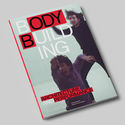
Six months after the release of the namesake book during the latest installment of the biennial, PERFORMA has launched Bodybuilding, which features thirty-five architecture studios who engage with performativity.

Is architecture a period or a comma? Are built forms hermetic bodies or catalysts for action? PERFORMA curator Charles Aubin and architect Carlos Mínguez Carrascor, published Bodybuilding: Architecture and Performance, during the most recent installment of the PERFORMA 19 biennial in New York City last November. Noticing a lack of a comprehensive, multigenerational survey on the subject, the duo’s interest in investigating the ways architects engage with performance goes as far back as a symposium they co-organized at the Performa 17 Hub in 2017. The book, which features essays by Mabel O. Wilson and Bryony Roberts, Lluís Alexandre Casanovas Blanco, and Victoria Bugge Øye, seeded the fundamental approaches now deeply rooted in the online exhibition: the impact of movement on systematic urbanization, the body’s relationship to buildings and monuments, and architecture’s role in action, be it physical or sociopolitical.

An Online Exhibition Connects the Dots Between Performance and Architecture - Image 1 of 4An Online Exhibition Connects the Dots Between Performance and Architecture - Image 2 of 4An Online Exhibition Connects the Dots Between Performance and Architecture - Image 3 of 4An Online Exhibition Connects the Dots Between Performance and Architecture - Image 4 of 4An Online Exhibition Connects the Dots Between Performance and Architecture - More Images+ 9

7 Design Guidelines for a Safe Post COVID-19 Transition

In order to ensure a proper transition into post COVID-19, architects, public health experts, and engineers are generating design guidelines to provide people with new secure, and efficient resources. Finding a balance between optimizing operations and keeping people safe, the strategies tackle the built environment that surrounds us, from restaurants and outdoor dining, to streets, offices, and retail.

Addressed to city officials, owners, and employers, the tools developed help to reopen the world, while reducing the risk of COVID-19 transmission, promoting social distancing standards, and enhancing wellbeing. Discover in this article a roundup of design guidelines securing a safe post coronavirus transition.

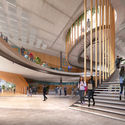
MAD Reveals the Shenzhen Bay Culture Park Masterplan

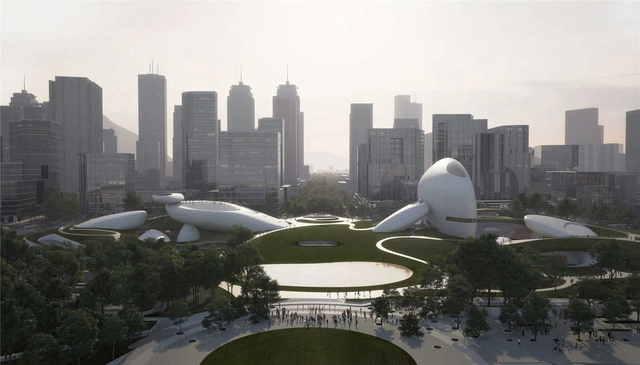
MAD Architects has unveiled its design for the Shenzhen Bay Culture Park along the waterfront in Shenzhen, China. The masterplan puts in place a 51,000 square meters cultural complex that includes the Creative Design Hall, the Shenzhen Science and Technology Museum, and a vast public green space.

MAD Reveals the Shenzhen Bay Culture Park Masterplan - Image 1 of 4MAD Reveals the Shenzhen Bay Culture Park Masterplan - Image 2 of 4MAD Reveals the Shenzhen Bay Culture Park Masterplan - Image 3 of 4MAD Reveals the Shenzhen Bay Culture Park Masterplan - Image 4 of 4MAD Reveals the Shenzhen Bay Culture Park Masterplan - More Images+ 15

AIA Releases Design Strategies for Safer Schools post COVID-19

The American Institute of Architects (AIA) has just released strategies, illustrations, and 3D design models in order to help reduce the risk of COVID-19 in schools. In an effort to assist education officials with reopening schools during the pandemic, the design guidelines are part of the AIA’s initiative “Reopening America: Strategies for Safer Buildings”.

Hachem Designs Hotel Among Lavender Fields in Australia

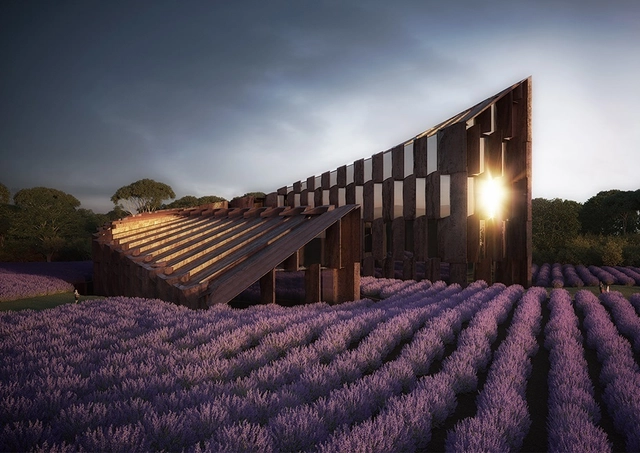
Hachem Architects have designed a new $65 million hotel within a lavender farm in Australia's Yarra Valley. Design as a boutique retreat, the project will also include a facility for infusing lavender into gin. Dubbed Voco, its horseshoe layout is focused towards the Valley’s views and wraps itself around a private courtyard. The design was made to capture the imagination of a new generation of travelers.

Hachem Designs Hotel Among Lavender Fields in Australia - Image 1 of 4Hachem Designs Hotel Among Lavender Fields in Australia - Image 2 of 4Hachem Designs Hotel Among Lavender Fields in Australia - Image 3 of 4Hachem Designs Hotel Among Lavender Fields in Australia - Image 4 of 4Hachem Designs Hotel Among Lavender Fields in Australia - More Images+ 4

Socially Distant Outdoor Yoga Domes Invade the Open Spaces of Toronto

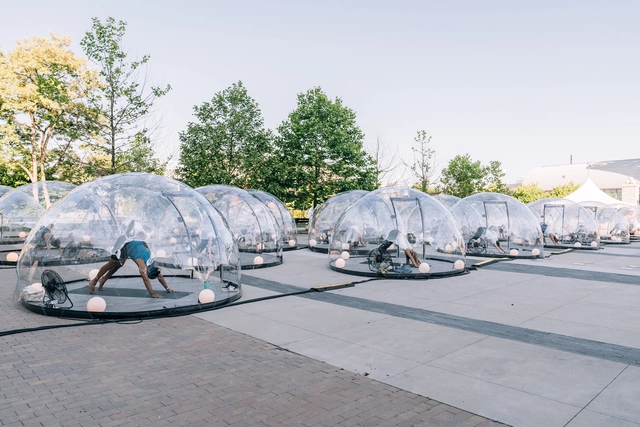
A new pop-up intervention installs 50 private, clear, frameless, geodesic domes in the open spaces of Toronto, Canada. Created by Lmnts Outdoor Studio, the project aims to bring Yoga and fitness workouts safely, to an outdoor setting, while respecting social distancing measures.

Socially Distant Outdoor Yoga Domes Invade the Open Spaces of Toronto  - Image 1 of 4Socially Distant Outdoor Yoga Domes Invade the Open Spaces of Toronto  - Image 2 of 4Socially Distant Outdoor Yoga Domes Invade the Open Spaces of Toronto  - Image 3 of 4Socially Distant Outdoor Yoga Domes Invade the Open Spaces of Toronto  - Image 4 of 4Socially Distant Outdoor Yoga Domes Invade the Open Spaces of Toronto  - More Images+ 9

KCAP’s Dynamic Masterplan for Heidelberg, Germany Moves Forward

The PHVision Masterplan for Heidelberg in Germany has been approved by the City Council. Located on the site of the Patrick-Henry-Village (PHV) in Heidelberg, the 100-hectare development, designed by KCAP can now move forward, transforming the former military area into a new quarter, establishing the knowledge city of the future.

RIBA Releases COVID-19 Recovery Guidance

The Royal Institute of British Architects (RIBA) has published guidance to help practices navigate recovery from the COVID-19 crisis. The Recovery Roadmap is divided into three phases: Response, Recovery and Resilience. Each phase considers a series of actions that practices can take to respond to challenges across different areas of their business throughout this crisis and beyond.

Final Approval Granted for 3XN's Sydney Fish Market

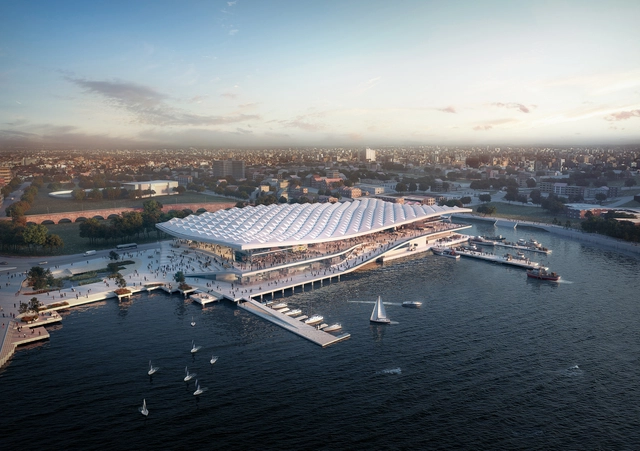
The largest fish market in the southern hemisphere, designed by 3XN, has received the final go-ahead from the NSW Government, paving the way for construction to begin within the next eight weeks. Part of the revitalization of Blackwattle Bay, in Sydney, Australia, the new 65,000 m2 Sydney Fish Market was envisioned as a major public and cultural destination.

Final Approval Granted for 3XN's Sydney Fish Market  - Image 1 of 4Final Approval Granted for 3XN's Sydney Fish Market  - Image 2 of 4Final Approval Granted for 3XN's Sydney Fish Market  - Image 3 of 4Final Approval Granted for 3XN's Sydney Fish Market  - Image 4 of 4Final Approval Granted for 3XN's Sydney Fish Market  - More Images+ 4

OMA and LOLA Unveil Images of the New Feyenoord Stadium in Rotterdam

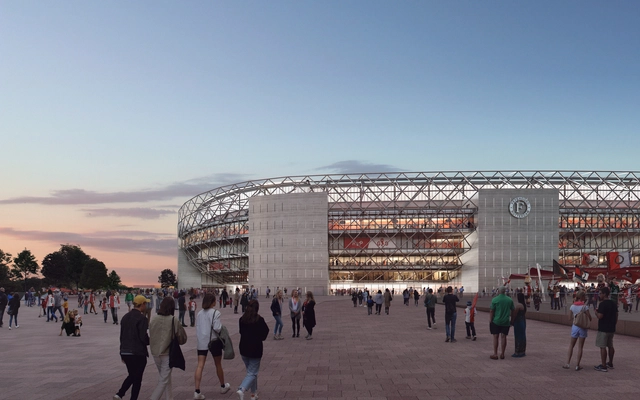
OMA and LOLA Landscape Architects have revealed their design development for the New Feyenoord Stadium, in Rotterdam. Part of the Feyenoord City master plan, the scheme “has been optimized to ensure on-time and cost-effective delivery, while reinforcing its integrity as a vital iconic building”.

OMA and LOLA Unveil Images of the New Feyenoord Stadium in Rotterdam - Image 1 of 4OMA and LOLA Unveil Images of the New Feyenoord Stadium in Rotterdam - Image 2 of 4OMA and LOLA Unveil Images of the New Feyenoord Stadium in Rotterdam - Image 3 of 4OMA and LOLA Unveil Images of the New Feyenoord Stadium in Rotterdam - Image 4 of 4OMA and LOLA Unveil Images of the New Feyenoord Stadium in Rotterdam - More Images+ 12

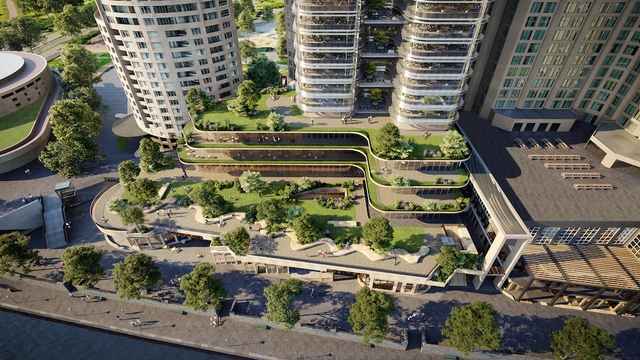
Fender Katsalidis Designs $800 Million Masterplan for Melbourne's Southgate

Fender Katsalidis has released details of a masterplan to revitalize Melbourne’s Southgate precinct. Submitted for planning approval, the project is made to create a new urban marker for Southbank and the city. The $800 million project includes a new 21-level office tower, 2,000 square metres of publicly accessible parkland, and 2,000 square metres of landscaped open spaces.

3 Major Architecture Firms Propose School Buses and Shipping Containers for Accessible Testing Labs

Despite all the news of re-openings, lifted restrictions, al fresco options dining, and a return to something more closely resembling “normal,” COVID-19 is still very much with us. And despite the defeatist/downplayed/nothing to see here stance embraced by the current presidential administration, the United States is still in the midst of an unprecedented public health crisis. In some states, both new reported cases and hospitalizations have now reached record highs.

This being said, the need for accessible, easy to fabricate, and quick-to-deploy testing facility solutions are still in great need, particularly in dense urban areas, at large institutions and workplaces, and in underserved communities where coronavirus testing might come as a luxury, not a basic necessity. In terms of testing availability, all bases need to and must be covered.

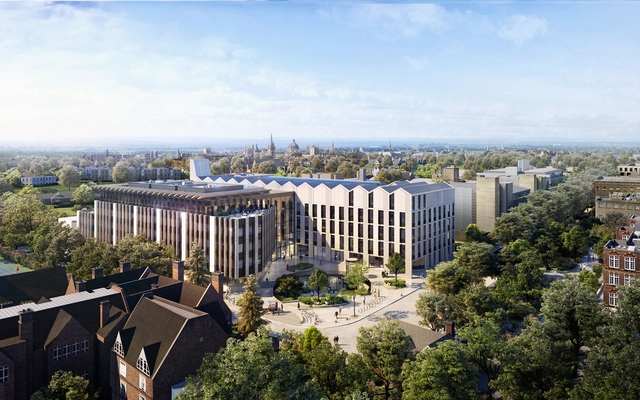
University of Oxford Announces Largest Project in its History, Designed by NBBJ

The University of Oxford and internationally-renowned architecture practice NBBJ have unveiled images of the new Life and Mind Building. The development, the University’s largest building project in its history, will be the new home of the Departments of Experimental Psychology and Biology, including Plant Sciences and Zoology, accommodating 800 students and 1,200 researchers.

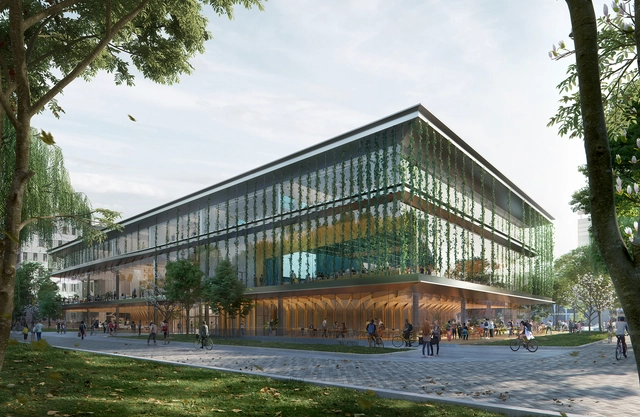
UNStudio Designs a Multifunctional and Flexible Education Building for TU Delft in the Netherlands

Part of Delft University of Technology (TU Delft), in the Netherlands, Echo is a new multifunctional and flexible inter-faculty building, now under construction and due for completion in Dec 2021. Designed by UNStudio, in collaboration with Arup and BBN, the future-proof facility meets the needs of the ever-increasing numbers of students.

UNStudio Designs a Multifunctional and Flexible Education Building for TU Delft in the Netherlands - Image 1 of 4UNStudio Designs a Multifunctional and Flexible Education Building for TU Delft in the Netherlands - Image 2 of 4UNStudio Designs a Multifunctional and Flexible Education Building for TU Delft in the Netherlands - Image 3 of 4UNStudio Designs a Multifunctional and Flexible Education Building for TU Delft in the Netherlands - Image 4 of 4UNStudio Designs a Multifunctional and Flexible Education Building for TU Delft in the Netherlands - More Images+ 7

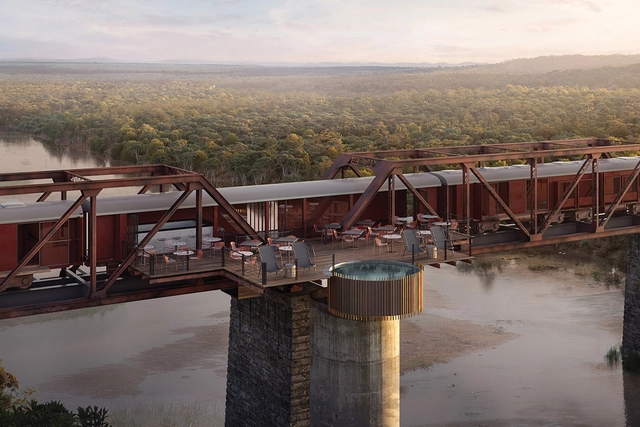
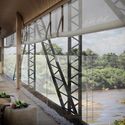
1950s Train Cars to Become Boutique Hotel Above South Africa's Sabie River

A new boutique hotel in South Africa will re-purpose train cars as guest rooms on a bridge above the Sabie River. Each car has been converted to house 31 luxury guest rooms made to highlight local culture. Called the Kruger Shalati, the train scheme aims to celebrate where the first visits to Kruger National Park were allowed in the early 1920s.

1950s Train Cars to Become Boutique Hotel Above South Africa's Sabie River - Image 1 of 41950s Train Cars to Become Boutique Hotel Above South Africa's Sabie River - Image 2 of 41950s Train Cars to Become Boutique Hotel Above South Africa's Sabie River - Image 3 of 41950s Train Cars to Become Boutique Hotel Above South Africa's Sabie River - Image 4 of 41950s Train Cars to Become Boutique Hotel Above South Africa's Sabie River - More Images

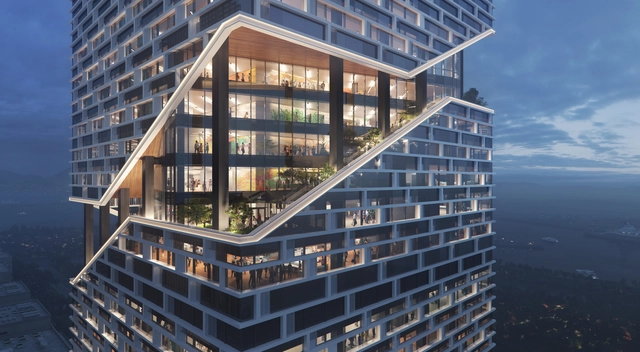
NBBJ Imagines Spiraling Headquarters for Vivo, China's Growing Smartphone and Tech Company

NBBJ has been selected to design the new Vivo headquarters, introducing the next generation of work environments that integrates nature, health, and equal access to amenities. Located in Shenzhen’s Bao’an district, the 32-story spiraling tower highlights an innovative design that embraces the urban-coastal site and reflects the company’s values. Construction began in May 2020 and is scheduled for completion by fall 2025.

First U.S. Exhibition of Pritzker Prize-Winner Balkrishna Doshi to Open in September

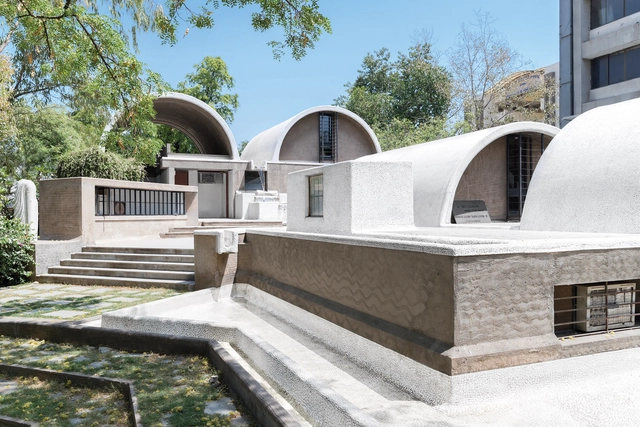
Wrightwood 659, a private institution located in Chicago’s Lincoln Park neighborhood, will host the first U.S. Exhibition of Indian architect, urbanist, and 2018 Pritzker Prize winner Balkrishna Doshi. Running from September 9 till December 12, 2020, the retrospective entitled Balkrishna Doshi: Architecture for the People, is the first display devoted to the works of the laureate, outside of Asia.

First U.S. Exhibition of Pritzker Prize-Winner Balkrishna Doshi to Open in September - Image 1 of 4First U.S. Exhibition of Pritzker Prize-Winner Balkrishna Doshi to Open in September - Image 2 of 4First U.S. Exhibition of Pritzker Prize-Winner Balkrishna Doshi to Open in September - Image 3 of 4First U.S. Exhibition of Pritzker Prize-Winner Balkrishna Doshi to Open in September - Image 4 of 4First U.S. Exhibition of Pritzker Prize-Winner Balkrishna Doshi to Open in September - More Images+ 3