As architects we generally see ourselves as providers of new buildings; we also often see architecture as a way to remedy social ills. For many architects, when presented with a social problem, we try to think of a design for a building which addresses it. But what happens when the problem itself is a surplus of buildings?
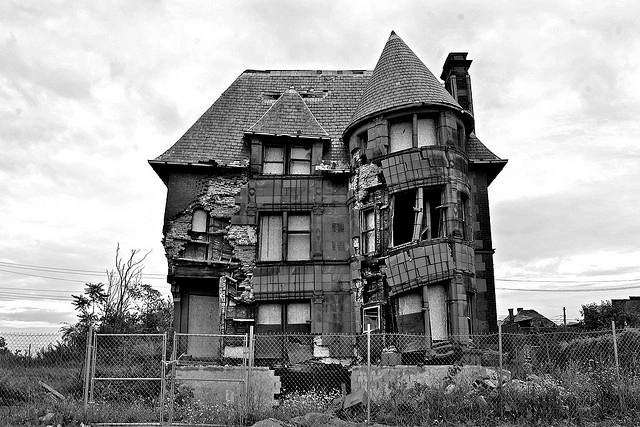
This is exactly the situation that Detroit finds itself in today. Thanks to the rapid decline in population since its heyday in the mid 20th Century, the City of Detroit is home to some 78,000 vacant structures. While politicians worldwide win public support by promising new construction and growth, Detroit Mayor Dave Bing proudly announced his plans to demolish 10,000 empty homes before the end of his term.
The process will be inherently wasteful. Fortunately, some are making the best of the situation, with sustainable initiatives that create jobs and economic benefits for residents. Read on after the break to find out how.
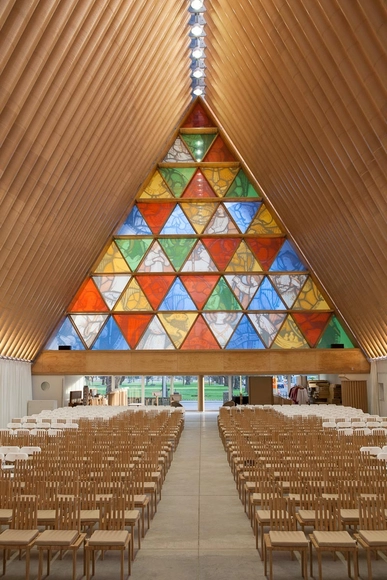
Shigeru Ban’s Cardboard Cathedral is officially open to the public, just over two years after the crippling 6.3 magnitude earthquake ravished the New Zealand town of Christchurch. With an expected lifespan of 50 years, the temporary cathedral will serve as a replacement for the city’s iconic 1864 Anglican cathedral - one of Christchurch’s most prized landmarks - until a more permanent structure is built.
BIG, WHR and Arup have been shortlisted alongside two other design teams to participate in the second phase of the design competition for what will be Denmark’s largest hospital. The 124,000 square meter facility, known as the Nyt Hospital Nordsjælland, is planned to be built north of Copenhagen.
According to the jury, “BIG’s ideas, together with the large green spaces and green surfaces, mean that we really can talk about a healing hospital in the best possible interpretation of the concept.”
We will keep you updated as details of the other shortlisted teams emerge.
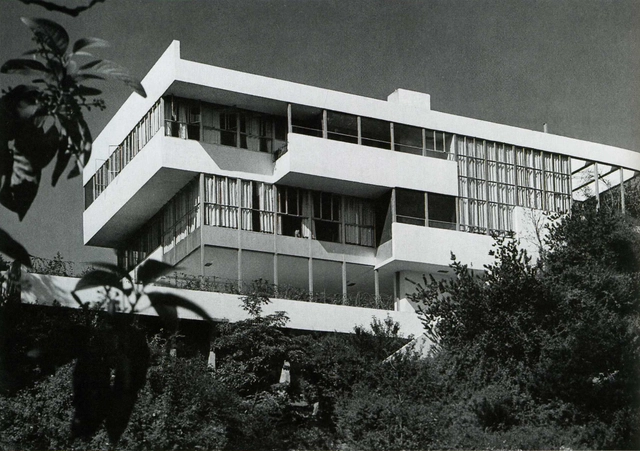
Richard Neutra's 1929 Lovell House. Image Courtesy of Wikiarquitectura
A shadow hangs over the hills of Los Angeles, threatening its modernist architecture. In this article on the Daily Beast, Andrew Romano investigates the trend for the 'McMansions' which are now popular among LA's super-rich, and the risk that they pose to the style that "many believe was perfected in Southern California" - the hillside modernist home. But it's not all bad news: he finds that the Schairer House, designed by Gregory Ain in 1949 is now being restored, and Beverly Hills last year past its first preservation laws. Read the full article here.
The World Architecture Festivalis around the corner! On October 2nd-4th, hundreds of architects will gather inSingaporefor an intense dose of architecture, in the form of panels, lectures, live crits, and more. You can see all the shortlisted projects here.
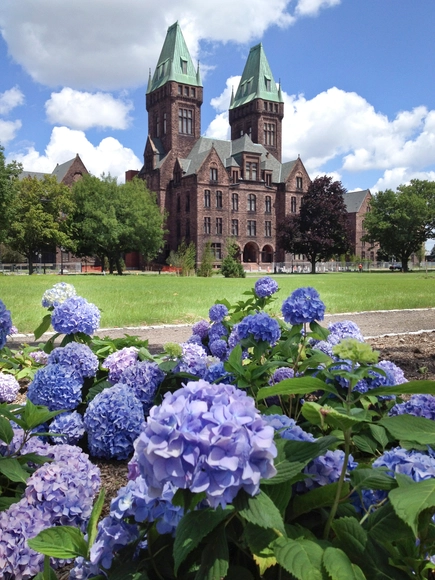
New York Governor Andrew Cuomo has announced that the Richardson Olsmted Complex, a National Historic Landmark that is widely considered to be one of Buffalo's most important and beautiful buildings, will be rehabilitated and reused as a hospitality venue and cultural amenity for the city. The design team, including New York-based Deborah Berke of Deborah Berke Partners and Buffalo-based Peter Flynn of Flynn Battaglia Architects, have high hopes of transforming the unused building into a "thoroughly modern travel and cultural experience" while maintaining a deep respect for its long history.
"Working on the rehabilitation of the Richardson Olmsted Complex is an extraordinary design opportunity," said Deborah Berke. "We are designing a 21st-century architectural addition to H. H. Richardson's spectacular 19th-century buildings that is both rooted in history and forward thinking."
In this interview with BD, Richard J Williams discusses his recent book "Sex and Buildings," which analyses how some places, such as his home town of Edinburgh, "wear their morality on their sleeve," while other places. such as Brazil, have an idea that "modernism can be sexy." He also talks about the US attitudes to sex and modernism, bringing up the 'Playboy townhouse' of the 1960s and the TV show Mad Men, as well as architects Richard Neutra, Rudolph Schindler and John Portman. You can read the full interview here.
The advent of electrical lighting has allowed us to colonise the night. Not only have kilometres of street lighting ensured higher levels of safety, but signs, advertisements, etc. continue to draw us into nocturnal landscapes. As Rem Koolhaas explored in Delirious New York, Manhattan and Coney Island were the early luminous prototypes for today’s continuously vibrant metropolises: cities that establish new rhythms, a new balance between work and life.
But what happens when lighting upsets our natural balance? When we lose the beauty of the dark sky, the stars? What happens when lighting turns into pollution?
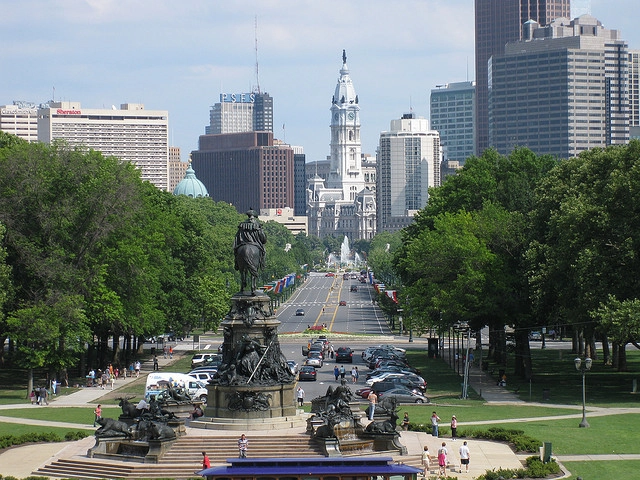
In this article in the Wall Street Journal, a number of key players discuss the ongoing work to transform "the most elegant urban boulevard in the US", Philadelphia's Benjamin Franklin Parkway. The parkway has been on a long journey from boulevard to highway, and thanks to a new plan entitled "More Park, Less Way", it could be on its way back, with a variety of plans to change the Parkway into a vibrant, more densely populated series of spaces with more amenities for local residents. You can read the full article here.
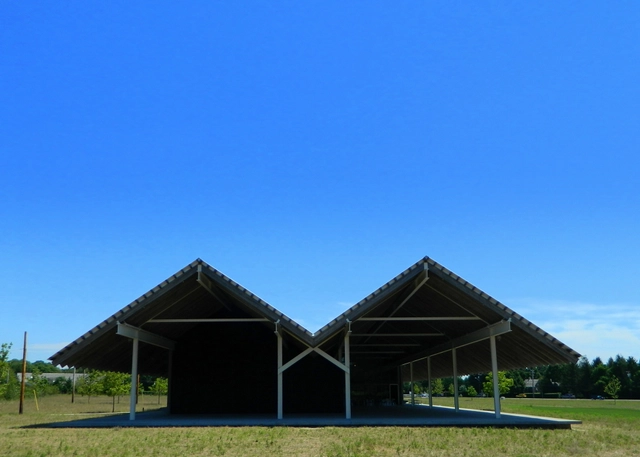
The Herzog & de Meuron designed Parrish Art Museum in Long Island, NY is captured here by brazilian photographer Paul Clemencefrom Facebook.com/Archi-Photo. This photo gallery very elegantly emphasizes the building's delicate placement on the landscape as well as its natural surrounding beauty of which the architects took their inspiration. Clemence also captures the project's moment of outdoor shelter that surrounds the building to emphasize the importance of the site and its interaction with the art within.The full photo gallery can be viewed after the break.
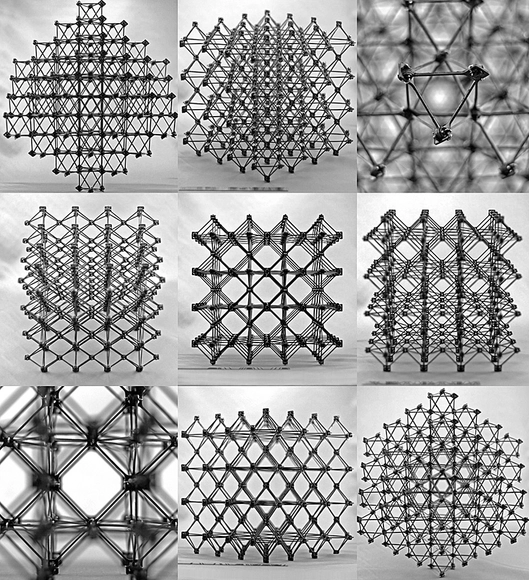
MIT researchers have developed a lightweight, interlocking composite component which can be snapped together to create airplanes, spacecraft and even larger structures. Likened to chain mail but based on a newly-developed geometry, the parts form a structure that is 10 times stiffer for a given weight than existing ultralight materials. The structure allows much less material to carry a given load and could revolutionize all moving vehicles, reducing their weight and the costs of construction while allowing greater design flexibility. To find out how it happens, read the full description here.
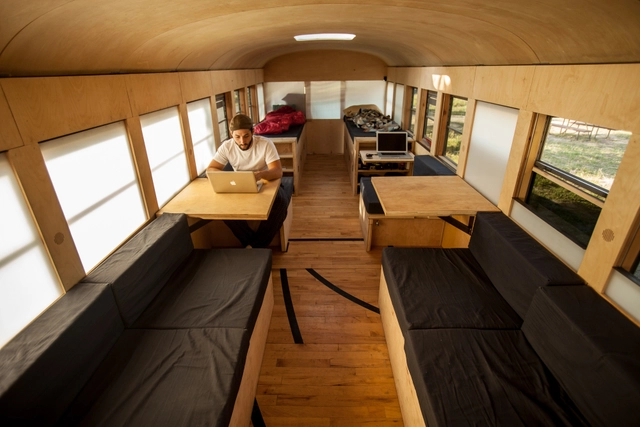
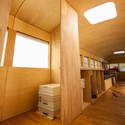
Like many architecture students, Hank Butitta was frustrated. Frustrated that the projects he and his fellow classmates were painstakingly, time-consumingly crafting at architecture school resulted—almost always—in nothing. But Hank Butitta, unlike many architecture students, decided that, for his thesis, he would buy an old school bus and turn it into a flexible living space. The result: a 225 square foot mobile home—complete with reclaimed gym flooring and dimmable LED mood lighting.
On his website (www.hankboughtabus.com), Butitta says, “This project was a way to show how building a small structure with simple detailing can be more valuable than drawing a complex project that is theoretical and poorly understood.” Since the project (which was envisioned with a nod to the tiny house movement) was picked up by the media last week, fans and commenters have flooded the site, asking Hank how he resolved certain problems and where he sourced the materials.
Ten of Los Angeles’ Case Study Homes have been deemed historically significant an worthy of being included on US’s National Register of Historic Places. Despite the Los Angeles Conservancy’s belief that all of them deserve “equal preservation protections,” the 11th home was not included due to “owner objection.”
The Case Study Houses spawned from a post-WWII residential experiment, presented by the Arts & Architecture magazine in 1945, which introduced modern movement ideas for affordable and efficient housing. The homes - designed by the likes of Richard Neutra, Charles and Ray Eames, Pierre Koenig, Eero Saarinen and others - redefined the modern home. And, with the help of Julius Shulman, placed Los Angeles as an epicenter for mid-century modernism.
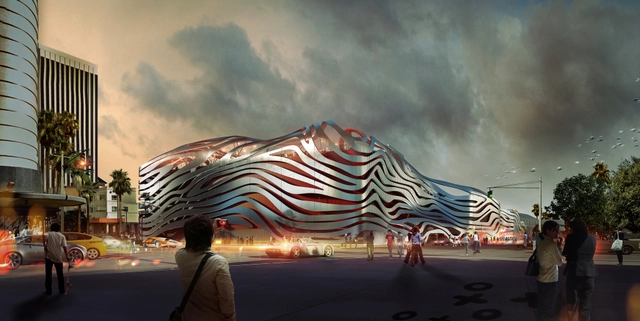
The Petersen Automotive Museum in Los Angeles has announced that it will celebrate its 20th anniversary in 2014 with a redesign of its interior and a complete transformation of its exterior facade to create a "world class museum that will showcase the art, experience, culture and heritage of the automobile." The exterior design by Kohn Pedersen Fox Associates will give the Petersen a truly unique and iconic look that will hopefully attract architecture and car enthusiasts alike.
More on the museum's drastic transformation after the break.
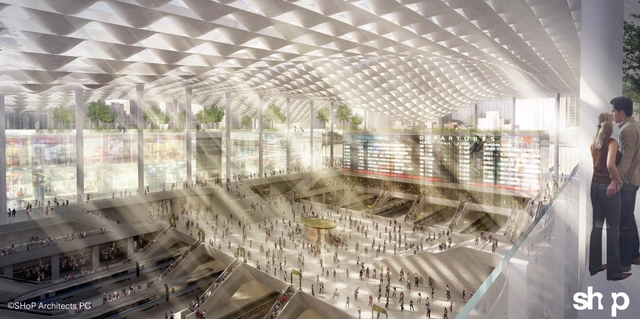
In this article in the New York Observer, Stephen Jacob Smith discusses the future of Penn Station, now that Madison Square Garden's permit has been extended by just 10 years. Smith thinks that the grand redesigns of the station itself are pure vanity - considering the poor organization of the current station and the competing interests of the stakeholders involved - and proposes that there are better improvements to be had in unseen infrastructure improvements rather than show-stopping architecture. Read the full article here.
Colorado’s Biennial of the Americas has invited artists and architects from across the Americas to participate in the second edition of Draft Urbanism: a citywide exhibition that examines the evolving relationship we have with our cities. This year, four architects - plan:b arquitectos (Colombia), Pezo von Ellrichshausen (Chile),June14 Meyer-Grohbrügge&Chermayeff (New York/Berlin), and Alex Schweder(New York) - were commissioned to each design and build a large-scale installation that address site-specific urban challenges and key planning issues presently facing downtown Denver.
With urban challenges ranging from Denver’s over abundance of surface parking lots to the effects of an 8-lane thoroughfare that splits the downtown core, these four installations aim to portray a deep understanding of the city’s history while proposing innovative ways in which art can address our urban future.
Read on to learn about the installations and view a short film for each by Cristobal Palma.
The winners of the Inside2013 Competition, hosted by the Morpholio Project, have just been announced. The Competition emphasized the wealth of talent brimming from young designers, especially with respect to creative structures for communities. These winning entries, which publicly promote the research, exploration and investigation currently happening amongst today's emerging talent, take into consideration our increased use of technology and contribute ideas which are not so far off from being realized in the future. More images and information on the winners after the break.
The July Architecture Billings Index (ABI) has jumped to 52.7, up more than one full point from June's 51.6, indicating "acceleration in the growth of design activity nationally." As any score above 50 indicates an increase in billings, July's score reflects an increase in demand for design services; this increase was seen most dramatically in the area of new projects, which jumped from 62.6 in June to 66.7 in July.
Despite the optimistic results, AIA Chief Economist, Kermit Baker, noted the uneven nature of the growth, and warned that "it is premature to declare the entire sector has entered an expansion phase.”
More statistics from July's ABI, after the break...
Norman Foster has walked away from a $670 million expansion project for Moscow’s largest museum of European art: The Pushkin Museum of Fine Arts. According to The Art Newspaper, the prized British architect resigned from the project back in June after Moscow’s chief architect, Sergei Kuznetsov issued an ultimatum that demanded Foster either work and defend the project himself or turn it down.
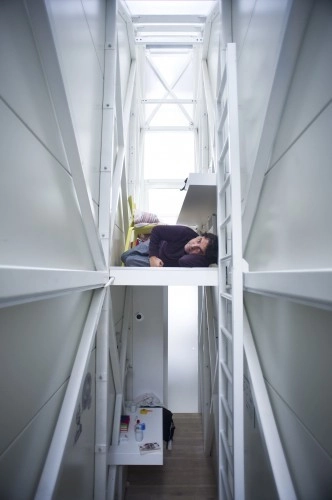
Would you ever want live in the Keret House - the world's skinniest dwelling - in Warsaw, Poland? Well, now's your chance. The Polish Modern Art Foundation has announced an open call for resident applications to artists (under age 35) practicing in the fields of architecture, visual arts, literature, music or film. If selected, artists will have the opportunity to live in the Keret House for up to 21 days to realize a project of their own design. The residency aims to foster individual artistic expression, promote creative exchange, and expose artists to the cultural environment of Poland while offering them the chance to experience what many believe to be an "impossible architecture." See if you are eligible to apply here.
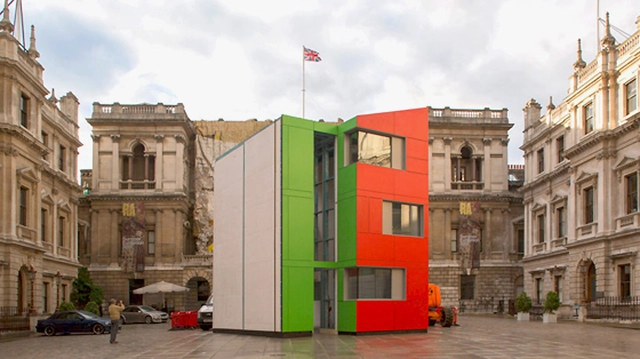
Rogers Stirk Harbour + Partners (RSHP) have unveiled a three story flat-pack house in the courtyard of London’s Royal Academy of Arts (RA). Designed as an answer to the UK’s urgent need for cost-effective housing, the prototype demonstrates a method of building "high-quality, well-designed houses significantly cheaper than other traditional methods of construction."
RSHP, known for their large-scale projects, envisage Homeshell as part of a wider platform which could encompass apartments, schools, factories and healthcare centers.
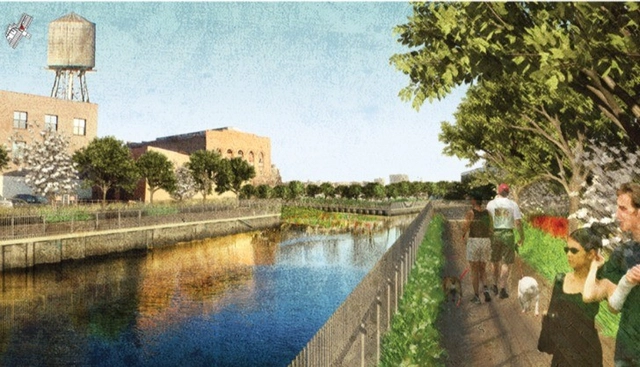
One of the United States’ most polluted bodies of water is about to receive a much needed make-over: In early 2014, construction will begin on a pollution-preventing greenscape that will run alongside Brooklyn’s Gowanus Canal. The proposal, dubbed Sponge Park, was envisioned more than five years ago by Susannah Drake of dlandstudioand has just now “soaked up” enough funds to move forward.
After initially getting the go-ahead earlier this year, the design for the Maze Peace Centre in Northern Ireland, designed by Daniel Libeskind in collaboration with McAdam Architects, was dealt a major blow last week, when First Minister of Northern Ireland Peter Robinson retracted his support for the controversial building, saying that it would be wrong to continue with the build without achieving a consensus.
Read on after the break to find out more about the controversy.
Videos
This satellite image of Bolivia shows dramatic deforestation in the Amazon Basin. Courtesy of Google.
NASA, in cooperation with TIME and Google, has unveiled startling timelapse images of Earth from orbit collected by NASA's Landsat program since 1984. This program, created not for spycraft but for monitoring the way in which humans are rapidly altering the surface of the planet, consists of eight satellites that have collected millions of pictures in the course of two generations. When sifted through, cleaned up and stitched together, these pictures come together to create a high-definition slideshow that reveals some of the drastic changes our planet is undergoing - most notably through widespread urbanization.