Videos
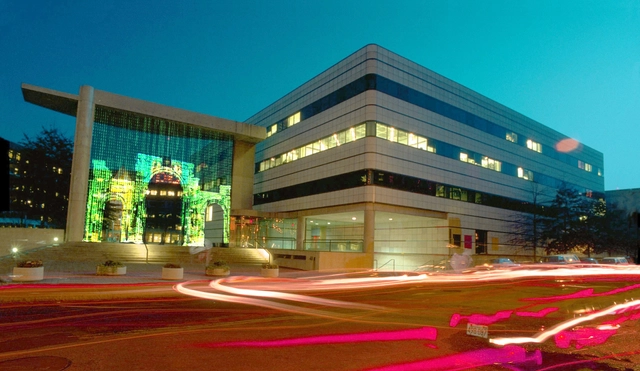
Photomontage of the Memory Matrix installation at night in front of the Wiesner Building, MIT campus. Image credit: Photomontage by Azra Aksamija, 2016. Original photo of the MediaLab by Steve Mann. Image Courtesy of Resnicow and Associates
In honor of the centenary of MIT's move to the Cambridge Campus, the university has carried out a series of public events this spring, including the installation of two innovative architecture and design projects: Memory Matrix and Biaxial Tower.
Installed in the iconic arch of MIT’s Wiesner Building (designed by Pritzker Prize winner and MIT alumni I.M. Pei), Memory Matrix is a giant screen made of intricate pixel-like Plexiglass elements, arranged to form larger matrix-like screens that reveal an image of the recently destroyed Arch of Triumph in Palmyra. The image is only visible during the day through the movement of wind and light, and at night, through the illumination of the pixels. Spearheaded by Azra Aksamija, Memory Matrix will be on display from April 23 through May 7.
“All nations and regions returned positive workload forecasts, with practices in the North of England being the most optimistic. Large practices (51+ staff) remain the most positive. Medium-sized practices (11–50 staff, balance figure +48) saw a boost in confidence levels, while small practices (1–10 staff, balance figure +28) were upbeat, however to a lesser degree," states the report.
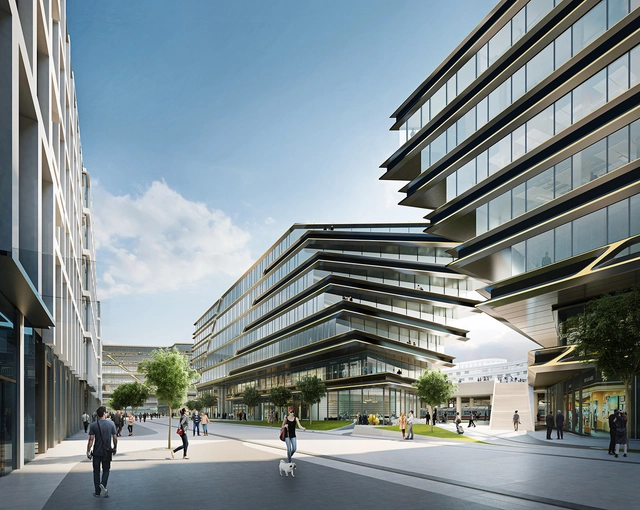
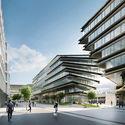
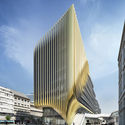
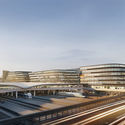
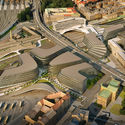
Zaha Hadid Architects (ZHA) has revealed plans to design and redevelop more than 22,000 square meters of brownfield land in Prague, in a 90,000 square meter development adjacent to the city’s Masaryk Railway Station. ZHA was selected by project partner Penta, an investment company active in ten markets across Europe, as the winner of a 2014 competition for the site. Devising a new central business district, the ZHA plan seeks to integrate with existing means of transit, including suburban and domestic rail services, a bus terminal, Line B of the city’s metro, and a future airport rail link to Vaclav Havel International Airport. Approximately one kilometer from Prague’s central square, the design seeks to create a balance between the horizontality of the railway lines and the verticality and publicness of the Old Town.
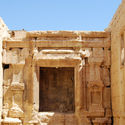
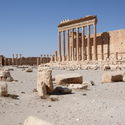
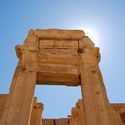
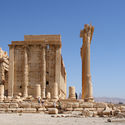
In August of last year, many of the most precious landmarks of the ancient city of Palmyra were damaged or destroyed by the forces of ISIS in a violent, iconoclastic attempt to send a message to the rest of the world. Since the UNESCO World Heritage Site was recaptured in March, the question in the architectural preservation community has been how to rebuild and preserve the buildings. That process will begin, of course, with a thorough assessment of the damage.
Shortly after Palmyra was recaptured Iconem, a French company which specializes in the digitization of archeological sites, arrived in Palmyra to lead the survey. In partnership with the Syrian DGAM (Direction Générale des Antiquités et des Musées), Iconem was granted access to the city to survey the damage to the temples of Bel and Baalshamin, the Monumental Arch, the Valley of Tombs, and the museum—all sites which are of the most cultural value and therefore were the greatest targets of ISIS's violence.
ROSSETTI has unveiled their design for a proposed development in downtown Detroit on the site of a currently unfinished jail. The project features a new MLS stadium with 20,000-25,000 seats, a training facility, a retail area, a parking structure for more than 5,000 cars, and four towers programmed for a hotel and residential and office spaces.
The Board of Directors of La Biennale di Venezia, upon recommendation from Alejandro Aravena, have announced the Brazilian Pritzker Prize-winning architect Paulo Mendes da Rocha as the recipient of the Golden Lion for Lifetime Achievement of the 15th International Architecture Exhibition, Reporting From the Front. Citing the "timelessness" of his work "both physically and stylistically" as "the most striking attribute of his architecture," the board have also stated that "this astonishing consistency may be the consequence of his ideological integrity and structural genius."
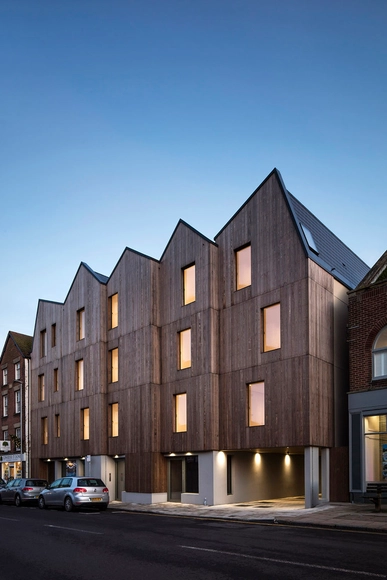
The Royal Institute of British Architects (RIBA) has announced six winners for its RIBA South East Awards, which recognize architectural excellence in the regions of Kent, Surrey, East Sussex, West Sussex and the Channel Islands. These winners will be considered for a RIBA National Award, which will be announced on June 23. Winners of the National Award will then be eligible for the RIBA Stirling Prize later in the year.
The six winners of the RIBA South East Awards are:
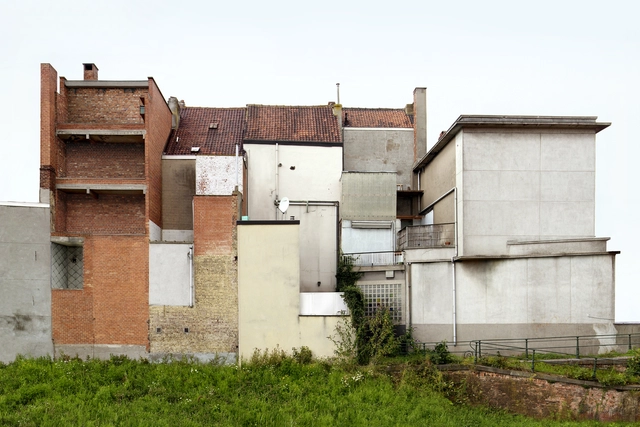
A practice of architects, an interior architecture firm, and an architectural photographer will together be presenting the Belgian contribution to the 2016 Venice Biennale. Architecten de vylder vinck taillieu, interdoorzon interieurarchitecten and Filip Dujardin—self-styled as the Bravoure (Bravura) team—will explore "what craftsmanship can mean during a period of economic scarcity" as, according to the curatorial team, "dealing with scarcity demands a high level of precision."
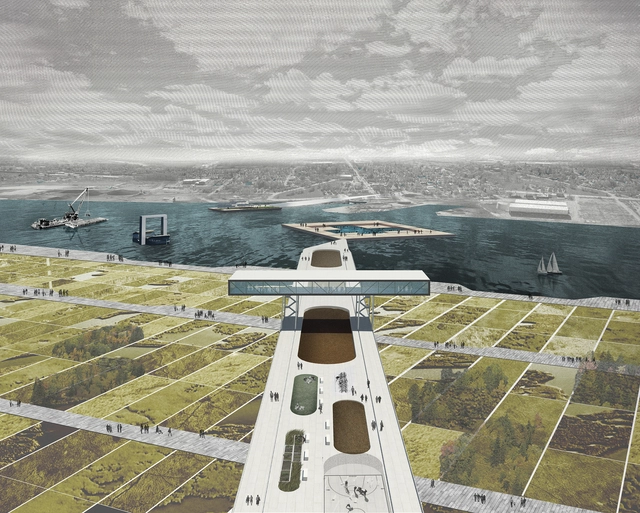
The Architectural League of New York has announced the winners of its thirty-fifth annual Architectural League Prize for Young Architects + Designers. First launched in 1981 and selected by a committee of former recipients and League Program Director Anne Rieselbach, the Architectural League Prize is one of the most prestigious awards given to young architects, who are recognized for their talent and forward-thinking ideas. This year’s theme for the competition, “(im)permanence”, asks how time plays a role in architectural style, means of assembly, and its relationship to program which ultimately alters expectations of architecture in an “impermanent environment.”
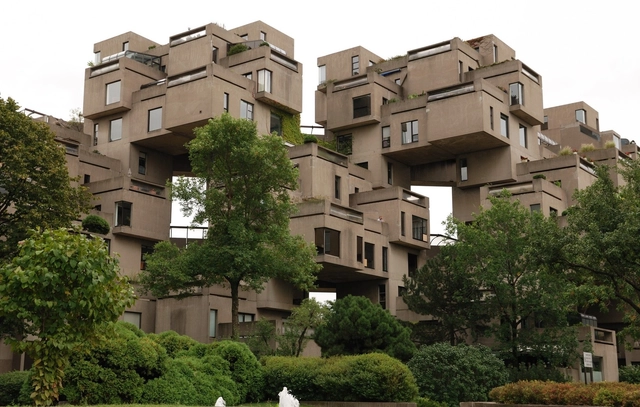
Moshe Safdie will be honored with a Lifetime Achievement Award at the 2016 National Design Awards of the Cooper Hewitt, Smithsonian Design Museum. The museum states, “The Lifetime Achievement Award is given in recognition of a distinguished individual who has made a profound and long-term contribution to the contemporary practice of design.” Safdie and his fellow recipients will be honored at the 17th annual National Design Awards gala in New York in October.
The Global Art Affairs (GAA) Foundation in collaboration with PLANE-SITE, has produced a series of interviews with world renowned architects that will be available for public viewing at the TIME SPACE EXISTENCE exhibition at the 2016 Venice Architecture Biennale. The prestigious list of architects includes Peter Eisenman, Denise Scott Brown, Curtis W. Fentress, Meinhard von Gerkan, Dirk Hebel, the late Frei Otto, and Wong Mun Summ and Richard Hassell of WOHA.
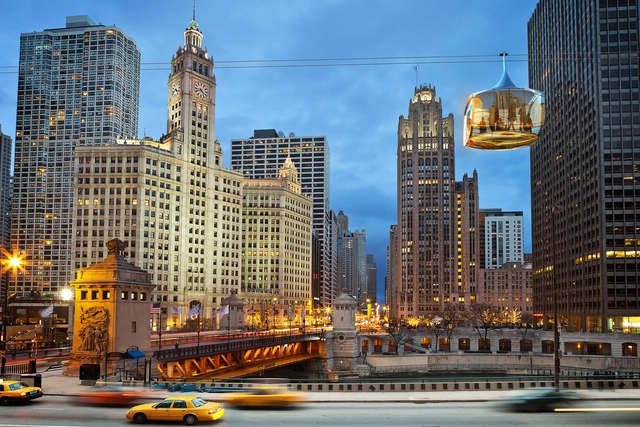
Courtesy of Marks Barfield Architects and Davis Brody Bond
Marks Barfield Architects and Davis Brody Bond have revealed plans for the “Chicago Skyline” an aerial cable car attraction spanning from the Chicago Riverfront to Navy Pier and through Downtown along the Riverwalk. The project, still seeking permission, is meant to enable visitors to experience the fabled Chicago skyline in a new way, viewing the city and lakefront from custom-designed pods or “gondolas”. The design shares many similarities with the pill-like capsules surrounding the London Eye, which was also designed by Marks Barfield Architects. The Skyline is being marketed as a practical solution to link Navy Pier to the transit network within the Chicago Loop.
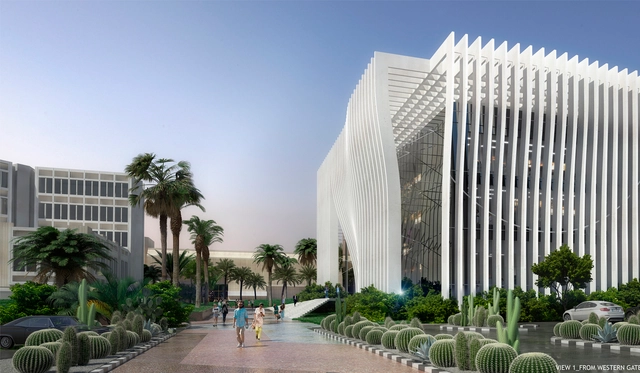
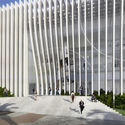
Atelier d'Architecture Michel Remon has been announced as the winner of the Open International Competition for the Tel Aviv University Nanoscience and Nanotechnology Centre. The French company has a history of designing buildings for technological purposes, including the National Research Centre for Scientific Research (Meudon, suburb of Paris), the Physics and Biology Laboratories for Ecole Polytechnique (Palaiseau, suburb of Paris), the National Solar Energy Institute (Savoy), and the Paris-Saclay Research Сentre of Air Liquide. In Tel Aviv, a matrix of vertical lines creates a "skin" over a three story, 6,000 square meter structure that will house 12 research labs – including those for physical, biophysical, and neural engineering, as well as molecular electronics, and others – in addition to offices and public areas. Once complete, the building will house 120 scientists and engineers as collaborators with one of the most significant universities in Israel.
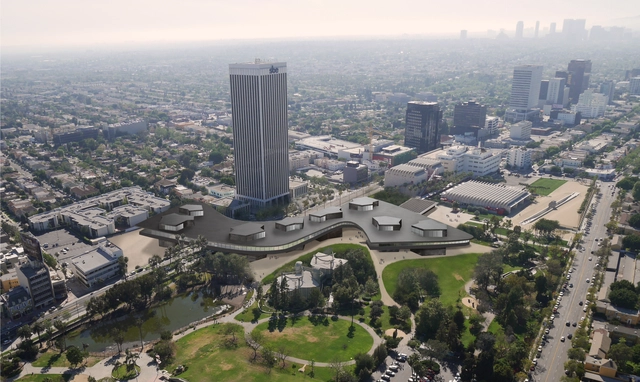
The Los Angeles County Museum of Art (LACMA) has announced two gifts totaling $75 million dollars, bringing the museum’s Peter Zumthor designed campus overhaul one step closer to reality, reports the Los Angeles Times. Elaine Wynn, one of the world’s top art collectors, has pledged $50 million dollars, and former Univision chairman A. Jerrold Perenchio has promised $25 million, bringing the total funds raised and approved to $275 million, just shy of halfway to the $600 million required for the project.
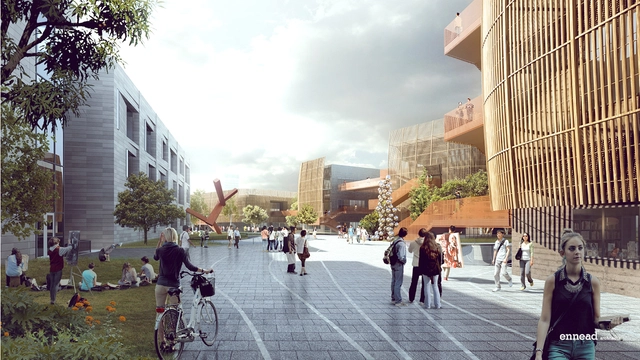
Ennead Architects have unveiled their proposed design for the Tianjin Academy of Fine Arts campus expansion, master planning and architectural design competition. “This campus expansion and re-envisioning positions Tianjin Academy of Fine Arts—one of China’s top schools of fine art—as an Academy in the Park,” inspired by nature and an oasis destination within the dense urban fabric of Tianjin, write the architects.
European Expressionism in architecture has, until now, suffered from neglect. Following a successful campaign for the first volume in a planned seven-part series which focused on Berlin, a new version of the Fragments of Metropolis series—which covers with the Rhein-Ruhr region of Europe—will document 155 buildings from Bochum, Bottrop, Dortmund, Duisburg to Düsseldorf, Cologne, Münster and Oberhausen. This latest volume is currently being crowdfunded.
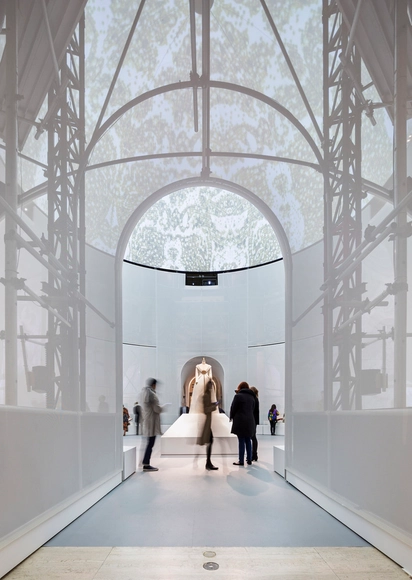
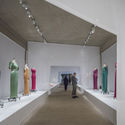
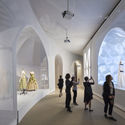
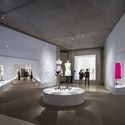
With the conclusion of this year’s Met Gala, on Thursday the public will have their first look at the Costume Institute of the Metropolitan Museum of Art’s new spring show, "Manus x Machina". According to the museum, “[the exhibition] will explore [an] ongoing dichotomy, in which hand and machine are presented as discordant tools in the creative process, and question the relationship and distinction between haute couture and ready-to-wear.” Occurring in the museum’s Robert Lehman Wing, a 1975 expansion by Kevin Roche and John Dinkeloo, the exhibition design has been developed by Shohei Shigematsu of OMA New York. Organized by Andrew Bolton, the Curator of The Costume Institute, the exhibition will feature over 100 samples of “haute couture and avant-garde ready-to-wear, dating from an 1880s Worth gown to a 2015 Chanel suit.” Read on for a small preview of the exhibition, fashion, and spectacle of Manus x Machina, on view from May 5 - August 14.
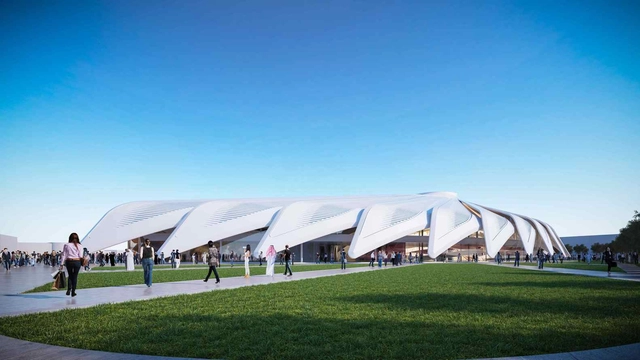
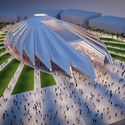
Santiago Calatrava has won the competition to design the United Arab Emirates Pavilion for the Expo 2020 Dubai in 2020. Nine finalists submitted 11 concepts that were evaluated on three criteria: their expression of Expo’s theme, “Connecting Minds, Creating the Future,” whether the design was evocative of the UAE, and if a balance was struck between the country’s past and future. Calatrava’s design proposes a 15,000 square meter pavilion with exhibition areas, an auditorium, food and beverage outlets, and VIP lounges. The design is meant to evoke the wings of a falcon in flight, linking itself to the country’s history of falconry to emphasize the country’s present-day goals of global connectedness.
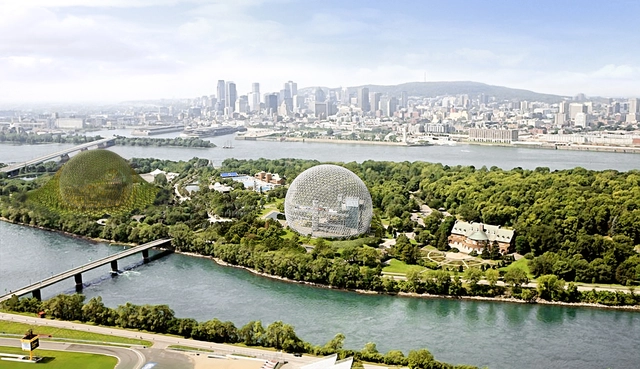
In anticipation of the upcoming 50th anniversary of Expo 67, Studio Dror has proposed a 150-meter-wide vegetated dome for Park Jean Drapeau, the original site of the World Fair. The new dome would complement Buckminster Fuller’s Biosphere, which was built as the US pavilion for Expo 67.
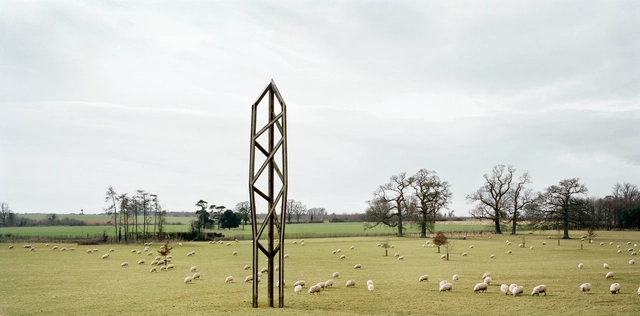
Two sculptures—Obelisk by Alison and Peter Smithson and Columns by Álvaro Siza Vieira—have been re-erected in Shatwell, a "semi-derelict agricultural complex" located in rural England. The instatement of the monuments form a part of an evolving programme of installations which Drawing Matter, an organisation founded by Niall Hobhouse "that champions the process of architecture through collecting, archiving and commissioning," will use to explore the relationship between architecture, sculpture and landscape.
The Australian Institute of Architects have awarded their highest honor, the Gold Medal, to the founders of ARM Architecture during the 2016 Australian Achievement in Architecture Awards. Based out of Melbourne and Perth, ARM is widely known for their “contemporary, often daring, sometimes controversial designs.”
Established in 1988 by directors Stephen Ashton, Howard Raggatt, and Ian McDougall, the large scale practice has had a significant impact on design throughout Australia. They've designed a range of projects including cultural buildings, urban design and planning, office buildings, apartments, community projects, and shopping centers.
The Serbian Orthodox Cathedral of St. Sava, a New York landmark built in 1851 by Richard Upjohn, burned Sunday night in a fire after more than 700 parishioners celebrated Easter, reports NBC New York. Originally known as Trinity Chapel, the cathedral was created as satellite location for Trinity Church at Wall Street and Broadway in Lower Manhattan, also designed by Upjohn, after parishioners began to settle farther from the original location. The church was later joined by a Clergy House and the Trinity Chapel School in an ecclesiastical complex, but in 1943 the chapel and neighbors were sold to the Serbian Orthodox Church. The cathedral, stretching between 25th and 26th Street, was nearly 180 feet long, and had one of the largest hammerbeam roofs in the city. The New York Landmarks Conservancy partnered with the church for a 2002-03 restoration of the building's facade and roof. The four-alarm fire that was contained by Monday morning is under investigation as suspicious.
Architects are famously cynical about the long hours and over-education required for what can be a thankless career. But in a recent study conducted by WalletHub, “2016’s Best & Worst Entry-Level Jobs”, recent grads and seasoned professionals alike may be surprised to find that “architect” is ranked 10th out of 109 evaluated professions. Read on to find out how they calculated their result.













_Morley_von_Sternberg_reduced.jpg?1485964869&format=webp&width=640&height=580)