The Royal Institute of British Architects (RIBA) Competitions has announced a shortlist of 5 teams in the competition for the Upper Orwell Crossings Project in Ipswich, England. The project brief consists of 3 new bridges spanning the Upper Orwell River that will enable the redevelopment and regeneration of several districts of Ipswich, as well as relieve congestion and improve connectivity for multiple forms of transportation.
“This national museum helps to tell a richer and fuller story of who we are,” said Obama. “It helps us better understand the lives, yes, of the president but also the slave, the industrialist but also the porter, the keeper of the status quo but also the activist seeking to overthrow that status quo.”
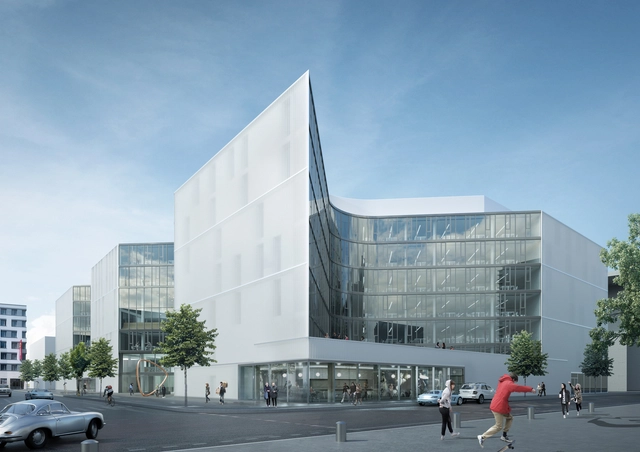
On Tuesday, September 6th, a groundbreaking ceremony was held for the newly planned “Berliner Block,” the Zalando Headquarters — a structure designed by HENN Architects for Europe’s largest online dealer in footwear and fashion. Along with David Schneider of Zalando Management Board and Berlin’s governing mayor Michael Muller, architect Gunter Henn spoke about the construction project currently underway.
The Lisbon TriennaleMillennium bcp Début Award was created to celebrate the achievements, and promote the careers of, young architects and practices under the age of 35.
More than 140 applications were received, representing five continents and including 39 countries including Portugal, Germany, Brazil, and Mexico, as well as Iran, Jordan, Sudan, and Palestine. The jury have praised the very high level of the proposals across the board.
As part of the exhibition, filmmaker Moritz Dirks sat down with 16 of the top architects working in China today, including Wang Shu, Dang Qun of MAD Architects, and Zhu Pei of Studio Pei-Zhu, to discuss the challenges of creating cultural spaces that relate both to the global, digital, urban contexts of the contemporary world and to the strong heritage and identity of Chinese culture.
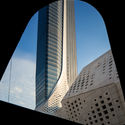
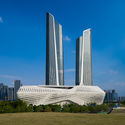
Photographer Khoo Guo Jie of Béton Brut has provided us with some new images of Zaha Hadid Architects’ Nanjing International Youth Culture Centre, now nearing completion along the Yangtze river in Hexi New Town, Nanjing’s new central business district.
Occupying a 5.2 hectare site, the complex contains 465,000 square meters of floor space, which includes a hotel, conference center, offices and underground parking, and is part of a larger masterplan by ZHA that will feature a pedestrian bridge linking the plaza with the other side of the river.
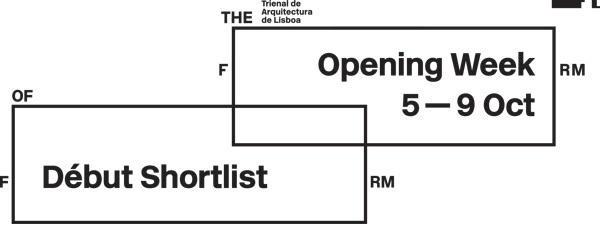
The Form of Form starts on the holiday that celebrates the implementation of the Portuguese Republic with exhibition openings, debates, book presentations and many other activities. The intensive programme of the opening week will give a sneak-peek into what will follow until 11 December. The Lisbon Architecture Triennale invites you to join this celebration of architecture and the city. Book on your calendar.
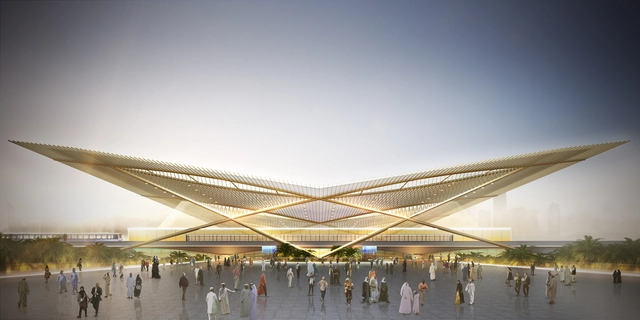
Working in collaboration with global engineer CH2M, Alstom, and Acciona and Gulermack, the firm was selected ahead of ten rival bids for the high-profile project, which will connect Nakheel Harbor & Tower with the World’s Fair site.
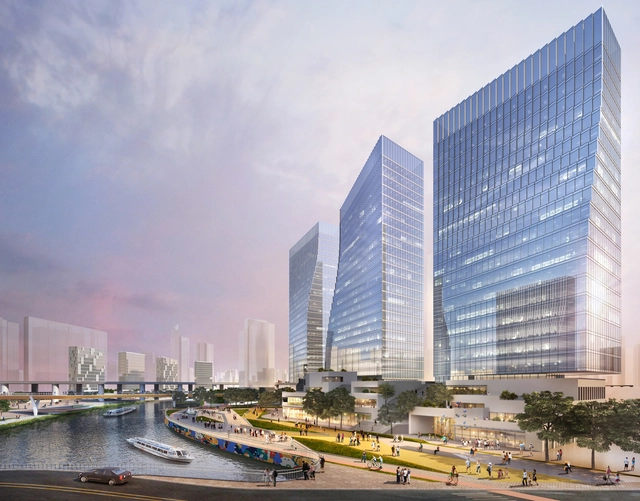
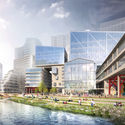
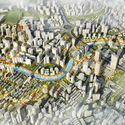
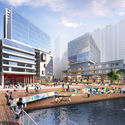
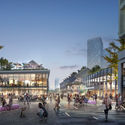
U.S.-based firm Sasaki has won the international competition to redesign Suzhou Creek—also known as the Wusong River—in Shanghai, China, which was historically one of the city’s most vital water routes, but which, in recent decades, suffered severe pollution and neglect. After receiving a grant from the Asian Development Bank, the waterway has been cleaned and is now in the process of becoming a new centerpiece for Shanghai.
After working for OMA, BIG, FR-EE and REX, architect-turned-artist Se Yoon Park has dedicated the last three years to Light, Darkness, and the Tree, a sculpture series employing digital fabrication techniques to express an allegory for life. With assistants, Vladislav Markov, Kelly Koh, David Temann Lu, Ramon Rivera, Kara Moats, and Insil Jang, Park uses dynamic light and shadow to capture movement on surfaces that contort, split and disappear into each other.
Videos
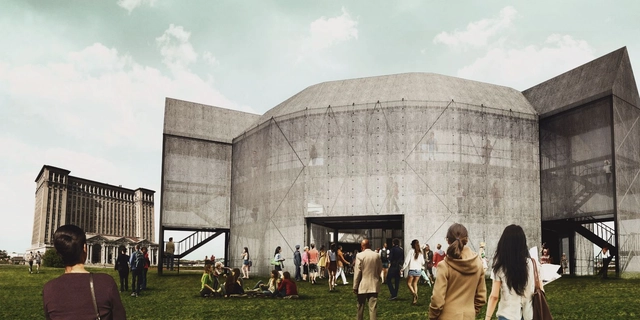
Globe by Michigan Station, Detroit. Image Courtesy of The Container Globe
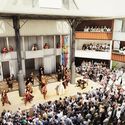
All the world’s a stage – quite literally so, in the case of the Container Globe, a proposal to reconstruct a version of Shakespeare’s famous Globe Theatre with shipping containers. Staying true to the design of the original Globe Theatre in London, the Container Globe sees repurposed containers come together in a familiar form, but in steel rather than wood. Founder Angus Vail hopes this change in building component will give the Container Globe both a "punk rock" element and international mobility, making it as mobile as the shipping containers that make up its structure.
In this video from CNN Style, London designers Edward Barber and Jay Osgerby discuss Forecast, a wind-powered installation they created in collaboration with V&A Museum for the first London Design Biennale. With the intent to help city residents find their way “at a time of turbulence,” the installation responds to the Biennale's theme "Utopia by Design."
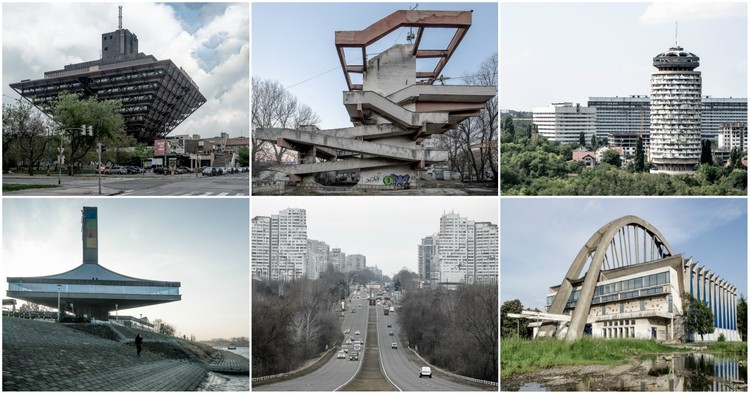
Recent years have seen a rapidly increasing interest in the architecture of the former Soviet Union. Thanks to the internet, enthusiasts of architectural history are now able to discover unknown buildings on a daily basis, and with the cultural and historical break caused by the collapse of the Soviet Union, each photograph of a neglected and decaying edifice can feel like an undiscovered gem. However, often it can be difficult to find more information about these buildings and to understand their place in the arc of architectural history.
That was the reason behind the creation of Socialist Modernism, a research platform started by BACU - Birou pentru Artă şi Cercetare Urbană (Bureau for Art and Urban Research) which "focuses on those modernist trends from Central and Eastern Europe which are insufficiently explored in the broader context of global architecture." Socialist Modernism already consists of a website on which BACU has cataloged a number of remarkable and little-known buildings. However, now the team is raising funds on Indiegogo's Generosity platform for the next step in their research project. With this money they hope to create an app on which users can add new sites and buildings to the database.
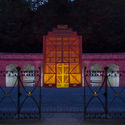
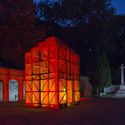
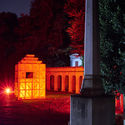
Sam Jacob Studio has created a replica of Adolf Loos’ unrealized 1921 mausoleum in Highgate Cemetary, London, which is home to the graves of Karl Marx and Malcolm McLaren, amongst other notable figures.
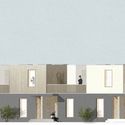
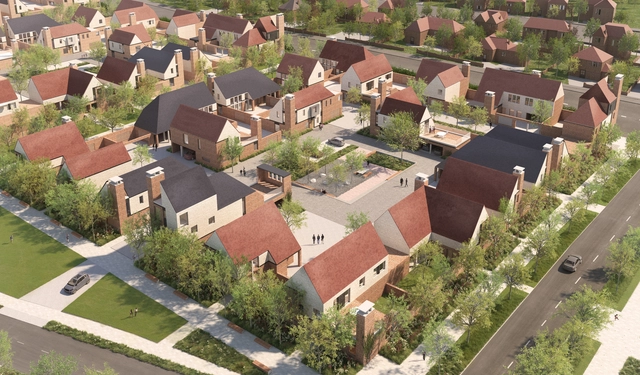
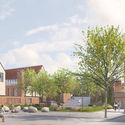
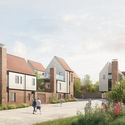
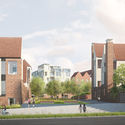
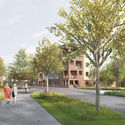
Proctor and Matthews Architects have released its plans for 140 homes in the first development phase of Mountfield Park, a major urban extension of Canterbury, England as a 21st-century garden city.
Inspired by the local landscape and vernacular forms, namely nearby courtyard farms and the site’s existing landscape of hops fields and fruit orchards, this first phase of the development will feature six residential clusters with houses interconnected around an orchard landscape. These clusters will be configured as a series of stepped terraces, in response to the site’s topography.
Designing airports based on flight-inspired, aerodynamic forms is nothing new – in fact, that has been the concept behind some of history’s most beautiful airport terminals, such as Eero Saarinen’s iconic TWA Terminal in New York. But until now, no airport building has been quite so literal with its symbolism as the recently unveiled Ashgabat International Airport.
The new terminal building in Turkmenistan's capital takes the form of a soaring falcon, echoing the mascot of the national airline carrier. And at a cost of $2.3 billion USD, the structure has already drummed up some controversy – critics claim the building is much larger than needed to handle the country’s relative low traffic rates.
See some images of the bird-shaped building below.
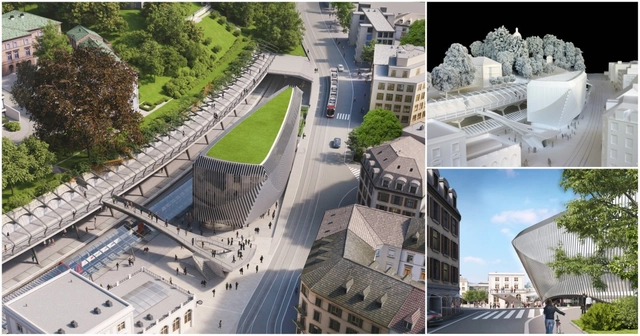
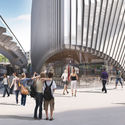
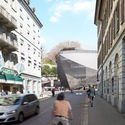
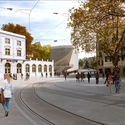
Santiago Calatrava has unveiled plans for a new office building in the city center of Zurich, Switzerland. The new five-story building will be integrated into Stadelhofen Station, the transit hub and city landmark also designed by Calatrava in 1990.
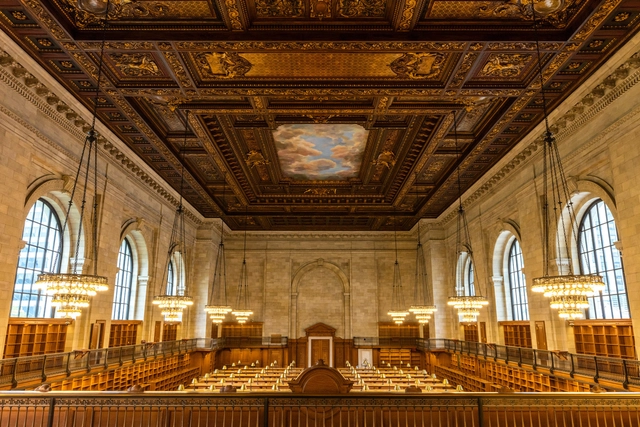
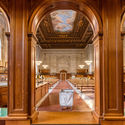
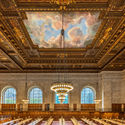
After being closed for a two-year restoration, the New York Public Library’s historic Rose Main Reading Room and Bill Blass Public Catalog Room will reopen to the public ahead of schedule on Wednesday, October 5th at 10am.
The $12 million project, managed by Tishman Construction Corporation, came about in May 2014 when an ornamental plaster rosette fell 52 feet from the Reading Room’s ceiling. In addition to recreating and replacing this piece, all 900 rosettes in both rooms were reinforced with steel cables. Other work included the recreation of a 27′ x 33′ James Wall Finn mural on the ceiling of the Catalog Room and the restoration of the chandeliers. To mark the occasion, the NYPL has shared an incredible collection of photographs documenting the restoration work and the Rose Main Reading Room with nearly all scaffolding removed.
Zaha Hadid Architects' new Port House in the Belgian city of Antwerp, which has been almost a decade in planning and construction, officially opens this week. A monumental new structure sits above a repurposed and renovated (formerly derelict) fire station, providing a new headquarters for Europe's second largest shipping port. Housing 500 staff, who will now be under the same roof for the first time, the building represents a sustainable and future-proof workplace for its employees. Photographer Laurian Ghinitoiu has visited to capture his unique perspective on this new addition to the city's crane-covered skyline.
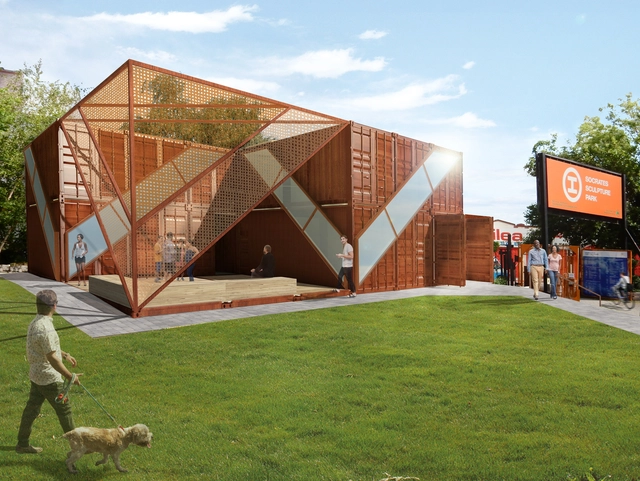
Perched on Long Island City’s waterfront, Socrates Sculpture Park is celebrating its 30th anniversary with its first permanent structure.
Its form? Cubes.
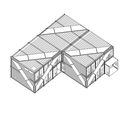
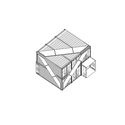
LOT-EK architecture firm’s “The Cubes” — initially commissioned for New York's Whitney Museum of American Art — is composed of eighteen recycled shipping containers that create two levels of indoor space. The building's 960 square feet of flexible interior space promises a multi-functional facility, with most areas built for holding classes of up to 70 people.
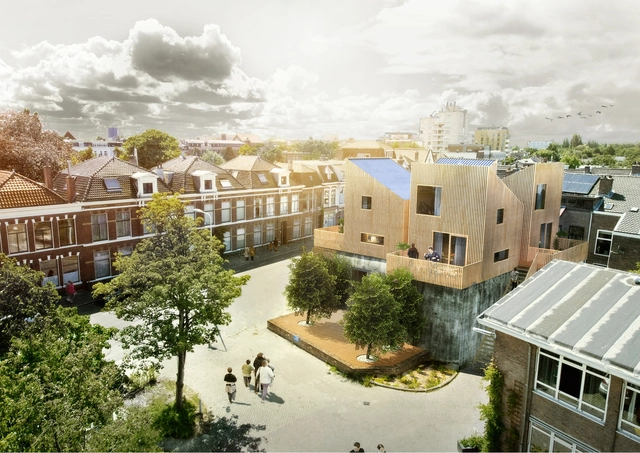
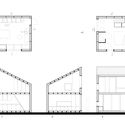
Dutch firm Froscen Architects has unveiled FOON HOUSE(S), a tiny house concept in Leiden, the Netherlands. To be built on a former communications bunker from World War II in the middle of the city, the design focuses on the adaptive reuse of a small concrete complex overgrown with ivy.
The project will consist of four separate micro-houses on top of the bunker, each with a floor space of about 38 square meters, and equipped with necessary facilities.
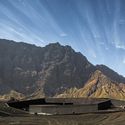
Captivated by the lunar landscape and the sudden destruction of architecture, architect Adrian Kasperski has designed three new speculative projects that respond to the events and culture of the island: A Volcanism and Culture Centre, a Vineyard and Hotel, and a New village to replace the leveled Chã das Caldeiras.


.jpg?1474600879&format=webp&width=640&height=580)
.jpg?1474600879 "Courtesy of MawsonKerr Architects")

.jpg?1474600957 "Courtesy of MawsonKerr Architects")
.jpg?1474600879)









.jpg?1474243524 "Globe in Waitangi Park, Wellington NZ. Image Courtesy of The Container Globe")










.jpg?1474634758&format=webp&width=640&height=580)
.jpg?1474634442 "© Laurian Ghinitoiu")
.jpg?1474634454 "© Laurian Ghinitoiu")
.jpg?1474634533 "© Laurian Ghinitoiu")
.jpg?1474634733 "© Laurian Ghinitoiu")
.jpg?1474634758)