

Land Lines, a new Chrome Experiment exploiting the satellite image data collated by Google Maps, allows anyone—cartographic aficionado or otherwise—to marvel at the contours of the world through gestures. Intelligently designed to detect dominant visual lines from a dataset of thousands of images, cut down from over 50,000 by using a combination of OpenCV Structured Forests and ImageJ’s Ridge Detection, users can simply "draw" or "drag" on a mobile browser or on a desktop to "create an infinite line of connected rivers, highways and coastlines."
Architecture News
Land Lines: Trace an Infinite Path Around the Planet Using Maps
https://www.archdaily.com/801794/land-lines-trace-an-infinite-path-around-the-planet-using-mapsAD Editorial Team
Adidas' New World of Sports Campus is Star Themed
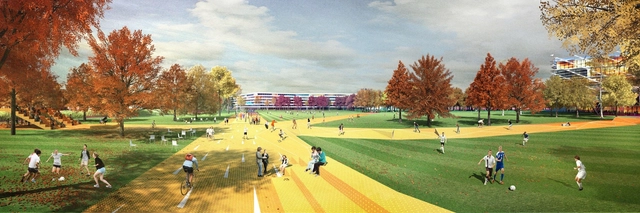
LOLA Landscape Architects have won the Adidas Competition to design the sportswear corporation's "World of Sports" campus. While Adidas had already chosen a design architect prior to this competition, LOLA will be adding four star-shaped central spaces on the grounds of the campus.




https://www.archdaily.com/801740/adidas-new-world-of-sports-campus-is-star-themedNatalina Lopez
15 Finalists Selected for the 2016 Art of Building Photographer of the Year Award
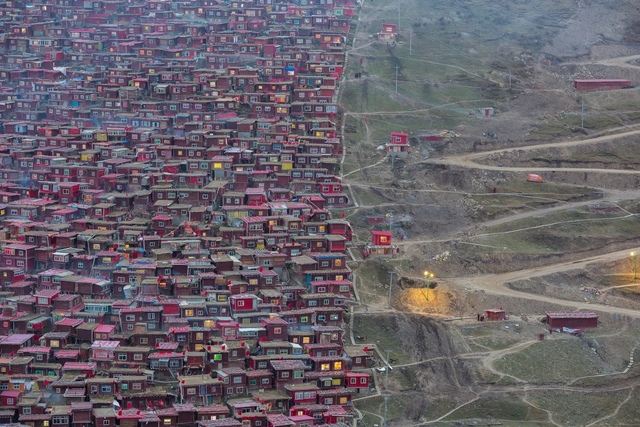
Fifteen stunning images from top photographers around the world have been selected as finalists of Chartered Institute of Building’s (CIOB) 2016 Art of Building Photographer of the Year competition.
With subjects ranging from the windswept wonderland of an empty New York City to a rapidly changing Tibetan hillside village to a dreamy shot of Foster + Partners’ Swiss Re Headquarters ( a.k.a. “The Gherkin”) this year’s entries constitute a “cornucopia of styles and stories,” says CIOB spokesman Saul Townsend.
https://www.archdaily.com/801817/15-finalists-selected-for-the-2016-art-of-building-photographer-of-the-year-awardPatrick Lynch
Plans Revealed to Transform Pier 26 into New Park along the Hudson River in New York
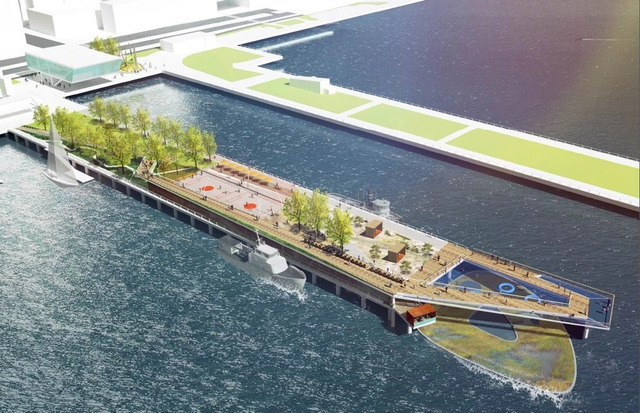
The Hudson River Park Trust has revealed plans to transform the 800-foot-long Pier 26, located on the Hudson River in the New York neighborhood of TriBeCa. Currently vacant, the pier is set to receive a new park designed by landscape architects OLIN Studio and a maritime education center designed by Rafael Viñoly Architects.
https://www.archdaily.com/801812/plans-revealed-to-transform-pier-26-into-new-park-along-the-hudson-river-in-new-yorkPatrick Lynch
This Time Lapse Perfectly Captures the Days Leading Up to Your Final Review
Pablo Pinares has created a video with which all past and current architecture students can identify: a time lapse of the final hours before a studio review. Whether your architecture school days are behind you or you still have juries to look forward to, read on to revel in your school experiences with us.
https://www.archdaily.com/801516/this-time-lapse-perfectly-captures-the-days-leading-up-to-your-final-reviewPola Mora
99% Invisible Explores the Strange Phenomenon of Rotary Jails
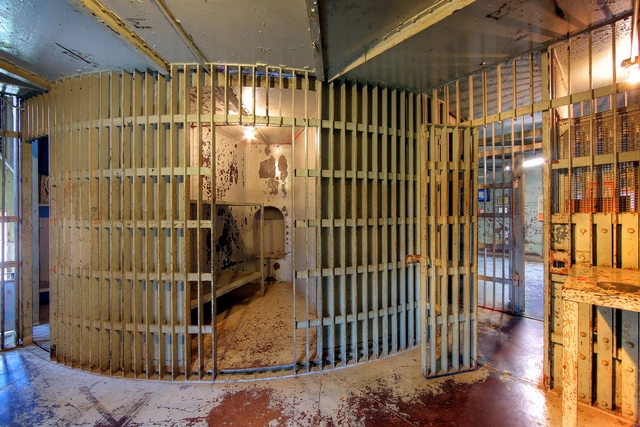
99% Invisible has recently published a review of rotary jails, a strange prison architecture system in which cell blocks turn to align with the position of a single door, in the attempt to create better security. Used around the early 20th century, this odd, carousel-like technology spread across the United States in mainly Midwestern towns.
https://www.archdaily.com/801624/99-percent-invisible-explores-the-strange-phenomenon-of-rotary-jailsSabrina Santos
99% Invisible Tackles McMansions and the Architecture of Evil
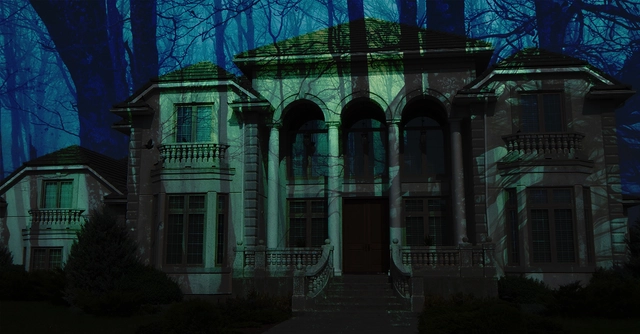
Architecture critic Kate Wagner has collaborated with 99% invisible on a podcast and a guest column delving into the tragedies of McMansions and the representation of evil through architecture in film, respectively.
In the podcast, Wagner, who is the author of McMansion Hell, is interviewed by Roman Mars and explains how the McMansion typology evolved, as well as how it became so despised, delving into topics of architectural history and representations of wealth.
Through her article as a guest columnist, Wagner explores the real-world buildings used in film to depict the evil corporation archetype in movies like Robocop, Blade Runner, and The Matrix.
https://www.archdaily.com/801474/99-percent-invisible-tackles-mcmansions-and-the-architecture-of-evilSabrina Santos
Thom Mayne Completes Research on Houston’s Urban Future
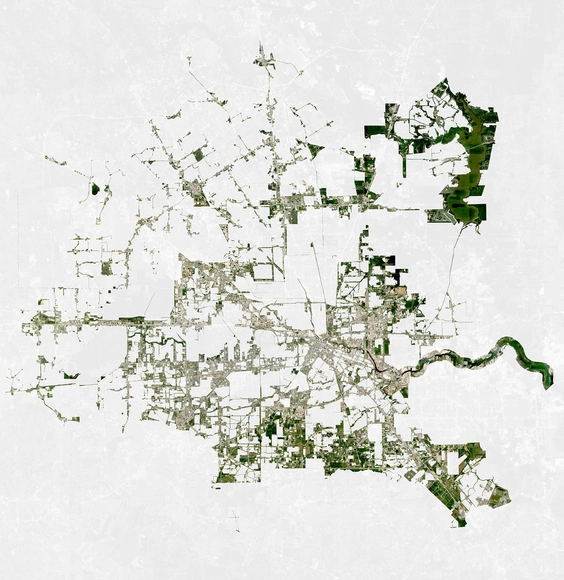
Pritzker Prize winner Thom Mayne has completed a three-semester–long study of Houston’s future, given its current sprawling urban conditions and rapid growth. The project, conducted alongside 21 University of Houston students and faculty members Matt Johnson, Peter Zweig, and Jason Logan, focused on ways of addressing the problems that arise from Houston’s historical lack of zoning in conjunction with the largely unregulated growth of industry and capitalism. These approaches include reinventing the current energy infrastructure, changing real estate and density, and leveraging the lack of zoning to generate new ideas.
https://www.archdaily.com/801618/thom-mayne-completes-research-on-houstons-urban-futureAlyssa Wu
Experience the Sir John Soane's Museum, Virtually

The Sir John Soane’s Museum is often cited as a seminal inspiration for architects of all generations. Located in London's Lincoln's Inn Fields, the house—designed by Soane (born in 1753), architect of the Bank of England—is a remarkable biographical bricolage of unique spaces, objects and ideas. Kept exactly as it was at the time of Soane's death in 1837, the museum is packed with paintings, sculpture, furniture and drawings – all curated and composed by the architect himself to "enhance their poetic qualities."


https://www.archdaily.com/801636/experience-the-sir-john-soanes-museum-virtuallyAD Editorial Team
Storytelling Street Furniture Featured in URBE 2016
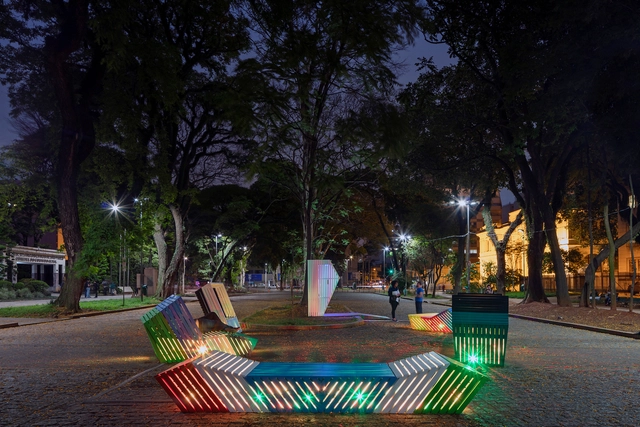
From the 4-6 of November, the Mediterranean Real Estate Fair, URBE 2016, featured an installation by São Paulo architect and urban planner Guto Requena. The public artwork, entitled “Can you tell me a secret?” is a collection of temporary street furniture: a phone booth that records visitors’ stories and plays them back randomly into five wooden benches.


https://www.archdaily.com/801617/storytelling-street-furniture-featured-in-urbe-2016Alyssa Wu
Material Focus: Expansion Inspired by Portuguese Tiles by João Tiago Aguiar
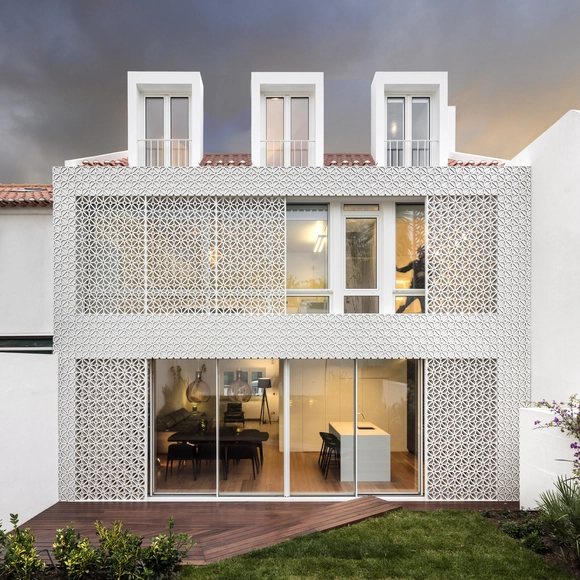
This article is part of our new series "Material in Focus", where we ask architects to share with us their creative process through the choice of materials that define important parts of the construction of their buildings.
Casa Restelo was designed by Portuguese studio João Tiago Aguiar - architects. The 225 square meter project consists of the expansion of a 50's residence in the Restelo neighborhood, an area of semi-detached houses. For this project they also completely renovated the exterior facades, keeping the current look in mind while creating a new interpretation of the patterns inspired by traditional Portuguese tiles. We talked with the architect João Tiago Aguiar to know more about the material choices and the challenges of this project.
https://www.archdaily.com/801534/material-focus-expansion-inspired-by-portuguese-tiles-by-joao-tiago-aguiarEquipe ArchDaily Brasil
99% Invisible Discusses How Algae Biotechnology Can Affect the Urban Environment
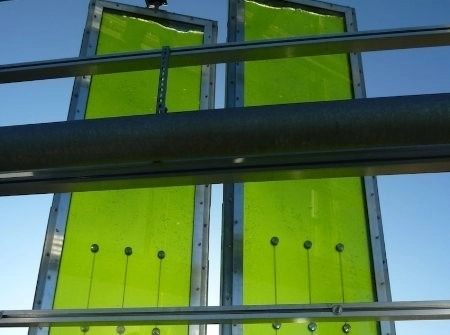
In a recent article for 99% Invisible, Kurt Kohlstedt explores how integrating microalgae into buildings can create a dualistic system of living and built, in order to perform services like create shade, generate power, and work with HVAC systems to modulate interior environments.
Projects that utilize such technology include bioreactors that produce oxygen and bio-fuel, a building with a bio-adaptive façade, and a street lamp that filters carbon dioxide from the urban environment.
https://www.archdaily.com/801558/99-percent-invisible-discusses-how-algae-biotechnology-can-affect-the-urban-environmentSabrina Santos
I.M. Pei's Le Grande Louvre Wins AIA 25 Year Award
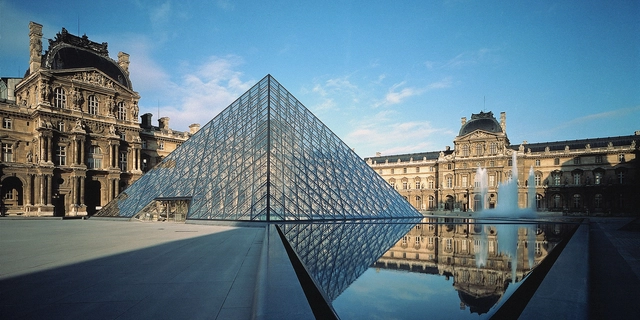
The American Institute of Architects (AIA) has selected The Grand Louvre – Phase I as the recipient of the 2017 AIA Twenty-five Year Award. Designed by I.M. Pei with his firm Pei Cobb Freed & Partners, the project is notable for its 71-foot-tall glass and stainless steel pyramid, which according to the AIA, “now rivals the Eiffel Tower as one of France’s most recognizable architectural icons.”
The award is presented annually to a project that has "stood the test of time by embodying architectural excellence for 25 to 35 years."


https://www.archdaily.com/801667/im-peis-le-grande-louvre-wins-aia-25-year-awardPatrick Lynch
Schmidt Hammer Lassen Design New Shanghai Library
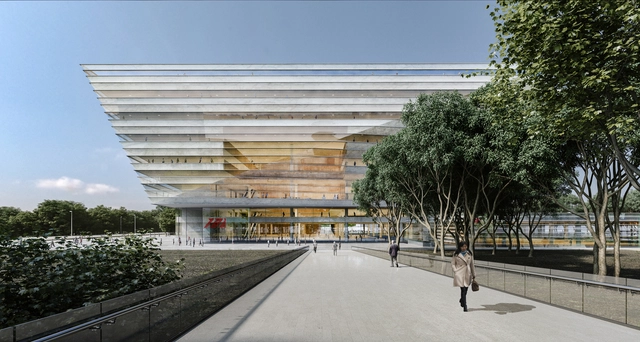
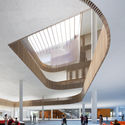
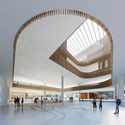
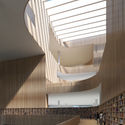
With nearly 25 million inhabitants the Chinese city of Shanghai is currently the most populous city in the world and, in addition, has a central library system that dates back to the mid 19th Century. A new city library, designed by Danish practice Schmidt Hammer Lassen and won following a two-stage international competition, will provide 110,000 square meters of space in the Pudong District and adjacent to Century Park – the largest green space in the city.


https://www.archdaily.com/801634/schmidt-hammer-lassen-selected-to-design-new-shanghai-libraryAD Editorial Team
SHoP + Rossetti to Complete $140 Million Renovation of Quicken Loans Arena in Cleveland
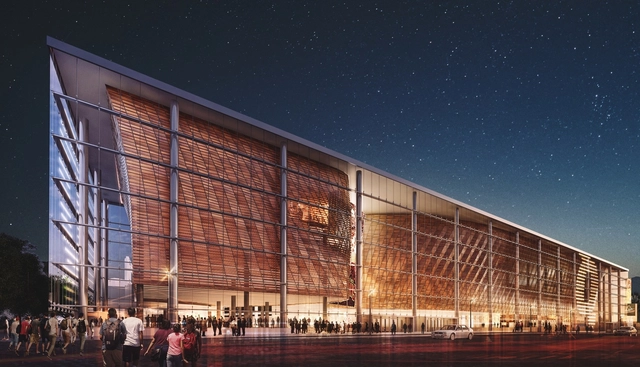
Quicken Loans Arena, home of the current NBA champion Cleveland Cavaliers, is set to receive a $140 million transformation. Designed by SHoP and Rossetti, the project will consist of significant upgrades to address the arena’s structural and operational deficiencies and improve the overall fan experience.


https://www.archdaily.com/801587/shop-plus-rossetti-to-complete-140-dollars-million-renovation-of-quicken-loans-arena-in-clevelandPatrick Lynch
PNG Paradise: Cutouts of Furniture, People, Trees and More
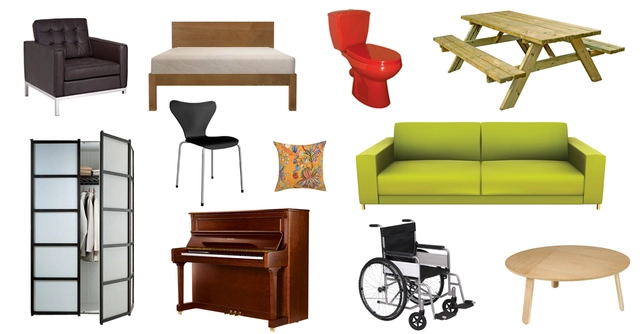
Did you know Pngimg has a large number of free images available for download in .png. The best part? They are perfectly clipped and background-free! The collection is divided into categories that includes trees, people, objects, appliances, sports, clothing, and a host of other strange but perhaps useful animals/things. Just when you needed fresh trees in your renders, Pngimg comes to the rescue.
Adding contextual objects and scale figures can really give life and added value to project visualizations. See the .pngs here here and check out other tools that might be helpful, below.
https://www.archdaily.com/801432/png-paradise-cutouts-of-furniture-people-trees-and-moreRomullo Baratto
Director of London's Architectural Association, Brett Steele, to Become UCLA Dean
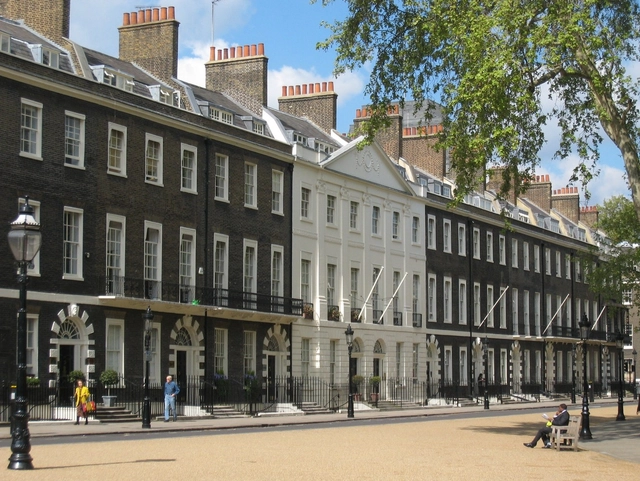
Brett Steele, Director of London's Architectural Association (AA) since 2005, has announced that he will become Dean of UCLA School of the Arts and Architecture in August 2017. Although American-born, Steele has since become a naturalized British citizen. He studied at the AA, the University of Oregon, and the San Francisco Art Institute respectively, before working as a Project Architect at Zaha Hadid Architects in the late 1980s and early 1990s.
https://www.archdaily.com/801567/brett-steele-aa-to-become-ucla-deanAD Editorial Team
Grimshaw Designs Masterplan and Start-up Incubator in Bristol
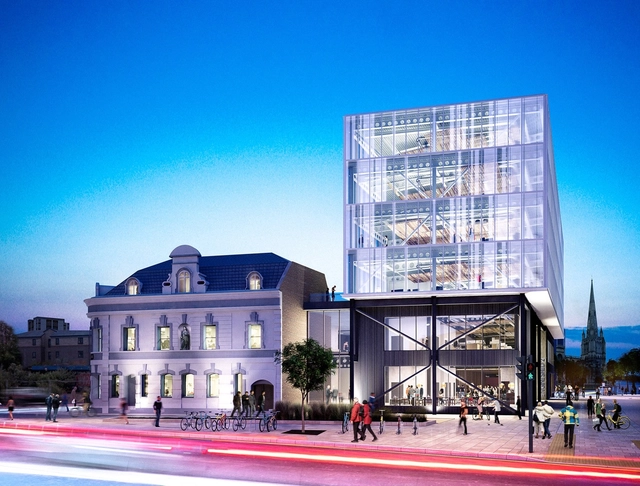
Working with developer Skanska, Grimshaw has designed a master plan for Bristol Temple Square in Bristol, England, that will contain a new start-up incubator and co-working space known as Engine Shed 02. The development will serve as an activated public area linking the Bristol Temple Meads Railway Station and the city center.
The masterplan unlocks a previously isolated site adjacent to the Temple Circus roundabout by creating a new walkway, the Brunel Mile, which prioritizes pedestrian and cyclist circulation through the area. A new public square along the path will also contribute to reinvigorating the neighborhood.
https://www.archdaily.com/801531/grimshaw-designs-masterplan-and-start-up-incubator-in-bristolPatrick Lynch
Kengo Kuma’s Tokyo 2020 Olympic Stadium Begins Construction
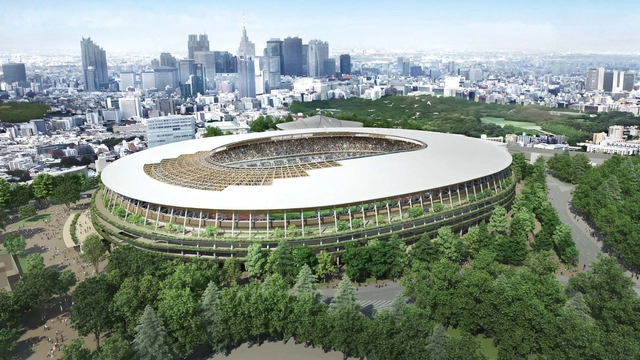
Construction has begun on Kengo Kuma’s design for the Tokyo 2020 National Olympic Stadium, a year after the scheme was selected to replace the original stadium design by Zaha Hadid Architects and three and a half years before the event’s opening ceremony on July 24, 2020.
https://www.archdaily.com/801519/kengo-kumas-tokyo-2020-olympic-stadium-begins-constructionPatrick Lynch
See the Best Architecture of 2016

As 2016 comes to a close, we want to extend our sincerest thanks for your continued support during this past year; it has been our most inspiring and successful yet as we continue to connect to architects all over the world.
On behalf of the entire ArchDaily team, we are very excited to share a special feature – 2016’s most visited projects and articles. This selection features the most relevant and noteworthy content created and shared over the past 12 months.
https://www.archdaily.com/801504/the-best-architecture-of-2016AD Editorial Team
UNStudio + MDT-tex Erect Biomimetic Pavilion at the Amsterdam Light Festival
.jpg?1481726245)
UNStudio and textile manufacturer MDT-tex have completed the Eye_Beacon Pavilion for the Amsterdam Light Festival. Serving as a ticketing and information booth for event goers, the pavilion’s design draws inspiration from the festival’s 2017 theme of biomimicry, specifically the bioluminescent organisms of the deep sea world.
.jpg?1481726491 "© Janus van den Eijnden")
.jpg?1481726425 "© Janus van den Eijnden")
.jpg?1481726570 "© Janus van den Eijnden")
.jpg?1481726550 "© Janus van den Eijnden")
.jpg?1481726245)
https://www.archdaily.com/801499/unstudio-plus-mdt-tex-erect-biomimetic-pavilion-at-the-amsterdam-light-festivalPatrick Lynch
This Former Professional Skateboarder Is Now a Skate Park Architect
After a career as a professional skateboarder, Helsinki-based Janne Saario has become one of few landscape architects in the world with a practice devoted completely to designing skate parks for young people. Saario’s designs—all of which are located in Europe—diverge from the typical brutalist stereotypes of concrete skate park masses, and rather, are site-specific and heavily influenced by their natural surroundings.
“Young people are our hope and future,” says Saario. “And by offering beautiful and meaningful surroundings to grow, like wonderful skate parks, we can make a positive change on their picture of the world and future behavior.”
https://www.archdaily.com/801358/this-former-professional-skateboarder-is-now-a-skate-park-architectSabrina Santos
Davis Brody Bond and Kieran Timberlake Unveil Designs for NYU Complex in New York
The architectural team comprised of Davis Brody Bond and Kieran Timberlake has unveiled its newest updates on the design for 181 Mercer, a 735,000-square-foot complex for New York University that will replace a 35-year-old gym facility and become NYU’s largest classroom building, as well as a space for performing arts, athletics, and students and faculty housing.
https://www.archdaily.com/801164/davis-brody-bond-and-kieran-timberlake-unveil-designs-for-nyu-complex-in-new-yorkSabrina Santos
Who Should Win the 2017 Pritzker Prize?
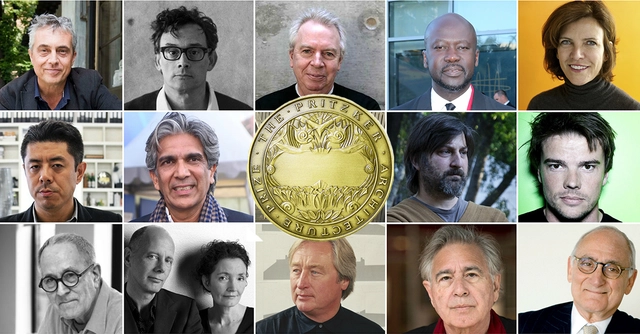
The end of 2016 is nearly upon us, and with the start of 2017 comes speculation about who will be the next Pritzker Prize winner. Will the jury honor an influential member of the "old guard," as they did in 2015 when they bestowed the award upon the late Frei Otto? Or will they recognize a young architect who is redefining the profession, as they did when they selected Alejandro Aravena earlier this year? Will they reward virtuoso spatial design, or will they once again acknowledge the role of social impact, as they did in recognizing Aravena and Shigeru Ban in 2014? Will the award go to an individual or to two or more architects working together, as it did in 2010 when SANAA scooped the prize?
We want to hear from our readers – not just about who probably will win the prize, but about who should win the prize, and why. Read on to cast your vote in our poll, and let us know in the comments whose name you'd like to hear announced in 2017.
https://www.archdaily.com/801407/who-should-win-the-2017-pritzker-prizeAD Editorial Team


