Adjaye Associates has unveiled designs for SPYSCAPE, a new museum and interactive experience that illuminates the world of espionage from historical secret intelligence to modern day hacking through a collection of rare artifacts, exhilarating storytelling and immersive personalized experiences.
Located a stone’s throw from Times Square in New York City, the 60,000-square-foot space will use architecture as a key element of the museum experience. Inspired by the spaces occupied by the world’s most significant spy organizations, the building interiors will resemble a small town, with a variety of spaces unfolding beneath a vaulted canopy. Circulation will lead visitors through a wide range of vantage points and perspectives, playing with perceptions and drawing you into the individual pavilions.
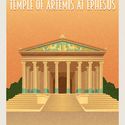
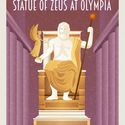
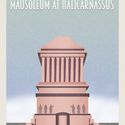
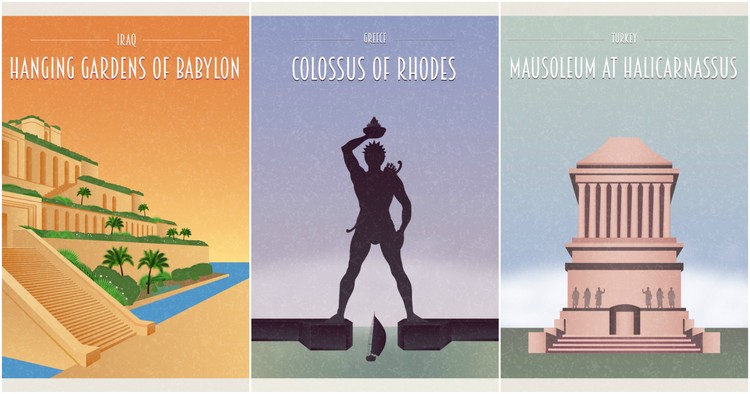
Architecture has been historically deployed as a tool to construct and concretize legacies. Whereas only a few built edifices have left a large enough impact on the world, or have been around long enough, to enter into the canon of architectural legend, the seven wonders of the ancient world have achieved both. With only one—the Great Pyramid of Giza—still standing, the others have all taken a unique position in the architectural imagination, with representations over the years of structures such as the Colossus of Rhodes and the Lighthouse of Alexandria changing according to the whims of artists of the time. Nevertheless, the spectacular stories behind each of these lost landmarks is worth revisiting – which is exactly what travel company Expedia has done in this series of illustrations.
Hariri Pontarini Architects and Pinnacle International have unveiled the design of three glassy skyscrapers that will make up a new development on the Toronto waterfront.
Known as One Yonge, the complex will consist of over 4 million square feet of mixed-use space spread across five new buildings and a total renovation of the existing Toronto Star building.
ARCHMARATHON has announced the winners of their 2017 Awards Program as the event, which took place at Faena Forum in Miami from October 12-14, comes to a close. Now in its 4th edition, the Awards focus on architecture studios that have been actively practicing in USA, Canada, Central America and Latin America.
Winners were chosen by a jury consisting of Luca Molinari, Francisco Pardo, Sebastian Salvat, Alejandro Paredes Fontanals and ArchDaily’s David Basulto and David Assael in in 8 themed categories: MOVING, LIVING, DREAMING, WORKING, CHILLING OUT, CARING, VISIONING and RE-THINKING. This year’s overall winner was awarded to Rozana Montiel | Estudio de Arquitectura + Alin V. Wallach for their community space, Common Unit.
Videos
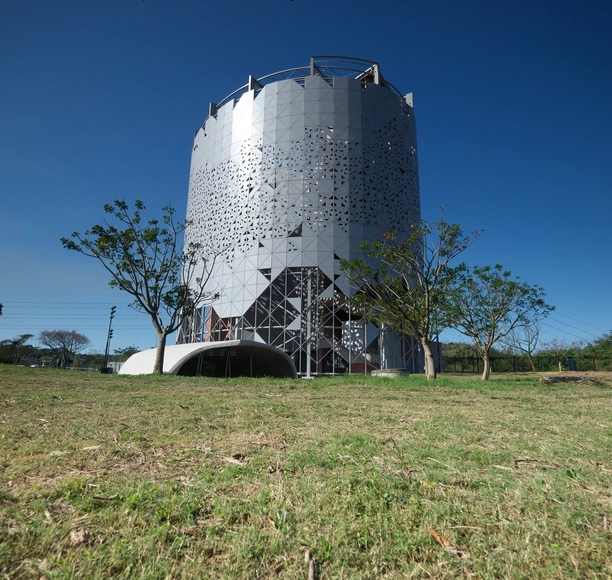
Grand Prix winner: Umkhumbane Museum, South Africa / Choromanski Architects. Image Courtesy of Africa Architecture Awards
The winners of the inaugural Africa Architecture Awards have been announced. Established by St. Gobain with the goal of “stimulating conversations about African architecture as it cements its place in a global continuum,” the event represents the first ever Pan-African awards program of its kind, with more than 300 projects from 32 African nations being considered by a steering panel led by Professor Lesley Lokko, ambassador Phill Mashabane, advisor Zahira Asmal, and architect David Adjaye.
“The Africa Architecture Awards are very critical,” said Adjaye. “Now is the time to promote excellence and best practice on the continent. The Africa Architecture Awards are particularly important because this is the moment that a lot is happening on the continent in terms of development, in terms of the architecture that’s being produced.”
Have you ever spent hours calibrating the nozzle of a 3D printer or preparing a print-ready file – only to find that the model has failed because of a missed zero-thickness wall? With this in mind, the Platonics Ark—a 3D printer currently being developed in Helsinki, Finland—has one simple goal: to remove all unnecessary set-up and technical processes by means of intelligent automation and, as a result, almost entirely eliminate the wasted time that architects and designers spend calibrating printers, or working up print-ready files.
Designs by Helsinki-based practice AOR have been selected following an open competition for the extension of Tampere Art Museum, in Finland. The existing building which the museum currently occupies was formerly used as a granary, designed by C. L. Engel and completed in 1838. Most believe it to be the third oldest building in the country. AOR's winning proposal seeks to create "a landmark for the museum" by articulating the urban landscape between nearby Pyynikintori square and adjacent parkland, connecting to and with the existing gallery spaces.
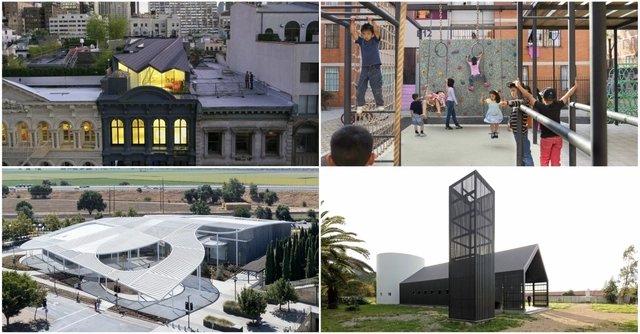
Bee Breeders announced the winners of the Adelaide Creative Community Hubcompetition, challenging designers to propose an innovative, vibrant public space for the city of Adelaide, Australia. Participants were required to design either a temporarypavilion or fixed landmark within the frequented public park. Competition submissions seemed to focus on one of three things: a flexible open program, half building/half landscape, or a temporary pavilion. Judges looked for a clear concept. Winning projects have the potential to do more than merely bring people together; they go a step further sparking innovation in creative communities.
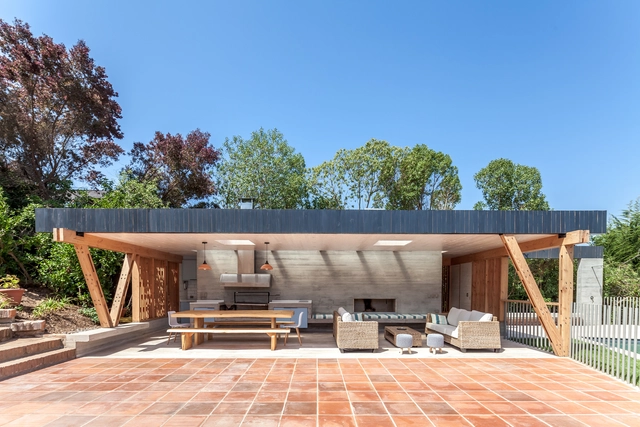
Our readers in the southern hemisphere are getting ready to fire up their barbecue area for some warm weather fun.
For many, this space has converted into an important social space where family and friends get together to enjoy a meal. Due to its importance, architects include this enclosure as one of the fundamental parts of the functioning of the house.
Below we have compiled some of the best barbecue areas published in ArchDaily to inspire and tempt you, our readers.
https://www.archdaily.com/881188/18-beautiful-barbecue-areas-for-summerPola Mora
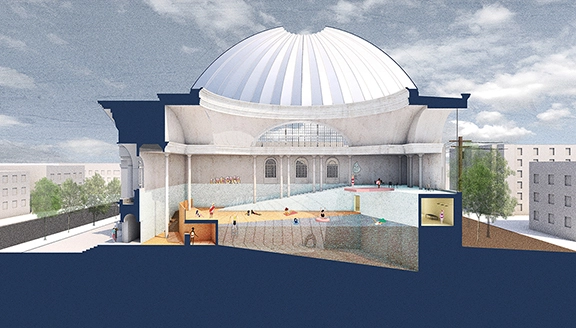
The Burnham Prize 2017 is a competition hosted by the Chicago Architectural Club (CAC), this year the title was ‘Under the Dome,' requiring participants to rethinking the radial form that has been a part of architecture for centuries.
Participants were asked to develop a speculative proposal for the abandoned St Stephen’s Church on its centennial anniversary, challenged with the task of injecting energy and life back into the desolated ruin. In reaction to the Chicago Architecture Biennale, the historical and typological construct of the dome was to be taken and reconsidered as a contemporary structure with an understanding of the historical context.
In celebration of the 20th Anniversary of the Frank Gehry-designed Guggenheim Museum Bilbao, creative production studio 59 Productions has put on a 4-day projection mapping light show, transforming the museum’s iconic shimmering surfaces into a canvas for a dazzling light display.
From October 11-14th, the 20-minute-long multisensory production Reflections combined music, light and projection, creating a show on the building’s north-facing titanium facades that told the story of the museum’s genesis and design.
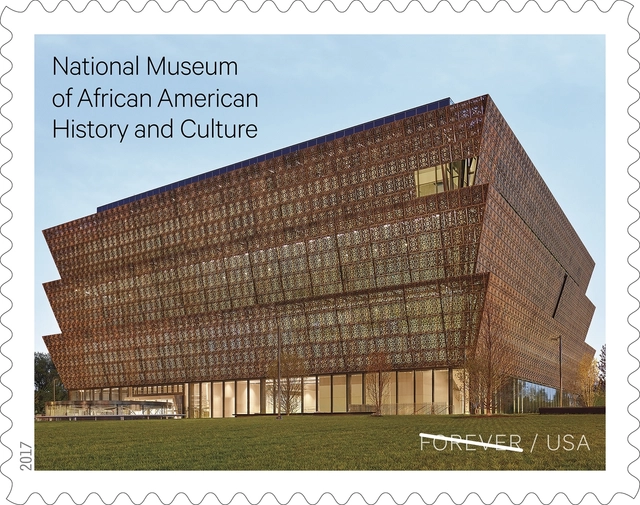
Designed by art director Antonio Alcalá, the commemorative Forever stamp is based on a photograph taken by Alan Karchmer of the museum, which has welcomed nearly 3 million visitors since its debut in September 2016.
Learning doesn't have to formal, or expensive. As education becomes increasingly commodified the world over, here are four courses from the Massachusetts Institute of Technology (MIT) exploring architecture and landscape, urbanism, photography, and the production of space that are—significantly—free of charge and available to all.
https://www.archdaily.com/881570/4-mit-architecture-courses-you-can-take-online-video-lectures-includedAD Editorial Team
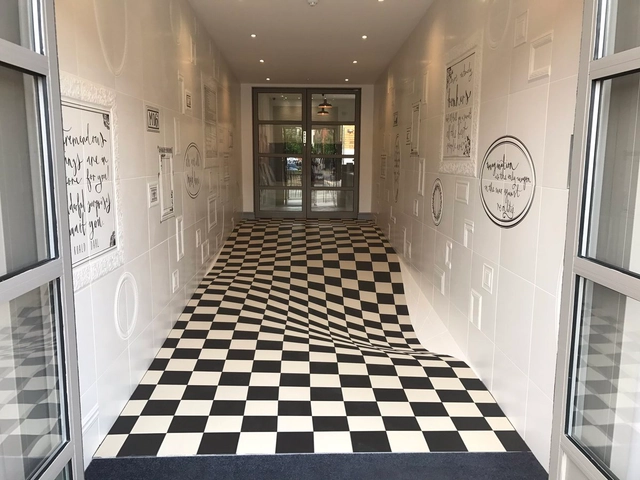
An optical illusion has been given a practical purpose in this mind-boggling floor at the headquarters of British tile company Casa Ceramica.
In addition to serving as an example of the company’s products, the floor is specifically designed to slow down people as they walk into the Casa Ceramica showroom. Thankfully, the forced perspective only works in one direction, so finding your way out is a much less stressful endeavor.
https://www.archdaily.com/881574/this-optical-illusion-floor-serves-a-practical-purpose-at-britains-casa-ceramicaAD Editorial Team
In Good Fences Make Good Neighbors, a new exhibition by Ai Weiwei presented by the Public Art Fund, the artist and activist takes on the security fence as a medium for urban intervention, with New York City as his canvas. Some of the works might be easy to miss, like the chain link fences suspended over a gap between two buildings on East 7th Street, just steps from Ai’s old basement apartment. But others, like the monumental Gilded Cage at Doris Freedman Plaza in Central Park, or Arch, nested under the Washington Square arch, are unmistakable and grandiose.
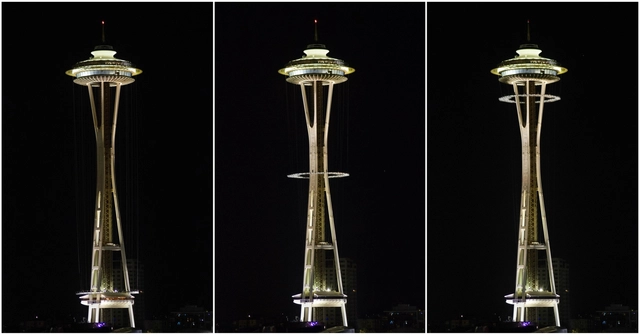
Construction has begun on the Olson Kundig-led $100 million renovation of Seattle’s most iconic structure, the Space Needle.
With work taking place 500 feet above the ground, the project demanded a unique alternative to traditional scaffolding: a 28,000 pound platform surrounding the tower that was hoisted to a position just below the observation Tophouse.
New drone footage shows how this platform, manufactured by scaffolding company Safway, was constructed at 100 feet above the ground, and then lifted into place and secured. According to Century Project, the structure represents “one of the largest lifts of Safway scaffold ever completed and it’s one of the company’s biggest scaffolds in circumference.”
For the 9th edition of Design Week Mexico, emerging Mexican practice Materia has completed a architectural pavilion within Mexico City's largest public green space, Chapultepec Park. Commissioned by Design Week Mexico in collaboration with Museo Tamayo, the pavilion will serve as a major cultural attraction during the event from October 11th—15th, and beyond.
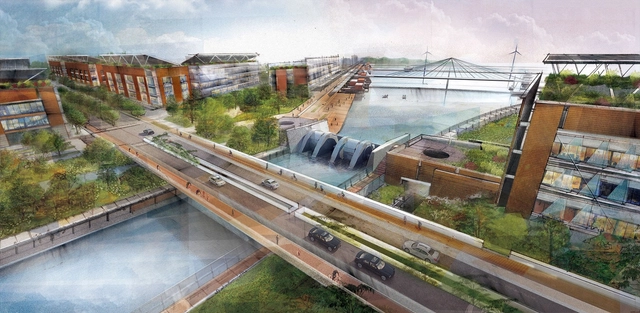
Overall Winner + Climate, Energy & Carbon Prize winner - The Hydroelectric Canal / Paul Lukez Architecture. Image Courtesy of World Architecture Festival
The World Architectural Festival has announced the 11 winners of their newest award slate, the WAFX Prize, sponsored by GreenCoat®, celebrating the world’s most forward-looking architecture. The prize is awarded to future projects that address key challenges architects with face over the next 10 years, spanning topics including climate, energy & carbon, water, ageing and health, re-use, smart cities, building technology, cultural identity, ethics, power and justice.
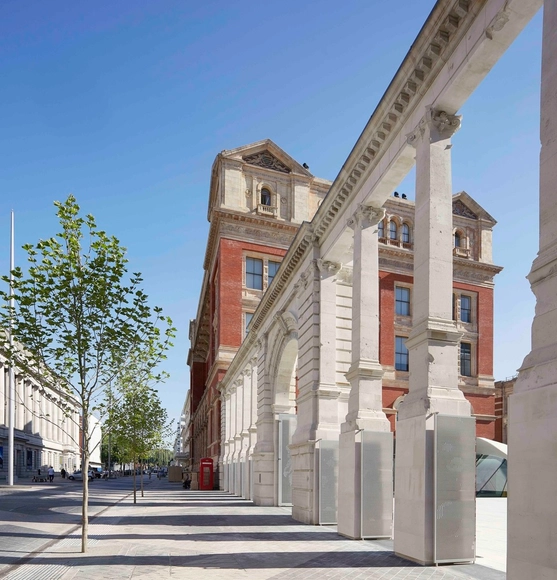
Tristram Hunt—director of London's Victoria and Albert Museum (V&A)—has expressed concern about one of the city's most successful semi-pedestrianized zones: Exhibition Road in the Royal Borough of Kensington and Chelsea. As reported by The Art Newspaper, Hunt has argued that the traffic arrangements are “confusing, dangerous and unsatisfactory”. His answer, following a traffic collision on October 7, 2017, which injured 11 people, is to fully pedestrianize the area.
https://www.archdaily.com/881299/are-part-pedestrianized-zones-in-dense-urban-environments-dangerousAD Editorial Team
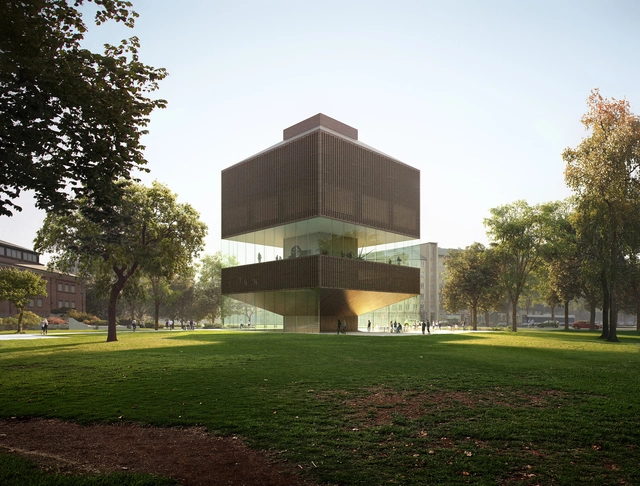
Nieto Sobejano Arquitectos has revealed the design of Montblanc Haus, a new museum, visitor center and event space in Hamburg, Germany dedicated to the "art of writing" and the finely-detailed craftsmanship of Montblanc products. The Spanish firm was selected as the winner of an international competition ahead of top teams including Snohetta (Norway), John Pawson (UK), wHY (USA) and Noé Duchaufour (France).
At the announcement, Hamburg Mayor Olaf Scholz and Montblanc CEO Nicolas Baretzki unveiled the design of the 39,395-square-foot (3,660-square-meter) project for the first time, presenting it as a new architectural icon for the city. Estimated to cost 20 million euros, the museum will tell the story of Montblanc through the company's iconic writing utensils and products.
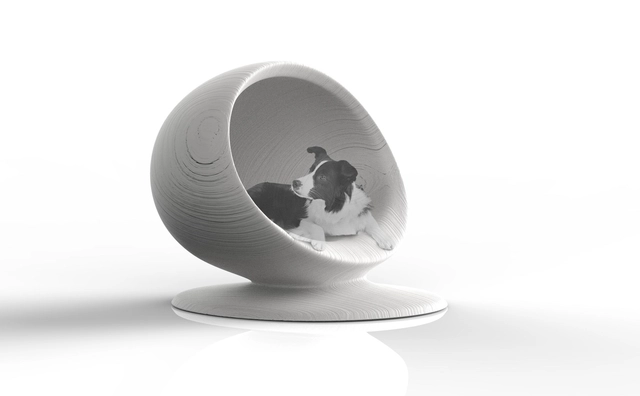
Who says architecture is only for humans? Not the UK-based pet charity Blue Cross for Pets, whose BowWow Haus London campaign is bringing design into the doghouse.
Joining a growing list of more than 80 architects, designers and artists, Zaha Hadid Architects is the latest practice to design a one-of-a-kind dog kennel that will be be displayed before being auctioned off at a gala next May to benefit the more than 40,000 sick, injured and homeless pets helped by Blue Cross for Pets each year.
The MacArthur Foundation has announced the 24 recipients of their 2017 MacArthur Fellowships Grants (sometimes referred to as ‘Genius’ Grants), and for the first time since 2011, the list includes individuals from architectural fields: urban planner and designer Damon Rich and landscape architect Kate Orff.
Established in 1981, the grants are awarded annually “to encourage people of outstanding talent to pursue their own creative, intellectual, and professional inclinations.” This year’s fellowships come with a $625,000, no-strings-attached stipend for individual pursuits.
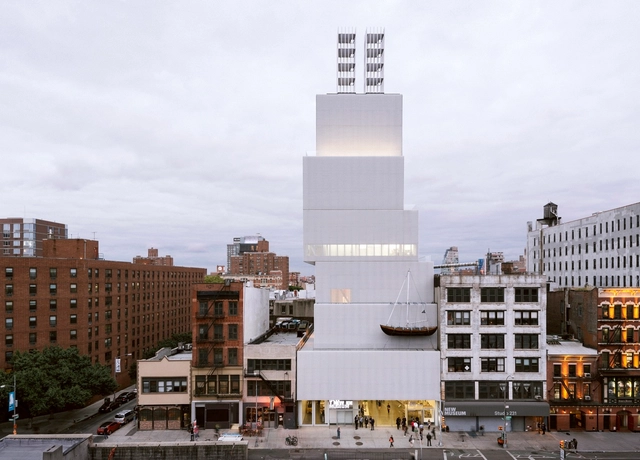
Rem Koolhaas and Shohei Shigematsu, both partners at OMA, have been tapped to design the recently-announced expansion of the New Museum in New York. OMA will design a new building adjacent to SANAA's tiered-box museum. The project is expected to break ground in 2019 and will give the New Museum an additional 50,000 square feet (4,650 square meters) for "galleries, improved public circulation and flexible space for the institution’s continued exploration of new platforms and programs." This will be Koolhaas' first public building in New York. According to the New York Times, the New Museum—the only museum in New York City exclusively devoted to contemporary art—has already raised 50 percent of the cost.
https://www.archdaily.com/881400/oma-shohei-shigematsu-and-rem-koolhaas-selected-to-design-new-museum-expansion-in-new-yorkAD Editorial Team
Rising sea levels, and the potential of extreme conditions globally, are threatening coastal cities around the world. While the Netherlands are often considered to be leading the engineering battle against the tides, Japan—with a renewed sense of urgency—are investing heavily in high-end systems and infrastructure to protect their largest metropoli.
https://www.archdaily.com/881308/doubts-loom-over-japans-vast-subterranean-water-control-systemsAD Editorial Team


.jpg?1508257249)
.jpg?1508257213 "Courtesy of Adjaye Associates")
.jpg?1508257227 "Courtesy of Adjaye Associates")
.jpg?1508257249 "Courtesy of Adjaye Associates")
.jpg?1508257238 "Courtesy of Adjaye Associates")
.jpg?1508257249)










.jpg?1507695443&format=webp&width=640&height=580)








_Jaime_Navarro_6.jpg?1507820280&format=webp&width=640&height=580)



_2017__Jia-hao_Syu__Design_Haus_Liberty.jpg?1507743499 "The \"Bark-alona Pavilion\" - Jia-hao Syu, Design Haus Liberty © 2017, Jia-hao Syu, Design Haus Liberty. Image via BowWow Haus London")
_2017__Jia-hao_Syu__Design_Haus_Liberty.jpg?1507743493 "Shiguru Foo-foo Pavilion - Jia-hao Syu, Design Haus Liberty © 2017, Jia-hao Syu, Design Haus Liberty. Image via BowWow Haus London")