The Aga Khan Award for Architecture has announced the Master Jury for the 16th award cycle. The independent panel includes Pritzker Prize laureate Yvonne Farrell, ArchDaily founder David Basulto, and Lucia Allais, director of the Buell Center. Established in 1977 by Aga Khan IV, this competition set out to highlight architectural projects that have a significant positive impact on Islamic communities worldwide. The Award is presented in three-year cycles and has a monetary prize totaling US$1 million.
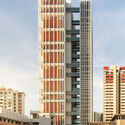
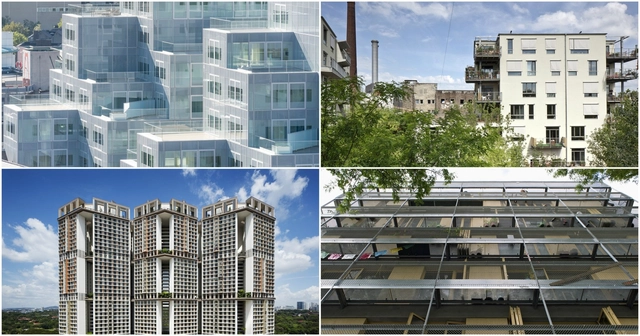
Deutsches Architekturmuseum (DAM) has announced the International High-Rise Award 2024/25. Selected from more than 1,000 new high-rises worldwide dating from the past two years, the nominated projects are located in 13 counties from 5 continents. In autumn, the five finalists will be announced, followed by the winner announcement scheduled for November 12, 2024. The main objective of the award is to highlight good practices in the ongoing trend of mixed-use high-rises.
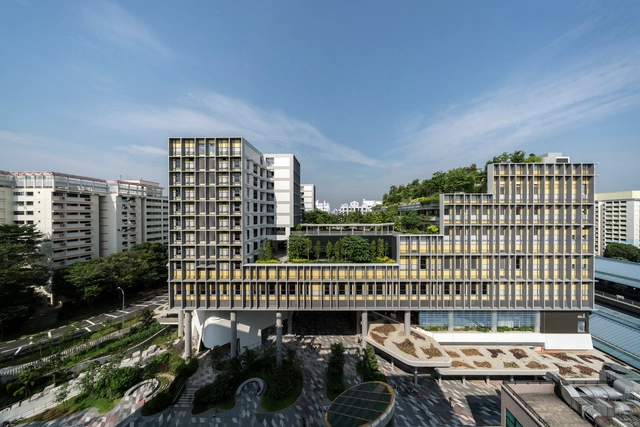
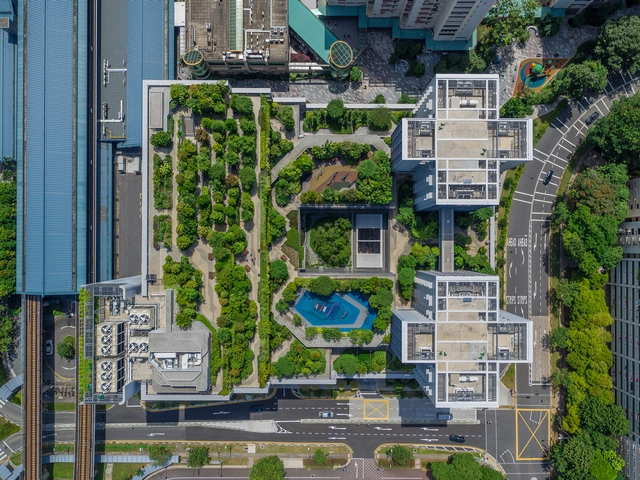
With the increase in the construction of high-rises, special features such as the introduction of greenery in the design, unusual shapes, or the construction of clusters of towers, have become the new normal. DAM’s research this year also shows a growing eco-awareness, as the focus in high-rise construction is increasingly on the use of existing buildings. While the majority of tall buildings continue to be erected in China, followed by the USA, Australia, and Singapore have emerged as new hubs of high-rise architecture.
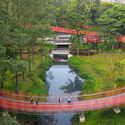
Last week, the President*s Design (P*DA) Award chose 8 winning recipients for its 2023 edition. The award that honors designers making a transformative and positive impact on the lives of Singapore’s society and the broader global community recognized Henning Larsen, BIG, and the Singapore Pavilion for Expo 2020 Dubai.
The P*DA presented two categories: Designer of the Year and Design of the Year. Organized jointly by the DesignSingapore Council and the Urban Redevelopment Authority (URA), the biennial award was given to two “Designer of the Year” and six “Design of the Year” recipients. Beyond the excellence of their design execution, the honorees demonstrated a genuine sense of purpose and mission that is consistent with P*DA's core values. The outstanding designs of this year tackle fundamental and systemic issues like consumerism and circularity, dementia and caregiving, climate change and sustainability, and show how Singapore is developing its best design practices that are applicable to enhancing lives worldwide.
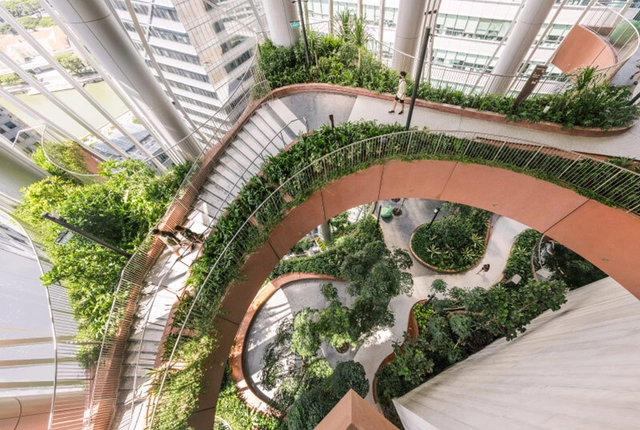
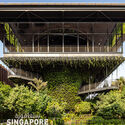
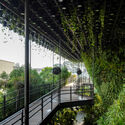
The SingaporePavilion for Expo 2020 Dubai illustrates the city's aspiration towards a sustainable future that merges architecture, nature, technology and culture. Under the title "Nature.Nurture.Future", the pavilion designed by WOHA Architects and landscape design practice Salad Dressing showcases a sample of Singapore's urban environment that epitomizes its City in Nature vision. The multi-layered green space creates a self-sufficient ecosystem highlighting ideas of sustainability and resilience through the marriage of technology and nature.
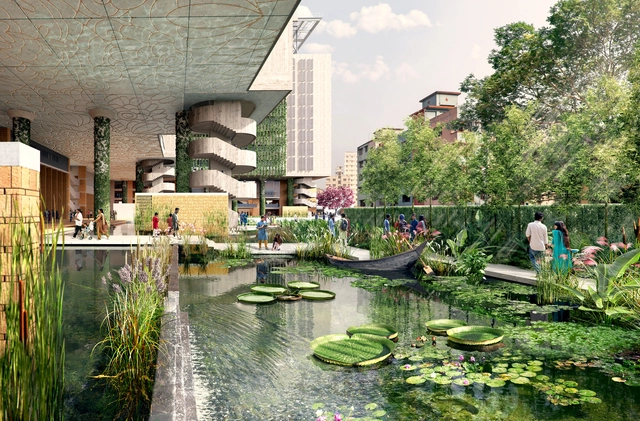
WOHA and BRAC University have unveiled the latest images from the 5.3-acre university campus, scheduled for completion in 2021. Located in Dhaka, Bangladesh, the intervention will transform a polluted and flooded wasteland into a sustainable inner-city campus and public park.
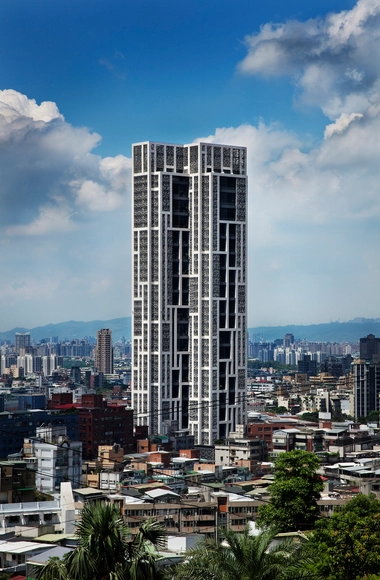
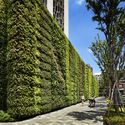
Sky Green, WOHA’s first project in Taichung, Taiwan has just been completed. Commissioned by the developer Golden Jade, with Feng Chia University as an advisor, the project is the first green and sustainable mixed-use development in the city.
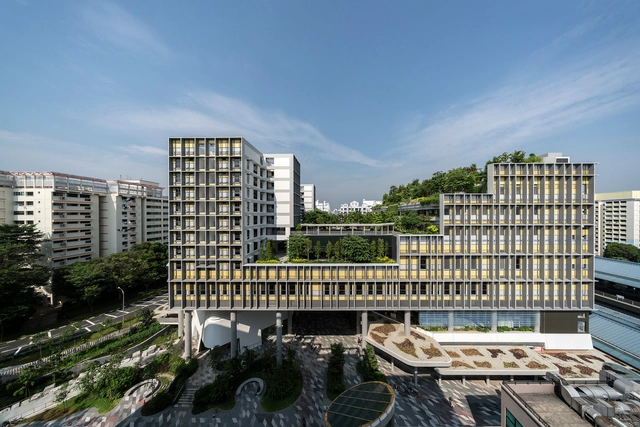
The challenges associated with the provision of adequate and affordable housing around the world demand that architects respond with original solutions that challenge traditional building forms, typologies and methods of delivery.
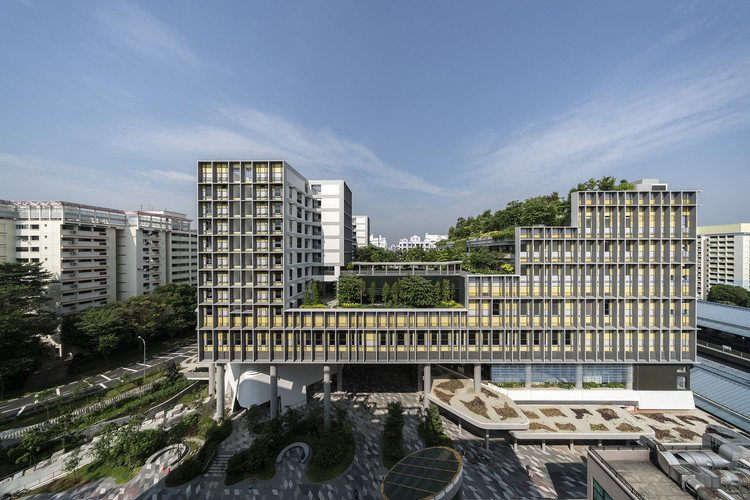
PLANE–SITE brought together the architects of four inventive housing projects. These projects represent a diversity of approaches to similar housing challenges across radically different global contexts. From the redensification of European urban centers to the rapid urbanization of the tropical Asian megacity, these radical housing models challenged existing paradigms in order to advance resident well-being as their principle design concern. In contrast to Schumacher’s divisive speech, the panel illustrated projects that were deliberately designed to promote community life and social interaction between residents – and in some cases also with other citizens in spaces that blur the line between public and private.
View along New Punggol Road - Singapore Institute of Technology. Image Courtesy of WOHA
Expected to be completed in 2023, construction works have started on the campus of the Singapore Institute of Technology designed by WOHA. The 91,000 square meter project located in an existing forest, will create a “Campus in a Park” experience, where learning spaces and green spaces will be combined.
Singapore’s creative community will soon be thriving as one of the city's buzziest projects, Design Orchard, nears completion. Designed by Singapore-based architecture firm WOHA, the 2350 sqm green project has been under construction since early 2018, and will officially be open to the public on the 30th of January, 2019.
Located on Orchard Road, the city’s most iconic shopping avenue, the project's publicly accessible sloped rooftop park will incorporate multiple services and public areas, accentuating the design and providing up-and-coming designers with a space to create, produce, and exhibit.
A month after the event, the various nominees of 2018's World Architecture Festival have returned to their home cities, leaving the fanfare of the year's event in Amsterdam as a memory. But that's not to say it's not left a lasting impact.
https://www.archdaily.com/908256/world-architecture-festival-winners-share-their-experiences-of-the-eventAD Editorial Team
Though seemingly opposite environments, cities are a lot like rainforests. At ground level, the world is dank, dark, and full of predators. Inhabitants seeking fresh air, sunshine, and privacy have only one direction to go: up.
So in the urban jungle, it’s only natural to build a “canopy” in the form of rooftop architecture. The popularity of rooftop amenities across residential, commercial, hospitality, and even health-care projects shows that’s exactly what’s happening.
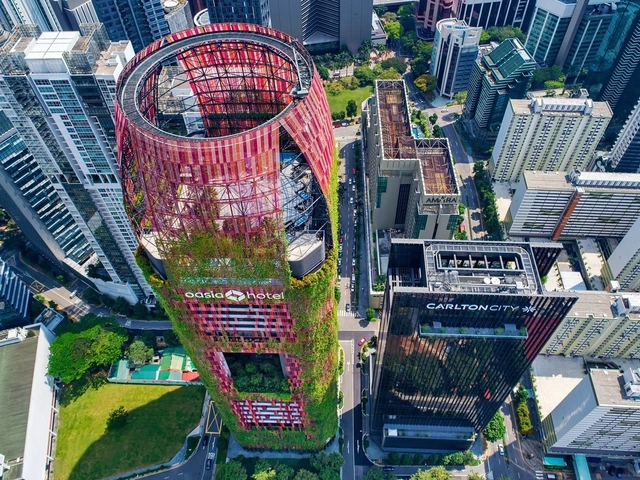
New photographs released by ceramics manufacturer AGROB-BUCHTAL show nature beginning to claim the Oasia Hotel Downtown in Singapore. WOHA Architects’ 30-story scheme was designed to be a “verdant tower of green” in the heart of the city’s financial district.
The tower’s red aluminum mesh cladding has begun to sprout a lush landscaping, consisting of 21 different species of creepers. The colorful flowers and green leaves provide food for birds and insects, while the reaction of the creepers to different light, wind, and shade conditions come together to form a natural mosaic.
WOHA has released an update of their first office skyscraper for China, as their Vanke Yun City scheme tops out in Shenzhen. Manifesting as three tower blocks attached to a central T-shaped core, the scheme seeks to present “an alternative office tower typology that responds to the sub-tropical climate in Shenzhen.”
Set against the backdrop of ubiquitous post-modernist skyscrapers, the 1.6 million-square-foot (150,000 square-meter) scheme aims to “radically transform the soulless skyscraper into a highly liveable, humane, and sustainable micro-vertical city.”
WOHA's first exhibition in Latin America, Garden City Mega City: WOHA's Urban Ecosystems presents over two decades of WOHA's international designs. With its inauguration at the Museum of the City of Mexico during the MEXTRÓPOLI International Festival of Architecture and City, the exhibition proposes the introduction of biodiversity and lively public spaces into vertical, climate-sensitive highrises within megalopolises.
The exhibition features sixteen intricate architectural models, an immersive video installation and large-scale drawings and images that show WOHA's proposals for vertical communities in the tropical megacities. PLANE-SITE documented the exhibition's opening along with the points of view of various MEXTRÓPOLI contributors and city officials.
As part of the MEXTRÓPOLI festival in Mexico City early last month, Singapore-based firm WOHA debuted their first exhibition in the Latin America, GARDEN CITY MEGA CITY. WOHA's architecture introduces biodiversity into public spaces, turning high-rise courtyards and hallways into teeming community assets. In this exhibition, the architects show how their work has addressed both climate change and the social challenges that occur as a result of rapid (upward) urban development.