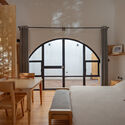
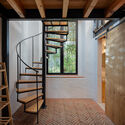
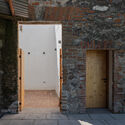
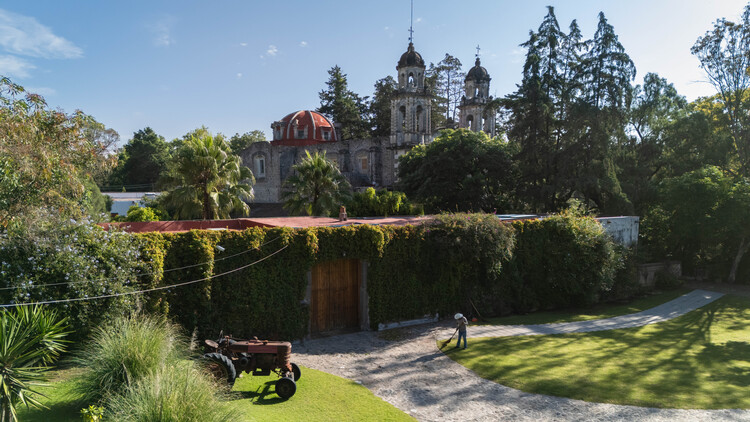
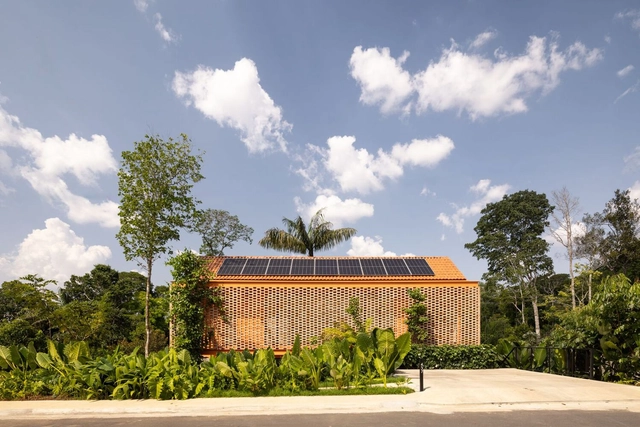
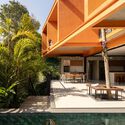
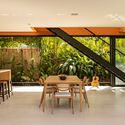
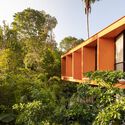
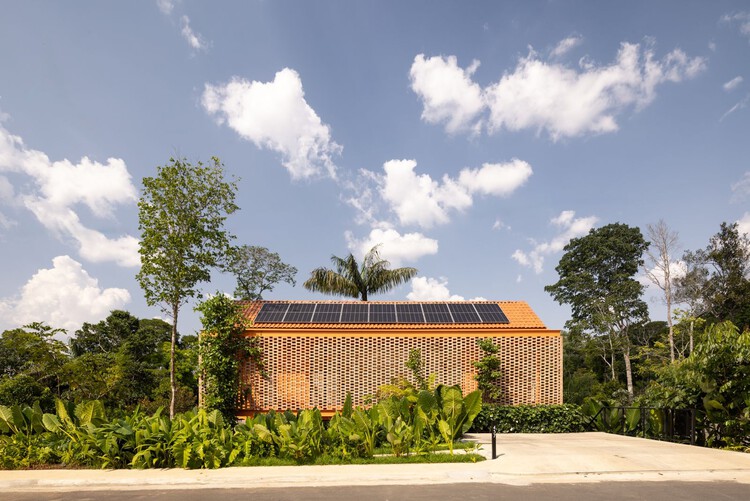
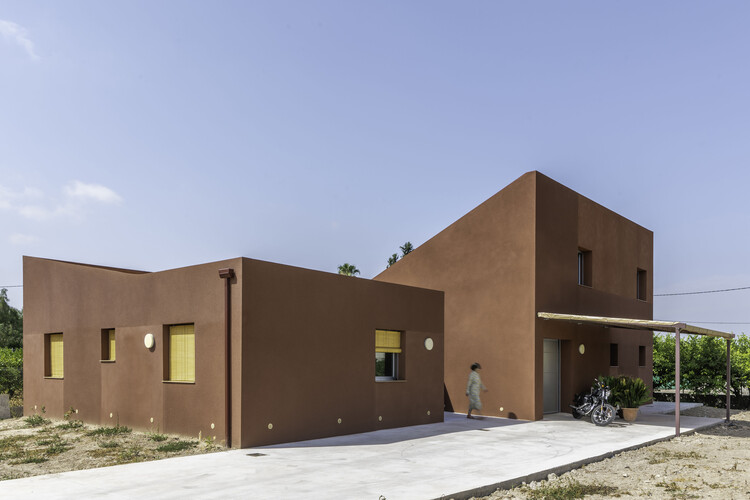
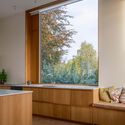
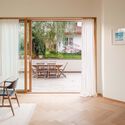
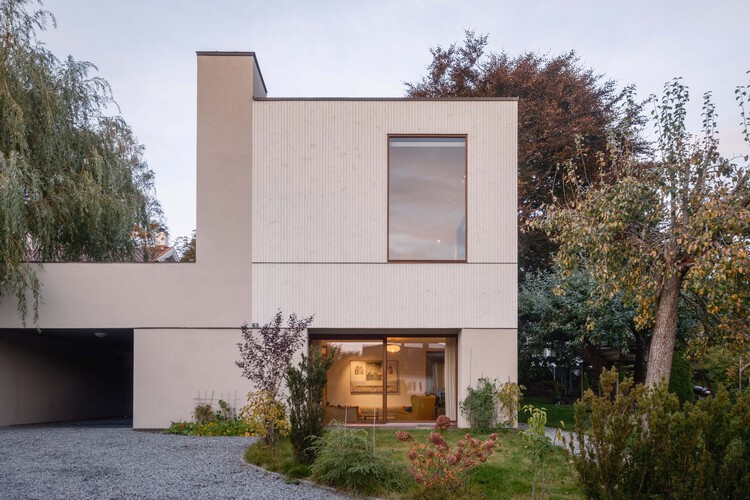
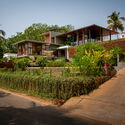
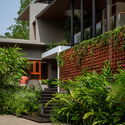
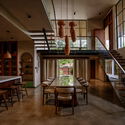
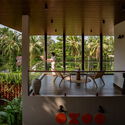
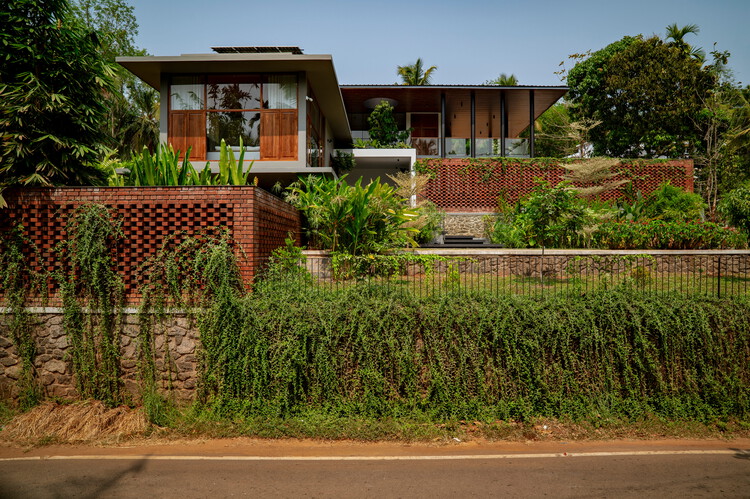
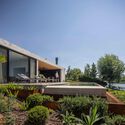
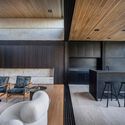
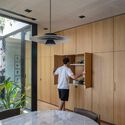
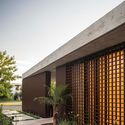
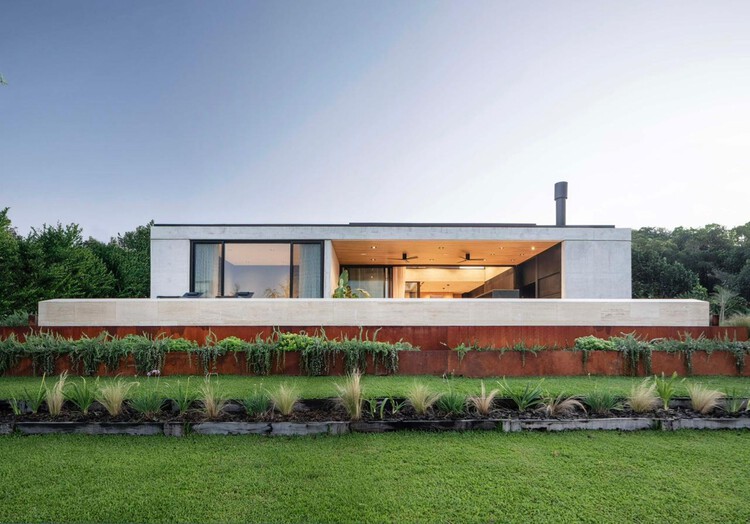
Architects: TANK Architectes / Olivier Camus & Lydéric Veauvy
Location: Villeneuve D’ascq, 59, France
Architect in Charge: Mathieu Berteloot
Site area:365 sqm
Constructed area:146 sqm
Budget:$225,000 Euro
Project year:2008
Photographs: Pierre Manuel Rouxel
The foundation of the Nepal Pavilion was completed this week. With the theme “Tales of Kathmandu City,” the pavilion will capture important historic moments of the city. The pavilion will put on display the luster of Katmandu, the capital city of Nepal and an architectural, artistic and cultural center that has developed over 2,000 years.
The theme touches upon the soul of a city by exploring its past and future. Another highlight of the pavilion will be Nepal’s efforts in environmental protection and developing renewable energies. The pavilion is in the form of an ancient Buddhist temple in Kathmandu, surrounded by traditional Nepalese houses.
A car or motorcycle rally will run from Lumbini to the Expo site. The rally will bring the “eternal flame of peace” to Shanghai from Nepal. More images after the break. read more »
Technology company Advanced Micro Devices’ (AMD) new “Lone Star” campus – located at 7171 Southwest Parkway in Austin – has been awarded LEED Gold certification from the U.S. Green Building Council, making it the largest LEED-certified corporate campus in Texas. The $190 million, 870,000-square-foot campus opened in January 2008 on a 59-acre tract in south Austin. Project elements include four four-story office buildings, three recessed parking garages and the Lone Star building, which features an employee fitness center, cafeteria, gourmet coffee bar, casual meeting space, outdoor decks and a gaming center with table tennis, billiards tables and video game consoles.
Austin-based Graeber, Simmons & Cowan served as the lead architect; Texas-based TBG Partners provided programming, site planning and landscape architecture services; Austin-based Paul Koehler Brown and Austin-based Jaster-Quintanilla served as the structural engineers; Austin-based Michael E. James &Associates served as the civil engineer; and Dallas-based Austin Commercial served as the general contractor.
Architects: Danny Forster
Location: Lake Omena, Michigan, USA
Project year: 2009
Project area: 250 sqm
Photographs: Danny Forster
Big, challenging, creative. Designing a retail store may very well define it’s success in the future. Check our first part of previously featured retail stores in ArchDaily. And to finish our week, we bring you our second part of retail. Enjoy!
Sarugaku / Akihisa Hirata
This is a set of commercial tenant building in Daikanyama, Tokyo. From legal condition it was demanded to build several small volumes in narrow site, and we decided to make several volumes that seemed to be mountains. Thereby valley-shaped space between mountains is formed, where people and displayed things will overflow (read more…)
Dot envelope _ low cost shopping / OFIS arhitekti
The existing site is listed as industrial historical area with buildings of an old butchery complex, which included the water-tower and old butcher hall. Demand of National heritage was to rebuild the tower as it was in original and to integrate the main façade portal of old hall in front of the planned new shopping mall (read more…)
Showroom H / Akihisa Hirata
This is the building for a showroom exhibiting small agricultural equipments. I tried to create a place similar to natural environment in an artificial way. People are invited to go deep into the continuity without whole view, where they can find different spread of things in every minute. This architecture is made by a very simple operation (read more…)
K:fem department store / Wingardh
Fifty years after the opening of Vällingby, Sweden’s world famous New Town from 1954, works began with its resurrection. After the glorious days when children and their mothers filled the community in the outskirts of Stockholm with life, other developments gradually drained the neighbourhood unit (read more…)
PUMA City, Shipping Container Store / LOT-EK
Our green friends over Inhabitat just tipped us on a new project by NYC/Napoli based office LOT-EK, a practice that has been doing an interesting job by reusing containers. 24 containers are put together to create a 3 storey store with over 11,000 sqf, including a bar/lounge area and 2 decks. The store is currently at (read more…)
Architects: Duangrit Bunnag Architect Limited – DBALP
Location: Cha Am, Petchaburi, Thailand
Principal in Charge: Duangrit Bunnag
Collaborator Architects: Saranya Srisakulchairak / Architect Group Head, Kahitha Boonyatasaneekul / Architect, Rawin Sangsittayakorn / Architect, Prinpond Boonkham / Interior, Thiti Tritrakarn / Landscape Archiect
Contractor: Square Tech Co.,Ltd.
Structural Engineer: EMS Consultant Co.,Ltd.
Client: KS Resort and Spa Co.,Ltd.
Site area: 30,000 sqm
Building area: 18,000 sqm
Project year: 2008 sqm
Photographs: DBALP & KS Resort and Spa
The Barcelona Institute of Architecture (BIArch) is an international institution set up to further interaction between academic research, specialized practice and the cultural dissemination of contemporary architecture. Occupying a space midway between schools of architecture and professional praxis, BIArch is an open laboratory for professionals and researchers that aims to promote new ways of thinking and acting for a technological, energy and economic reality in permanent flux.
Their next seminar is “Energy”, and it will be held next October 30-31, at BIArch (La Pedrera, Passeig de Gracia 92, Barcelona, Spain). All sessions will be in English. Access is free but limited. Registration is is required for attendance at info@biarch.eu. The seminar is directed by Agustí Obiol.
Architects: YH2_Yiacouvakis Hamelin architectes
Location: Saint-Hyppolite, Québec, Canada
Design team: Benoit Boivin, Marie-Claude Hamelin, Loukas Yiacouvakis
Client: Jean Mathieu
Builder: Martin Lachance
Project area: 1,850 pi.ca.
Project year: 2008-2009
Photographs: Francis Pelletier & Loukas Yiacouvakis
The project for a footbridge located in Roche-sur-Yon was commissioned as a collaborative work in between HAD Paris, who has a previous experience with the footbridge they did in Turin for the Olympic Village in 2006 and Bernard Tschumi, who recently finished the Acropolis Museum.
Architects: Mauricio Pezo, Sofia von Ellrichshausen
Location: Road to El Venado nº 1130, San Pedro, Chile
Models: Oscar Otarola, Helena Lennert
Structure: German Aguilera
Construction: Ricardo Ballesta
Sanitary project: Marcelo Valenzuela
Electrical project: Carlos Martinez
Constructive system: Reinforced concrete
Exterior finishing: Cooper Oxide tinted concrete, aluminium window frames
Interior finishing: Painted concrete and wood, wooden and stone floors
Plot area: 597 sqm
Built area: 160 sqm
Project date: 2007
Construction date: 2008-2009
Model photographs: Ana Crovetto
Photographs: Cristobal Palma
Over the course of the summer, Design It: Shelter Competition received submissions from people in 68 countries for a total of nearly 600 entries that met competition requirements. On the occasion of the Guggenheim Museum’s 50th Anniversary, they are pleased to announce the two winning entries.
David Mares’s CBS – Cork Block Shelter, won the People’s Prize after receiving 64,875 votes out of more than 100,000 votes submitted online by voters around the world; and David Eltang’s SeaShelter, which was selected by a jury of architecture and design experts for the Juried Prize. Prizes include airfare and two nights accommodation for two in New York City, behind-the-scenes tours of the Guggenheim Museum and Google offices, and Google SketchUp Pro licenses.
Images of the two winners and videos from the competition after the break. read more »
Architect: Supple Design / Eoghan Lewis
Location: Mernda, Victoria, Australia
Client: Stockland Property Trust
Structural consultant: HKMA—Phil Mance
Site area: 850 sqm
Floor area: 130 sqm
Design year: 2006
Construction year: 2007
Photographs: Shannon McGrath, Eoghan Lewis
Architect: bittonidesignstudio
Location: Los Angeles, CA, USA
Project Team: Mark Bittoni, Ross Jeffries, Salomé Reeves
Client: Private
Structural Engineer: C.W. Howe & Associates
Area: 185.8 sqm
Project Year: 2009
Photographs: Eric Staudenmaier Photography
Coop Himmelb(l)au’s House of Music in Aalborg, Denmark is a shared hybrid space that becomes a center of inspiration, “both of the shared-synergetic behavior and of the form and expression of the architecture..” Cultural and educational functions are interspersed between shared public and performance spaces, creating a network of interaction among the public, artists, students and educators. Situated in a dynamic urban grid, the House of Music becomes a full extension of the city, linking the character of the city with the new opportunities the Music Hall provides.
Project name: Zamet Centre
Program: Public, cultural, business, sport
Location: B. Vidas Street, Zamet, Rijeka, Croatia
Architect: 3LHD - Sasa Begovic, Tatjana Grozdanic Begovic, Marko Dabrovic, Silvije Novak, Paula Kukuljica, Zvonimir Marcic, Leon Lazaneo, Eugen Popovic, Nives Krsnik Rister, Andrea Vukojic
Collaborators: Mateo Bilus, Building Physics / Details; Berislav Medic, UPI-2M, Structural Engineering; Branko Čorko, IPZ-elektroinzenjering 22, Electrical Engineering; Mario Lukenda, Termoinzenjering-projektiranje d.o.o., HVAC; Slavko Simunović, HIT PROJEKT, MEP Engineering – Plumbing; Nenad Semenov, PASTOR, sprinkler installation; Rok Pietri, LIFT MODUS, elevators; Zeljko Arbanas, IGH PC Rijeka, diaphragm wall; Zeljko Stipković, Fire Protection; Ivica Babic, Zavod za zastitu na radu Rijeka, Safety at Work; Marija Babojelic, Special Consultant – Cost Consultant; Ines Hrdalo, Landscape Architect; Damir Bralić, Lana Cavar i Narcisa Vukojevic, signage and environmental graphics design; Nikola Durek, “Typonine Zamet” typeface design
Project year: 2004-2008
Construction: Dec 2007, October 2009
Geolocation: 45-20-39 N, 14-24-0 E
Site area: 12.289 m2
Size: 16.830 m2
Volume: 88.075 m2
Footprint: 4.724 m2
Budget: 20 mil €
Client: Grad Rijeka / Rijeka Sport d.o.o.
Main contractor: GP Krk
What is the future for cities? Are they expanding at an ever-increasing rate or are they being abandoned and shrinking into oblivion? Are cities polluted, overcrowded and anonymous, or are they dynamic centres of innovation and culture? Are they sociable or anti-social? Well, it depends who you read because each description reflects the confusion about the state of the world’s cities. Anxieties over urban space within western cities, and fears over the dynamic growth of megacities in the developing world have altered the way that we see the benefits and drawbacks of urbanisation. It has been said that a culture of shrinkage is set to develop; or alternatively, that the city will have finally swallowed the world.

From transport systems to energy grids, from social networks to economic activity, this is the forum in which to debate the implications of min/max alternatives. And given the often fraught debates over lifestyles, liberties, aesthetic values and technologies, to clarify the architectural and cultural attributes that can best help address the urban future.
The event will take place in the University of Cambridge, UK, on November 26, 2009. More information on programme, speakers and registration, click here.
A month ago we presented you the finalist entries for Stadskantoor, a new mixed used building at Rotterdam’s City Hall. After a process of public feedback and a presentation to the professional jury, OMA’s entry was awarded with the 1st prize.
The strategy of the project is very simple: a modular flexible structure spans between existing buildings, supporting the mixed use program, while freeing the space below for public use. The axonometric shown below shows this rich public realm that the offers back to the city.
With this modular structure, units can be added or even dismounted from the structure as demands on the building change over time, and can adapt to either office space or residential parameters as desired. Green terraces on higher levels provide the possibility of an apartment with a garden in the heart of urban Rotterdam.
URBANUS was awarded with the 1st prize on the competition for the new integrated teaching building at the Chinese University in Hong Kong. Entitled “Windows on Community,” the building strives the link the two parts of the campus together, while also providing a visual connection with those who approach. Through the implementation of a Moebius Strip, the design mixes the inner circulation of the building with the exterior circulation of the streets. “This loop of circulation and urban internal street for us is not only a vertical linkage but more the heart of the college-a lively community space at the center of it all,” explained the architects.
More about the University after the break.
Architects: J. MAYER H. Architects
Location: Hamburg, Germany
Architect on Site: Imhotep, Donachie und Blomeyer
Sturctural Engineers: Lydia Thiesemann, CBP
Building Services: Energiehaus, Sineplan
Light Engineers: Andres – Lichtplanung
Landscape Architects: Breimann & Bruun
Project Year: 2007
Constructed Area: 5,436 sqm
Photographs: fotografieSCHAULIN, Hiepler Brunier, Dirk Fellenberg & Schraubverschluss
Architects: OBRA Architects
Location: Southampton, New York, USA
Principals in Charge:Pablo Castro, Jennifer Lee
Project team:Selin Semaan, Akira Gunji, Luis Costa, Shin Kook Kang, Satoshi Kiyono, Kaon Ko, Bronwyn Kotzen, Fabiana Meacham, Elizabeth Snow, Elina Almuhametova, Chiara Filios, Doreen Lam
Structural Engineering:Robert Silman Associates
Lighting consultant:Peiheng Tsai Lighting Design
Project Area: 1,231 sqm
Project year: 2008
Photographs: OBRA Architects
and