Megan Sveiven

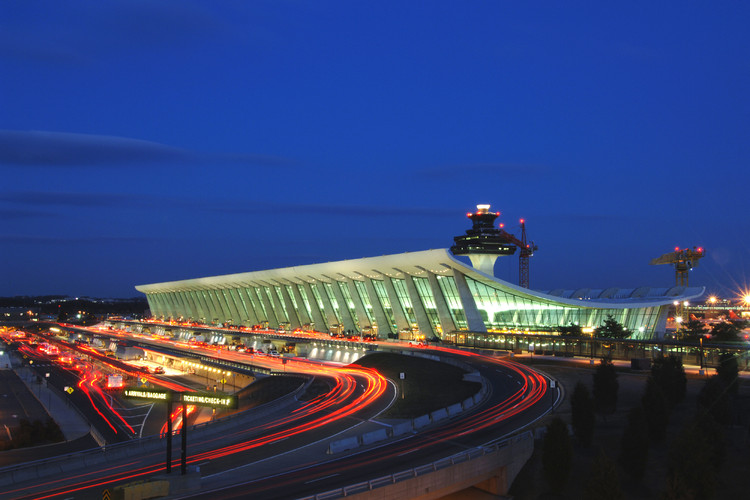
AD Classics: Dulles International Airport / Eero Saarinen

©MWAA

Known for his innovative, sculptural forms used throughout both architecture and furniture designs, includes these same curving and organic forms in the TWA Terminal as well as in the on the outskirts of Washington D.C.

More on the Dulles International Airport terminal by Eero Saarinen after the break.

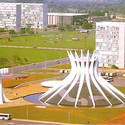
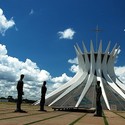
AD Classics: Cathedral of Brasilia / Oscar Niemeyer

©Wikimedia Commons

Having such a significant history, it can be expected that the architecture of reflects the richness and prominence of the culture as a planned city. The church bears much importance in the society, so the design had to have significance and personality against its surroundings. Oscar Niemeyer was sure to make a statement with the powerful expression and unique form of the , which led to his acceptance of the Pritzker Prize in 1988.

More on Oscar Niemeyer and the Cathedral of Brasilisa after the break.

AD Classics: Angkor Wat

©Essential Architecture

A major symbol of itself, is one of the oldest temples in the world that still functions as the significant religious center it was built to be. Constructed in the early 12th century for King Suryavarman II (ruled 1113-1150), was a state temple and capital city for the community, first as a Hindu establishment and eventually becoming a Buddhist temple.

The style of Angkor Wat is the epitome of classical Khmer architecture. The two primary ties between this temple and architecture of the Khmer style is the temple mountain and gallery temples. It was inspired by the home of the gods in Hindu mythology, called Mount Meru. It is surrounded by a moat and a wall 3.6km long, and the three rectangular galleries are distinguished by level changes of the ground.

More on Angkor Wat after the break.

AD Classics: Taj Mahal / Shah Jahan

©Wikimedia Commons

Easily one of the most recognizable buildings in the world, the Taj Mahal’s harmonious integration with its environment makes it a prime destination for many. Completed in 1648 as a for ‘s late wife, Mumtaz Mahal, it stands as a symbol of eternal love as its history and beauty never fail to captivate the heart.

More on the fascinating history of the Taj Mahal after the break.

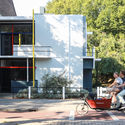
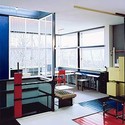
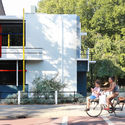
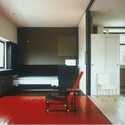
AD Classics: Rietveld Schroder House / Gerrit Rietveld

©Wikimedia Commons

Still as visionary and eccentric as it was when it was built in the 1920s, the Schroder House by continues to impress architects and interior designers with its innovative solutions to prominent design questions of its time.

The flexibility of the interior spaces and the obviously planar quality of the house both give it an edge that makes it distinguishable and unique on every level.

More on the by Gerrit Rietveld after the break.

AD Classics: St. Bernard de Clairvaux Church

© Weird

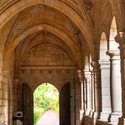
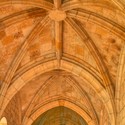
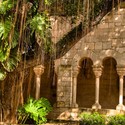
The unusual history of the St. Bernard de Clairvaux Church adds richness to the Floridian landscape as it gives people of all ages a breathtaking escape from the showy yet glamorous side of Miami. Initially built in the town of Sacramenia of Segovia in Spain during the period of 1133-1144, the monastery was named after the famous Cistercian monk Bernard de Clairvaux almost immediately after his canonization. For around 700 years, the walls housed hundreds of monks until the mid-1830′s, when the Cloisters were seized, sold, and converted into a granary and stable.

More about the history of St. Bernard de Clairvaux Church after the break.

AD Classics: Knights of Columbus Building / Kevin Roche & John Dinkeloo

©Wikimedia Commons

The firm Roche-Dinkeloo and Associates is known for producing some of the most significant and influential civic and corporate architecture of contemporary times. The two architects were very successful in recognizing new social conditions within their postindustrial society, paying specific attention to the individual and their changing relationship with public space.

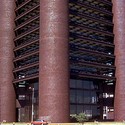
The Knights of Columbus Building in , , is the second tallest building in the skyline although it is only 23 stories. Its modern construction and design were revolutionary at the time, and continue to be appreciated today.

More on the Knights of Columbus Building by Roche-Dinkeloo and Associates after the break.

AD Classics: Chrysler Building / William Van Alen

©Wikimedia Commons

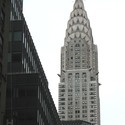
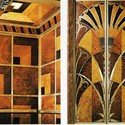
In a skyline that has developed as a destination for architects and city lovers alike, the by William Van Alen is identifiable from any distance for its distinguishable style and profile against its surroundings. With the initial intention to be the world’s tallest building, it remained so for only eleven months until it was surpassed by the Empire State Building in 1931. The Chrysler Building is a classic example of the Art Deco style, from the street to its terraced crown. Interior and exterior alike, it is admired for its distinctive ornamentation based on features that were also found on Chrysler automobiles at the time.

More on the Chrysler Building by William Van Alen after the break.

AD Classics: Church on the Water / Tadao Ando

©

“You cannot simply put something new into a place. You have to absorb what you see around you, what exists on the land, and then use that knowledge along with contemporary thinking to interpret what you see.” This philosophy of Tadao Ando is ever apparent in his design, as he is celebrated for the attention he pays to nature and the relationship between interior and exterior spaces of his buildings.

More on Tadao Ando‘s after the break.

AD Classics: East Building, National Gallery of Art / I.M. Pei

©Flickr: username- Andy961

What would eventually become known as the West Building of the National Gallery of Art, the initial portion of the museum was financed by art collector Andrew Mellon. Architect John Russel Pope was hired to design the museum in the late 1930s, with the intentions of leaving space for future additions.

Mellon’s son Paul had the responsibility of choosing the architect for the expanse years later, so he turned to one of the most forward-thinking architects of the twentieth century, .

More on the by I.M. Pei after the break.

AD Classics: Convent of La Tourette / Le Corbuiser

©Samuel Ludwig www.samueltludwig.com

The Convent of La Tourette is ’s final building completed in Europe, and is also thought by many to be his most unique program. It was built to be a self-contained world for a community of silent monks, and to accommodate the unique and specific lifestyle of the monks, the  is made of one hundred individual cells, a communal library, a refectory, a rooftop cloister, a church, and classrooms.

The one request to the architect by Father Marie-Alain Couturier was that he “create a silent dwelling for one hundred bodies and one hundred hearts.”

More on Le Corbusier‘s Convent of La Tourette after the break.

AD Classics: Luce Memorial Chapel / I.M. Pei

©Anonymous Blogger

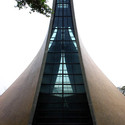
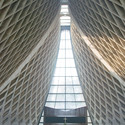
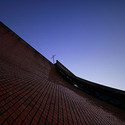
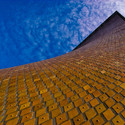
Named after an American missionary of the late 19th century, the was added to the campus of Tunghai University in , Taiwan. It was designed by Chen Chi-Kwan, an artist and architect, in collaboration with the infamous architect I.M. Pei.

More on the Luce Memorial Chapel by I.M. Pei after the break.

AD Classics: San Cataldo Cemetery / Aldo Rossi

©Flickr: username-guiba6

, a man appreciated internationally for his theories, architecture and drawings, was one of the most prominent architects of his time. His desire to create buildings that reflected his social perspective and theories was reflected in most if not all of his buildings, but it was particularly evident in the .

More on the San Cataldo Cemetery after the break.

AD Classics: John W. Chorley Elementary School / Paul Rudolph

©Daniel Hui

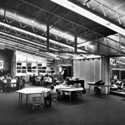
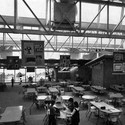
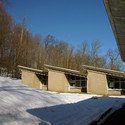
It is always wonderful to stumble upon humble examples of architecture done by exalted architects, who are typically known and appreciated for their larger structures rather than their smaller-scale or less flashy buildings. In the case of Middletown, , the local elementary school flaunts hints of the more recognized designs of Paul Rudolph but at a more modest scale.

More on the by Paul Rudolph after the break.

AD Classics: Stockholm Public Library / Gunnar Asplund

©Sam Teigen

In the early 1900s, the concept of a public library was being adopted by the City of Stockholm in Gunnar Asplund was initially hired to help determine the requirements for a public library and then prepare a competition open to all architects. Beginning his research in the United States, Asplund saw first hand examples of the most developed library system in the world. He became very informed and when the building committee realized the strength that he had in his understandings and ideas, they decided he would be the most suitable architect for the job.

More on the after the break.

AD Classics: Neviges Mariendom / Gottfried Böhm

©Yuri Palmin

When a miraculous engraving in copperplate of the Immaculata was brought to Neviges in the seventeenth century, it became a pilgrimage center for the religious.  Around 1960, the church decided that they wanted to construct a new building, starting a competition which would result in a new church amidst a Franciscan monastery and other late-baroque architecture. This led to a series of competitions, eventually won by architect , although initially his design was not accepted as the judges thought it to be exaggerated and manneristic.

More on the Neviges after the break.

AD Classics: Gamble House / Greene & Greene

©Alexander Vertikoff

The essential nature of architecture by Greene & Greene begins with intense attention to detail and craftsmanship, as their bungalows mark the height of the American Arts and Crafts style. The brothers were inspired by the concept of total design, or gesamtkunstwerk, which was stressed in the German-designed rooms at the 1904 Louisiana Purchase International Exposition in St. Louis. When they met David and Mary Gamble, they already had developed a list of rich couples who commissioned them to design their houses, with generous budgets and relatively free reign.

“An architect is a builder employing the process of art,” Charles Greene once wrote. This is proven to be their governing belief, not only in the final product but also throughout the process. The brothers were known to veer from the initial blueprints, showing that they were enthralled with transition and process, the blueprints as a point of departure rather than a set of instructions.

More on the by Greene and Greene after the break.

AD Classics: Casa Batlló / Antoni Gaudí

©Wikipedia

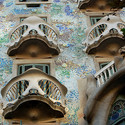
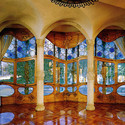
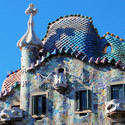
The inspiring imagination of undoubtedly reveals itself in one of his most poetic and artistic designs for a building, . His synthesis of animal shapes, vine-like curves, hints of bone and skeleton, and his use of lustrous colored bits of glazed ceramic and glass create a masterpiece that will forever astonish its observers.

More on Casa Batlló after the break.

AD Classics: The Colonnade Condominiums / Paul Rudolph

© Cooney-Hughes

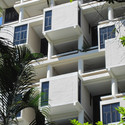
Initially intending to design a housing structure as a set of prefabricated units hoisted onto a structural frame, the ideas and visual intricacies of ‘s were developments of the previously designed but unbuilt Graphic Arts Center of Manhattan.

More on The Colonnade Condominiums after the break.

AD Classics: Schwimmer House / John Lautner

© Patricia Parinejad

One of the more inspirational and influential architects of the twentieth century, was revered in the world of architecture and design throughout his sixty-year-long career. Architects like Frank Lloyd Wright and Frank Gehry give a substantial amount of credit to Lautner, who influenced their designs and minds as architects. As is obvious in his architecture and especially in the , Lautner valued attention to space, materiality and relationship with the natural environment.

More on John Lautner and the Schwimmer House after the break.

AD Classics: St. Coletta School / Michael Graves

©

A bright and fun building that stands out against it’s surroundings, Michael Graves is well respected for his design that brought hope to the families of children with disabilities in and surrounding areas.

St. Coletta was founded in 1959 by a couple with a child diagnosed with Down Syndrome. As they had history dealing with the struggle of finding an educational system that worked for their child, they decided to establish the school as a special education charter which serviced and educated children with severe or multiple disabilities. The bright colors and simple forms make it very fitting for the people that the building serves, as it is fun, playful and inviting.

More on St. Coletta School after the break.