1. ArchDaily
  2. Zaha Hadid Foundation

Zaha Hadid Foundation: The Latest Architecture and News

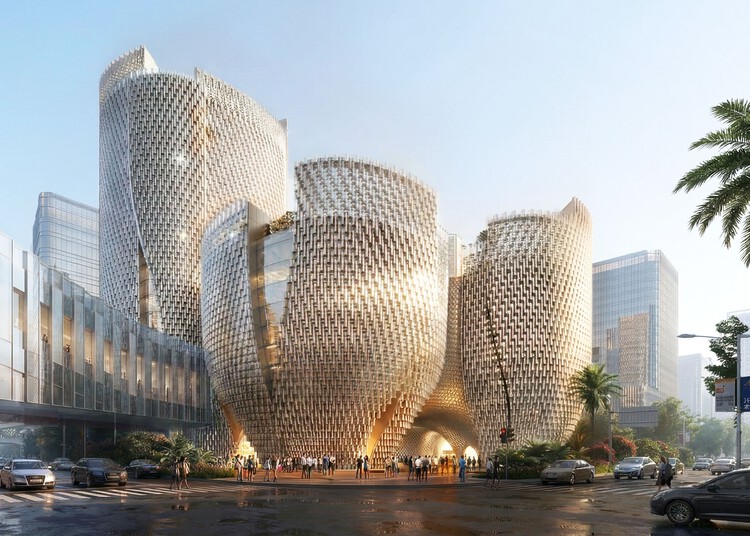
Zaha Hadid’s Legacy and Büro Ole Scheeren’s Róng Museum: This Week’s Review

As architectural discourse continues to expand across cultural, educational, and civic domains, this week's developments highlight how the discipline operates simultaneously through legacy, knowledge production, and large-scale public engagement. From reflections on influential figures and their enduring impact to evolving academic landscapes and new forms of cultural infrastructure, architecture is positioned as both a repository of ideas and an active agent in shaping contemporary identities. At the same time, projects spanning entertainment, museums, and waterfront developments point to a growing emphasis on hybrid programs and experiential environments, where architecture mediates between culture, public life, and global audiences.


Zaha Hadid’s Legacy and Büro Ole Scheeren’s Róng Museum: This Week’s Review - Image 1 of 4Zaha Hadid’s Legacy and Büro Ole Scheeren’s Róng Museum: This Week’s Review - Image 2 of 4Zaha Hadid’s Legacy and Büro Ole Scheeren’s Róng Museum: This Week’s Review - Image 3 of 4Zaha Hadid’s Legacy and Büro Ole Scheeren’s Róng Museum: This Week’s Review - Image 4 of 4Zaha Hadid’s Legacy and Büro Ole Scheeren’s Róng Museum: This Week’s Review - More Images+ 2

From Deconstructivism to Barrier-Breaking Achievements: Zaha Hadid’s Legacy 10 Years After Her Passing

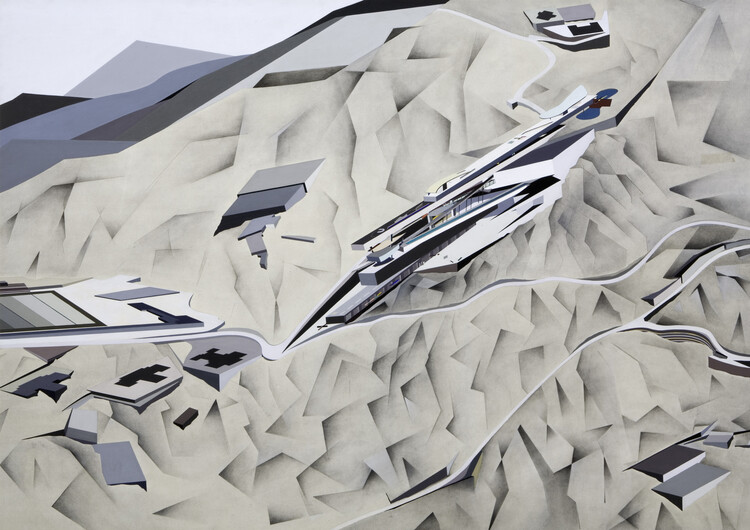
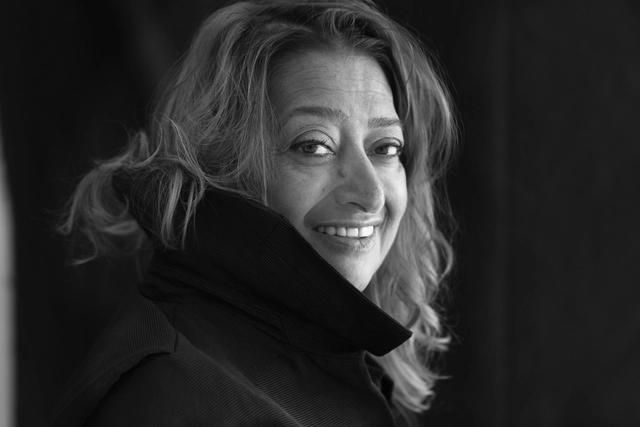
Between June 23 and August 30, 1988, The Museum of Modern Art (MoMA) in New York held an exhibition titled Deconstructivist Architecture, as part of a program "conceived to examine current developments in architecture." Curated by Philip Johnson and Mark Wigley, it focused on the contemporary work of seven international architects: Coop Himmelblau, Peter Eisenman, Frank Gehry, Rem Koolhaas, Daniel Libeskind, Bernard Tschumi, and a young Zaha M. Hadid. At 37 years old, her work was presented to the world as an example of "the emergence of a new sensibility in architecture." The material on display was not a model or a blueprint, but a painting, The Peak, submitted for an architectural competition in Hong Kong in 1983. From this starting point, her contribution to architecture deepened along the same lines recognized at the time of her inclusion in the exhibition: the development of a distinctive, mathematical, and, in her own words, "fluid" architectural language, and her emergence as a leading female figure in a field historically dominated by men.

From Deconstructivism to Barrier-Breaking Achievements: Zaha Hadid’s Legacy 10 Years After Her Passing - Image 1 of 4From Deconstructivism to Barrier-Breaking Achievements: Zaha Hadid’s Legacy 10 Years After Her Passing - Image 2 of 4From Deconstructivism to Barrier-Breaking Achievements: Zaha Hadid’s Legacy 10 Years After Her Passing - Image 3 of 4From Deconstructivism to Barrier-Breaking Achievements: Zaha Hadid’s Legacy 10 Years After Her Passing - Image 4 of 4From Deconstructivism to Barrier-Breaking Achievements: Zaha Hadid’s Legacy 10 Years After Her Passing - More Images+ 10

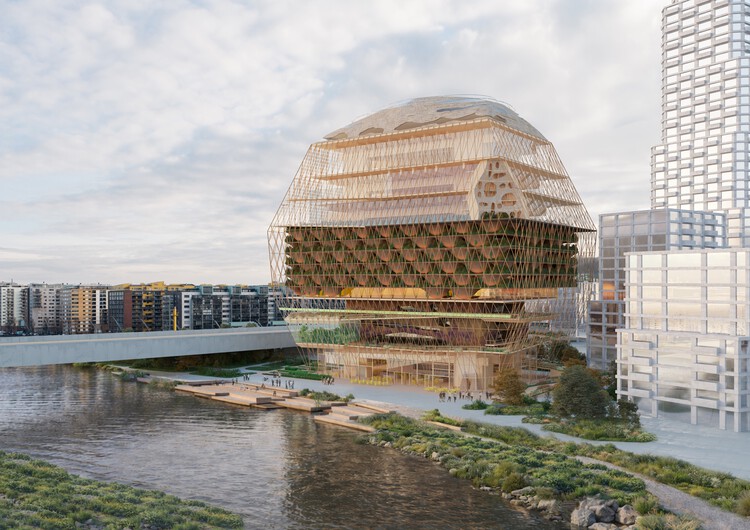
Rotterdam’s Sustainability Landmark and Brisbane’s 2032 Olympic Stadium: This Week’s Review

Architecture this week reflects the intersections of legacy, authorship, and social responsibility, as practices navigate questions of identity, recognition, and public engagement. Legal rulings, major competition shortlists, and large-scale urban proposals illustrate how architecture continues to operate across cultural, institutional, and environmental arenas. From sustainability-driven landmarks and transformative waterfront developments to iconic commercial towers, projects demonstrate approaches to ecological strategies and public programming. At the same time, global observances such as World Hearing Day highlight how spatial design shapes inclusion and accessibility, reminding the profession that the built environment can influence participation, learning, and well-being for diverse communities.

Rotterdam’s Sustainability Landmark and Brisbane’s 2032 Olympic Stadium: This Week’s Review - Image 1 of 4Rotterdam’s Sustainability Landmark and Brisbane’s 2032 Olympic Stadium: This Week’s Review - Image 2 of 4Rotterdam’s Sustainability Landmark and Brisbane’s 2032 Olympic Stadium: This Week’s Review - Image 3 of 4Rotterdam’s Sustainability Landmark and Brisbane’s 2032 Olympic Stadium: This Week’s Review - Image 4 of 4Rotterdam’s Sustainability Landmark and Brisbane’s 2032 Olympic Stadium: This Week’s Review - More Images+ 11

Beirut to Madrid: Global Education Programs from Zaha Hadid, Norman Foster, and SOM Foundations

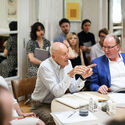
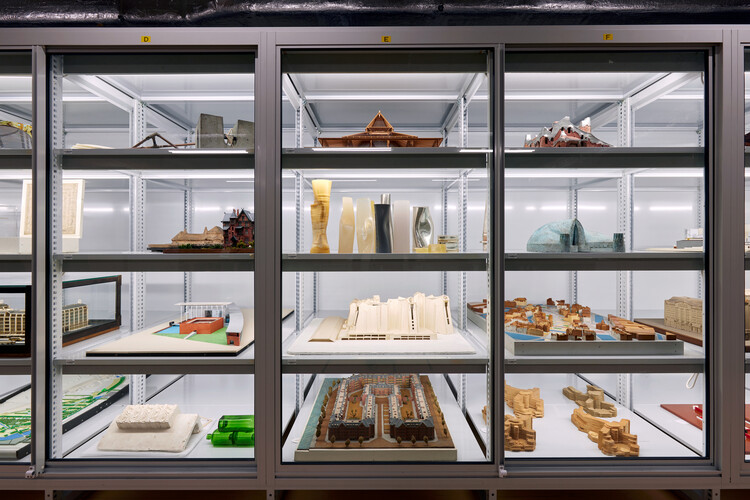
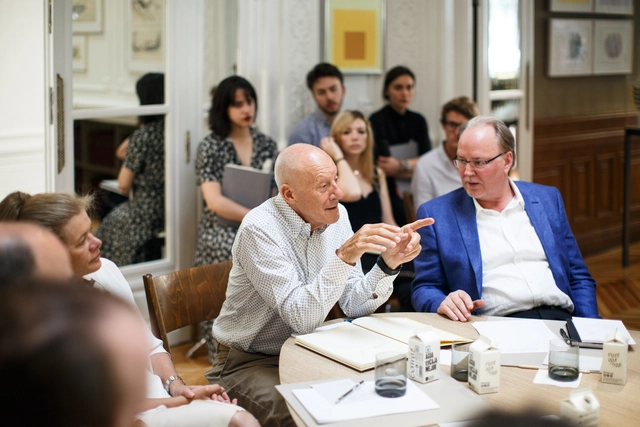
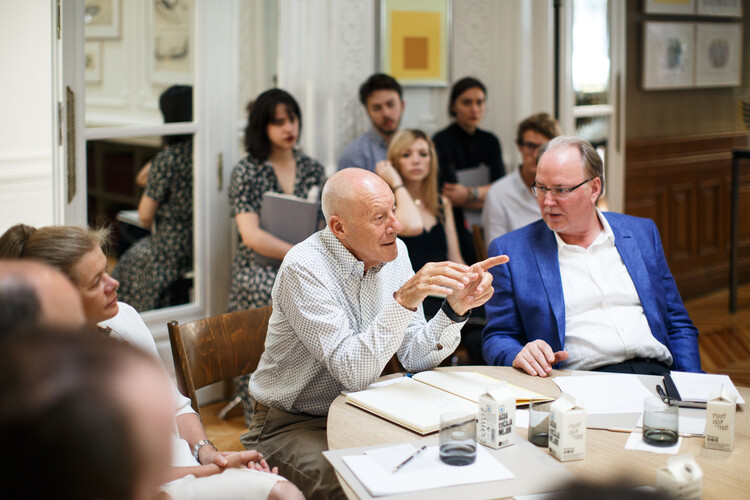
Foundations established by architects have increasingly become involved in architectural education through scholarships, fellowships, and interdisciplinary academic programs. These initiatives often aim to support students, promote research, and facilitate broader engagement with architecture and the built environment. Some architect-initiated foundations, such as the Zaha Hadid Foundation, which recently launched the Zaha Hadid Scholars Program at the American University of Beirut, along with the Norman Foster Foundation and the SOM Foundation, have introduced educational programs connected to their missions. While these programs differ in structure and focus, they commonly seek to extend the legacies of their founders by addressing contemporary challenges in design education. Their activities range from localized scholarship offerings to global research collaborations, reflecting a diverse approach to nurturing emerging talent and advancing architectural discourse.

Beirut to Madrid: Global Education Programs from Zaha Hadid, Norman Foster, and SOM Foundations - Image 1 of 4Beirut to Madrid: Global Education Programs from Zaha Hadid, Norman Foster, and SOM Foundations - Image 2 of 4Beirut to Madrid: Global Education Programs from Zaha Hadid, Norman Foster, and SOM Foundations - Image 3 of 4Beirut to Madrid: Global Education Programs from Zaha Hadid, Norman Foster, and SOM Foundations - Image 4 of 4Beirut to Madrid: Global Education Programs from Zaha Hadid, Norman Foster, and SOM Foundations - More Images+ 3

Zaha Hadid Leaves Net Fortune of £67 Million

As reported by The Guardian and the Architects' Journal, the last will and testament of the late Zaha Hadid—who passed away in March 2016 aged 65—has revealed that the Dame of the British Empire and Principal of Zaha Hadid Architects had a net fortune of £67,249,458 (around $82.5million or €77million). This sum, which was filed in the UK High Court in December last year, will be bequeathed in small parts to nieces and nephews (£1.7million), her brother Haytham Hadid (£0.5million), and her business partner Patrik Schumacher (£0.5million). At the time of her death, Hadid was unmarried with no children.