Eduardo Souto de Moura: “I Look Beyond Solution; I Look For an Expression”

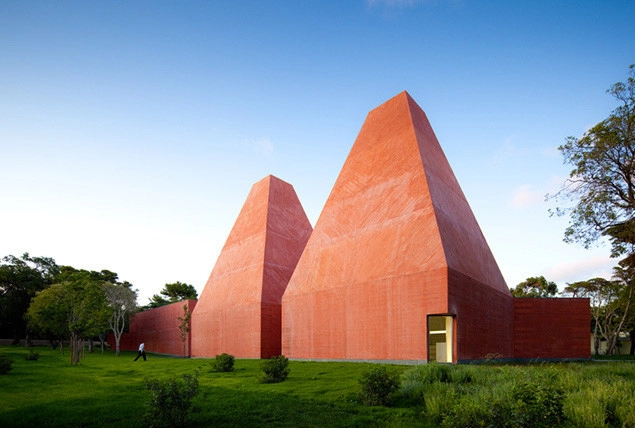
The architectural approach of 2011 Pritzker Prize-winner Eduardo Souto de Moura can be difficult to summarize. His convictions on matters of aesthetics and design are strongly held, but also highly individual and at times even unusual. In his work, this translates to buildings that are enigmatic, yet not flashy—in the words of the 2011 Pritzker Prize jury, “His buildings have a unique ability to convey seemingly conflicting characteristics—power and modesty, bravado and subtlety, bold public authority and sense of intimacy—at the same time.” In the latest interview from his “City of Ideas” series, Vladimir Belogolovsky speaks to Souto de Moura to probe his architectural mind and understand the thinking behind these powerful yet modest works.

Zhang Ke of ZAO/standardarchitecture: "Is a New Revolution Possible Today?"

Beijing-based architect Zhang Ke was educated first at China’s leading school, Tsinghua University, going on to later graduate from Harvard’s GSD in 1998. The former equipped him with technical know-how, while the latter encouraged him to question the essential elements of the profession, such as why we build. After working for three years in Boston and New York, Ke returned to Beijing to open his practice in 2001.

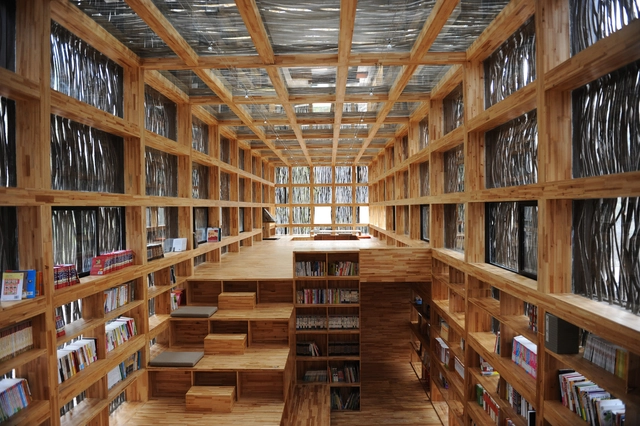
"I Identify Forms with Energy": Li Xiaodong of Li Xiaodong Atelier

One of the immediate impressions that I formed of the Beijing-based architect and Tsinghua University Professor Li Xiaodong (b. 1963) is his reassuring self-confidence. Following our interview, Professor Li asked me a question of his own - would I like to teach at his school? “I never taught in my life,” I replied. He quickly countered, “I know. You can teach. Yes or no?” If I have learned anything about life, it is that when opportunities come you should grab them first and think later. "If he is so confident in me, why shouldn’t I trust him?” I reasoned.

"I Believe in Questions that are Eternal": Dong Gong of Vector Architects

It is now expected of architects to turn away from designing iconic buildings/objects and focus instead on creating engaging built environments; from imagining idealistic, form-driven projects driven by the artistic pursuit to focusing on downright pragmatic solutions. China, of course, holds a large mirror to these tendencies, as so many Chinese architects quickly produced exactly the kind of projects that critics favor – modest in scale, straightforward in their expressions, reliant on indigenous construction techniques, and with inventive use of traditional materials. The results, however appealing, seem to lack both variety and risk-taking. There must be another way, not so formulaic.

"I Failed to be an Artist but I Became an Artistic Architect": Interview with Yung Ho Chang of Atelier FCJZ

Beijing architect Yung Ho Chang together with his wife Lijia Lu started his practice in 1993 under the name Feichang Jianzhu, atelier FCJZ. It literary means “not ordinary architecture,” a symbolic name for the practice that became China’s first independent architectural office, laying the foundation of contemporary practice in the country. Chang is referred to as the father of contemporary Chinese architecture. He grew up in the prominent architect’s family. Chang’s father, Zhang Kaiji [Yung Ho Chang’s Chinese name is Zhang Yonghe] was a classicist. He was one of the chief architects of the Beijing Architectural Design Institute and the design architect in charge for what is today the National Museum of China on Tiananmen Square. Chang studied architecture in Nanjing, then received his Bachelor degree from Ball State University in Muncie, Indiana, and Master of Architecture from the University of California at Berkeley. He has taught in both China and America, including at Harvard’s GSD and headed MIT’s architecture department from 2005 to 2010. In 2012, the year he joined the Pritzker Prize Jury, his fellow countryman Wang Shu became the first Chinese architect who won the Prize. The following is an excerpt from my conversation with Yung Ho Chang at his Beijing office.

“Architecture Happens Because We Believe in a Better Future”: An Interview with Jürgen Mayer H.

Architect Jürgen Mayer H. founded his firm J.MAYER.H in Berlin in 1996. He studied both in Germany (Stuttgart University) and in the US (Cooper Union and Princeton). Back in 2010, Mayer H. told me that while his solid professional education in Germany equipped him with the know-how about the technical and practical aspects of architecture, he still lacked a clear vision about how to develop his own thought and an architectural language.

"I Prefer When Form Follows Force": an Interview with Helmut Jahn

In the last few years something has happened to architects’ willingness to strive for originality. The boldest visions now often come from the old guard of architecture - and frankly, I enjoy conversations with them much more. The current insistence on having common ground pushed so many younger architects into a zombie-like copycat state of mind. But to me, common ground means not to think alike – then there is space for discourse.

"I Want to Build Lighter": Francisco Gonzalez Pulido of FGP Atelier

After graduating from Tecnológico de Monterrey, a leading technical school in Mexico, Francisco Gonzalez Pulido worked on design-build projects for six years before leaving for the US where he earned his Master’s degree from Harvard’s GSD in 1999. The same year the architect started working with Helmut Jahn in Chicago where he stayed for 18 years – from intern to becoming the president of the company in 2012, at which point he renamed the firm into Jahn. By then he developed his own body of work there. Last year Gonzalez Pulido started FGP Atelier in his adopted home city.

“We Learn From the Ordinary as Well as From the Extraordinary”: Robert Venturi and Denise Scott Brown

There are so many complexities and contradictions in life in general and architecture in particular. I am writing this intro to an interview I held in 2004 with Robert Venturi and his life-and-architecture partner Denise Scott Brown, while visiting Beijing’s Tsinghua University where I was invited to teach this fall. Was it simply a coincidence when, at the last moment before leaving my New York City apartment I would, almost by chance, grab a 2001 issue of Architecture magazine with Venturi on its cover and his contradictory quote, “I am not now and never have been a postmodernist.

"Making Problems is More Fun; Solving Problems is Too Easy": Liz Diller and Ricardo Scofidio of Diller Scofidio + Renfro

It is so refreshing to hear the words: “We do everything differently. We think differently. We are still not a part of any system or any group.” In the following excerpt of my recent conversation with Liz Diller and Ric Scofidio at their busy New York studio we discussed conventions that so many architects accept and embrace, and how to tear them apart in order to reinvent architecture yet again. In New York the founding partners of Diller, Scofidio + Renfro have shown us exactly that with their popular High Line park, original redevelopment of the Lincoln Center, sculpture-like Columbia University Medical Center in Washington Heights, and The Shed with its movable “turtle shell” that’s taking shape in the Hudson Yards to address the evolving needs of artists because what art will look like in the future is an open question.

Manuel Zornoza of LATITUDE: "We Were Fascinated by this Idea - How do You Build a City from Scratch?"

Manuel N. Zornoza grew up in Alicante, Spain and, following studies in Madrid (UAX) and London (the AA), relocated to China in 2010 to avoid the economic crisis stifling architectural work in his home country. Over the last eight years, the young architect’s small but thriving studio has built more than a dozen projects, from shops, to factory space conversions, to a traditional Chinese hutong - all in China. But that’s not to say Zornoza’s left his roots behind. He now also maintains a small practice in Madrid, which handles projects in both China and Spain.

Sergey Skuratov of Sergey Skuratov Architects: "I Imagine the Building as a Living Thing"

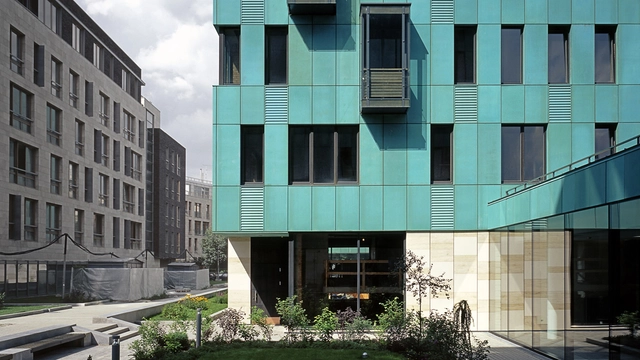
Sergey Skuratov, founder of Sergey Skuratov Architects, an award-winning Russian practice (2008 Architect of the Year), is known for his sleek and well-composed portfolio. Projects such as Copper House, Art House, and House on Mosfilmovskaya Street demonstrate his sensitivity to materiality and ability to retain his vision from concept to reality. Over the last two decades Skuratov has succeeded in producing a whole strata of world-class architecture in Moscow, far more than any other local practitioner. His projects, predominantly residential and office complexes, have remained attractive and versatile without ever veering into conservatism.

Philip Yuan of Archi-Union Architects: "The Process of Construction can be Elevated to Art Performance"

Though the understated Swiss and British Pavilions were the big (and perhaps overly literal) winners at this year’s Venice Architecture Biennale investigating Freespace, it was the Chinese that put their relentless architectural progress on display. Nestled in the back of the Arsenale, the Chinese Pavilion presented dozens of built works all around Chinese countryside, each project demonstrating a meaningful social impact through the involvement of villagers in the production process. Among the most visible Chinese architects presenting at the pavilion was Shanghai-based educator and practitioner Philip Yuan, whose office Archi-Union Architects has become a major voice in the already-distinctive contemporary Chinese architecture scene.

Han Wenqiang of ARCHSTUDIO: “Let’s Call My Work the Art of Coordination”

Throughout the work of Beijing-based practice ARCHSTUDIO, there is a constant feeling of sensitivity to culture and history. That is not to say that the firm’s designs are not modern—far from it in fact—but that the work of founder Han Wenqiang infuses modern materials and forms with a distinctly Chinese sensibility, that is just as apparent in his designs for a food packaging facility as it is in a Buddhist shrine (incidentally, both designs which won ArchDaily Building of the Year Awards, in 2017 and 2018 respectively). In the latest interview from his “City of Ideas” series, Vladimir Belogolovsky speaks to Han about whether architecture is an art form and what it means to create “Chinese” architecture in the 21st century.

Will Alsop: “That’s the Art of Architecture—Putting Everything Together in Your Own Way”

During my meetings with Will Alsop—two at his London studio in 2008 and 2010, and during our four-day trip to Moscow where I organized his lecture for SPEECH Magazine in winter 2011—he impressed me as having the most genuine, artistic, and free-spirited soul of all the architects I met. Calatrava, Hadid, and Gehry may strike one as great artists, but no matter how inventive they are, they are all involved in shaping buildings. Alsop, on the other hand, would find himself engaged in working in a completely boundless and unrestricted manner as a true artist. It seems that his whimsical works—"blobs and daubs," as he called them—are imagined as pure fantasies to be transformed into architecture much later by his staff. Eventually, he would have to “sell” them to his clients as buildings that function.

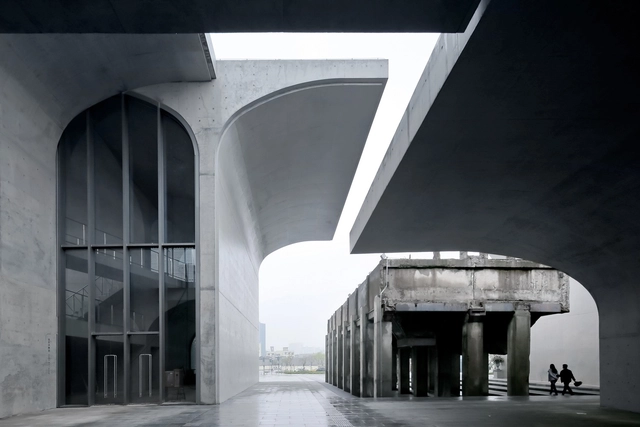
Atelier Deshaus: "The Idea Is Not to Create an Object But to Construct a Path"

In China's newly emerging constellation of famed architects, few firms elicit the sense of surprise caused by the work of Atelier Deshaus. With projects ranging from awe-inspiring to humble, their work does not adhere to any stylistic rules, but all of their projects exude an enigmatic aura. In this interview, the latest in Vladimir Belogolovsky’s “City of Ideas” series, principals Liu Yichun and Chen Yifeng discuss the role of identity in their work and how they try to connect their buildings to the landscape.

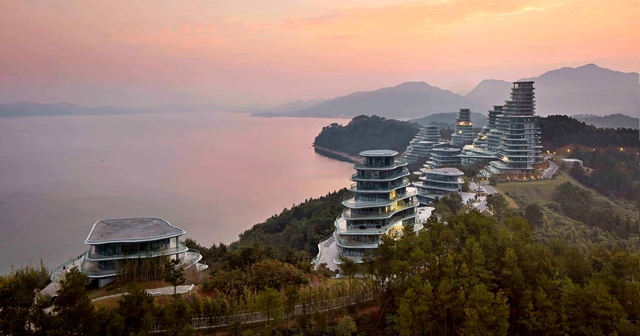
Ma Yansong: “Some People May Say My Work Is Futuristic, But I See It as Traditional”

With the unconventional, undulating forms of his buildings—and the fact that his path to architectural success included a stint working for Zaha HadidMa Yansong is often miscategorized as an architect of the latter generation of Deconstructivists, interested only in futuristic forms that push the boundaries of technology for the sake of innovation as an end in itself. But in fact Ma’s designs, especially those in his home country of China, are deeply rooted in nature and tradition, as he explains in the latest interview from Vladimir Belogolovsky’s “City of Ideas” series.

Benjamín Romano: "I Focus on Improving the Building"

Visiting Mexico City several times in recent months enabled me to get to know a number of leading architects there. In the process, I was in turn directed to other architects that were new to me, whom I then discovered were, in fact, the leading and most revered architects in the country according to the local architectural community. I am particularly referring to Alberto Kalach and Mauricio Rocha, whose interviews were published in this column last year, and Benjamín Romano, whose name came up when I asked a number of architects to cite their favorite building from recent years in Mexico City. Along with the absolute favorite, Vasconcelos Library by Kalach, another structure stood out: Torre Reforma, a 57-story office tower, the tallest building in the city. The following conversation with Romano, its architect, took place inside this unusually powerful and inventive structure.