The results of the Royal Institute of British Architects (RIBA) Future Trends Survey for July 2014 show that the Workload Index among UK practices fell back to +28 (from +34 in June) with confidence levels among RIBA practices about the level of future workloads remaining "very strong in practices of all sizes across the whole of the UK." Whereas last month’s survey saw Scotland top the index with a balance figure of +50, London showed the greatest strength in July with a balance figure of +38. Practices located in Wales and the West were the most cautious about prospects for future workloads, returning a balance figure of just +12. The survey shows that actual workloads have been growing for four consecutive quarters and the overall value of work in progress last month was 10% higher than this time last year.
The number of women becoming architects in the UK is increasing, according to the latest figures by the UK’s Architects Registration Board (ARB). Now, 7,538 female architects are registered with the ARB, up nearly 74% from just 10 years ago, the Architects’ Journal (AJ) reports. Yet despite the overall increase, women still only make up 22% of the profession, and represented just 38% of the new registrants in 2013.
Read on after the break for comments from female architects…
To coincide with the opening of the Royal Institute of British Architects (RIBA)'s new Architecture Gallery at their headquarters in London's Portland Place, the first major retrospective of Edwin Smith will open next month. Smith, one of Britain's foremost 20th century photographers, was considered a master of capturing the essence of the places, landscapes and buildings he documented over an extensive career. The exhibition, entitled Ordinary Beauty, will display over a hundred carefully curated black and white images from a collection of over 60,000 negatives and 20,000 prints donated by Olive Cook, Smith's widow and collaborator, to the RIBA Library.
In a short film for The Guardian Lead Architect and Partner of Rogers Stirk Harbour + Partners, Graham Stirk, tours Robert Booth around the almost-complete Leadenhall Building. The building is referred to as a relative of it's neighbour, Lloyds of London, which was completed by Richard Rogers's practice in 1986. Leadenhall, dubbed the "Cheesegrater" due to its angled façade, is twice the height of Lloyds and is considered to be the physical manifestation of the evolution of Rogers' architectural and tectonic language. Although less "structurally showy" than its counterpart, the building is still unconventionally bold when it comes to structural expression.
The search for the 2014 Young Architect of the Year Awards (YAYA), organised by BDOnline, has begun. Now in its 16th year, YAYA "recognises the most promising new architectural practice in the European Union." Open to fully qualified architects who have been practising for twelve years or less, the winner of this year's YAYA will be announced at the Architect of the Year Awards gala dinner on the 2nd December 2014 at The Brewery, London.
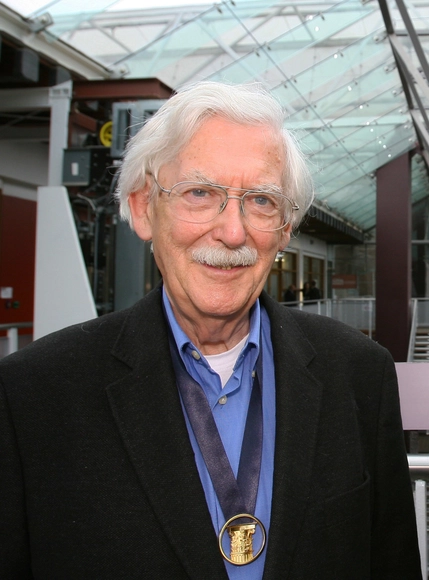
Professor Andy MacMillan, one of Scotland's most important post-war architects, died suddenly this weekend during this year’s Royal Incorporation of Architects in Scotland (RIAS) Andrew Doolan Awards visits. Macmillan was a professor at the Glasgow School of Art from 1973 to 1994, and a partner at Gillespie, Kidd & Coia in 1966. More on MacMillan's legacy after the break.
Inspired by an article written by Michael Hebbert in 1993, Chris Bevan Lee's forty minute documentary explores the elevated post-war infrastructural redevelopment of the City of London, fragments of which still stand across the square mile today. The Pedway: Elevating London examines London planners' attempt to build an ambitious network of elevated walkways through the city that largely never saw completion. In a carefully produced film those 'pedways' that remain are photographed and discussed as symbols of a utopia that almost was.
Smithsonian National Museum of African American History and Culture. Image Courtesy of Adjaye Associates
In an interview with Rowan Moore for The Observer, British born architect David Adjaye discusses his work, personality and ambitions as head of the one of the fastest growing internationally operating practices. With Moore's immersive descriptions and expertly written narrative, the "breadth of Adjaye's vision" becomes apparent. Featuring precise descriptions of some his upcoming projects, including the designs for the Smithsonian's National Museum of African American History and Culture and a number of smaller buildings in London, Moore's discussion ultimately explores Adjaye's early (and successful) steps into the African architectural market. You can read the interview in full here.
The scaffolding has come down, revealing the first glimpse of FAT's extraordinary A House ForEssex. Designed in collaboration with British ceramic artist Grayson Perry and commissioned by Alain de Botton’s alternative holiday rental project Living Architecture, the house will be the final built work that FAT complete. The bejewelled two bedroom dwelling, topped with a shimmering golden copper alloy roof and clad in glinting green and white tiles, sits in the rolling landscape of Essex - Charles Holland (FAT) and Perry’s home county. Adorned with sculptures integrated into a wider narrative that spatially recounts the life of a fictional character called Julie, the barn-like shape, bold colours and decoration has not simply garnered widespread attention but has also captured people’s curiosity.
Find out more about the project in an interview with the architect after the break.
One of the latest installations at London'sSerpentine Gallery, where Smiljan Radicrecently unveiled an ethereal pavilion, is Marina Abramović's performance installation entitled 512 Hours. Creating what has been described as "the simplest of settings" in one of the gallery's large spaces, the artwork employs Abramović's most frequently used material: herself. Coupled with the audience and a selection of common objects, the constantly changing sequence of events on display is the very first live installation by the artist displayed in the UK. Upon arrival, visitors are asked leave their baggage (including mobile phones, cameras and any other electronic equipment) behind in order to enter the exhibition. Find out more about what you can expect from it here.
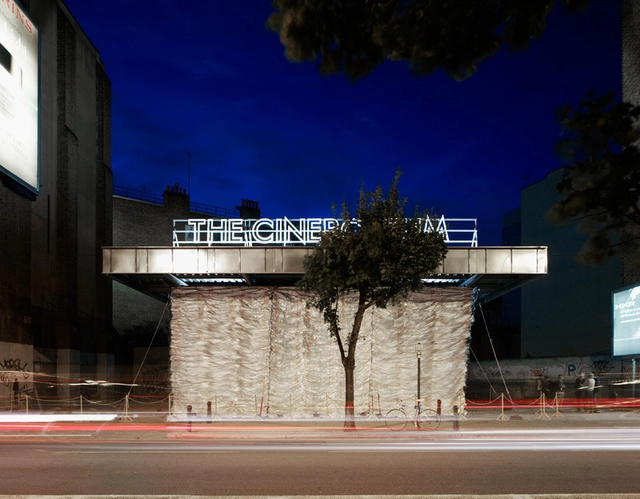
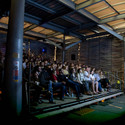
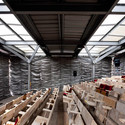
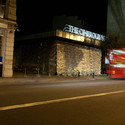
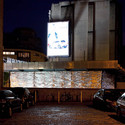
The Cineroleum, a self-initiated project built in 2010 by London based practice Assemble Studio, transformed a derelict petrol station into a "hand-built" cinema on one of capital's busiest roads. Aimed at raising awareness to the wider potential for reusing the 4,000 empty petrol stations across the UK for public use, the adapted structure on Clerkenwell Road was "enclosed by an ornate curtain" strung from the "roof of the petrol station's forecourt. Described as an "improvisation of the decadent interiors that greeted audiences during cinema’s golden age," classic infusions of cinematic iconography were integrated into a space built from only cheap, reclaimed or donated materials.
According to Will Doig of NextCity, world renowned contemporary artist Damien Hirst has received planning permission to build a town from scratch on the British coastline. Working alongside Rundell Associates the project, which has been dubbed "Hirst-on-Sea" near the town of Ilfracombe, will consist of 75 affordable homes built over the next ten to fifteen years. Most famous for his 2007 diamond-studded skull entitled For the Love of God and, more ubiquitously, glass cases containing sharks and cows preserved in formaldehyde, Doig wonders that, "given Hirst’s history, it’s hard to imagine he’s not trying to make some sort of statement." Time will tell as to what that might be.
You Are Here / Felicity Barbur and Edward Crooks. Image Courtesy of Combo Competitions
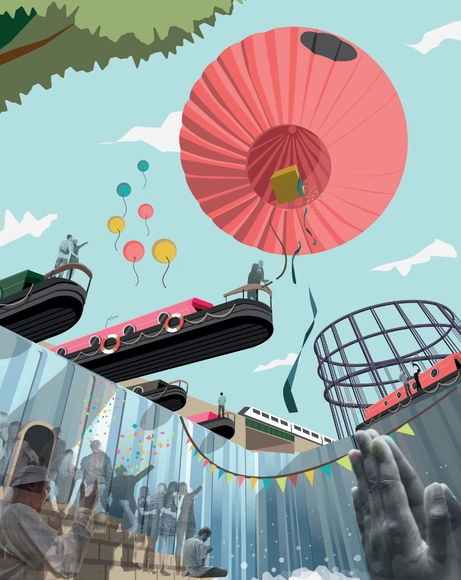
Faith!, the latest ideas-based challenge organised by Combo Competitions, asked participants to design a place of worship in London. In spite of the beguiling simplicity of the title, coupled with a typically open brief, the placed winners and three honourable mentions exhibit a diverse, exciting collection of conceptual drawings and visuals. With an interesting balance of playful interpretations and more grounded proposals, all start to address relevant socio-political issues - such as the mutual acceptance and peaceful co-existence of different religions - in some way. The competition asked participants first and foremost to seek to merge two concepts: religion and knowledge.
The House of Lords has announced that the proposal to appoint a 'Chief Architect' in the UK, one of the major recommendations of this year's report by Terry Farrell, will be discussed by the UK's minister for architecture Ed Vaizey and Housing and Planning minister Brandon Lewis. The proposal was among 60 recommendations made by the Farrell Review at the end of March. Other proposals due to be discussed by ministers are a the idea of establishing a Place Leadership Council and design review panels for infrastructure projects. More after the break...
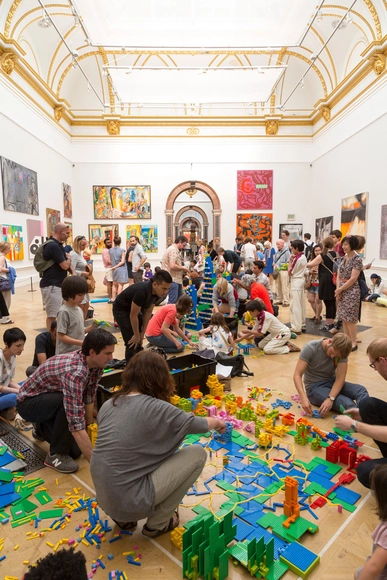
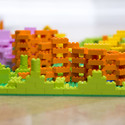
As part of the 2014 London Festival of Architecture, teams of architects from the four of the most recent Stirling Prize winning British practices were challenged with creating the most imaginative piece of a city - out of LEGO. Each team began with a carefully laid out square on the floor of the largest gallery of the Royal Academy Summer Exhibition, at which point they were given just one hour and 45 minutes to create an urban masterpiece out of blocks. Each group of architects worked alongside students from the Royal Academy’s attRAct programme, which offers A-level art students the chance to engage with art and architecture. An esteemed panel of judges ultimately selected the team from Zaha Hadid Architects as victorious, who "considered London on a huge scale and used curving buildings of different typologies which echoed the shape of the Thames."
Read more about the brief and the other participating entries after the break.
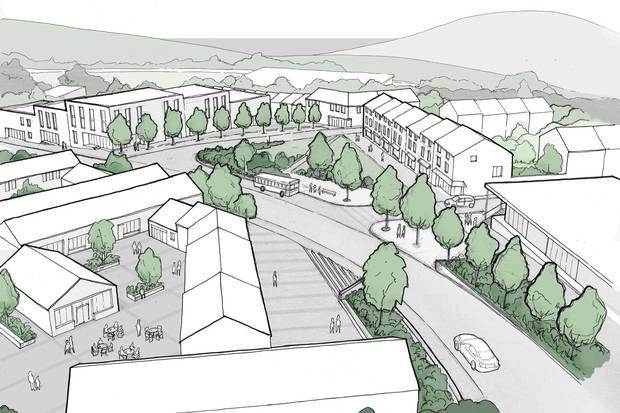
7N Architects have revealed their designs for the 8.2 acre Fountainbridge site, one of the largest city centre developments in Edinburgh, where they plan 350 homes, a range of workspaces, a 130 room hotel, canalside retail and café space and two arts buildings. The intention for the former industrial zone is to offer "enhanced canalside features, open space and paths for both pedestrian and cycle use."
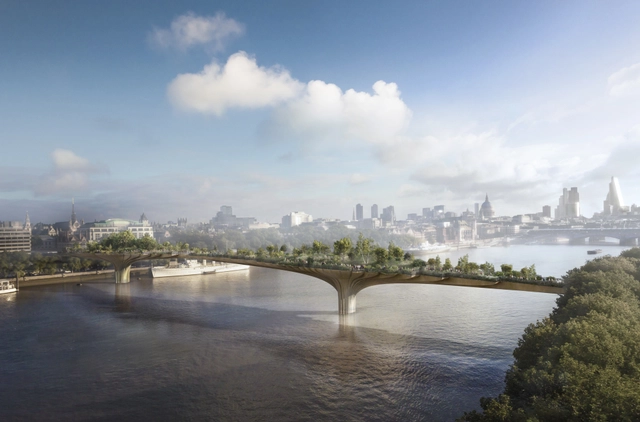
Heatherwick's trademark ingenuity, demonstrated in previous projects such as the London Garden Bridge proposal, will be needed for the difficult site in Leeds. Image Courtesy of Arup
The Maggie's cancer charity has announced Thomas Heatherwick as the latest high-profile designer who will contribute to the Maggie's Centre program, with a site at the new Bexley Wing of St James's University Hospital in Leeds. The new centre will be the first Maggie's in Yorkshire, with Heatherwick joining the likes of Norman Foster, Richard Rogers, Zaha Hadid, Frank Gehry and Steven Holl in the list of Maggie's Centre designers.
The results of the Royal Institute of British Architects (RIBA) Future Trends Survey for June show that the Workload Index among UK practices increased slightly to +34 (from +33 in May) with confidence levels amongst RIBA practices about the level of future workloads remaining "very strong and widespread across the whole of the UK". Whereas last month’s survey showed Wales and the West with the brightest outlook, this month's survey saw Scotland top the index with a balance figure of +50, the East Midlands and East Anglia tailing closely behind with a figure of +48. Workload forecasts from practices of all sizes are optimistically reporting positive balance figures.

___N_Ireland__1965_(c)_Edwin_Smith__RIBA_Library_Photographs_Collection.jpg?1408906178&format=webp&width=640&height=580)

_Dave_King_-_Channel_4_Television_(2).jpg?1407615518&format=webp&width=640&height=580)
_FAT_-_Living_Architecture_(2).jpg?1407615522 "Sculptures by Grayson Perry. Image © FAT/ Living Architecture")

_Dave_King_-_Channel_4_Television.jpg?1407615749 "Under Construction (August 2014). Image © Dave King / Channel 4 Television")
_FAT_-_Living_Architecture_(3).jpg?1407615601 "Aerial View. Image © FAT/ Living Architecture")
_Dave_King_-_Channel_4_Television_(2).jpg?1407615518)