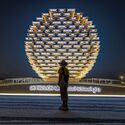
The Finnish Pavilion for Expo 2020 Dubai showcases the country's deep connection with nature and sustainability, contributing to its high quality of life. Titled "Snow Cape", the pavilion designed by JKMM Architects subtly evokes Finnish natural settings through materiality and atmosphere while embodying the principles of circular economy championed by the Nordic country. The structure with its tent-like entrance creates a point of commonality, reminding of Finland's nomadic heritage, as well as the Arabic text.
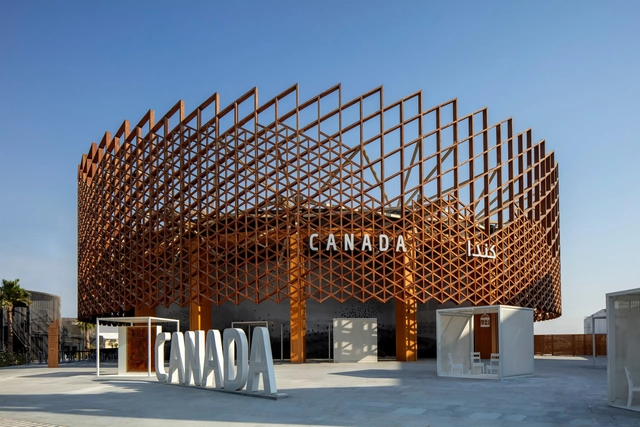
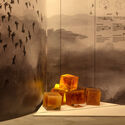
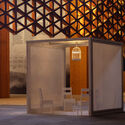
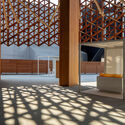
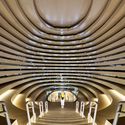
Designed by Toronto-based practice Moriyama & Teshima Architects and construction company ElisDon, the Canadian Pavilion for Expo 2020 Dubai aims to bridge the two cultures by echoing Canada’s landscapes and incorporating Arabic architectural elements with its wooden lattice facade a reference to the traditional Mashrabiya. Accompanying the pavilion is the art installation Traces created by Montréal-based firm KANVA, which brings a poetic reflection on the uncertainty of the future of ecosystems to the exhibition grounds.
UK’s contribution to Expo 2020 Dubai is a wooden sculptural structure that celebrates cultural diversity and collaboration, highlighting Britain as a meeting place of cultures and ideas. Created by artist and designer Es Devlin, the Poem Pavilion uses advanced machine learning algorithms to transform the input of visitors into collective poems. The latter can be read in illuminating displays on the façade, transforming the pavilion into the exhibit itself.
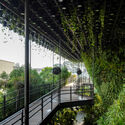
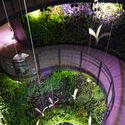
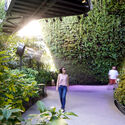
The SingaporePavilion for Expo 2020 Dubai illustrates the city's aspiration towards a sustainable future that merges architecture, nature, technology and culture. Under the title "Nature.Nurture.Future", the pavilion designed by WOHA Architects and landscape design practice Salad Dressing showcases a sample of Singapore's urban environment that epitomizes its City in Nature vision. The multi-layered green space creates a self-sufficient ecosystem highlighting ideas of sustainability and resilience through the marriage of technology and nature.
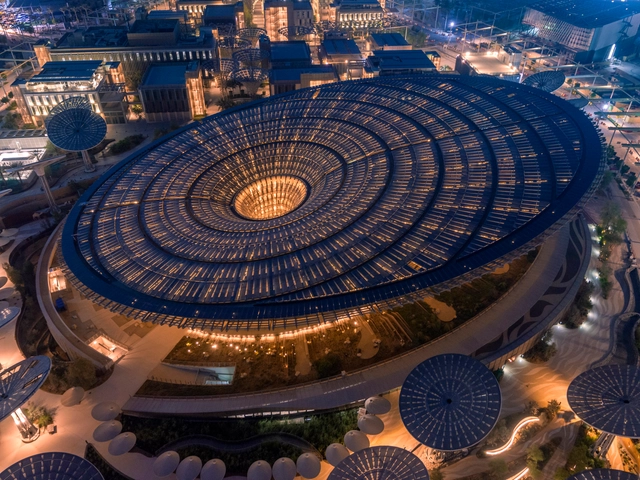
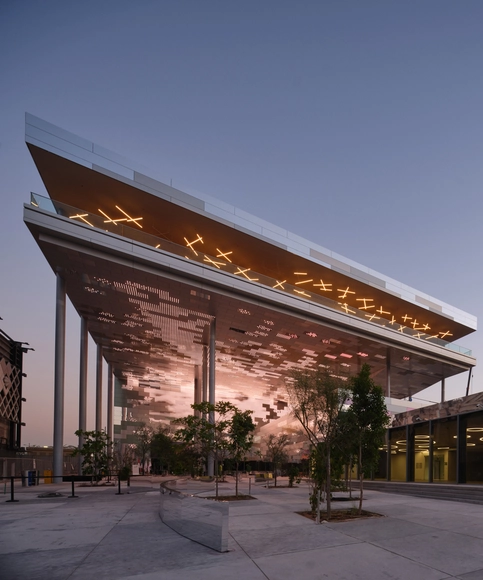
Expo 2020 Dubai's Sustainability Pavilion designed by Grimshaw Architects expresses the ethos of addressing the impact of human activities on the environment, acting as a catalyst for collective action. With sustainability as one of the three core themes of the Expo, the pavilion named Terra will become a platform for highlighting the urgency of the issue, sharing knowledge and exploring ideas while also providing visitors with n immersive experience. As one of the legacy buildings, the project is set to become a Science Centre after the event and aims to operate as an autonomous construction in terms of energy and water supply.
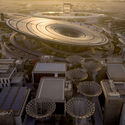
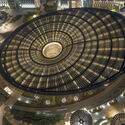
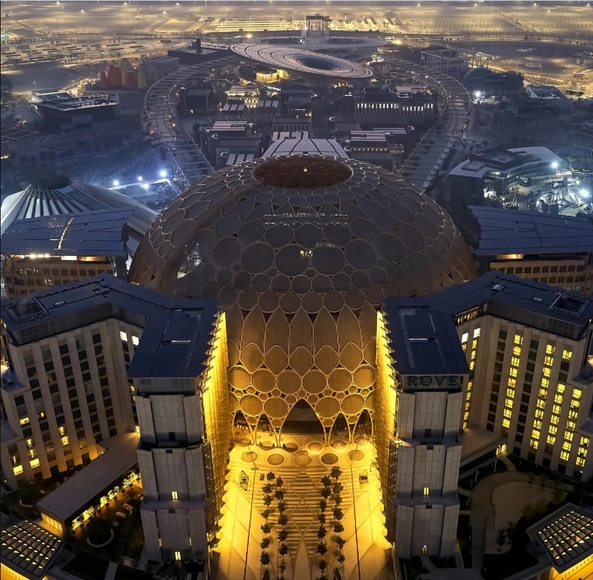
Al Wasl Plaza and Sustainability Pavilion. Image Courtesy of Expo 2020 Dubai
With Expo 2020 Dubai scheduled to debut in less than a month, new drone shots of the venue highlight water and garden features. Aiming to “explore the power of connections in shaping our world”, Expo 2020 Dubai will run from 1 October 2021 until 31 March 2022, under strict Covid regulations, after a year delay due to the worldwide pandemic.
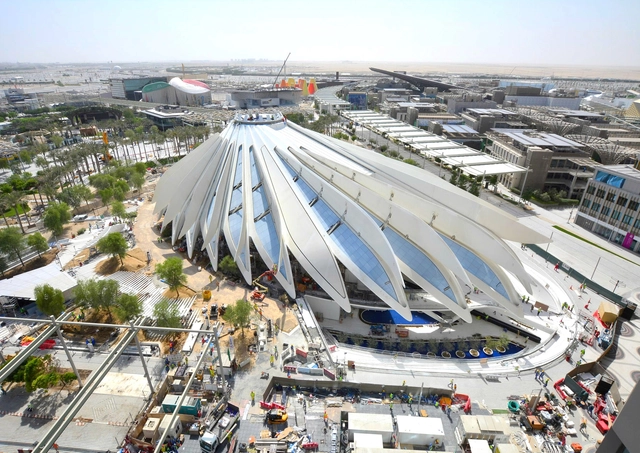
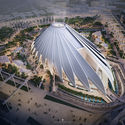
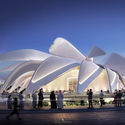
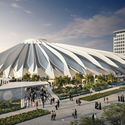
Spanish architect and engineer Santiago Calatrava has unveiled the design of the UAE Pavilion at Expo 2020 in Dubai, UAE. The 15,000 square meters pavilion stands as a "symbolic interpretation of the flow of movement", designed with carefully curated lines and spaces that blend with its surroundings of greenery, shaded arcades, and cantilevered wings. The national monument is set to create an immersive, multisensory experience for visitors from both an architectural standpoint, as well as integrated cinematic features, introducing them to the history, culture, and futuristic innovations of the UAE.
France Pavilion. Image Courtesy of Expo Dubai 2020
With 3 months to go until the opening of Expo 2020 Dubai, on October 1st, the organizing committee has released updated images highlighting ready and completed pavilions. With officially 191 participating nations, the expo is seeking to “explore the power of connections in shaping our world”. Showcasing architecture, culture, and inspiring innovations, the world expo has been, for the past 170 years, the leading platform to introduce great inventions and architectural revolutions, most of which shaped the world we live in today.
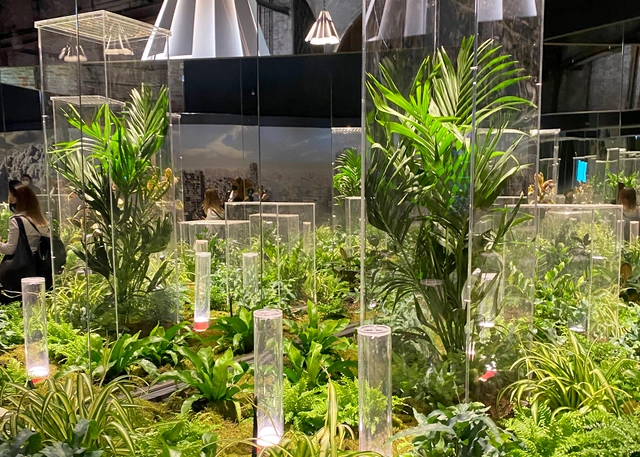
The 17th Venice Architecture Biennale is currently unfolding, revealing a wide range of answers to the question "How will we live together". With 60 national pavilions, numerous contributions of invited architects from all around the world and several collateral events, this year's edition restates the Biennale's role as a platform for inquiry, exploration, and disruptive thinking in architecture. Curator Hashim Sarkis' original statement called upon architects "to imagine spaces in which we can generously live together." Recent circumstances have made the question even more relevant, prompting a holistic re-evaluation of how the world as a collective can face changes and challenges of an unprecedented scale from the disrupting role of technology, to inequality, mass migration and climate change. The following national contributions reflect on "how will we live together" amidst climate change, exploring ideas for a more sustainable future.
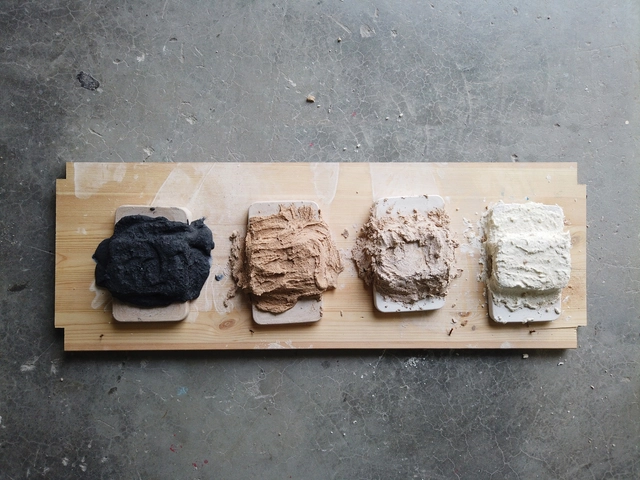
With the inauguration of the 17th Venice Architecture Biennale, 60 nations from across the world showcased unique solutions to the question of “How will we live together”. Neither the pandemic nor its repercussions got in the way of the curators' creative process. Instead, they took it as a factor to explore how the notion of 'living together' has changed over the past year, and how they can reimagine better built environments. ArchDaily had the opportunity to meet with architect Wael Al Awar, one of the co-curators of the UAE Pavilion, to discuss how the pavilion's innovative material came to be and what it means for the future of architecture.
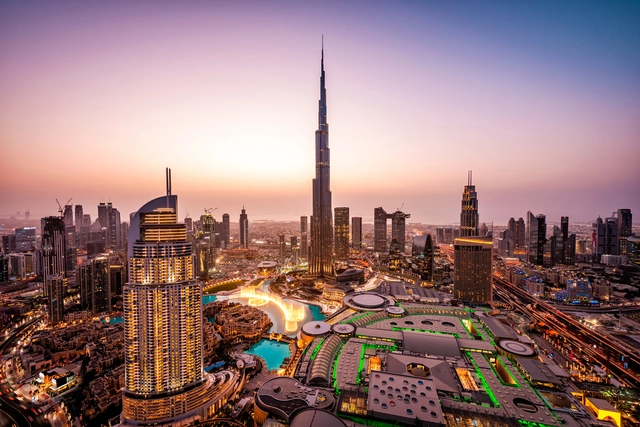
The Dubai Crown Prince has issued a Resolution to form a Supreme Committee for the Urban Planning of Dubai. The decision aims to regulate, ensure, and implement all the required deliverables of the Dubai 2040 Urban Master Plan, to make Dubai the "best city in the world to live in". The urban planning sector will overlook all major infrastructure and urban projects, as well as focus on addressing matters of housing and regulations of the real estate sector to improve the wellbeing of the city's residents.
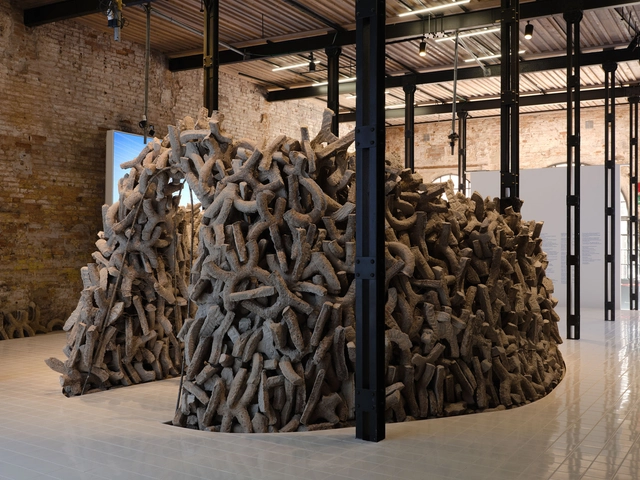
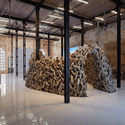
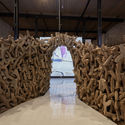
Wael Al Awar and Kenichi Teramoto, both principals of Dubai-based Waiwai design, have been appointed as the curators for the National Pavilion of the UAE at the 2021 Venice Biennale. Entitled Wetland, the exhibition presents an experimental solution to the critical environmental impact of the construction industry. The intervention will present a large-scale prototype structure created from an innovative, environmentally friendly cement made of recycled industrial waste brine. The exhibitionwill open to the public at the 17th International Architecture Exhibition of the Venice Biennale from Saturday, May 22nd to Sunday, November 21st, 2021.
FOUN’TA’SY. Image Courtesy of Public Housing Enterprise J.S.C
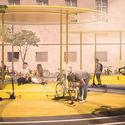
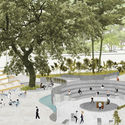
Looking at the urban environment, this week’s curated selection of the Best Unbuilt Architecture highlights interventions in public spaces, submitted by the ArchDaily Community. Suitable for this monthly topic, the article underlines worldwide approaches that tackle the challenges of these areas through the introduction of innovative solutions.
Exploring a multitude of methods fitting for different contexts, this feature presents a tactical urban strategy implemented in a neighborhood in Kosovo and micro-mobility measures in Italy. Other projects evoke public approaches in private developments and enhanced historical and cultural connections between parks, buildings, and cities. In addition, this roundup showcases conceptual interventions that tackle social distancing and the challenges of the pandemic, in order to allow people to move freely and safely across space.
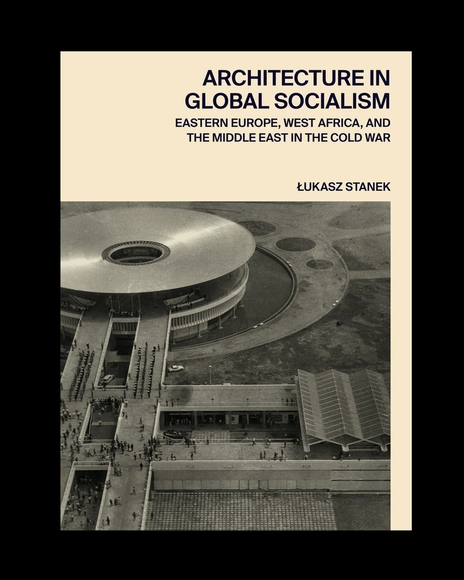
Cover of Architecture in Global Socialism by Łukasz Stanek, Princeton University Press, 2020.
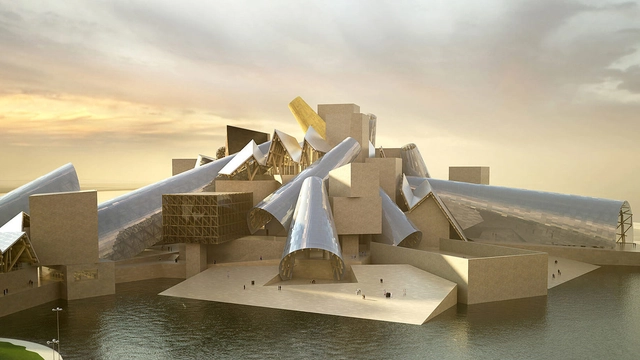
In the course of the Cold War, architects, planners, and construction companies from socialist Eastern Europe engaged in a vibrant collaboration with those in West Africa and the Middle East in order to bring modernization to the developing world. Architecture in Global Socialism shows how their collaboration reshaped five cities in the Global South: Accra, Lagos, Baghdad, Abu Dhabi, and Kuwait City.
P&T Architects and Engineers have designed a free zone development, “dedicated to the growing e-commerce market in the Middle East”. Entitled Dubai CommerCity, the award-winning project puts in place three main clusters spread over 530,000 square meters: business, logistics, and social.















.jpg?1631531492 "Courtesy of Expo 2020 Dubai")











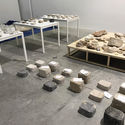
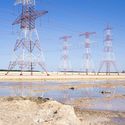
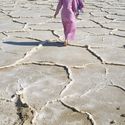

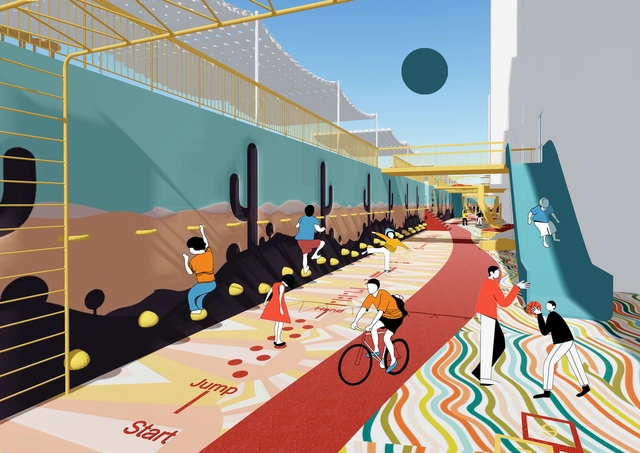
(%C2%A9minorormajor).jpg?1612954566 "Oasis-Playground. Image Courtesy of Studio Minorormajor")


.jpg?1588147105&format=webp&width=640&height=580)
.jpg?1588147126 "Courtesy of P&T Architects and Engineers")
.jpg?1588147079 "Courtesy of P&T Architects and Engineers")
.jpg?1588147146 "Courtesy of P&T Architects and Engineers")
.jpg?1588147038 "Courtesy of P&T Architects and Engineers")
.jpg?1588147105)