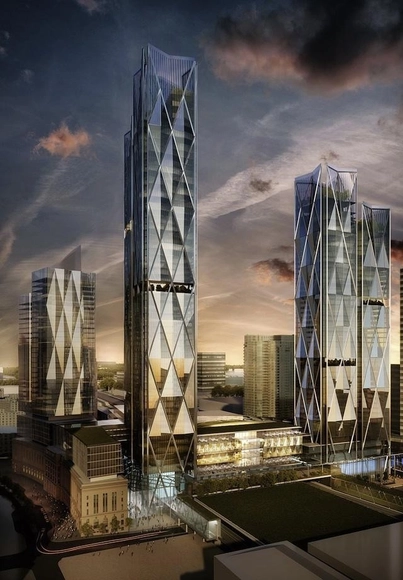
Details have been leaked of a major new development on the Southern edge of downtown Toronto, just East of Union Station. The scheme, uncovered by UrbanToronto and its inquisitive users, involves the connection of sites on both sides of the railway tracks, and will include three towers and a pedestrian bridge featuring a park and retail space. It is understood that Wilkinson Eyre are the architects, after BD confirmed last week that they have recently won a major competition in Toronto.
Courtesy of Mirvish Enterprises, Gehry Partners, LLP and Projectcore Inc.
Frank Gehry and Developer David Mirvish have revealed the latest design iteration in their embattled plan to build a set of mixed-use skyscrapers in Toronto. The new design reduces the number of towers, from three to two, however the remaining towers are taller than before, with one at 82 stories and one at 92.
The buildings will house apartments, a new art gallery and space for OCAD University as previously planned, but the decision to use two towers instead of three means that three of the five existing buildings can be retained - including the Princess of Wales Theatre, and two designated heritage warehouses - sidestepping some of the criticisms of the previous scheme.
Read on after the break for Frank Gehry's take on the design
Material Minds, presented by ArchDaily Materials, is our new series of short interviews with architects, designers, scientists, and others who use architectural materials in innovative ways. Enjoy!
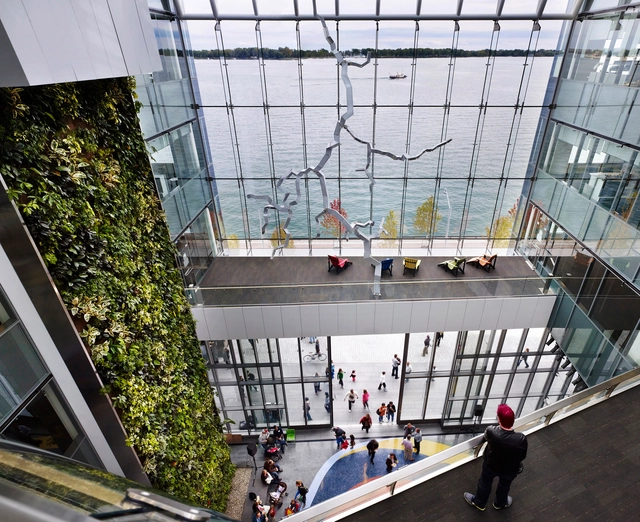
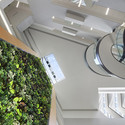
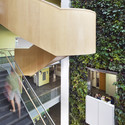
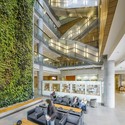
Green, or living, walls have begun popping up and growing across commercial interiors everywhere over the last decade. To understand how a living wall functions, and how to design one, we went straight to a pioneer in the profession: Ms. Birgit Siber of Diamond Schmitt Architects in Toronto. The synthesis of natural systems and building systems had been in her mind since her days as a student, but the major break came in 2000, when her team constructed a massive living wall for The University of Guelph-Humbar. To understand how architects are closing the gap between interior and exterior via the living wall, read the full interview after the break.
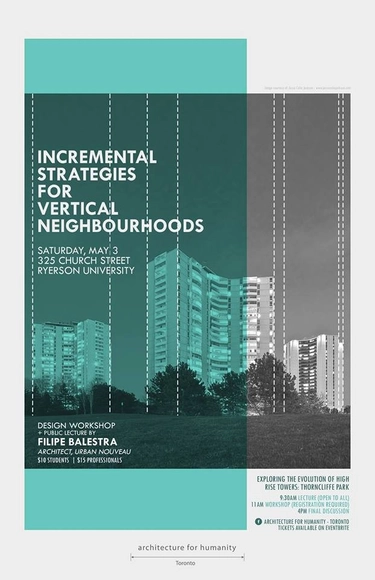
According to the most recent national census in Canada, almost half of Toronto residents are immigrants, one-third of whom arrived in the past ten years. To allow the city to adapt to this surging flow of immigrants, Architecture for Humanity Toronto (AFHTO) has called upon students and professionals from various backgrounds to rethink Toronto's urban fabric - and, in particular, its high-rise developments - by establishing a series of lectures and workshops entitled "Incremental Strategies for Vertical Neighborhoods."
At the inaugural event a few weeks ago, Filipe Balestra of Urban Nouveau* was invited to speak about his work and contribute to a design charrette inspired by the City of Toronto's Tower Renewal program. For more on Balestra and the event, keep reading after the break.
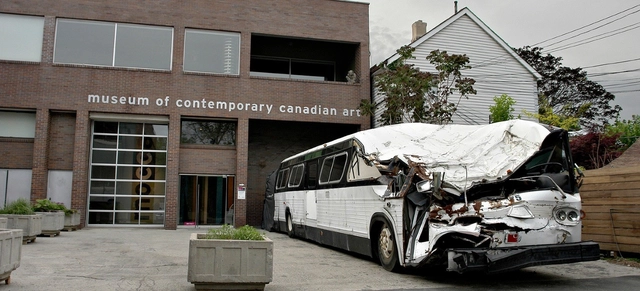
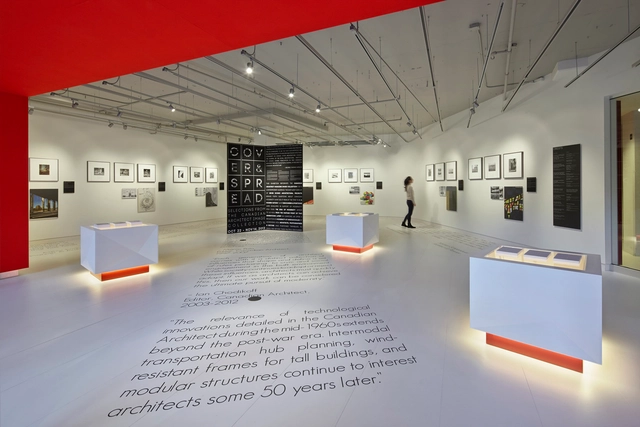
The Museum of Contemporary Canadian Art (MOCCA) is calling for submissions that respond to the thematic of an upcoming exhibition, entitled TBD, that will be on view September 5 to October 25, 2014 in Toronto, Canada.
The exhibition proposes that the definition of a museum is not fixed but rather “to be determined.” By asking, “what is a contem- porary art gallery?” the exhibition questions our fundamental assumptions concerning the role and importance of museums in so- ciety and their associated architectural forms. MOCCA’s galleries will become a place of inquiry and discussion featuring artworks and activities that destroy existing paradigms and offer projections about the shape of museums in the future. This is a particularly timely topic given the proliferation of museum architecture in Canada and abroad and the current juncture in MOCCA’s existence which sees the institution searching for a new and permanent venue.


.jpg?1404391225&format=webp&width=640&height=580)
.jpg?1404391241 "Courtesy of Mirvish Enterprises, Gehry Partners, LLP and Projectcore Inc.")
.jpg?1404391212 "Courtesy of Mirvish Enterprises, Gehry Partners, LLP and Projectcore Inc.")
.jpg?1404391209 "Courtesy of Mirvish Enterprises, Gehry Partners, LLP and Projectcore Inc.")
.jpg?1404391239 "Courtesy of Mirvish Enterprises, Gehry Partners, LLP and Projectcore Inc.")
.jpg?1404391225)