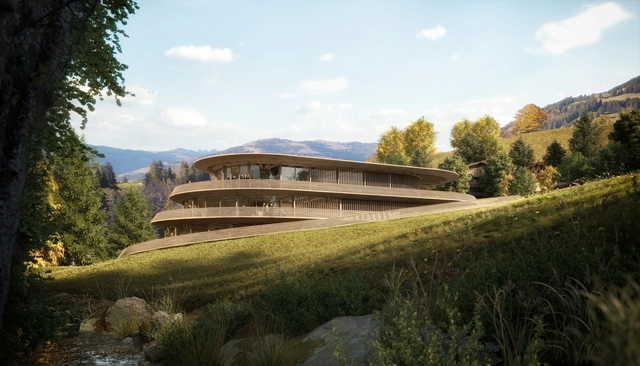
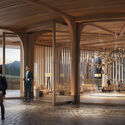
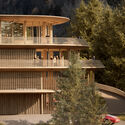
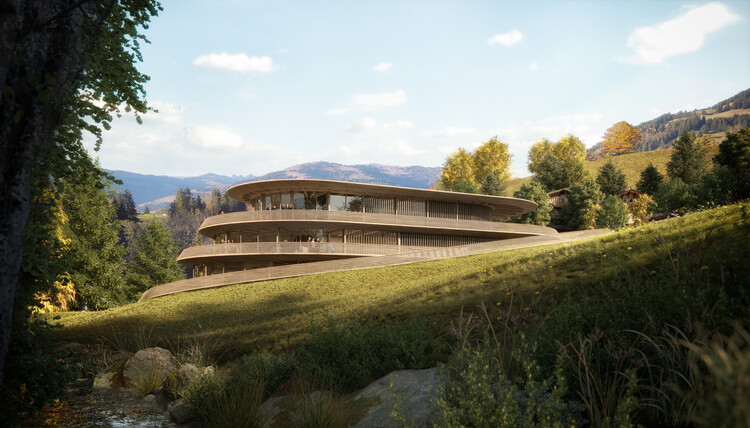
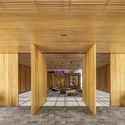
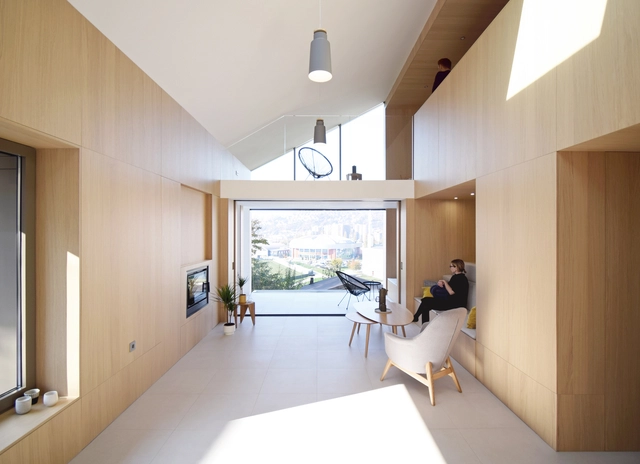
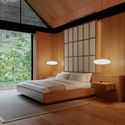
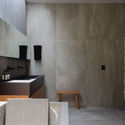
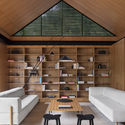
Foster + Partners Gstaad House project in Switzerland. Render. Image Courtesy of Foster + Partners
Foster + Partners has received planning permission for a new timber residential building in Gstaad, Switzerland. Designed as a house in the Alpine resort town, the project combines residential use with exhibition, storage, and social spaces. According to the architects, it will be the first purpose-built facility in Gstaad to accommodate the specialised requirements of fine art, cars, fashion, and antique collections.
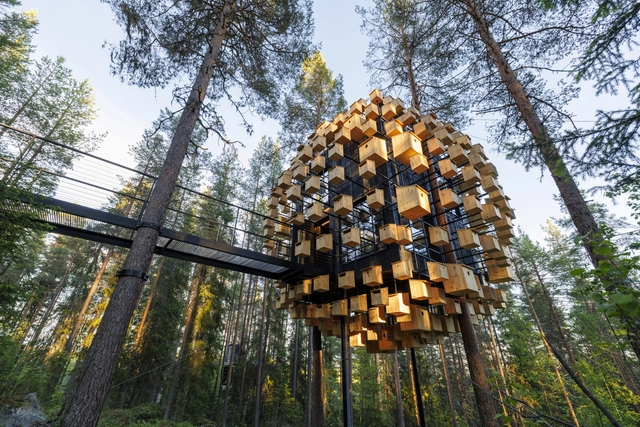
Biosphere at Treehotel / BIG. Image Courtesy of BIG
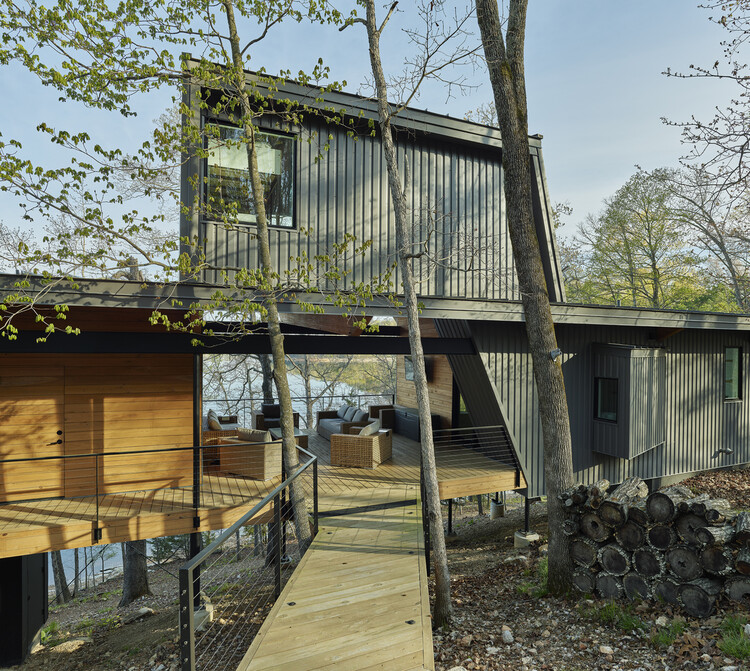
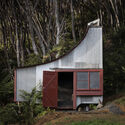
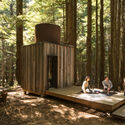
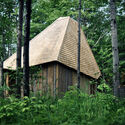
Today's population lives in large, vibrant, and sometimes chaotic cities. That’s why the most popular options involve escaping to natural settings such as remote forests, tropical jungles, or pristine beaches when choosing places to take a break from daily responsibilities and routines. For those seeking to disconnect completely from city life while staying closely connected to nature, small-scale hotels, cabins, and lodges are excellent options. Whether it’s a private vacation home or a cabin hotel, these accommodations are designed to make their natural surroundings their most important asset, allowing the buildings to blend seamlessly into the landscape.
Origin myths,” “founding myths,” and “creation legends” provide a way for us to see into and imagine the distant past in metaphorical, poetic, and compelling ways. The oldest origin myths help us understand how a people or a place (such as the universe) were believed to have come into existence. Anthropologists describe these as creation myths or “cosmogonic” myths. They might explain how the world came to be. For example, Native North American peoples such as the Cherokee, Ojibwe, and Aztecs share an origin myth that land was first created on top of a great ocean. One of the most common Western origin myths is the creation of Adam and Eve. But founding stories exist for all kinds of social conditions, historical customs, and objects, as well as places—think of the myth of the brothers Romulus and Remus, suckled as babies by a wolf, who survive to found the city of Rome (after Romulus got rid of his brother).
For much of the world, this past year was spent within the confines of our homes, undoubtedly blurring the lines between our public, professional, and private lives and transforming our living spaces into places of work and productivity. This transformation of spaces and how they are used is nothing new in the world of architecture as countless spaces take on various roles beyond what they were originally designed for--a fact reflected in their layout, design, and the materials used within them.
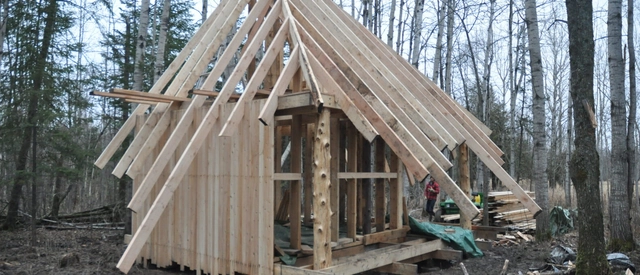
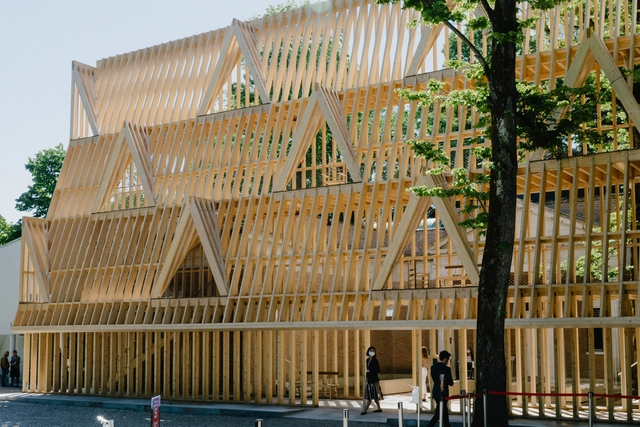
Four years ago, the Pritzker Prize–winner Tadao Ando spectacularly converted a 1920s apartment building in the Lincoln Park neighborhood of Chicago into exhibition spaces for a gallery named—in deference to its street address—Wrightwood 659. The gallery is currently staging a resourceful exhibition on wood-frame construction, the method by which more than 90% of U.S. houses are built.
Rarely has wood-framing been the subject of an architectural show. It’s too mundane a topic—or at least it seemed that way until two associate professors at the University of Illinois Chicago, Paul Andersen and Paul Preissner, conceived the American Framing exhibition for the U.S. Pavilion at the 2021 Venice Architecture Biennale. One year after Venice, the much talked-about exhibition makes its American debut at Wrightwood 659.
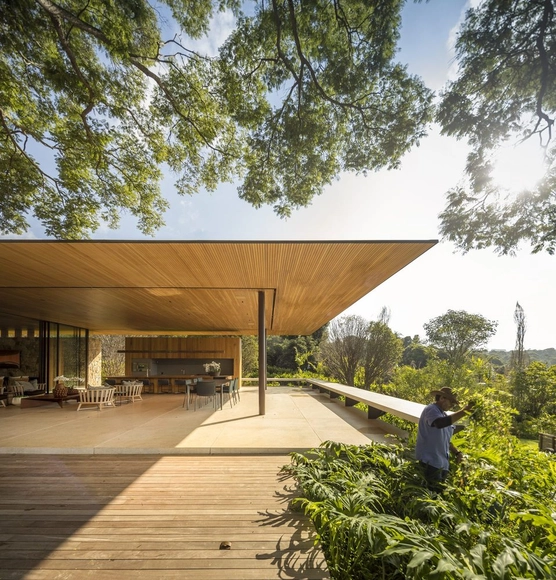
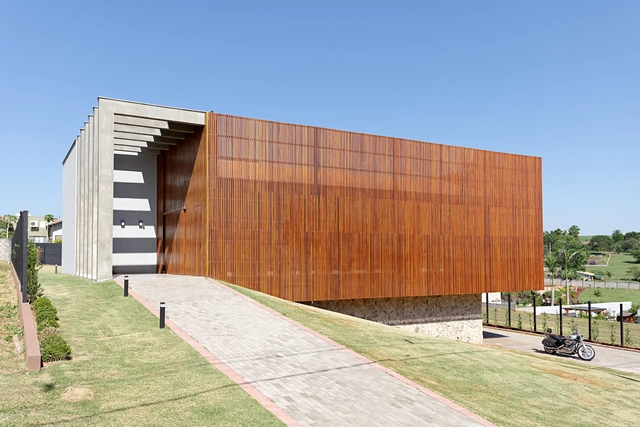
Manufacturers: Casa de Cora, Cia Luz, Danilo Sbindio, Deca, Design brasil, +6Elettromec, FSCOTT, Francortinas, Lumini, Madeireira Mato Grosso, Roberto Almeida-6
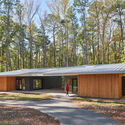
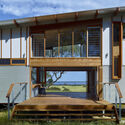
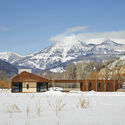
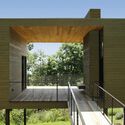
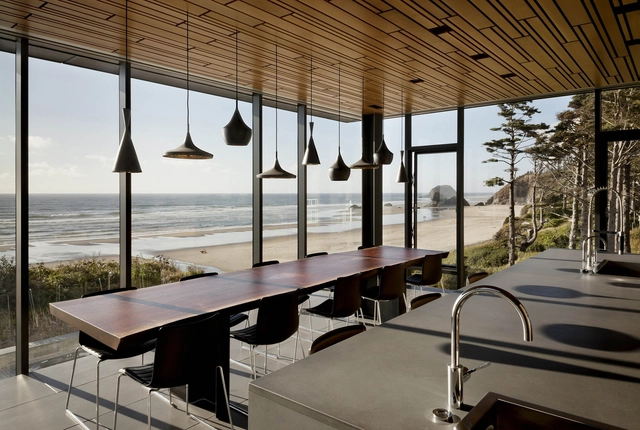
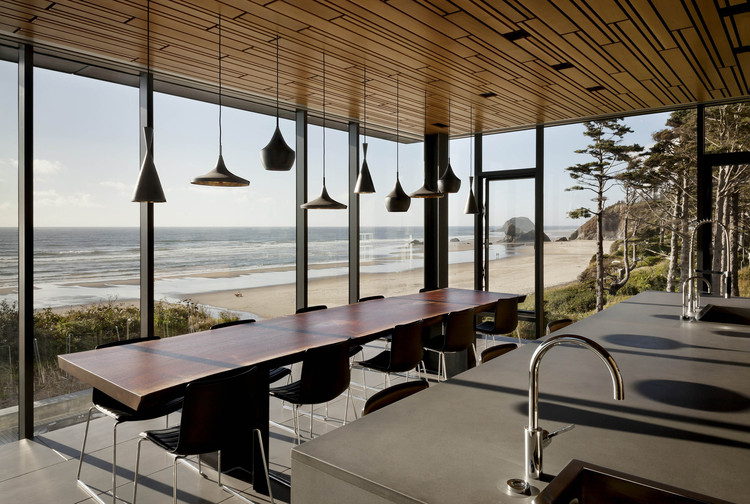
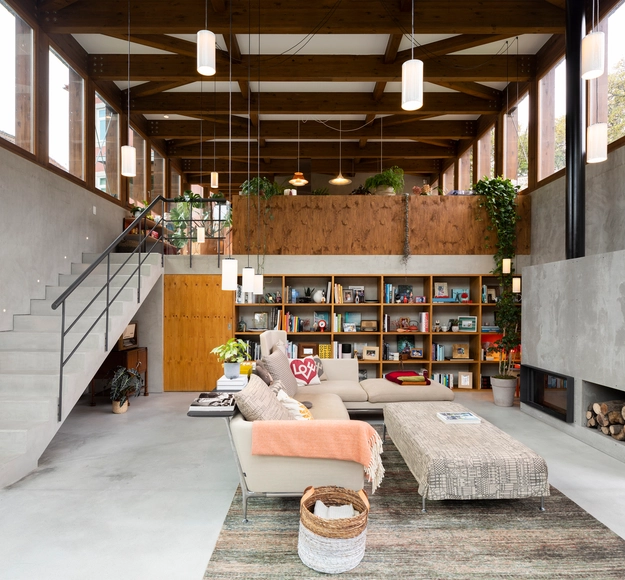
Oregon holds some the most varied geography and private developments in the United States. Home to diverse landscapes and architecture, the state is defined by the Cascade mountain range, windswept coastlines, dense forests, and a high desert environment to the east. These varied geographies have shaped the state’s construction techniques and residential design. At the heart of these building efforts are timber and glass homes found throughout the state.
The history etched into Spain's wooden houses has many lessons to teach us about the role of wood in creating everything from light-weight and mobile modular homes to interior and exterior finishes. What's more, these lessons are not limited to new constructions. They apply to everything from furniture to remodels.