In this article, we tap into how AI could be augmenting, changing design processes, and how architects and other professionals are responding and incorporating these technological advancements into their design work. What kind of innovation can AI bring to this industry, and what has been experimented with so far? This selection of projects can help form an opinion on the architectural application of AI.
The “smart” movement has gained traction and generated buzz over the last decade, but despite all of the hype, what even is a smart city? The dogma behind its loose definition and goals has been rather elusive, and while some claim that it relies on digitization of all urban aspects, others argue an increase in personal data collection is the sole method for improving urban lifestyles. One person’s digital paradise is perhaps another person’s technophobic doomsday. Extending beyond the mere definition of these cities, what role do designers and researchers play in creating this loosely identified futuristic landscape? As Corbusier once defined a home as a machine for living, it’s time to redefine how our buildings shed their passive exteriors and become the true machines for working that they were always meant to be.
In 2018, the UN released an article stating that 55% of the world’s population already lived in urban areas, predicting that by 2050 this percentage would reach 68%. This trend toward greater urbanization carries with it several implications regarding environmental degradation and social inequality. According to National Geographic, urban growth increases air pollution, endangers animal populations, promotes the loss of urban tree cover, and heightens the likelihood of environmental catastrophes such as flash flooding. These health hazards and catastrophic phenomena may be more likely to impact poorer populations, as larger cities tend to demonstrate higher rates of economic inequality and uncontrolled growth tends to produce unequal distributions of space, services, and opportunities.
To mitigate these negative effects of urbanization, designers are increasingly prioritizing sustainability and the maximization of available space – allowing more people to occupy less space with a smaller footprint.
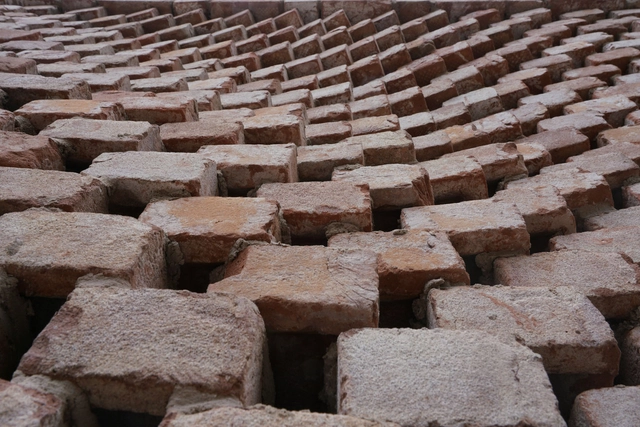
Craftmanship is back. Following a century of mass production and industrial development, crafts are starting to be revalued and reinterpreted. A new sensitivity towards raw materials, the recovery of local techniques and the defense of small-scale trade are a few of the claims that this comeback represents. Materials such as earth and ceramics, textiles and wood are being reinterpreted by designers, artists, and architects around the world, in search of both their own style and the representation of collective nostalgia.
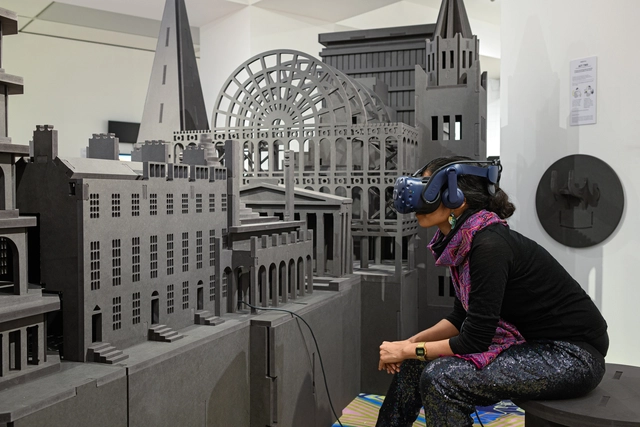
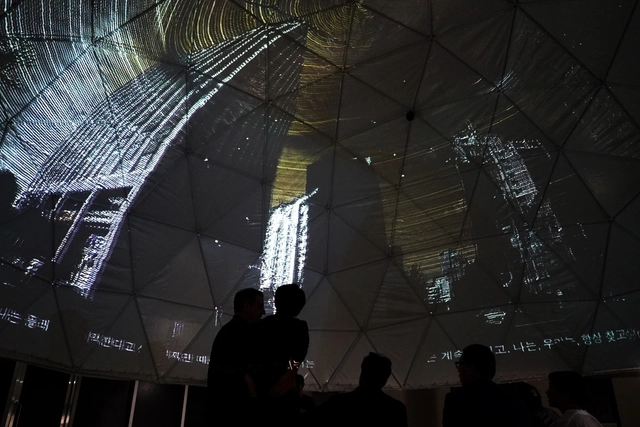
Freestyle by Space Popular at RIBA Architecture Gallery @ Francis Ware
RIBA presents its first virtual reality (VR) exhibition, exploring moments across 500 years of aesthetics in architecture.
What makes a style? How is a style collectively agreed upon and shared? Drawing on RIBA’s world-class collections, Space Popular uses virtual reality to examine styles of the past and to consider the technology’s impact on contemporary spaces and buildings. Historic artefacts will be displayed alongside newly commissioned content, inviting you to enter a beguiling virtual universe to experience how popular cultures and technologies impact architecture and its style evolution.
Making connections across mass media and style, Freestyle takes the visitor on a journey through
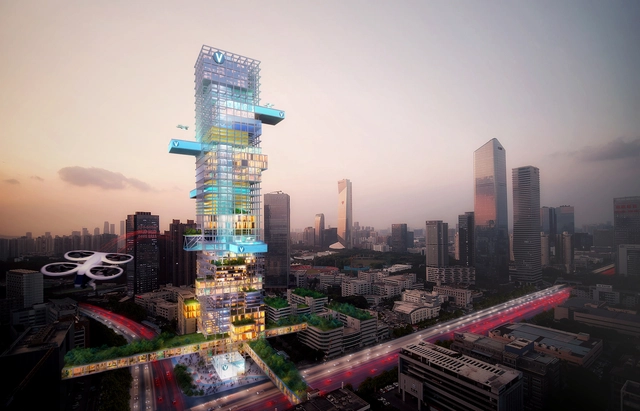
MVRDV in collaboration with Airbus, Bauhaus Luftfahrt, ETH Zurich, and Systra, is developing a plan for the future of Urban Air Mobility (UAM). The investigation tackles the integration of “flying vehicles” into our urban environments and envisions a comprehensive mobility concept.
The global climate crisis is not only forcing us to rethink architectural design and the way we live, but also the materials and products that shape our built environment, starting from its origins and manufacture. Toward this end, wood has become an efficient alternative to steel and concrete – materials with high levels of embodied energy – and has led to some important architectural innovations that may culminate in its more widespread use worldwide.
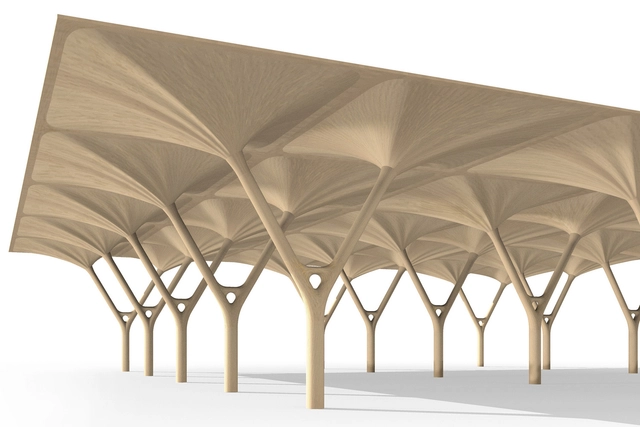
Inspired by the efficiency of nature, Strong By Form has developed Woodflow, a technology that generates wood panels of high structural performance, "combining the optimization of their shape, the orientation of their fibers in relation to the direction of stressors, and the variation in their density for better compression or traction," as explained by its creators. In addition, all of their products are developed in a controlled process through parametric software, integrated into BIM platforms and CNC manufacturing systems.
We talked with Jorge Christie, CTO of Strong By Form, to learn more about this new technology.
While technology and construction have progressed rapidly in recent years, allowing structures to be built taller and faster than ever, remnants of colossal ancient monuments remind us that construction techniques from as long as hundreds of years ago had enormous merit as well. In fact, many of the innovations of antiquity serve as foundations of modern construction, with the Roman invention of concrete serving as a cogent example. Other essential ancient construction techniques, such as the arch and the dome, are now often considered stylistic flourishes, with designs like the Met Opera House reinterpreting classical typologies in a modern context. Yet perhaps the most relevant reinterpretations of ancient construction today are those that do so in the interest of sustainability, renouncing high-energy modern construction methods in favor of older, more natural techniques.
https://www.archdaily.com/933010/the-future-of-the-old-how-ancient-construction-techniques-are-being-updatedLilly Cao
With the amount of information and technology we currently have, whether from academic research or from the manufacturers of construction products themselves, there is very little room for empiricism and experimentation when we design on the most diverse scales. Even worse is when design specification misconceptions can pose huge costs and headaches. However, long before construction and occupancy of the building, it is possible to clearly understand how the construction will function thermally, its photovoltaic power generation capacity, and even how much power will be required to cool and/or heat it. There are software, tools and applications that allow you to quantify all these design decisions to avoid errors, extra costs, unnecessary waste generation, and ensure the efficiency of all materials applied.
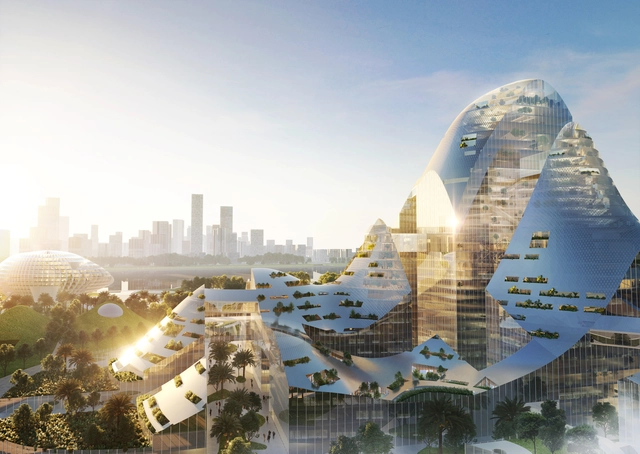
MVRDV has just released images of the firm’s competition entry for the next Tencent headquarters campus, located in Qianhai Bay, Shenzhen. Highlighting the green potential of Smart CityTechnology, the project imagines an entire urban district including offices, homes for Tencent employees, commercial units, public amenities, schools, and a conference center.
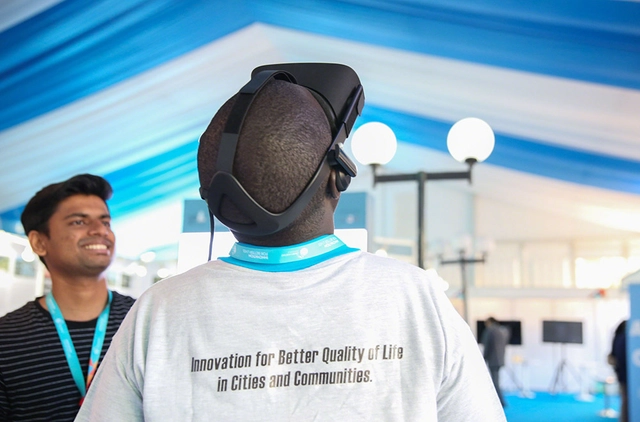
The MIT India Initiative is a not-for-profit effort of students and alumni from the Massachusetts Institute of Technology to delve into pressing problems in novel, challenging contexts, and tackle these with technology and design. This is a first of its kind workshop where mentors from multiple departments of MIT and Harvard will work with talented participants chosen from all across India to design solutions to some of today's most pressing challenges.
The workshop will be held in Mumbai, India facilitating participants to work on solutions that cut across boundaries of cultures, disciplines, and institutions.
The Un-habitat or the United Nations agency for human settlements and sustainable urban development, whose primary focus is to deal with the challenges of rapid urbanization, has been developing innovative approaches in the urban design field, in order to encourage the active participation especially of children, women and underprivileged individuals.
Designing well, creating beautiful buildings as well as boosting revenue and making your firm profitable rank highly among the goals of architects around the world today. What are the most effective tools architects need to achieve those goals? At a recent Technology and Architecture panel, successful architects discussed answers to that very question. When you watch this panel discussion, recorded live at the prestigious Pritzker Military Museum and Library, you will hear inspiring approaches to design, coordination and project management - rooted in BIM and enabled by the design flexibility found in ARCHICAD.
Being up to date with new technologies, understanding the best solutions for each project, and knowing the products present in the market and those that will be used in the future. We have observed that these themes arouse great interest in the architects, students, and architecture lovers who visit our site every day. In 2019, ArchDaily began to focus more on materials, covering products, construction techniques, and raw materials in general. The year is coming to an end, so we have compiled the most viewed articles on these topics, trying to understand what they imply for the present and where they will take us in the coming years.
There has been a lot of talk about how automation will affect the way we do architecture, and what our role will be when technologies reach our own desks and work tables. In recent years, while we have seen how robotics and advanced technology are gaining ground in construction and manufacturing, new tools are emerging that promise to automate the design process itself. These would allow us to quickly and easily configure living spaces and their dimensions in the initial stages of a project, using simulations and artificial intelligence.
Will this automation be the future of architectural design? We talked with Jesper Wallgren, architect and founder of Finch 3D, to better understand this tool and its possible scope.
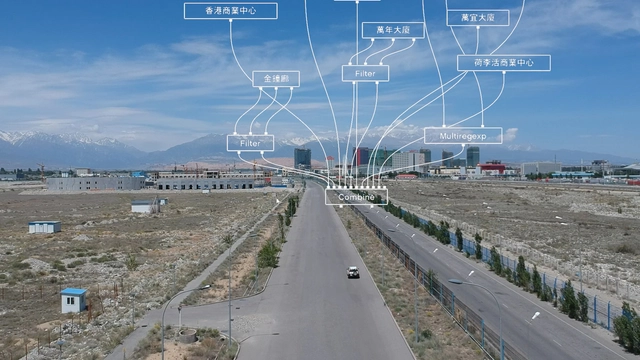
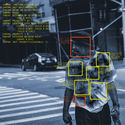
In December 2019, the Chinese city of Shenzhen will host the world’s only Biennale focused exclusively on the topics of urbanism and urbanization. The 2019 Bi-City Biennale of Urbanism\Architecture will explore new phenomena brought about by the digital revolution, and the ability of citizens to become involved in shaping cities. The Biennale curator, Carlo Ratti, exemplifies this intersection between natural and artificial, championing the power of new technologies to transform how we live and design through his work at Carlo Ratti Associati and the MIT Senseable City Lab. In the “Eyes of the City” section of the Biennale, he is joined by MVRDV, and its co-founder Winy Maas, in shaping an experience that invites visitors and observers to question how technologies such as facial recognition can be integrated into urban life.
https://www.archdaily.com/928595/carlo-ratti-and-winy-maas-discuss-facial-recognition-and-the-shenzhen-biennaleNiall Patrick Walsh
Opening in December in Shenzhen, China, the Bi-City Biennale of Urbanism and Architecture (UABB), organized by the cities of Shenzhen and Hong Kong, will discuss the theme of “Urban Interactions”. First to use Facial Recognition and Artificial Intelligence, the public exhibition will test new grounds to reflect on the impact of digital technologies on the urban environment.
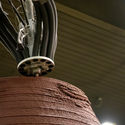
Automation is rapidly becoming a normalized part of many people’s daily lives and careers, a trend which has by no means evaded the construction industry. While this increasingly pervasive technology is often considered a symptom of the contemporary 21st century, however, one automated construction technology may have a history stretching as far back as the 1960s. This technology, the bricklaying robot, has transformed dramatically since its limited realization over 50 years ago, splintering into newer, more technologically advanced variations today.
https://www.archdaily.com/928440/the-evolution-of-bricklaying-robots-changing-the-rules-of-traditional-constructionLilly Cao


.jpg?1583859382&format=webp&width=640&height=580)



.jpg?1583859382)
.jpg?1582834753&format=webp&width=640&height=580)
.jpg?1582834791 "via Shutterstock")

.jpg?1582834753)