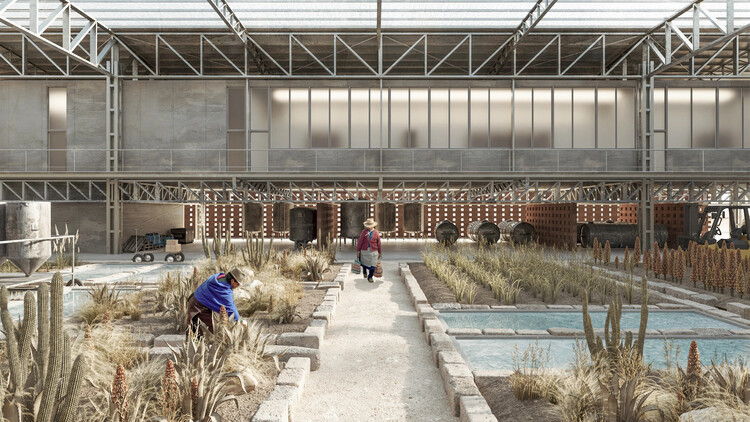
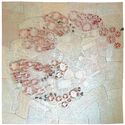
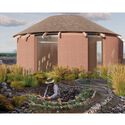
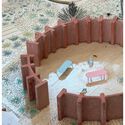
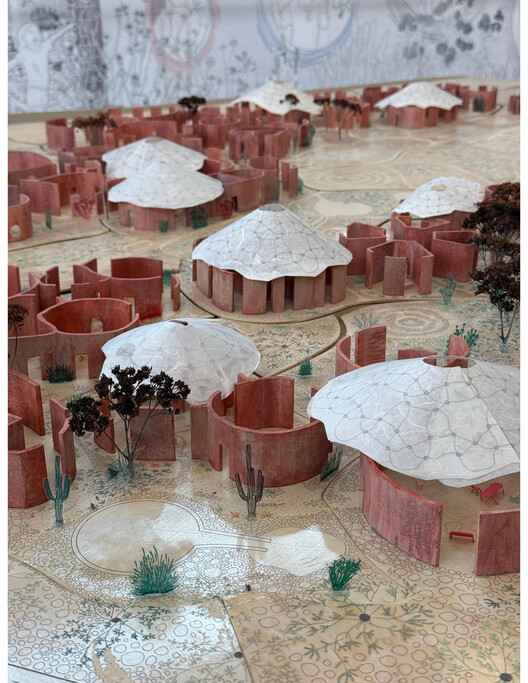
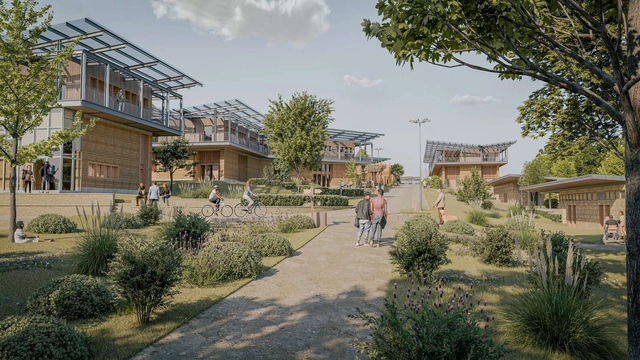
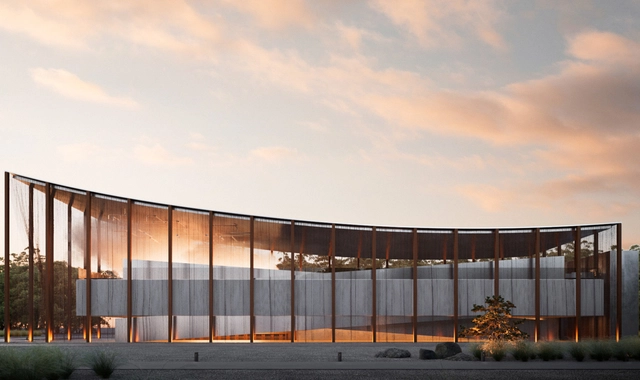
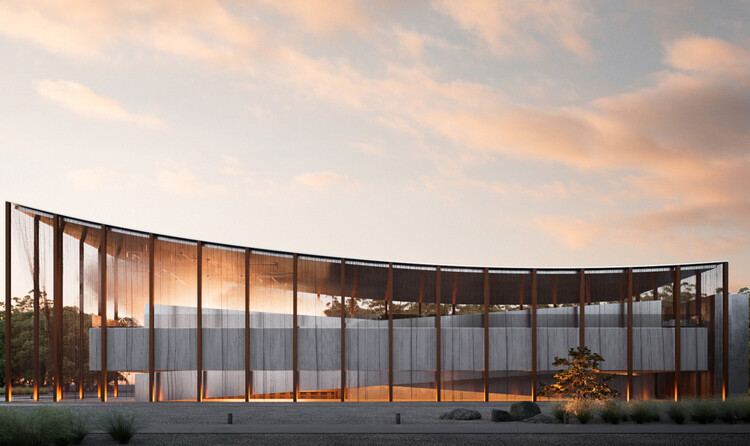
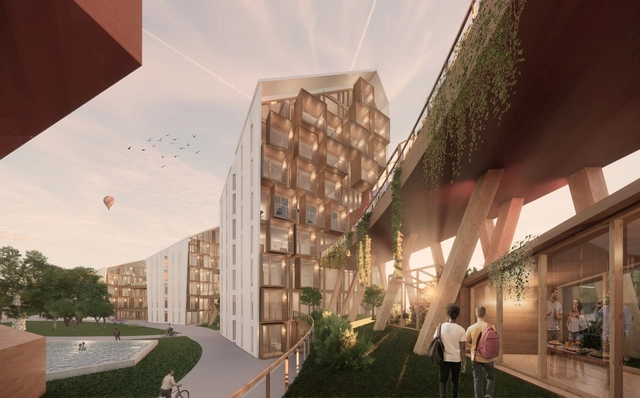
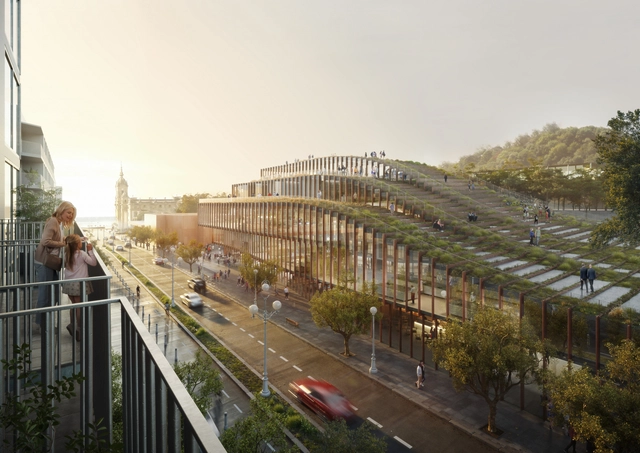
Regenerative Salt Landscapes, winning entry of the ArchDaily Student Project Awards 2026. Image via ArchDaily Student Project Awards
On paper, entering an architecture competition is one of the most challenging things an architecture student can do. What draws students to them is the chance to experiment, approaching a loosely defined program that leaves room to test unconventional ideas and unfamiliar tools outside the rhythm of the semester. That distance from assessment is a relatively recent development, as competitions were once central to architectural education.
At the École des Beaux-Arts, teaching was split between the atelier, where students developed projects under a practising architect, and the competition, where a jury of professors judged the students' work without having followed its development. This model was later brought to schools such as MIT, Penn, and Cornell by French-trained instructors. Over time, most schools held on to the atelier, which became the design studio, and pushed the competition to the edges of the curriculum.
First Prize Winner + Buildner Student Award: Linear Ritual. Image Courtesy of Buildner
Buildner has announced the results of the Iceland Slow Sauna architecture competition, developed in partnership with Slow Travel Mývatn. Set beside Þúfa – Private Homestay in the volcanic landscape of Lake Mývatn in northern Iceland, the competition invited architects and designers to create a compact retreat combining a sauna and greenhouse within a single architectural experience. Rooted in the Icelandic tradition of bathing as a ritual of stillness and renewal, the brief asked participants to explore how heat, light, vegetation, and landscape could shape an intimate place of recovery and connection to nature.
First Prize Winner: Helical. Image Courtesy of Buildner
Buildner is pleased to announce the results of its Architect's Chair Competition Edition 5, the fifth edition of the annual international competition inviting architects and designers worldwide to create a signature chair that reflects their individual design philosophy and vision.
Chair design exemplifies the interdisciplinary nature of architecture, bringing questions of proportion, structure, material, ergonomics, and craftsmanship together at the scale of a single object. This year's submissions explored a broad range of approaches, from highly minimal, structurally efficient solutions to designs rooted in cultural references, material experimentation, and new fabrication methods.
First Prize Winner: Below Shadows. Image Courtesy of Buildner
Buildner has announced the results of its fourth annual Home of Shadows international architecture ideas competition. The competition series is designed to focus on the vital interplay between light and shadow in creating functional and inviting living spaces. It highlights the importance of natural light in home design, essential for creating comfortable, inviting, and practical environments.
Light is viewed as a language through which architects communicate emotions in their designs, with shadows playing an equally significant role in influencing the ambiance of a space. The balance between light and shadow allows for the creation of spaces with depth and texture, setting different moods for various purposes. Often, this balance can be achieved through the strategic placement of windows and doors.
Second Prize Winner: A stair, a spiral, or a park. Image Courtesy of Buildner
Buildner has announced the results of its third edition Architect's Stair international architecture ideas competition. The event invited designers to reflect on one of architecture's oldest and most symbolic elements: the stair. Beyond its functional role as a connector of levels, the stair was positioned here as a medium of architectural storytelling—an invitation to explore ideas of procession, sequence, space, and form.
Marina Opatija and the Kvarner Bay shoreline from above. Image Courtesy of Smart & Sustainable Marina Rendezvous
M3 Monaco's Smart & Sustainable Marina Rendezvouscompetition returns for its sixth edition with an open-architecture Call for Ideas centered on Marina Opatija, on Croatia's Kvarner Bay. This article sets out what the competition asks of designers: a focused, high-impact intervention built around three required buildings, the pillars and sustainability criteria behind the brief, the key dates leading to the August 2026 deadline, and how to enter, free of charge, for professionals and students alike, with the top finalists pitching their work at the Yacht Club de Monaco.
First Prize Winner: Seeds in Forgotten Soil. Image Courtesy of Buildner
Buildner has announced the results of its Re-Form: New Life for Old Spaces, second edition, an international ideas competition examining the adaptive reuse of small-scale existing buildings. The competition invited architects and designers to propose transformations of used, abandoned, or overlooked structures with an approximate footprint of 250 square meters, located anywhere in the world. With no fixed site or program, participants were encouraged to explore alternatives to demolition and new construction through reuse strategies grounded in contemporary social and environmental concerns.
Set on the banks of the Sava River in Belgrade, Serbia, the site of a former cement factory became the starting point for the 21st edition of the Saint-Gobain Architecture Student Contest. Organized in cooperation with the World Green Building Council, OneClick LCA, the City of Belgrade, the Academic Yachting Club Belgrade, the Serbia Green Building Council, and the Green & Blue Corridors Association, invited students to imagine a new Sports and Recreation Hub capable of transforming an industrial waterfront into a year-round public destination. More than 200 universities from 34 countries participated in this 21stedition of the Architecture Student Contest.
Highlighted Submissions: Common Spaces. Image Courtesy of Buildner
Buildner, in collaboration with the City and County of Denver and AIA Colorado, has announced the winners of the Denver Affordable Housing Challenge, an international ideas competition exploring how affordability and design excellence can reinforce one another within the specific urban, social, and environmental context of Denver.
As the nineteenth edition in Buildner's Affordable Housing Challenge series, the competition invited architects and designers from around the world to respond to Denver's housing crisis through proposals operating at architectural, urban, and systemic scales. The brief did not prescribe a single site or typology but, rather, encouraged flexible strategies capable of addressing affordability, climate resilience, and community impact while contributing positively to Denver's urban identity.
Second Prize Winner + Buildner Student Award: Silent Equilibrium
Buildner is pleased to announce the results of its Architect's Chair Competition Edition 4, an annual international competition that invites architects and designers worldwide to submit designs for a signature chair. Following in the footsteps of iconic figures like Charles and Ray Eames, Ludwig Mies van der Rohe, Marcel Breuer, and Arne Jacobsen, participants are tasked with creating custom chairs that reflect their unique design philosophies and visions.
Videos
Second Prize Winner: Branch. Image Courtesy of Buildner
Buildner has announced the results of the Howard Waterfall Retreat architecture competition, an international design challenge developed in close collaboration with the Howard Family Trust. The competition invited architects and designers to propose a multi-generational family retreat set within a privately owned, forested landscape in Northwestern Pennsylvania, centered on the dramatic presence of Howard Falls and the surrounding gorge.
Rather than prescribing a singular architectural solution, the brief emphasized a careful dialogue between architecture and nature. Participants were asked to consider how a retreat could balance shared and private living, respond to steep topography and water systems, and integrate sustainably within a sensitive ecological setting. The project also called for an interpretation of family legacy, encouraging designers to acknowledge the history of the site and the original summer cottage while imagining a retreat capable of evolving across generations.
Videos
First Prize Winner: Edge of presence. Image Courtesy of Buildner
Buildner has announced the results of its Re-Form: New Life for Old Spaces, an international ideas competition examining the adaptive reuse of small-scale existing buildings. The competition invited architects and designers to propose transformations of used, abandoned, or overlooked structures with an approximate footprint of 250 square meters, located anywhere in the world. With no fixed site or program, participants were encouraged to explore alternatives to demolition and new construction through reuse strategies grounded in contemporary social and environmental concerns.
As an open-format competition, Re-Form foregrounded sustainability, feasibility, and community impact over formal or typological constraints. Submissions ranged from precise urban insertions to more speculative rural interventions, reflecting a broad range of approaches to working with existing fabric. Many projects focused on how limited, often marginal spaces could be reactivated to support new forms of collective use while responding to material, climatic, and ecological conditions.
More than 200 universities from 33 countries participated in the 20th edition of the Architecture Student Contest. Students from all over the world imagined projects to transform and challenge the development of a peripheral urban city and a village in a territory at the crossroads of Europe, home to the largest logistical platform of Southern Europe and a major cross-Europe high-speed railway project to come, and linked by the ambition of "Attracting Youth."
Proposta vencedora do Pavilhão do Brasil na Expo Osaka 2025. Autoria Studio MK27 e Magnetoscópio. Image Cortesia de Apex Brasil
The project led by architect Marcio Kogan was the winner of the competition for the Brazilian Pavilion at the next World Expo: Expo Osaka 2025, organized by the Brazilian Agency for the Promotion of Exports and Investments (ApexBrasil). The project is signed by professionals from MK27 and Magnetoscope. Besides Kogan, the architects Renata Furlanetto and Marcello Dantas are also authors.
https://www.archdaily.com/993672/studio-mk27-and-magnetoscope-win-competition-to-design-the-brazil-pavilion-at-expo-osaka-2025ArchDaily Team
Cortesia de Saint-Gobain's Architecture Student Contest
The 17th edition of the "Architecture Student Contest" has come to an end, with the participation of over 220 universities from 32 countries. This year, the challenge was to transform a district located in Warsaw, Poland in order to revitalize an area located next to Warszawa Wschodnia (Warsaw East). The contest involved the design of a new student residence and housing, as well as a meeting and entertainment center in an old factory building that is classified as a historical heritage site. With the requirement of addressing the space's performance as well as its architectural, environmental and social aspects, the contestants were tasked with a project that positively impacts its users and the planet, with low carbon emissions throughout its life cycle.
Selected among five invited architects including OMA, Snøhetta, 3XN, and Toyo Ito & Associates., the BIG-designed building for the Basque Culinary Center, is a new food tech hub located in San Sebastian, Spain. TheGastronomy Open Ecosystem (GOe) is in fact a 9,000 m2 project that seeks to push forward the art and science of gastronomic innovation, bringing together food start-ups, researchers, and chefs. Currently in progress, the building will focus on the development of alternative proteins, agricultural robotics, the prevention of food waste, and much more.