Videos
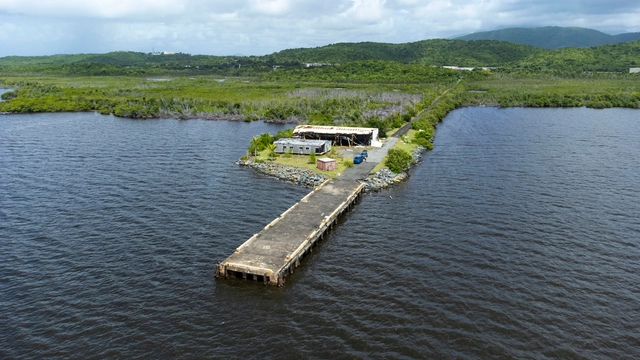
Courtesy of Puerto Rico’s Local Redevelopment Authority for Roosevelt Roads (LRA) / Roosevelt Roads
Puerto Rico’s Local Redevelopment Authority for Roosevelt Roads (LRA) is issuing a Request for Proposals (RFP #2022-004) through a Design Competition. The objective for this RFP is to obtain proposals from qualified architectural and engineering firms able to provide a full range of services – including studies, design, sustainability design, permits procurement and other services – for the development and construction of the Marine Business, Research and Innovation Center (MBRIC). Located in the eastern region of the island - specifically in the former Coast Guard Pier in Roosevelt Roads, Ceiba, municipality - the project will be developed in conjunction with Bluetide Puerto Rico, Inc., which collaborated with the LRA in the development of the program, as well as in establishing the needs and requirements necessary for the development of MBRIC. Bluetide will be responsible for overseeing the operation and maintenance of the facilities.
Global management consultancy McKinsey & Company in 2016 noted that the construction industry was ripe for disruption. Considered one of the world’s largest sectors, the forced advancement and adoption of innovative technologies have allowed the engineering and construction (E&C) industry to persevere in the last two years. In fact, a more recent report, also from McKinsey, noted that the construction industry is more likely to emerge from the pandemic leaner, more digitised, and with a greater eye toward sustainability.
Concrete can be found in almost any type of construction around the world. But how is it made?
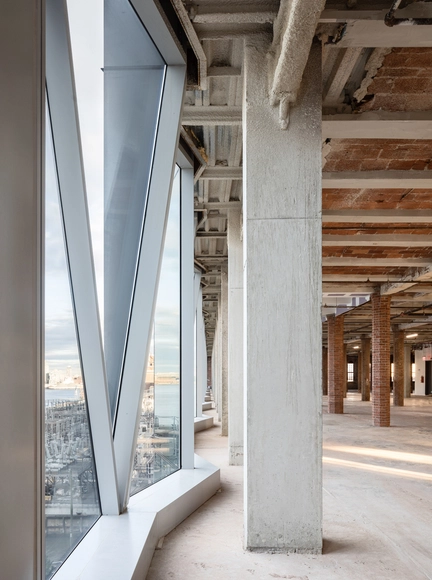
During manufacturing, once in contact with water, concrete’s main ingredient, cement, binds to any aggregates present and goes through a number of complex chemical reactions. That eventually turns it into concrete, a material that is very durable and easy to work with. Despite this reliable durability, concrete can go through a number of internal processes that can lead to serious structural concerns. One of these is alkali-silica reaction (ASR), which can cause cracks in concrete and even put structures in danger of collapse over time.
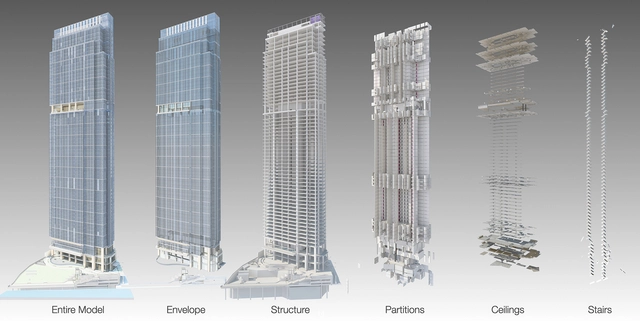
Wolf Point East Building / Pappageorge Haymes. Image Courtesy of Graphisoft
Considered the second most requested skill (behind field experience) in the industry and used by a growing number of design professionals, Building Information Modeling (BIM) has proved to be the present of architecture. But with constant new features and exciting improvements, it is also very much the future. For decades, the revolutionary software has established itself as a powerful tool with a long list of invaluable capabilities: detecting errors, reducing costs and material waste, mitigating risks, optimizing workflows and, above all, allowing for seamless, multi-disciplinary collaboration.
The total energy demand from buildings has risen dramatically in recent years. Driven by improved access in developing countries, greater ownership of energy-consuming devices and increasing urban densities, today it accounts for over one-third of global energy consumption and nearly 15% of direct CO2 emissions. As the climate crisis aggravates and its consequences are more visible than ever, the architecture and construction industry must respond accordingly. It must take responsibility for its environmental impact and give priority to reducing energy consumption, whether through design decisions, construction techniques or innovative products. The key lies, however, in not sacrificing aesthetics and comfort in the process.
The IV edition of the biennial Living Places – Simon Architecture Prize for architecture nominations and registrations can now be made until the 15th of September via www.simonprize.org. Inscription and participation are entirely free of charge and the winning teams receive a cash prize of 10.000 €. The vocation of this recognition is to distinguish those architectural projects (including interiors, public spaces and landscaping) whose excellence enhances the capacity of the spaces to ensure the comfort of its inhabitants. Architectures that turn into higher quality spaces for people in their day-to-day lives: to work, to learn, to wait, to play... Architectures to live in.
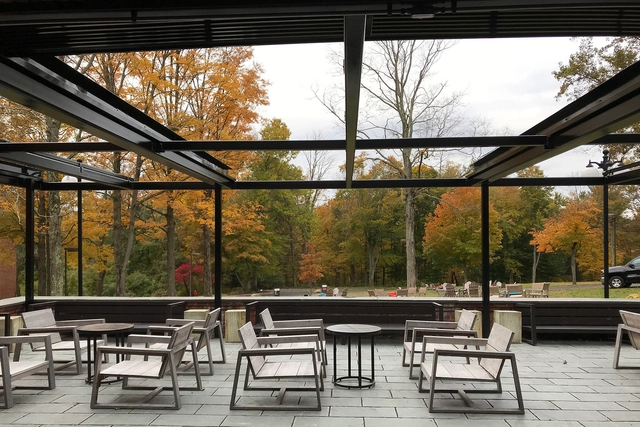
The primary function of architecture, and possibly the most important and basic, is to protect against the weather. Whereas our ancestors would stack tree trunks and animal skins to create rudimentary shelters against the sun and rain, the emergence of architecture took on impressive proportions, creating temples and captivating spaces that fulfill many other functions. The purpose of sheltering people from the outdoors, however, remains an important one and can turn an outdoor area into a functional and engaging space. With all the innovations that currently exist, there are also numerous improvements emerging for their mechanisms and functions.
“Travel isn’t always pretty. It isn’t always comfortable. Sometimes it hurts, it even breaks your heart. But that’s okay. The journey changes you; it should change you. It leaves marks on your memory, on your consciousness, on your heart, and on your body. You take something with you. Hopefully, you leave something good behind.” – Anthony Bourdain
Access to adequate housing is a human right. But with prices rising dramatically, incomes not growing proportionally and ineffective public policies, the lack of secure, affordable homes is fueling an ongoing global housing crisis. In fact, 90% of 200 polled cities were found to be unaffordable to live in, with the impact of COVID-19 only worsening the situation and forcing much of the world’s population to settle for precarious living conditions. This is only expected to aggravate in the not-too-distant future; by 2025, the World Bank estimates that 1.6 billion people will be affected by the housing shortage.
The Permanent Mission of Zimbabwe to the United Nations in New York, in collaboration with the Ministry of Local Government and Public Works of Zimbabwe, has launched a call for submissions for the selection of consultancy firms to provide architectural consultancy services to the Permanent Mission of Zimbabwe for the supervision of demolition, design and construction of the Chancery in Manhattan, New York, as well as the design and supervision of construction of the Official Residence in the City of Rye, New York. The Government of Zimbabwe owns properties in New York City and the City of Rye and is therefore inviting local firms in New York with proven record to participate in the tender.
The International VELUX Award jury has selected ten regional winners from the 507 submitted projects, from 211 schools of architecture around the world. The renowned jury was comprised of Anupama Kundoo, Anupama Kundoo architects (IN), John Ronan, John Ronan Architects (US), Rainer Hofmann, Bogevischs Buero (DE), Fuensanta Nieto, Nieto Sobejano Arquitos (ES), and Lotte Kragelund from VELUX A/S (DK), all of whom met for the jury meeting in Copenhagen.
The Europa Minimal Frame, a new aluminum architectural system, was developed by the company's R&D Department as a high-performing sliding system, emphasizing functionality, design and aesthetics. Recently awarded the Red Dot Award: Product Design 2022 in the Interior Design Elements category, the Minimal Frame aluminum system and its innovation, functionality and longevity present a number of benefits for designs which aspire to a minimalism that combines aesthetic simplicity and luxury.
Façades don't always have to be opaque. Whereas in the past the only options were heavy and raw–such as stone and brick–in recent years façades have adopted an increasingly lighter appearance, with innovative materials becoming the protagonists. These give the building a different look, delicate and transparent, while still maintaining privacy and thermal comfort. Examples of these include polycarbonate, translucent sheets, perforated tiles, glass and even metal chain links, which was the chosen material for a building in Montpellier, France.
Architecture has always played a key role in exhibitions. Museums, exhibitions, and expositions are not only cultural offerings, but are defined by space, by an exhibition itinerary that is able to surprise and fascinate the visitor who is drawn inside an active and inspiring experience.
For an exhibition, architecture is as fundamental as works of art, collections, and artifacts and their contents. The “Architecture for Exhibition” course has been created on these premises: its aim is to train professional designers who are able to materialize diverse artistic and museum experiences, enhancing the ever-changing story behind each cultural proposal. The students will acquire new skills in exhibition design and will move into a very prestigious environment – culture – which nowadays registers an increasing demand by the most critical and exclusive customers.
The term 'high-performing' may bring different images, ranging from a star student to a virtuosic violinist to a hard-working employee. As diverse as they may be, these 'high-performing' people have common attributes. A cut above the rest, they transcend expectations and bring added benefits through their functioning. They deliver the best possible outputs within their constraints and ensure quality while doing the same. Most importantly, they are consistent in their results, and they use their excellence to positively influence their own lives and the lives of the people around them.
Now, more than ever, architects are working outside the office. Whether meeting with a client over Zoom, visiting a job site, or sketching on the train, design professionals aren’t tethered to their desks– and neither should their 3D tools.
SketchUp, one of the most popular 3D modelers in the world, set out to meet this “new normal” for designers by launching a new mobile app: SketchUp for iPad. With a simple UI, intuitive drawing tools, and a direct integration with the cloud collaboration platform, Trimble Connect, SketchUp for iPad empowers designers to work in 3D anywhere. Let’s take a closer look.
The A’ Design Award was "born out of the desire to underline the best designs and well-designed products." It is an international award whose aim is to provide designers, architects, and innovators from all design fields with a platform to showcase their work and products to a global audience. This year's edition is now open for early entries; designers can register their submissions here.
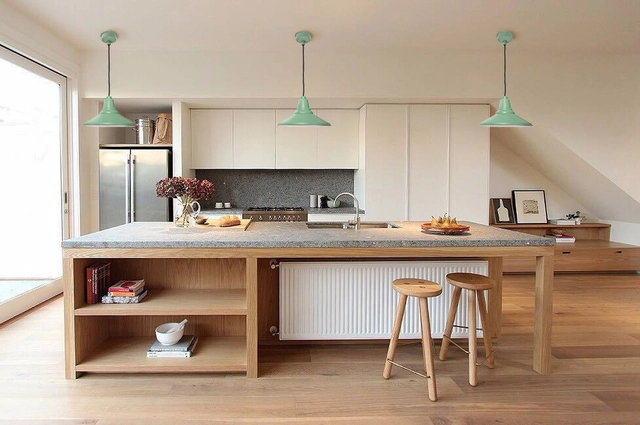
Calla Pendant Ceiling Lights. Image Courtesy of Cocoweb
Characterized by a simple structure and a gable roof, the traditional barnyard typology responds to its original function: sheltering farm products and livestock. In recent years, however, the barn aesthetic has evolved tremendously, sparking the interest of designers with its enduring rustic charm, minimalistic shape, refined ornamentation and modularity – qualities that have long made it popular in countryside hideaways. Reinterpreted to fit a contemporary style, the vintage typology has conquered modern projects that seek to offer an escape from the fast-paced, dense reality of urban life. Whether refurbishing historic farms or building new homes designed to resemble barns, architects have drawn inspiration from the industrial origins of traditional barnyards, but adding a modern twist.