As climate change continues to reach unprecedented levels, many are pointing towards enhancing circularity in the construction sector. Essentially, the circular economy aims to eliminate waste and the continual use of resources by repeatedly reusing, repairing or recycling materials. The cyclical approach is able to meet demand and minimize CO2 emissions by extending a product’s lifespan, which is especially important when dealing with limited resources. Unlike the traditional linear extractive method –where everything goes through an extremely contaminating process of 'take-make-waste'–, circularity keeps materials in use for as long as possible to extract maximum value. This, in turn, reduces pollution, regenerates natural systems and contributes to a healthier built environment, hence building economic, natural, and social capital.
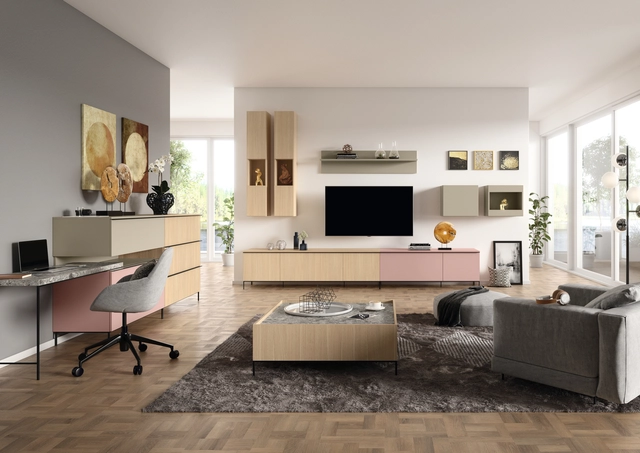
With its discreet design and coordinated colours, the workstation fits perfectly into the living area. Image Cortesia de EGGER
Although things seem to have returned to normal, it is undeniable that the COVID-19 pandemic has changed everyone. The truth is, its impacts on the economy and society can still be felt and will remain for some time. As a consequence, most people have become more conscious about public health, disease dissemination and the importance of science in everyday life. Many began to place more importance on time spent with family and at home, while companies have realized that not all office spaces are really essential and that home office can be just as effective.
The result is that people have began modifying their spaces to accommodate new uses which might have been unthinkable before. Our homes had to become, in a few weeks, places for rest, work, study, sports and leisure. Most were not prepared for this change, but gradually both residents and architects and designers found ways to adapt to the new reality. We've learned that accommodating new functions into a home means more than just setting up a table in the only free corner of the apartment. The pandemic also accelerated certain global trends and changed our relationships with products, companies and services, in terms of sustainability, social justice, digitization and individualization. The common factor between these different elements is that now they no longer require you to make a choice between one thing or another. Instead, all these elements are now connected, making life, people and products more agile and long-lasting. Under the motto “Create Transitions”, EGGER shows how decors and wood-based products can create and shape change in everyday living.
Spanish cities are clear examples of the overlapping of historical periods. Medieval urban layouts coexist with modernist urban plans, and their buildings show traces of Roman, Arab, Gothic, and Romanesque architecture. Moreover, in the era of Maritime Expansion, Spanish architecture was exported from the Iberian Peninsula to much of the world, especially the Americas. It is also difficult to speak of Spanish architecture without mentioning the Catalan genius Antoni Gaudí, whose distinctive style remains unparalleled in architectural history – inspiring and unsettling, without fitting into any particular single stylistic movement. In recent decades, Spanish architects have remained highly respected throughout the world. From the complex structures of Calatrava and the virtuosity of Enric Miralles, to the respect for context of Rafael Moneo. There are many others that should be noted, such as Ricardo Bofill, Alberto Campo Baeza, and the recent Pritzker winners, RCR Arquitectes.
Architects and designers often struggle with questions such as how to win more work, how to leave behind unprofitable, ineffective marketing methods, how to level up their design firm, and to say yes to more fulfilling work, and more. One way of facing these challenges is through continuing education and training.
IE University's free online sessions of their Business of Design series feature outstanding guest speakers with tips to enable architects and designers to become better managers, business developers, and entrepreneurs.
Architectural projects have been growing in complexity at an exponential pace while delivery times have shortened. In response to these demands, specialized visualization studios have become essential to architects and firms with high demands and tight deadlines. Brick Visual, the Budapest-based high-end visualization studio, reflects on its 10 years in the industry and the current state of architectural visualization.
Brick Visualwas founded in 2012 by a few ambitious young professionals whose dream was to create visuals for the most reputed architecture firms around the globe. From a small downtown apartment in Budapest, the handful of visualizers worked to address the needs of its clients while building a culture of innovation and artistic excellence. Since then, the small Hungarian collective transitioned into an international team of nearly 100 experts, who are based in their loft headquarters in Budapest, and satellite offices in Cluj-Napoca, Romania, and Verona, Italy.
Blending in with its urban context or standing out to draw attention, a façade tells a building’s story. It is an expressive medium through which we engage with architecture, defining first impressions and setting the tone for the interior by experimenting with transparency, movement, texture and color, among other aesthetic possibilities. Of course, the envelope also plays a crucial functional role, acting as a protective barrier against extreme weather conditions and directly impacting light transmittance, energy efficiency and acoustic comfort. Architects therefore face an important challenge: to achieve a balance between an attractive look and performance. To do so, it is pivotal to specify the right materials during the design stage.
The noisier the environment, the harder it is to concentrate on the sounds we really want –and need– to hear. We spend about 90% of our time indoors, either at home or at work, often with little concern for acoustic qualities, making our body remain in a constant warning state. In offices this is an even more critical issue. While traditional open plan working spaces encourage teamwork and effective communication, many professionals face the challenge of being able to concentrate with the frequent noises, whether from a nearby conversation, the construction site next door, or a noisy espresso machine. Among the problems that noise pollution can cause in the human body are stress, accelerated heartbeat, increased blood pressure, insomnia, and a constant state of vigilance. Studies also show that poor acoustics negatively affect productivity.
This can be further amplified by the environment itself, often composed of "hard" surfaces (masonry, concrete, glass) that reverberate sound several times over, making it necessary for people to raise their voices to be understood. Furthermore, acoustic devices are generally perceived as accessories that are not very aesthetically pleasing, often with clumsy designs and with little or no flexibility.
Courtesy of Saudi Architecture and Design Commission
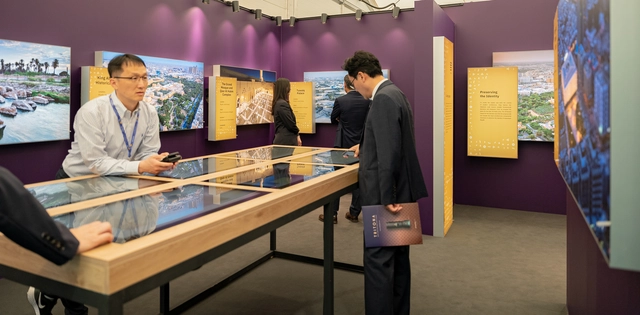
At the end of June 2022, the Saudi Architecture and Design Commission overseeing the development of the sector in Saudi Arabia traveled to Katowice in Poland to participate in the eleventh session of the World Urban Forum. In addition to their participation, the commission also introduced an exhibition to showcase the King Salman Charter for Architecture and Urbanism.
Launched last year, the first stage of the activation strategy of the King Salman Charter for Architecture and Urbanism saw the publication of the Charter, a traveling exhibition, the announcement of the Charter’s awards, and the launch of several services and incentives.
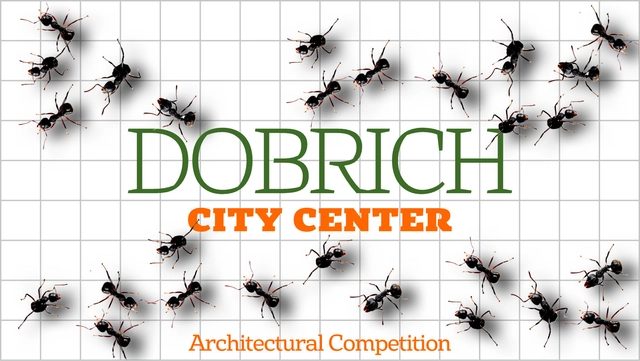
Dobrich is a city in the eastern part of Bulgaria, situated in the Eastern part of Europe. A city with a population of about 80,000 people, it aspires to building a central urban environment of modern, global standards. Pleasant, comfortable, safe and attractive, it prides itself in involving its citizens in defining its vision for development.
The transformation process must take into consideration not only the economic, social and cultural realities, but also the unique historical past and traditions of the city. Specific “urban heritage” must be the starting point for the development of an urban policy. By transforming the city we are indirectly transforming the lives of its citizens, and this is a process in which they cannot be indifferent.
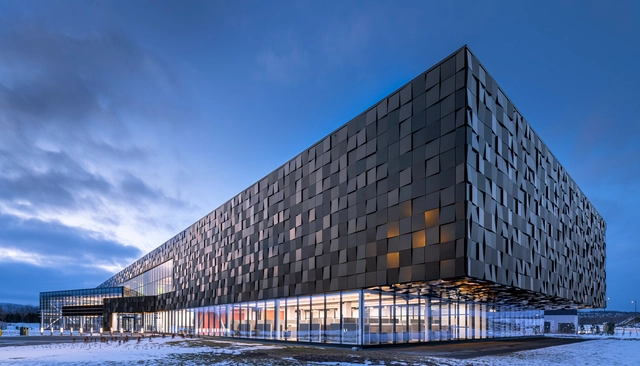
Jinan Cultural Sport and Archives, Public Center, Muchuan Xu, Minxi Cai, Xin Yan, Jingyi Zhao, Qijun Lu, Shangzhao Yang, Xiaofeng Li, Zhongning Zhang, Guanbao Ye / Vantree Design / . Image Courtesy of A' Design Award & Competition
The A' Design Awards - the world's leading annual international juried design competition - were established to promote and recognize the best design work in all countries and in all creative disciplines. The Award has 100 main categories, including Architecture, Building and Structure Design,Interior Space and Exhibition Design, and Furniture Design, in addition to others related to the world of Lighting, Landscape, Building Materials, and some "Super Categories" such as Good Industrial Design, Good Architectural Design, and more. Next year's edition is now open for entries; designers can register their submissions here.
When building near the sea, a project’s design strategy must pay special attention to the effects of marine corrosion. The salt content in the environment provokes a chemical and physical process which incites a material breakdown or degradation, compromising the durability of the building’s infrastructure.
As a response to the demands for ocean-side buildings, and the corresponding façade components that go along with them, air-lux has developed a system that aims to perform reliably in maritime conditions. By virtue of its corrosion-resistant materials, improved surface coatings, and technically optimized components, the system withstands marine climates and minimizes salt water damage.
Although we usually think of climate change as something that should be addressed by research institutes, governments or official reports, private companies also play a key role in affecting change, as they are on the front lines of production and innovation. This is especially true in the field of construction, as it is an industry that moves a significant amount of resources and people, but also exerts a huge impact on the environment. Unfortunately, not all companies take on this challenge, although this is slowly changing and can be seen in a number of successful examples. One of these is the case of Rieder, which embarked on a journey to become “Climate Positive” by 2030 and, more notably, set the example when building its new headquarters.
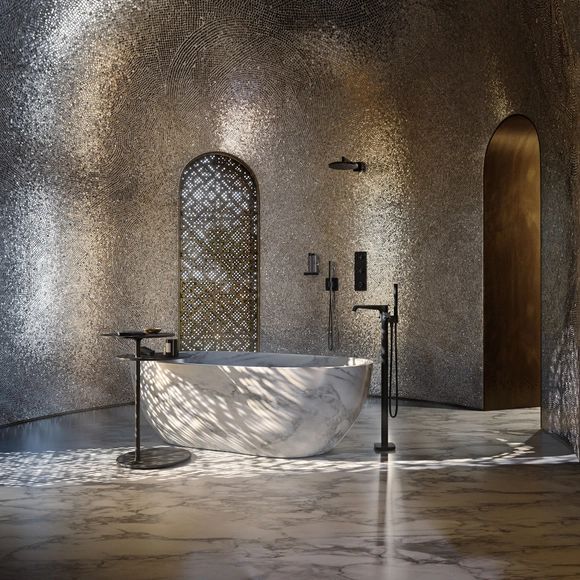
Much more than a merely utilitarian and functional space, the bathroom can be a relaxing place of privacy, solitude and self-care. It can be approached as an oasis of tranquility within one's home, a space to create bold combinations and highlight originality, or even as a room to surprise visitors and escape the usual designs, with different textures, colors and accessories. To achieve the desired effect of each project, specifying the most appropriate parts for each bathroom accessory is essential, which includes toilets, storage devices, walls and fittings such as taps and showers.
If you're looking to take your SketchUp skills to the next level, learning how to render animations can be a great way to showcase your designs. In this tutorial, I’ll show you how to create a professional animation using SketchUp and the photorealistic rendering plugin V-Ray. Our first step will be to create a simple camera animation and then animate the sunlight changing throughout the day. After that, we'll animate the clouds to make a time-lapse sky and learn how to share our final rendered clips with others.
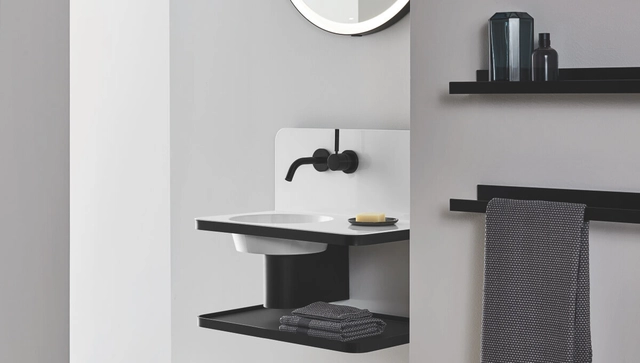
Square shapes convey a sense of reliability and safety, while triangles represent stability, balance and movement. Circular forms, in turn, tend to be more "friendly", as they encompass all other shapes. This is known as the psychology of shapes, a science that studies the influence of shapes on people and their meaning and effects on our minds. In fact, geometric shapes are almost naturally familiar to us, even if we have no formal studies or mathematical references specific to them, as this study showed. In architecture, basic geometric shapes are also widely explored through playing with volumes, subtractions and intersections in floorplans and façades. The shapes may also appear in their truest forms, in interior elements and accessories. This is the case of AXOR Universal Accessories, which comprises three product lines, each representing a basic shape: rectangular, round and with rounded corners, reinterpreted into bathroom accessory products.
The role of a building’s entrance area is critical in a world where first impressions are everything. It anticipates what is to come, marks the starting point to an architectural journey and sets the tone for the rest of the interior. As a practical “passageway” between different places, an entrance connects and unites, but at the same time separates, protects and provides safety for both homeowners and visitors. Thus, every aspect conveys specific formal features to serve that purpose; from the position of the door, to the shape of the threshold, to the structure of the ceiling.
Construction practices across the world, as well as the types and uses of building materials, have been identified as key factors that impact global warming. Studies have shown that the building sector will play a central role in achieving the UN Climate Change Conference (COP26) CO2 emissions reduction targets for 2030 and net zero CO2 emissions by 2050.
The construction sector's support for the achievement of these targets must focus on sustainable construction, which entails environmentally-friendly structures that consume less energy and have smaller or even net zero carbon footprints.
Green buildings are structures that, in their design, construction or operation, reduce or eliminate negative impacts on our climate and natural environment. They preserve precious natural resources and improve quality of life.
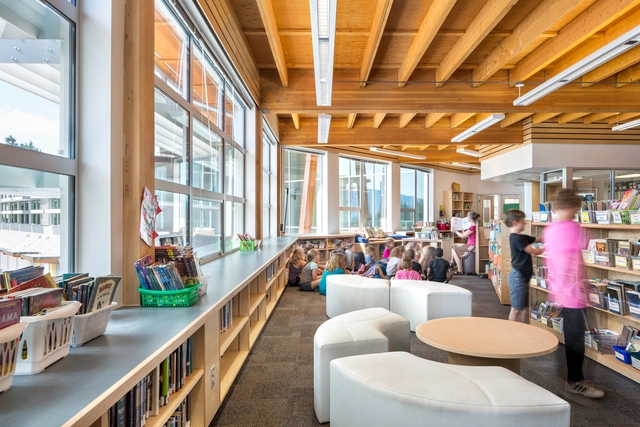
Gibsons Elementary, Gibsons, BC. KMBR Architects Planners Inc. Photo credit: Ed White Photographics. Image Courtesy of naturallywood.com
How does school design influence the process of teaching and learning? Understanding current educational design trends and methodologies is key to designing healthy spaces for students to develop their social and academic capacities.
If we look at the evolution of school design through time, we can see that each period has its own challenges and preferences. Today's main challenge in school design is to create spaces that can integrate open learning environments that incorporate diversity of learning spaces, social interaction and sustainability.
The architecture industry seems to constantly be on the lookout for new materials and methodologies that better incorporate sustainability. One material which has stood the test of time, while also finding space for innovation, is wood. In this context, British Columbia (Canada) stands out as one of the world's largest exporters of wood products, and has successfully applied a number of strategies to maximize its use in sustainable design. One notable example, which will be explored in this article, is the use of wood in schools.