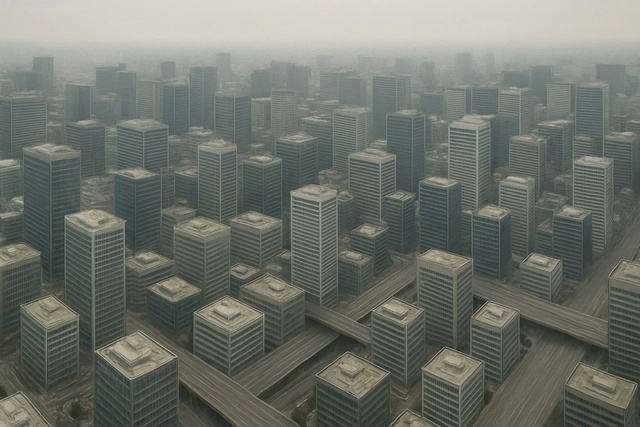
The Master's Programme on Sustainable Cities blends hands-on experience with academic insights from the Norman Foster Foundation's global network of experts. Co-directed by Norman Foster, President of the Foundation, and Professor Kent Larson, Director of the City Science Group at MIT Media Lab, the programme places students at the forefront of urban innovation. Each year, students immerse themselves in three pilot cities, engaging directly with local planners and managers to address urgent urban challenges.
Following the success of this year's pilot cities in Africa, the 2026 edition of the programme expands its geographical horizons to span three continents: Asia, Europe and Latin America. The pilot cities will be announced in the upcoming months.
In the past, AI-generated images often resembled psychedelic experiences—filled with strange, sometimes unsettling colors and forms. But recent advancements in artificial intelligence have transformed that landscape. Today, we are surrounded by images whose origins are often unknown. From playful mashups to portraits turned into works of art, it's undeniable that Artificial Inteligence has become a lasting part in our visual landscape. As Yuval Noah Harari noted in a 2023 interview with The Economist, "AI has gained some remarkable abilities to manipulate and generate language — whether through words, sounds, or images. It has, in effect, hacked the operating system of our civilization."
Architecture, naturally, has not been immune to this. Prompt-based image generators have flooded the virtual environment with renderings that span from surreal to hyper-realistic: futuristic cities, organic skyscrapers, and utopian cabins perched on idyllic cliffs. Most of these are created with general-purpose tools that prioritize visual novelty over design logic. But not all platforms follow this path. Gendo, for instance, was built specifically for architects and designers — offering finer control over parameters like scale, material, and spatial intent. Its goal isn't just to generate images, but to support design thinking. Still, these more intentional tools remain exceptions in a broader sea of generic, decontextualized imagery.
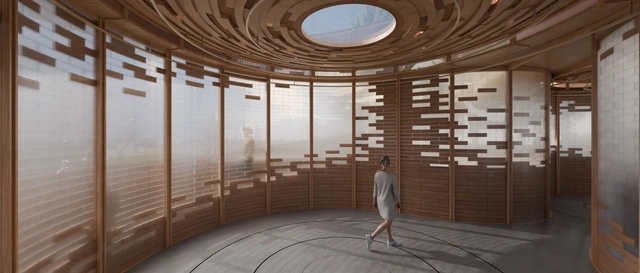
Buildner, in partnership with Collective Action for Culture (C.A.C), the Municipality of Peja, and the Ministry of Culture of Kosovo, has released the results of the Peja Culture Pavilion competition – an international architecture competition inviting architects and designers to reimagine a historically significant site in the heart of Peja, Kosovo.
The competition sought innovative and respectful design proposals that would revitalize a neglected urban square centered around a 15th-century water fountain. Entrants were asked to integrate this cultural heritage element into a multifunctional pavilion that could serve as a space for performance, reflection, gathering, and celebration.
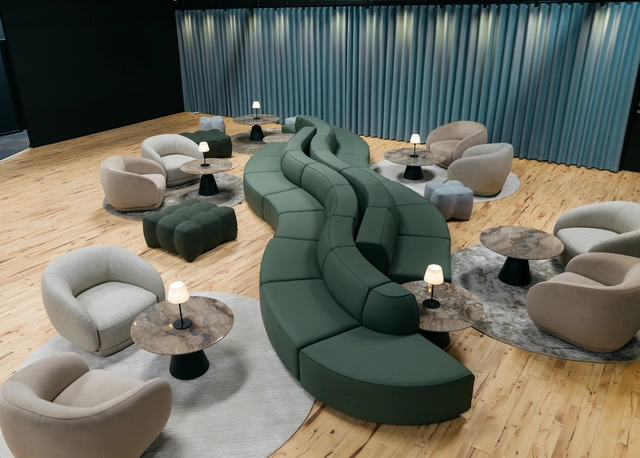
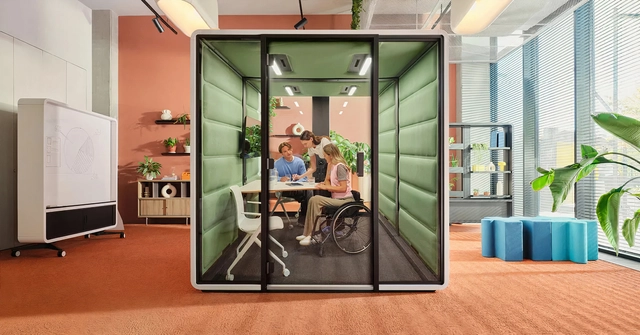
BoConcept’s modular solutions transform the space into a positive, diverse experience, enhancing the workplace environment
What is the meaning of architectural space if it is not used and enjoyed? This big picture question drills down to the essential purpose and sustainability of building architecture in the first place. It's a question that is perhaps most relevant today for offices that risk lying empty in an era of remote and hybrid work. An important challenge for design today is therefore to enhance the workplace environment to encourage attendance.
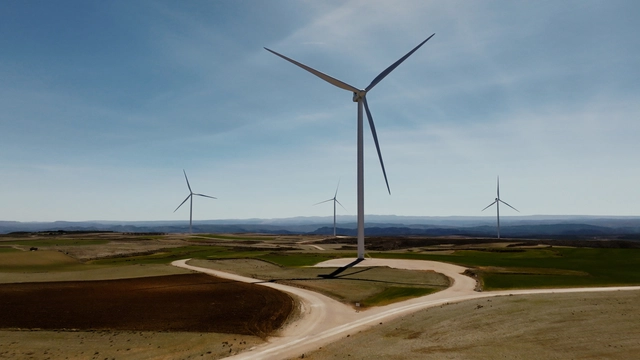
Enel, a global leader in renewable energy, launched "WinDesign", an international contest where talented professionals and students, in the domain of engineering, architecture and design, are invited to imagine and design new wind turbines. The goal is to develop turbines projects that blend more seamlessly into the landscapes that host them, thereby supporting a wider role for them in the energy transition.
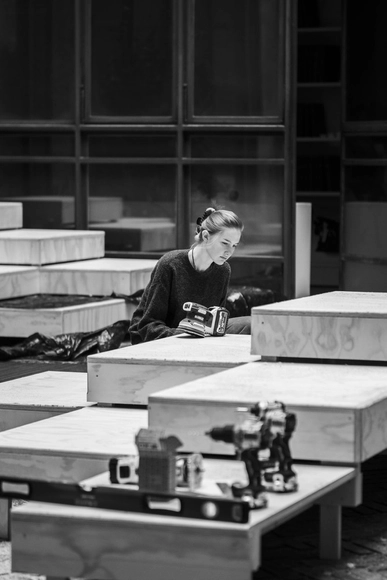
As the first postgraduate institute in architectural education born from connections with some of the most influential figures in contemporary design, Yacademy offers everyone who steps through its doors the chance to grow—both professionally and personally. Here, young architects experience a comprehensive journey designed to enhance their skills, sharpen their sensitivity, and foster meaningful relationships. A cornerstone of this journey is the construction workshop.
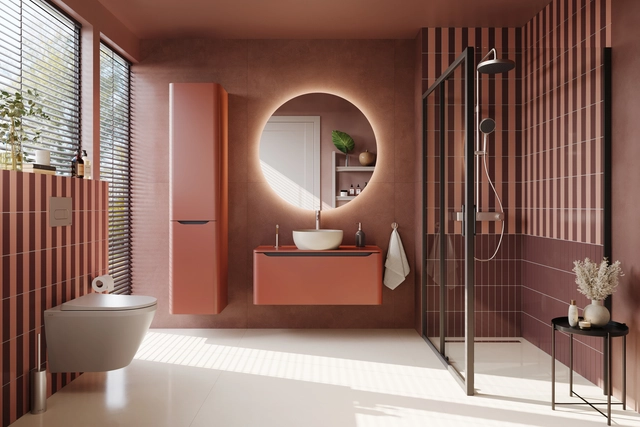
Following a broader trend across architectural spaces, bathrooms have evolved from strictly utilitarian functions into environments integrated with intelligent systems, where physical, cognitive, and sensory parameters are considered in the development of spatial solutions. But, it is always important to remind that cutting-edge technology doesn't always guarantee a better experience. While high-end automation and digital controls offer impressive capabilities, it's often the subtle, user-friendly features—the ones that feel intuitive rather than intrusive—that leave a lasting impression. These are the quiet innovations that elevate daily routines without overcomplicating them. The adoption of user-centered ergonomics—a design approach that takes human needs and limitations as its starting point—has guided the creation of components that respond adaptively to the presence, behavior, and preferences of users. Technologies such as toilets with automated features, proximity-activated faucets, concealed cisterns, and intuitive temperature controls not only enhance comfort and accessibility but also contribute to more efficient management of water and energy resources.
Work always evolved, adapting to the tools, technologies, and social structures of its time. In the earliest human societies, basic survival was the driving force behind labor, with hunter-gatherers dividing essential tasks to meet elementar needs. The Agricultural Revolution marked a turning point, introducing permanent settlements and specialization, which led to the emergence of labor division in ancient civilizations. As time progressed, the Middle Ages saw the rise of the feudal system, while trade and guilds laid the groundwork for a monumental shift: the Industrial Revolution. This era transformed work from artisanal, home-based production to centralized, large-scale factory systems.
Before industrialization, many service providers worked from home. But as factories grew, the workforce became centralized, transforming the relationship between worker and workplace. The rise of the service sector and modern corporations gave rise to office spaces that were often rigid and compartmentalized, like the iconic cubicles of the 20th century. Now, as work becomes increasingly digital and decentralized, offices are transforming again. Open layouts, specialized zones, and modular pods are replacing static configurations, promoting flexibility, focus, collaboration, and well-being. But how do innovations in modern workspaces respond to the demands of today's professionals?
On the occasion of Design Week 2025, Gessi transforms Casa Gessi Milano into an experience of Haute Culture, placing personal well-being at the center. A longstanding presence in the international design scene, Gessi continues to embody a vision of innovation, wellness, and refined aesthetic sensibility. Since its inauguration in 2012, this iconic space on Via Manzoni has become a distinctive meeting point where creativity, elegance, and experimentation exist in dialogue.
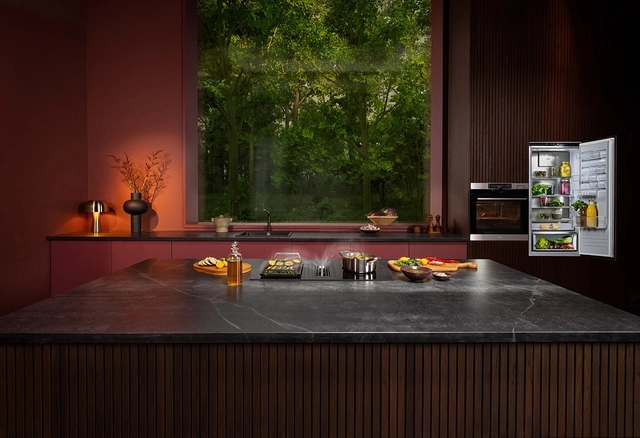
The role of the kitchen has undergone a remarkable transformation—evolving from a purely functional space into the central hub of the home, where creativity thrives and meaningful connections are made. This shift is closely linked to the growing popularity of cooking as a hobby, spurred by a surge in culinary-focused TV shows and dedicated channels. It reflects a broader cultural movement towards authenticity in an increasingly digital world—a counterpoint to the fast-paced nature of modern life that emphasizes a slower, more mindful lifestyle, often referred to as "slow living".
This trend also aligns with a growing focus on health and wellness, as well as a renewed appreciation for nature and cultural heritage. Today, the kitchen is more than just a place to prepare meals—it's where families gather, friends connect, and culinary skills are honed and celebrated. Yet, even an activity as elemental and hands-on as cooking can be transformed by technology. Beyond traditional electronic utensils and appliances that simplify many processes, Artificial Intelligence is emerging as a powerful ally in the modern kitchen.
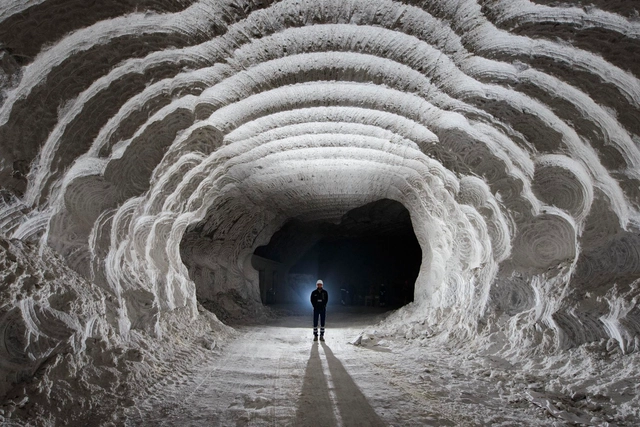
Blurring the boundaries between surface and underground, The In-between Scape and Transitorre boldly reimagine the Petralia Soprana Salt Mine as a meeting point of contrasts—where education blends with leisure, nature with architecture, and visitors become part of the story. These visionary projects, born from YACademy's Architecture for Landscape program, use bold forms and innovative materials to spark a dialogue between people and place, transforming the mine into an immersive and deeply connected experience. Drawing on a decade of expertise in designing within extraordinary natural sites, the program offers a unique educational journey into meaningful, context-driven architecture.
Throughout the course, Yacademy aims to train professional designers capable of intervening in astonishing and monumental natural contexts. Through an extensive program of lectures by master architects, exclusive site visits, hands-on workshops, and design reviews, designers will become more and more able to reconnect human design to the natural environment and be inspired by landscape to design outstanding, sustainable and impressive architectures. Moreover, the program guarantees an internship in a well-renowned architectural firm.
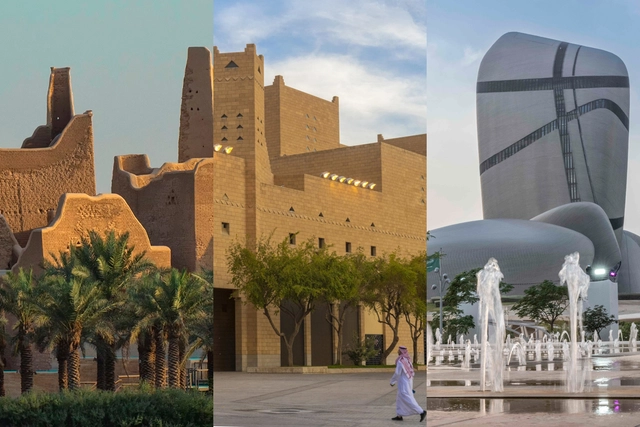
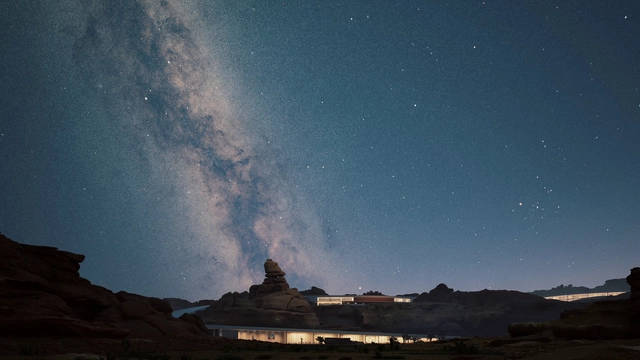
For centuries, the heart of the Arabian Peninsula was a land of vast deserts and settlements shaped by their environment. This relationship with the landscape, materiality, and knowledge of the place has not only endured but now translates into a landscape gaining recognition on the global creative scene. From projects that emerge with a profound sensitivity to context to global exhibitionsand awards that drive its evolution, the region is consolidating its architectural language—rooted in its history while oriented toward new explorations. Far from halting, this momentum continues to chart the path for its development, establishing the region as a platform in contemporary architectural discourse.
https://www.archdaily.com/1028115/insights-from-saudi-arabias-architecture-and-design-commission-and-the-designathon-initiativeEnrique Tovar
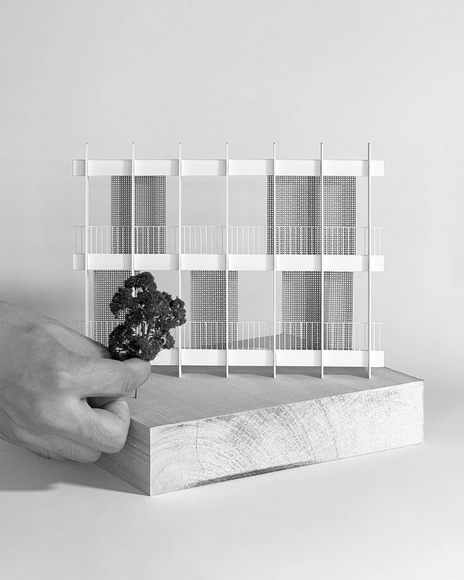
Buildner has released the results of its Denver Single Stair Housing Challenge, an international design challenge inviting architects, designers, and urban planners to explore innovative solutions for high-density residential living. Participants were tasked with reimagining a common point access block typology—often characterized by vertical circulation concentrated in a compact core—and transforming it into a more sustainable, community-oriented, and adaptable living environment. The competition was focused on sites in Denver, Colorado, though its issues are relevant to urban situations throughout the United States and around the globe.
Real-time rendering technology is evolving at an unprecedented pace, and D5 Render 2.10 sets a new benchmark with the introduction of real-time path tracing. In addition to this cutting-edge advancement, the update brings significant improvements to AI-driven post-processing, procedural city generation, weather effects, animation controls, and team collaboration features, elevating both rendering quality and workflow efficiency.
On April 10th, 2025, Saint-Gobain revealed the winners of the 14th edition of its International Gypsum Trophy during a ceremony held in Paris, France. 85 projects from 29 countries participated in this unique international competition organized by Saint-Gobain.
From the Americas to Asia, from Europe to Africa, the most talented and skilled gypsum installers competed in six categories: Ceilings; Innovation; Residential; Culture, Education and Leisure; Business and Institutional; and Façades, for the chance to win one of the 14 prizes. The 1st and the 2nd prize were awarded in each category, as well as the President's Prize (the "coup de coeur" of the jury) and the Grand Prix (rewarding the most outstanding project across all categories).
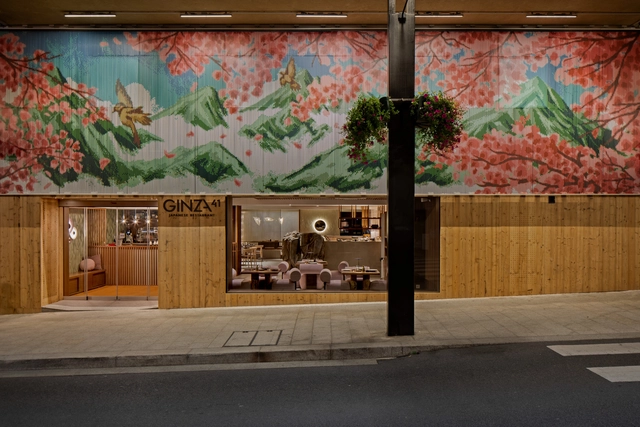
Through the creative manipulation of common construction materials and the exploration of elements such as form, light, texture, and space, architecture transcends mere functionality to become an artistic expression. Whether through the boldness of an innovative design, the harmony of balanced proportions, or the evocative use of materials, a building can transform into a work of art that inspires, intrigues, and evokes emotion. The design of the Ginza 41 sushi restaurant, conceived by architect Àfrica Sabé, exemplifies this approach. Its facade stands out in its surroundings thanks to solutions provided by Kriskadecor, a company specializing in customized metallic cladding. By utilizing a tensioned chain facade system that showcases a unique design, the project redefines the integration between architecture and visual branding.
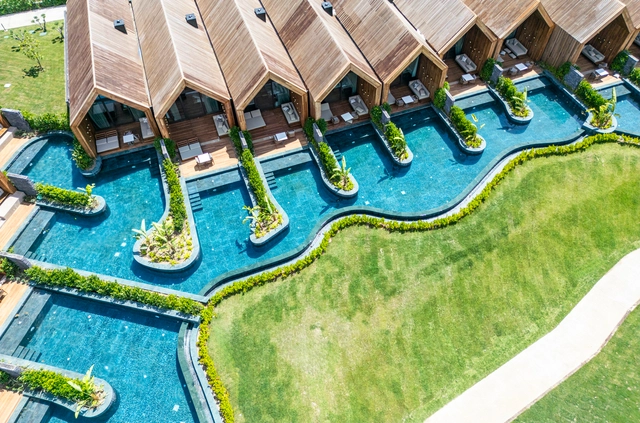
Pools have always symbolized luxury, leisure, and social interaction. Beyond their aesthetic appeal—where water dances across textures, movements, and reflections—they also serve functional purposes, providing relaxation, exercise, and entertainment. Their history dates back over 5,000 years to the Great Bath of Mohenjo-Daro in the Indus Valley (modern-day Pakistan), possibly used for rituals and communal practices. Later, the Greeks and Romans refined the concept, creating elaborate pools for bathing, sports, and social gatherings. The famous Roman baths, often heated and adorned with intricate mosaics, laid the foundation for modern spa and wellness culture, reinforcing the relationship between architecture, water, and quality of life.
During the Renaissance, pools were primarily associated with elite properties, but by the late 19th and early 20th centuries, public pools became more common, driven by urbanization and the promotion of hygiene. The rise of Olympic swimming competitions in the early 1900s further popularized the concept, leading to increased construction of both private and competitive pools worldwide. Today, pools continue to evolve, incorporating advanced materials and designs that enhance safety and sustainability. Whether for recreation, aesthetics, or well-being, pools remain a central element of modern architecture and lifestyle.
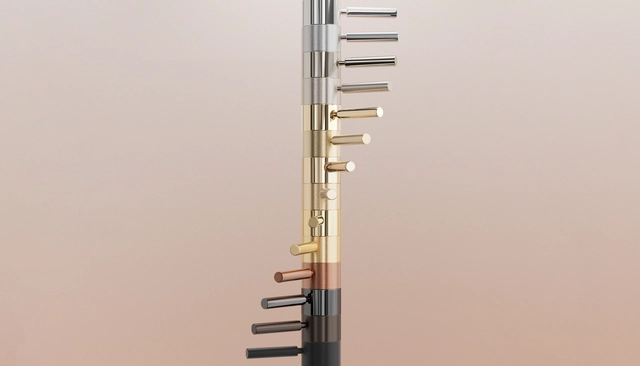
Functionality is non-negotiable when designing, but crafting the right ambiance is crucial—especially in bathrooms and kitchens, where a few well-chosen finishes, hues, and fittings can completely transform the atmosphere and favor the composition of a cohesive environment. Concepts such as beauty, quality, and variety drive much of the design process of these spaces, encouraging what some might perceive as an aspiration for perfection in all dimensions. The interaction of these factors enhances both the visual composition and the user experience, shaping a balanced and appealing setting that adapts to the evolving architectural and design language.
https://www.archdaily.com/1026872/crafting-an-aura-of-perfection-with-intense-metallic-finishes-in-modern-interiorsEnrique Tovar