Shenzhen: The Latest Architecture and News
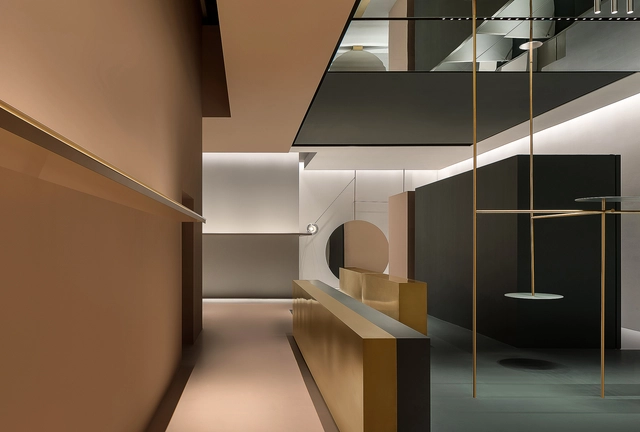
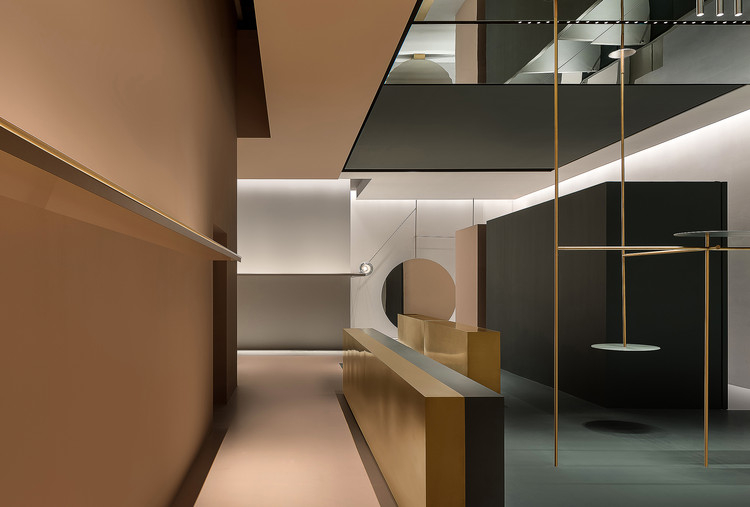
1WOR Flagship Shop in Shenzhen / DOMANI
https://www.archdaily.com/896501/1wor-flagship-shop-in-shenzhen-domani舒岳康 - SHU Yuekang
OPEN’s Pingshan Performing Arts Center in Shenzhen Nears Completion
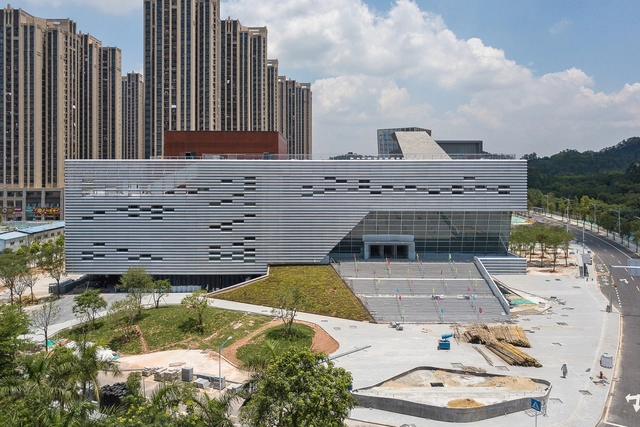
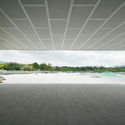
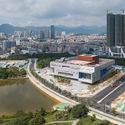
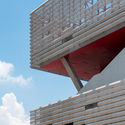
OPEN Architecture has released a new set of photos that documents the construction milestones of Pingshan Performing Arts Center in Shenzhen, China. The project was initially announced in 2015 as the first theatre planned for the newly-developed Pingshan area. With its building envelope now fully formed and cladded in precision-engineered aluminium panels, the Performing Arts Center is set to open by the end of this year as one of the city’s most anticipated cultural venues.

https://www.archdaily.com/896655/opens-pingshan-performing-arts-center-in-shenzhen-nears-completionJoanna Wong
Pre-Announcement: International Tender For the Architectural Design of Qianhai International Financial Exchange Center

The Overall Planning for the Development of the Qianhai Shenzhen-Hong Kong Modern Service Industry Cooperation Zone was approved by the State Council in 2010. The Planning defines Qianhai as an innovative cooperation demonstration zone for Guangdong-Hong Kong modern service industry.
https://www.archdaily.com/896627/pre-announcement-international-tender-for-the-architectural-design-of-qianhai-international-financial-exchange-centerAD Editorial Team
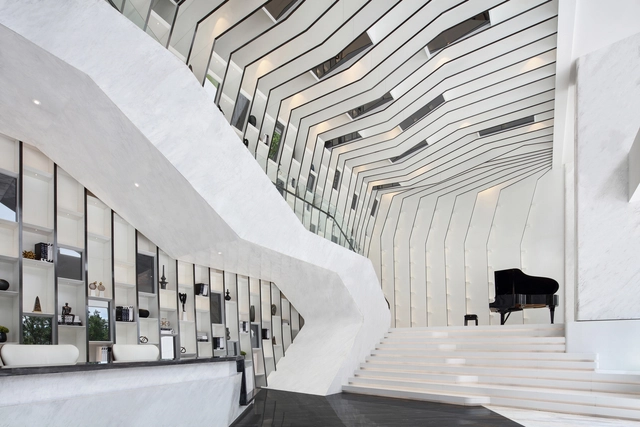
Sky Center / PAL Design


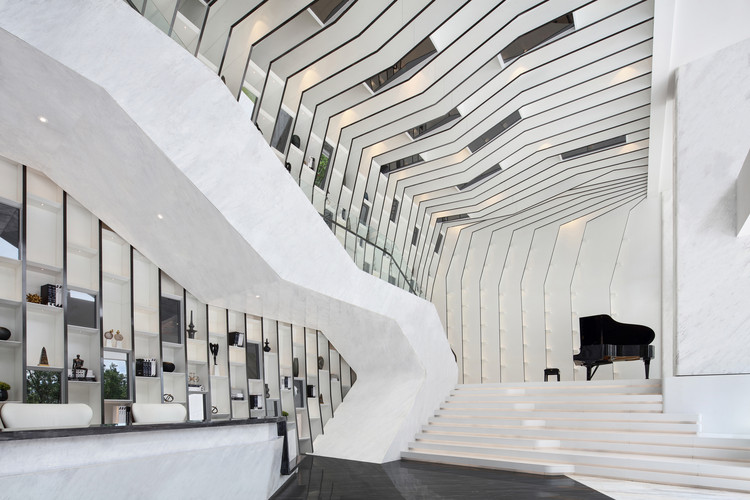
-
Interior Designers: PAL Design
- Area: 1577 m²
- Year: 2017
-
Manufacturers: DuPont, Arte, Baishite, Formica, Kemet Interior Materials
https://www.archdaily.com/896012/sky-center-pal-design罗靖琳
WOHA's First Office Skyscraper in China Tops Out in Shenzhen
.jpg?1528902145)
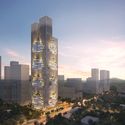
WOHA has released an update of their first office skyscraper for China, as their Vanke Yun City scheme tops out in Shenzhen. Manifesting as three tower blocks attached to a central T-shaped core, the scheme seeks to present “an alternative office tower typology that responds to the sub-tropical climate in Shenzhen.”
Set against the backdrop of ubiquitous post-modernist skyscrapers, the 1.6 million-square-foot (150,000 square-meter) scheme aims to “radically transform the soulless skyscraper into a highly liveable, humane, and sustainable micro-vertical city.”
.jpg?1528902160 "Courtesy of WOHA")
.jpg?1528902003 "Courtesy of WOHA")
.jpg?1528902220 "Courtesy of WOHA")
.jpg?1528903768)
https://www.archdaily.com/896343/wohas-first-office-skyscraper-in-china-tops-out-in-shenzhenNiall Patrick Walsh
East & West Restaurant / Horizontal Space Design




https://www.archdaily.com/894205/east-and-west-restaurant-horizontal-space-design舒岳康 - SHU Yuekang
Extra Time Café & Gallery / XU Studio

https://www.archdaily.com/888402/extra-time-cafe-and-gallery-xu-studio罗靖琳
Foster + Partners Unveil Images for Towering DJI Robotics Headquarters in Shenzhen

Foster + Partners has unveiled their vision for the headquarters of DJI, the world’s leading robotics company, to be located in the Chinese technological powerhouse of Shenzhen. Symbolizing the “heart of innovation” for the robotics giant, the scheme seeks to alter the traditional concept of office architecture, generating a “creative community in the sky.”
Comprised of two towers, the scheme strikes a balance between research, development, office space and public amenities. The floors comprise floating volumes cantilevered from central cores by steel mega-trusses, ensuring maximum flexibility in large, column-free workspaces.
https://www.archdaily.com/894239/foster-plus-partners-unveil-images-for-towering-dji-robotics-headquarters-in-shenzhenNiall Patrick Walsh
Sky Farm / VRAP
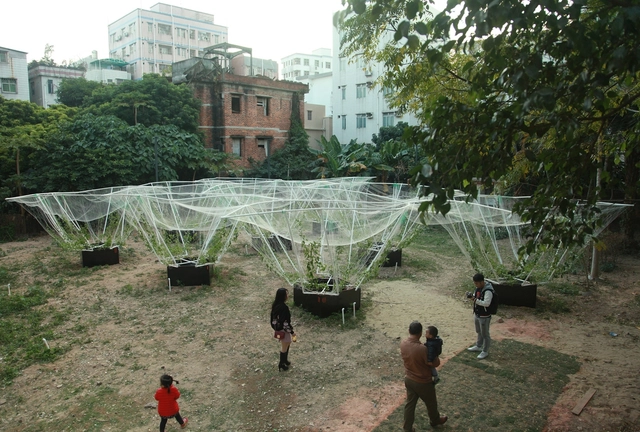




https://www.archdaily.com/893174/sky-farm-vrap罗靖琳
In China, an Experimental Pavilion of Ceramic Bricks Fuses Craftsmanship and Digital Fabrication
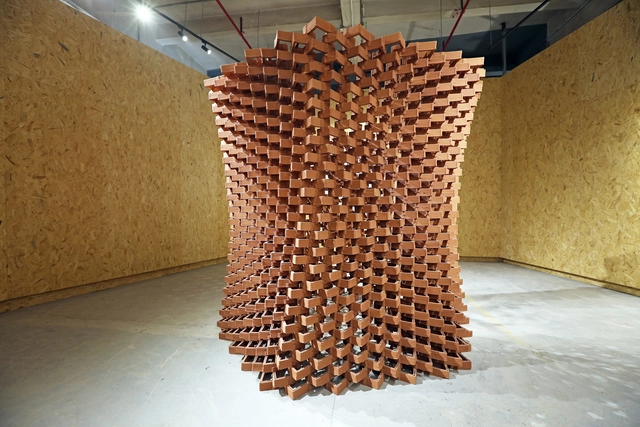
Uniting the material intelligence of vernacular crafts with the precision and flexibility provided by the new digital design and manufacturing technologies, the Robotic Fabrication LAB of The Faculty of Architecture of HKU has developed the CeramicINformation Pavilion, with the objective of finding suitable levels of automation to be used for emerging and transitioning economies.
Part of an evolving series, each of its 1,000 components is unique and relates specifically to its neighboring units. The elements are constructed through 3D printing and are made of terracotta brick, a material commonly used in modern Chinese construction.
https://www.archdaily.com/890192/in-china-an-experimental-pavilion-of-ceramic-bricks-fuses-craftsmanship-and-digital-fabricationJosé Tomás Franco
Meandering Skydeck Features in HASSELL's Competition-Winning Shenzhen District Masterplan
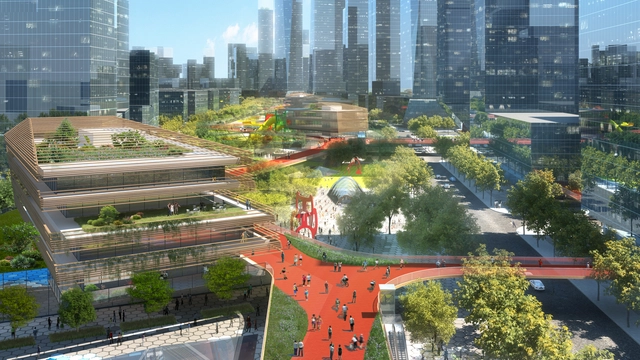
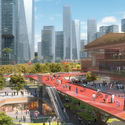
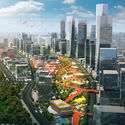
HASSELL has won a competition for the design of the Qianhai Mawan Mile, a business district for the Chinese “gateway city" of Shenzhen. Stretching over one mile (1.6 kilometers), the masterplan seeks to combine “lush parklands, new cultural buildings, and a meandering skydeck” in a vision centered on human-wellbeing.
Aimed particularly at attracting young, mobile residents in a rapidly-changing urban environment, the Mawan masterplan consists of integrated public spaces, neighborhood zones, pavilion buildings, and a mile-long (1.6-kilometer-long) skydeck weaving throughout the development.



https://www.archdaily.com/891778/meandering-skydeck-features-in-hassells-competition-winning-shenzhen-district-masterplanNiall Patrick Walsh
BIG's Shenzhen International Energy Mansion Captured by Laurian Ghinitoiu
.jpg?1521233754&format=webp&width=640&height=580)
The Shenzhen International Energy Mansion is the main headquarters of the Shenzhen Energy Company in China. In designing the building, Bjarke Ingels Group (BIG) paid special attention to one feature: the building's facade. The firm knew that in such a tropical climate, using a traditional curtain wall glass envelope would overheat the buildings and make people crank up their air conditioners. What BIG came up with in their winning design, and what is now the building's most defining feature, is a folded, origami-like facade. This facade provides high insulation and diffuses incoming sunlight, while reflecting the strongest rays onto solar panels.
Laurian Ghinitoiu points his lens towards this uncommon facade design and places the skyscraper within the lively metropolitan context of Shenzhen, China.
.jpg?1521233888 "© Laurian Ghinitoiu")
.jpg?1521233745 "© Laurian Ghinitoiu")
.jpg?1521233769 "© Laurian Ghinitoiu")
.jpg?1521233903 "© Laurian Ghinitoiu")
.jpg?1521233754)
https://www.archdaily.com/890886/bigs-shenzhen-international-energy-mansion-captured-by-laurian-ghinitoiuKeshia Badalge
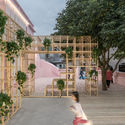
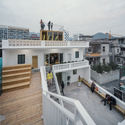
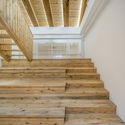
Village as Kitchen of UABB / ZHOU Wei + ZHANG Bin / Atelier Z+



-
Architects: ZHOU Wei + ZHANG Bin / Atelier Z+
- Area: 240 m²
- Year: 2017
-
Professionals: HANDAN HANYI CONSTRUCTION ENGINEERING CO.LTD.
https://www.archdaily.com/890437/village-as-kitchen-zhou-wei-plus-zhang-bin-atelier-z-plus罗靖琳
Haihui Co-working Space / 11architecture
.jpg?1515717909&format=webp&width=640&height=580)
.jpg?1515717484 "Model. Image Courtesy of 11architecture")
.jpg?1515717931 "© ZC Architectural Photography Studio")
.jpg?1515717721 "© ZC Architectural Photography Studio")
.jpg?1515717810 "© ZC Architectural Photography Studio")
.jpg?1515717909)
-
Architects: 11architecture
- Area: 300 m²
- Year: 2017
-
Manufacturers: 混凝土/施工队
https://www.archdaily.com/886966/haihui-co-working-space-11architecture舒岳康 - SHU Yuekang
His House and Her House / Wutopia Lab
.jpg?1520783618&format=webp&width=640&height=580)
.jpg?1520783626 "© CreatAR Images")
.jpg?1520783518 "© CreatAR Images")
.jpg?1520783542 "© CreatAR Images")
.jpg?1520783530 "© CreatAR Images")
.jpg?1520783618)
https://www.archdaily.com/890513/his-house-and-her-house-wutopia-lab罗靖琳
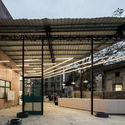
Inlay Workshop of UABB / Studio10
.jpg?1515729625&format=webp&width=640&height=580)
.jpg?1515729703 "© Chao Zhang")
.jpg?1515729846 "© Chao Zhang")
.jpg?1515729724 "© Chao Zhang")
.jpg?1515729625)
https://www.archdaily.com/886977/inlay-workshop-of-uabb-studio10罗靖琳
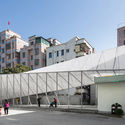
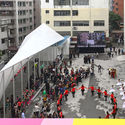
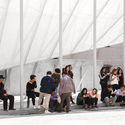
Zhulang Huagai: A Figure for the Nantou Urban Village / NADAAA + Cooper Union



https://www.archdaily.com/889765/not-ready-zhulang-huagai-a-figure-for-the-nantou-urban-village-nadaaa-plus-cooper-union罗靖琳
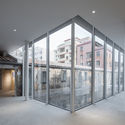
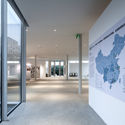
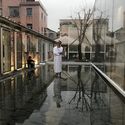
Guangming Exhibition Hall of UABB / CUBE DESIGN



https://www.archdaily.com/886738/guangming-exhibition-hall-of-uabb-cube-design-not-ready舒岳康 - SHU Yuekang