In the canon of great Dutch architects sit a number of renowned practitioners, from Berlage to Van Berkel. Based on influence alone, Rem Koolhaas—the grandson of architect Dirk Roosenburg and son of author and thinker Anton Koolhaas—stands above all others and has, over the course of a career spanning four decades, sought to redefine the role of the architect from a regional autarch to a globally-active shaper of worlds – be they real or imagined. A new film conceived and produced by Tomas Koolhaas, the LA-based son of its eponymous protagonist, attempts to biographically represent the work of OMA by “expos[ing] the human experience of [its] architecture through dynamic film.” No tall order.
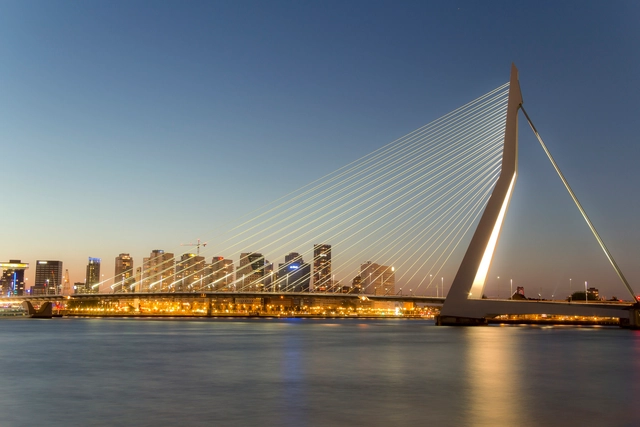
Marking the 20th anniversary of the opening of their iconic Erasmus Bridge in Rotterdam, UN Studio, along with the Kunsthal and Heerema Group, have organized an exhibition demonstrating “the many and varied ways that the bridge has been embraced by the public and become a symbol of the city of Rotterdam.”
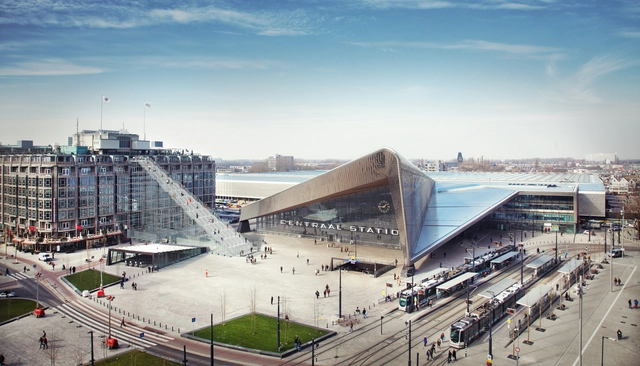
In the newest video by architects Wahyu Pratomo and Kris Provoost of YouTube’s #donotsettle, the duo visit MVRDV’s "The Stairs" installed outside Centraal Station in Rotterdam. The project commemorates the 75th anniversary of the city’s reconstruction after World War II by devising the staircase now attached to the Groot Handelsgebouw, a landmark and one of Rotterdam’s first post-war buildings. In the video, Pratomo and Provoost discuss the idea of temporariness, experience-driven architecture, context, and symbolism inspired by MVRDV’s intervention, all the while asking other visitors for their own reactions to the spectacle.
A little over a month since Rotterdam-based practice MVRDV announced a new temporary urban structure—a 180-step staircase, 29 meters tall and 57 meters long—for the heart of city of Rotterdam, the project has been officially opened. Those who ascend the staircase will find a temporary observation deck looking over Rotterdam Centraal, a rooftop bar, and the temporary reopening of the Kriterion cinema that was last active in the 1960s.
Rotterdam—the original "tabula rasa" city—will soon become host to a giant staircase, ascending 180 steps from Stationsplein (outside Rotterdam Central Station’s iconic entrance) to the top of the world-renowned Groot Handelsgebouw building. According to MVRDV, the structure will "follow in the city's tradition of celebrating reconstruction milestones" and, as such, the scaffolding system used to construct the staircase will be "a nod" to the 75th anniversary of the rebuilding of the city following World War II.
Open Set is a two-week thematic program consisting of a series of intensive one or three day workshops, symposiums and film screenings, led by Dutch and international designers, artists and researchers. Our goal is to promote and enhance the social value of design by facilitating debates around the chosen theme from a rich diversity of perspectives, design trends, traditions, and cross-disciplinary cultural practices. The event aims to offer international participants a studio environment where they are inspired to step out of their comfort zone and question the conventional ways of working, experiment with different strategies, techniques, ideas and cross-sector collaborations in order to develop their own practices with confidence.
Het Nieuwe Instituut, the Dutch institute for architecture, design, and digital culture in Rotterdam, have announced an open call for three research fellows to work in residence between June and December 2016. Alongside the institute’s exhibitions, lectures, publications, and archives, the Fellowship program will explore and challenge how research is conducted within an institutional context, pursuing alternatives to the expectation of predetermined outcomes, the use of official jargon, and the inertia power of the curriculum vitae. In the long term, the program is also intended to complement, reflect on, interact with, and critique the ongoing activities of the institute.
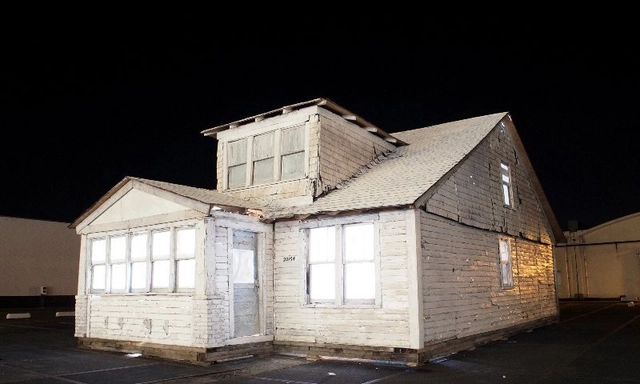
An empty house from Stoepel Street 20194, Detroit, is now in Rotterdam, The Netherlands. In this article for The Guardian, artist Ryan Mendoza describes his impetus and process for translocating a worn, abandoned former family home from one continent to another – as well as the statement he hoped to make. "When I arrived in Detroit in March 2015 I realised that this city – in the country I had left in 1992 out of distaste for its nationalistic, isolationist, police-dog mentality and its privatised prison system, [...] had, aside from the positive developments that were mostly in the downtown area, begun to look like a war zone."
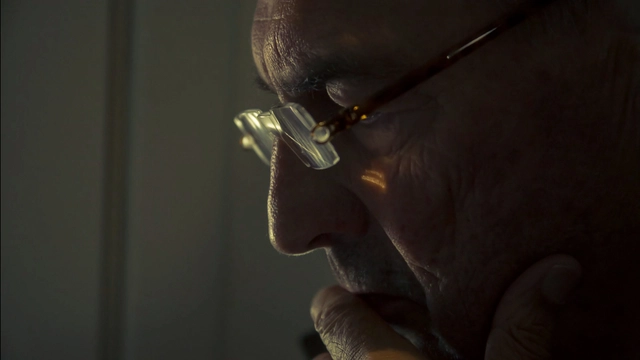
As part of OMA co-founder Rem Koolhaas' sixth interview with Charlie Rose, the Rotterdam-based Architect discusses why the Dutch port-city is his practice's base – and why he switched from journalism and scriptwriting to architecture. In the discussion, of which four snippets have been made available, Koolhaas also explains why he feels that smart technology has a "sinister dimension," and on how he—and his practice—have a tendency to "resist aesthetic."
https://www.archdaily.com/780502/why-rem-koolhaas-switched-from-scriptwriting-to-architectureAD Editorial Team
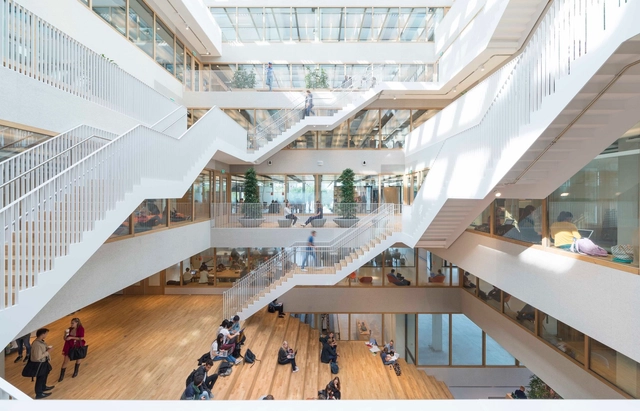
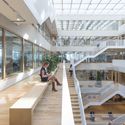
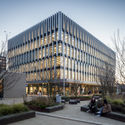
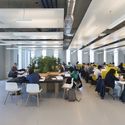
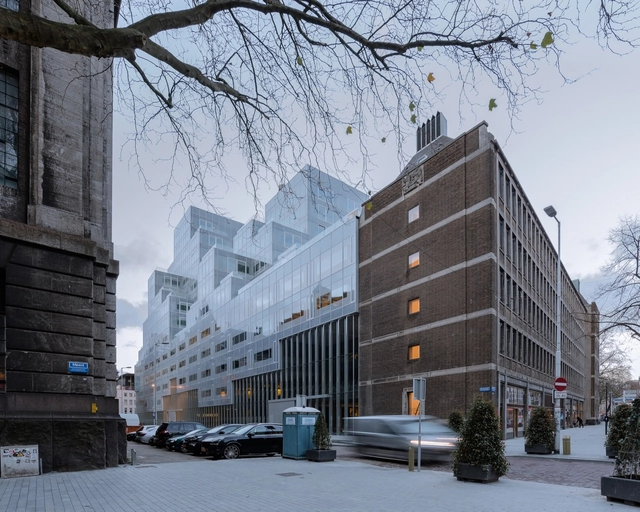
In the latest video from the youtube channel #donotsettle, architects Wahyu Pratomo and Kris Provoost explore OMA’s recently opened Timmerhuis in Rotterdam. The duo compare the conceptual design and renderings to the finished building, look at the impact the new building is having on the cityscape, and with some good fortune find their way through some locked doors.
#Donotsettle was started to reconcile the disparity between film as architectural representation and as an experiential medium. For more #donotsettle, check out their youtube page, where they walk through the Markthal, designed by Rotterdam-based practice MVRDV and the train station in Delft, designed by Delft-based practice Mecanoo, among many other sites.








.jpg?1463424218&format=webp&width=640&height=580)