


-
Architects: Atelier Pupa
- Area: 559 ft²
- Year: 2019
-
Manufacturers: JRBOTAS, Koklatt, Superbotânica
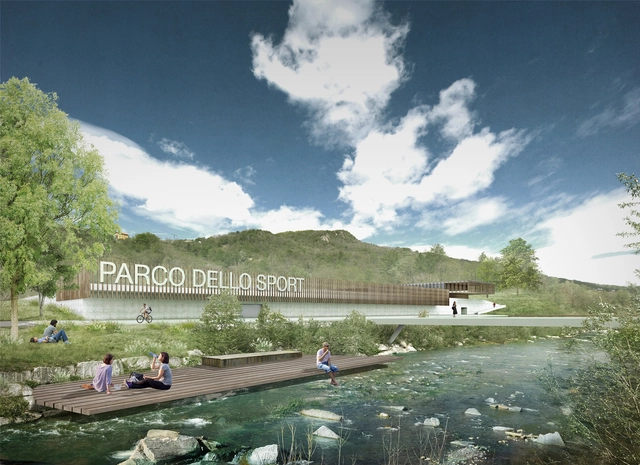
Focusing on the future of public space, and centering their approach on wellbeing and sport as drivers of sustainability, economic and social development, the Lugano Municipal Council in Switzerland has given the go-ahead for the planning of the new Pole of Sports and Events (PSE). Designed by LAND, the project dictates the direction for public spaces in the post-pandemic era.

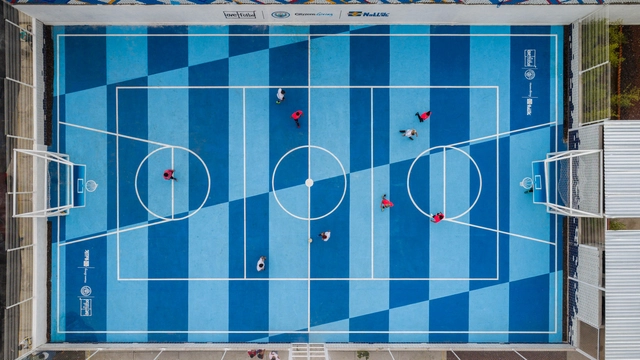
People often gather around sports activities, whether they are the ones exercising or the ones cheering. This internationally recognized social interest brings everyone together seamlessly, regardless of their background, gender, culture, ethnicity and so on.
Urban regeneration can take different aspects, and one of the most prominent and efficient solutions that can reconcile a community with itself and its surroundings is a sports function. In fact, this purpose encourages people to reclaim their fundamental right to public spaces and regenerate demoted, hostile or forgotten areas.
Read on to discover examples from all over the world, where physical activities made an urban impact on the neighborhood and the community.
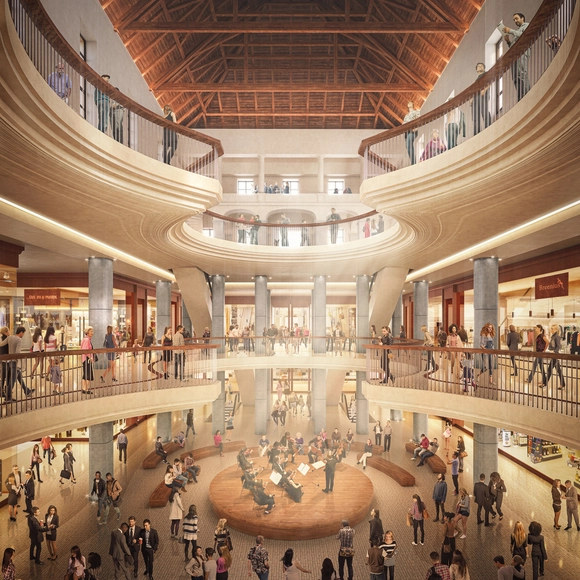
The London based Heatherwick Studio, have unveiled plans to design their first venture in the Czech Republic, in historic Prague. The project consists of regenerating an important site and create a mix of retail, office and public spaces.

The 3rd International Placemaking Week is an intimate, four-day-long global gathering of public space practitioners, researchers, and advocates that combines hands-on learning, public space activations, and innovative social events. Sign up before the regular registration rate ends on August 30!
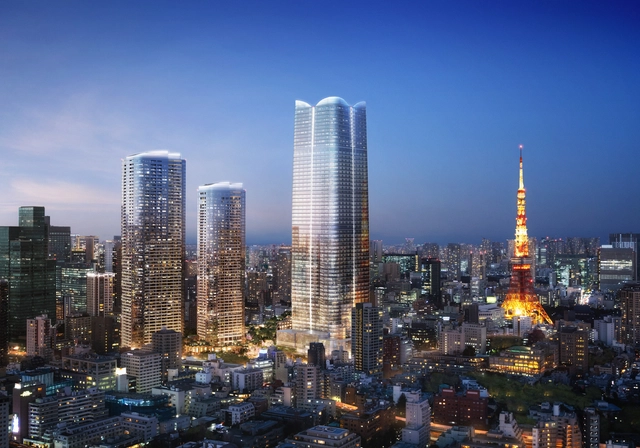
Pelli Clarke Pelli Architects generate for the first time in Japan, a high rise complex that holds the tallest building in the country, at the height of 330 meters. The U.S firm designed 3 towers for the district of Toranomon-Azabudai in Tokyo, part of a whole urban regeneration scheme for the central area of the capital.

reSITE’s game-changing event brings together a global community of 50 thought leaders, architects, urbanists, and the most innovative minds to share state-of-the-art trends in sustainable architecture as well as urban planning and living. REGENERATE is a call to action offering solutions to the pressing questions arising from climate change, redevelopment, and young generation’s demands and changing values.
.jpg?1540405202&format=webp&width=640&height=580)
The story of the Hastings Pier is an improbable one. Located in Hastings - a stone's throw away from the battlefield that defined English history - the pier was first opened to the promenading public in 1872. For decades the structure, an exuberant array of Victorian-era decoration, entertained seaside crowds but by the new millennium had fallen out of disrepair. In 2008 the pier was closed - a closure that became seemingly irreversible when, two years later, it burnt down.
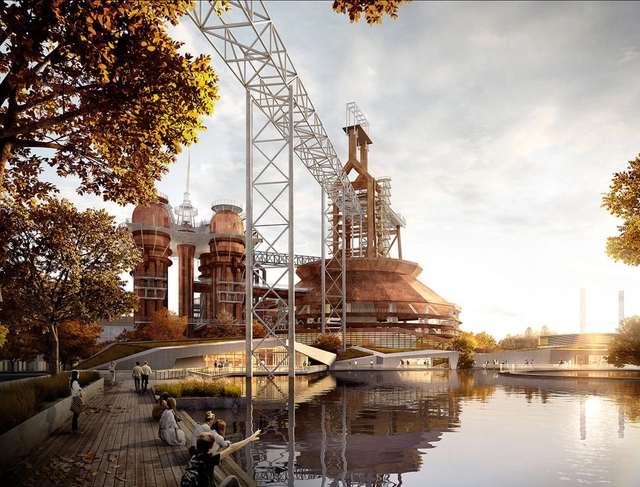
Across the world, developed cities are rebelling against heavy industry. While some reasons vary depending on local circumstances, a common global drive towards clean energy, and the shifting of developed economies towards financial services, automation, and the gig economy, is leaving a common trace within urban centers. From Beijing to Detroit, vast wastelands of steel and concrete will stand as empty relics to the age of steel and coal.
The question of what to do with these wastelands, with defunct furnaces, railways, chimneys, and lakes, may be one of the major urban questions facing generations of architects to come. What can be done when the impracticality of industrial complexes, and the precious land they needlessly occupy, collides with the embodied energy, memories, and histories which few would wish to lose?
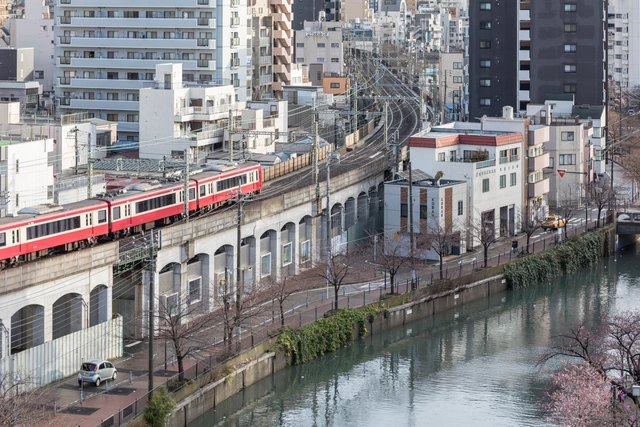
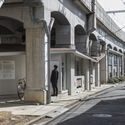
A +100 meter stretch of land beneath a train overpass in Koganecho, a district of Yokohama, Japan, underwent a progressive refurbishment in which seven different types of community space, each designed by a different architect, were built within a pre-set spatial grid. Historically there were many social issues in the area, largely in relation to its profitable but dangerous black market and red-light district. Once the illegal activity was eradicated in 2005, the underpass presented a great opportunity for social re-development, and the resultant project - the Koganecho Centre - emphasized an age-old Japanese cultural commitment, where what was once broken is used to make something new.


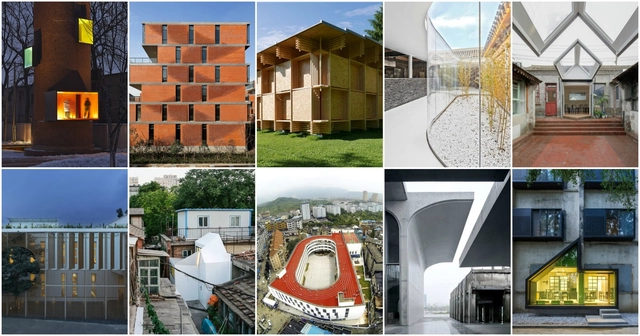
2016 has been a momentous year for Chinese architecture. From the completion of the Harbin Opera house by MAD to the Aga Khan Awards recognizing Zhang Ke of Standard Architecture for his micro-scale design of the Hutong Children’s Library and Art Centre in Beijing. It seems the general perception of Chinese architecture has finally moved beyond the big, weird and ugly.
Since we’ve started to branch out into China, the ArchDaily China team has been able to discover the rich layers beyond just these rising Chinese stars. As part of the country's large-scale urbanization process, last year, we posted some of the large-scale projects designed by China’s (largely unknown) Design & Research institutions such as train stations and cultural centers.
In addition, we’ve also come across a series of smaller, lesser known, younger practices that focuses more on small-scale experimental work. Here are our top ten favorites:

Following on from the success of ‘Cambodia 2015’ (awarded 3rd Top Competition of 2015 by Bustler), Eleven is excited to announce their latest architecture and idea challenge: ‘San Francisco 2016 - Tenderloin System Update’.
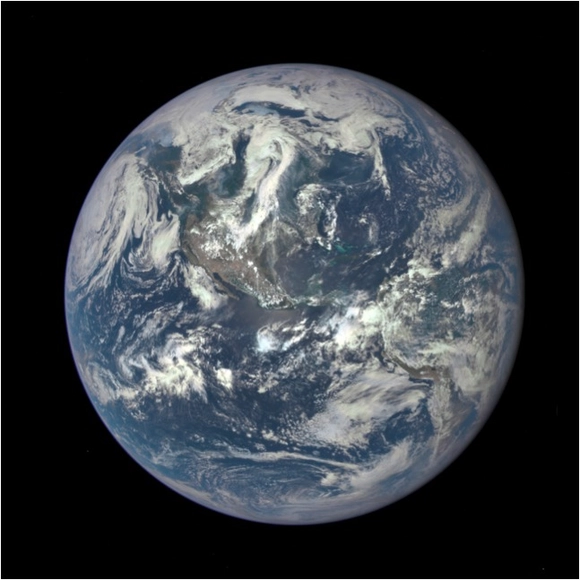
What do outer space capsules, submarines, and office buildings have in common? Each was conceived as a closed system: a self-sustaining physical environment demarcated from its surroundings by a boundary that does not allow for the transfer of matter or energy.
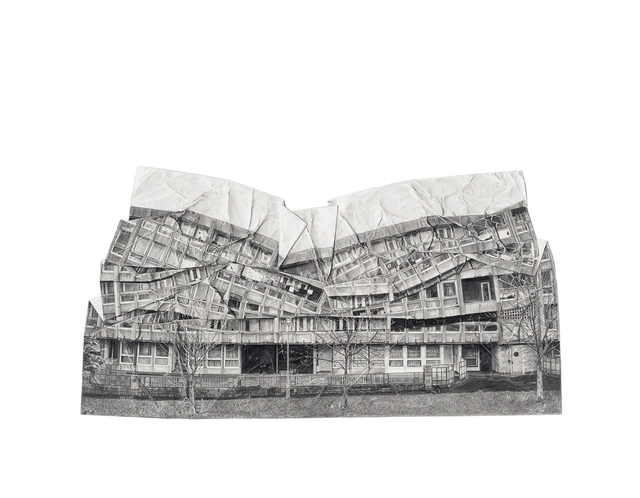
RIBA Bookshop presents the book launch of 'REGENERATION! Conversations, Drawings, Archives & Photographs from Robin Hood Gardens' by Jessie Brennan.

Adjaye Associates has announced plans to transform a 17-floor post-modernist structure in Johannesburg’s central business district into a luxury mixed-use building that will be known as the “Hallmark House.” Scheduled for completion mid-2016, the project aims to “combine an African aesthetic with a contemporary vision” and form a new typology for urban living.
“The transformation of Hallmark House is an opportunity to apply fresh thinking to urban community and to address changing lifestyles with a more fluid approach to the way we inhabit cities,” says David Adjaye.


.jpg?1540405410 "Hastings Pier / dRMM. Image © Laurian Ghinitiou")
.jpg?1540404858 "Hastings Pier / dRMM. Image © Laurian Ghinitiou")
.jpg?1540405254 "Hastings Pier / dRMM. Image © Laurian Ghinitiou")
.jpg?1540583713 "Hastings Pier / dRMM. Image © Laurian Ghinitiou")
.jpg?1540405202)