1. ArchDaily
  2. New York City

New York City: The Latest Architecture and News

New York City Legislation Effectively Bans Airbnbs and Short-Term Apartment Rentals

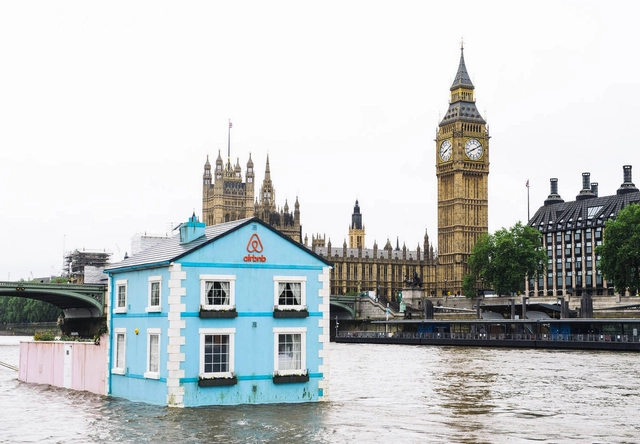
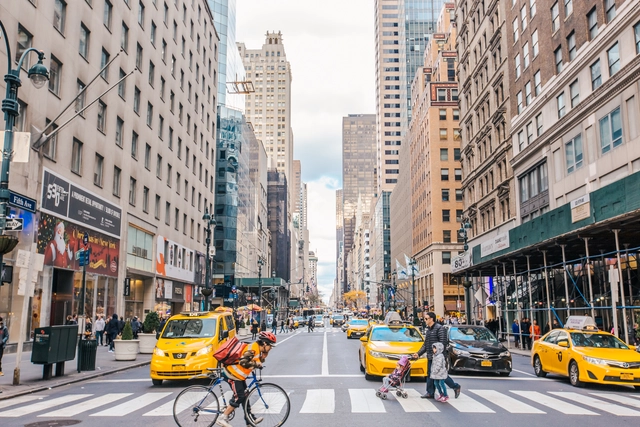
New York City’s Local Law 18, also known as the Short-Term Rental Registration Law, came into effect on September 5, changing the way in which short-term apartment rentals operate in the city. The new local legislation dictated that from now on, short-term rental hosts in the city must register with the Office of Special Enforcement (OSE) to obtain a license, and rentals are only allowed if the host lives in the place and is present for the duration of the guest’s stay. The number of guests is also limited to just two, and the duration is limited to 30 days. The legislation is not an explicit ban on platforms such as Airbnb, but the strict regulations make it almost impossible for the service to continue its activity.


New York City Legislation Effectively Bans Airbnbs and Short-Term Apartment Rentals - Image 1 of 4New York City Legislation Effectively Bans Airbnbs and Short-Term Apartment Rentals - Image 2 of 4New York City Legislation Effectively Bans Airbnbs and Short-Term Apartment Rentals - Image 3 of 4New York City Legislation Effectively Bans Airbnbs and Short-Term Apartment Rentals - Image 4 of 4New York City Legislation Effectively Bans Airbnbs and Short-Term Apartment Rentals - More Images+ 1

Top-Down and Bottom-Up Urban Planning: A Synergetic Approach

Subscriber Access | 

From the grid plans of ancient Greek cities to the Renaissance's idealized urban layouts, the history of urban planning is a reflection of evolving power structures and societal priorities. Across the world, many African and Asian cities simultaneously existed without clear visual manifestation. the organizational structure being deeply embedded in cultural needs and social relations. Urban development is marked by a dichotomy - the contrast between top-down planning strategies led by influential entities and governing bodies, and the bottom-up initiatives driven by local communities. This interplay shapes cities, influencing aspects from infrastructure and public spaces to housing models and urban character. Delving into the differences between these strategies is essential to crafting a harmonious urban landscape that caters to the needs of its residents.

Top-Down and Bottom-Up Urban Planning: A Synergetic Approach - Imagen 1 de 4Top-Down and Bottom-Up Urban Planning: A Synergetic Approach - Imagen 2 de 4Top-Down and Bottom-Up Urban Planning: A Synergetic Approach - Imagen 3 de 4Top-Down and Bottom-Up Urban Planning: A Synergetic Approach - Imagen 4 de 4Top-Down and Bottom-Up Urban Planning: A Synergetic Approach - More Images+ 1

SOM Reveals Design for a Net-Zero Campus on Governors Island, New York City

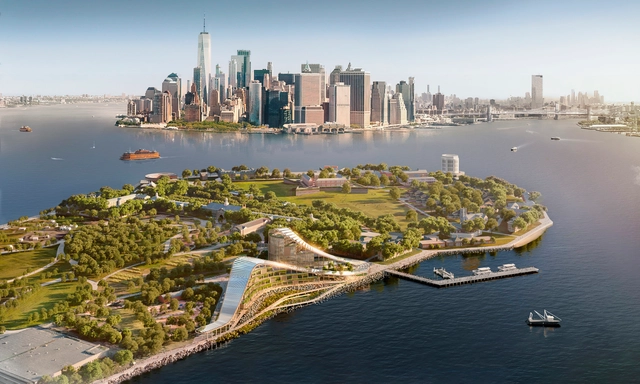
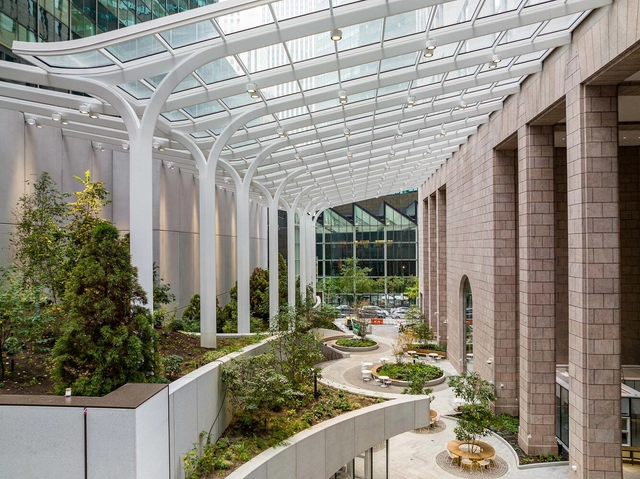
Skidmore, Owings & Merrill have been selected to design the New York Climate Exchange in partnership with Stony Brook University, a public research institute in New York. The new net-zero campus, located on Governors Island, New York, is planned to serve as an anchor institution for the development of new climate solutions. As a first-of-its-kind international center, “The Exchange” will also act as a regional hub for the green economy.

“We Are Just Beginning to Explore the Possibilities of Shaping Space”: In Conversation With David Hotson

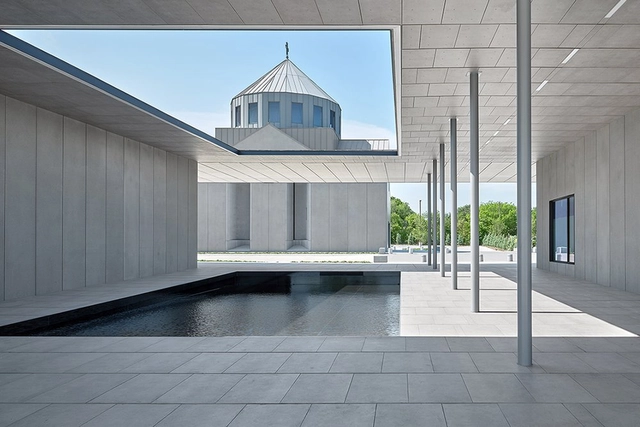
David Hotson (b. 1959) founded his New York City-based practice David Hotson Architect in 1991. His projects – houses, loft residences, penthouse apartments, and galleries – are known for their remarkable spatial and visual complexity. His Church of Saint Sarkis in Carrollton, Texas is especially distinguished for the luminous and sculptural qualities of its interior space as well as the exterior grade high-resolution digital printing on its west façade. Earlier this year this appealing work won the US Building of the Year award by World-Architects.com. Hotson obtained his Bachelor of Environmental Design from the University of Waterloo in Ontario, Canada, and earned his Master of Architecture in 1987 at Yale.

In the following interview with David Hotson, we discussed the architect’s design process, focusing on making concave spatial voids legible and primary, being inspired by Byzantine architecture and his favorite building ever built, what structure he considers the most important work of contemporary architecture, what makes his award-winning Church of Saint Sarkis special, and the use of space and light as the essential tools in creating architecture as a figural void and ultimately an art form.

“We Are Just Beginning to Explore the Possibilities of Shaping Space”: In Conversation With David Hotson - Image 1 of 4“We Are Just Beginning to Explore the Possibilities of Shaping Space”: In Conversation With David Hotson - Image 2 of 4“We Are Just Beginning to Explore the Possibilities of Shaping Space”: In Conversation With David Hotson - Image 3 of 4“We Are Just Beginning to Explore the Possibilities of Shaping Space”: In Conversation With David Hotson - Image 4 of 4“We Are Just Beginning to Explore the Possibilities of Shaping Space”: In Conversation With David Hotson - More Images+ 13

Anish Kapoor Unveils His First Permanent Public Artwork in New York City

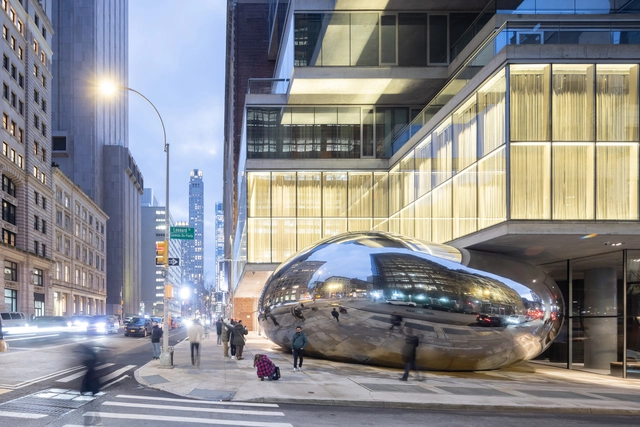
On January 31st, construction scaffolding and barriers were disassembled from the site at 56 Leonard Street, revealing Anish Kapoor’s first permanent artwork in New York City. The 48-foot-long, 19-foot-tall, 40-ton sculpture is nestled partially beneath the Herzog & de Meuron-designed residential building in the Tribeca neighborhood in Lower Manhattan. The mirrored sculpture is reminiscent of Kapoor;’s work called Cloud Gate, also known as “The Bean,” in Chicago, US.
Anish Kapoor Unveils His First Permanent Public Artwork in New York City - Image 1 of 4Anish Kapoor Unveils His First Permanent Public Artwork in New York City - Image 2 of 4Anish Kapoor Unveils His First Permanent Public Artwork in New York City - Image 3 of 4Anish Kapoor Unveils His First Permanent Public Artwork in New York City - Image 4 of 4Anish Kapoor Unveils His First Permanent Public Artwork in New York City - More Images+ 11

Regulations on Airbnbs Could Be Coming to A City Near You

Subscriber Access | 

Airbnb has long been a reliable way to find a homestay. Since its inception in 2008, the site has hosted more than 7 million homes around the world where travelers can stay in a room, or rent an entire house out for themselves. Recently, many cities have been cracking down on short-term stays, citing safety issues, false listings, and rising property prices which push people out of their homes when housing becomes used just for Airbnb rentals. What are cities doing about these issues? What is Airbnb doing to help remediate them? And will Airbnb be viable for much longer?

Zaha Hadid Architects and Office for Visual Interaction: an Interview about Architecture, Light and a Longstanding Collaboration

Subscriber Access | 

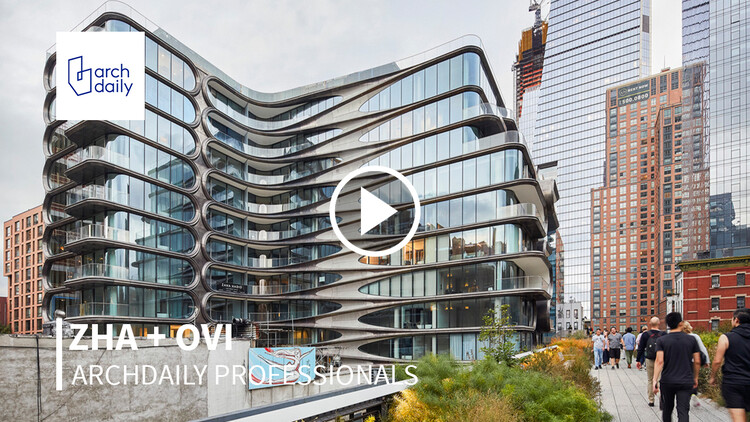
With more than 900 projects in over 40 countries, every project that Zaha Hadid Architects designs and builds has an impact on the narrative of contemporary architecture. At ArchDaily, we know that each architectural project has a team of professionals behind it which makes it possible. In this edition of the ArchDaily Professionals Video Interviews, we talked to Johannes Schafelner, associate director at Zaha Hadid Architects, and Enrique Peiniger, founder of OVI-Office for Visual Interaction about their long-standing collaboration in projects merging design and lighting.

Zaha Hadid Architects and Office for Visual Interaction: an Interview about Architecture, Light and a Longstanding Collaboration - Imagem 1 de 4Zaha Hadid Architects and Office for Visual Interaction: an Interview about Architecture, Light and a Longstanding Collaboration - Imagem 2 de 4Zaha Hadid Architects and Office for Visual Interaction: an Interview about Architecture, Light and a Longstanding Collaboration - Imagem 3 de 4Zaha Hadid Architects and Office for Visual Interaction: an Interview about Architecture, Light and a Longstanding Collaboration - Imagem 4 de 4Zaha Hadid Architects and Office for Visual Interaction: an Interview about Architecture, Light and a Longstanding Collaboration - More Images+ 1

10 Historic Hidden Architecture Gems to Visit in New York City

Subscriber Access | 

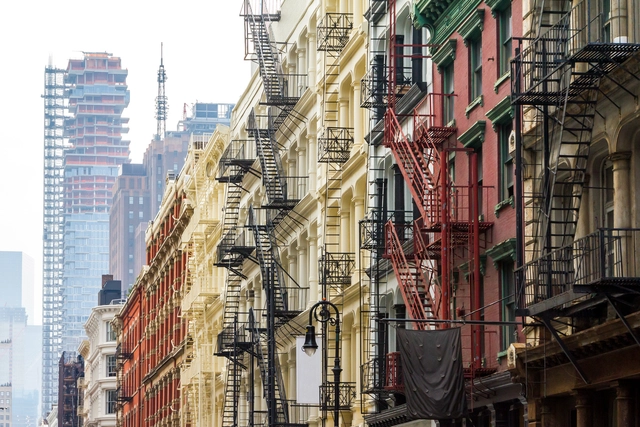
New York City is one of the most exciting places in the world. As an epicenter for the arts, media, and culture, New York has a rich history and a promising future, told mainly through its architecture. Perhaps more known for iconic buildings like the Empire State Building and the Chrysler Building, or even mega-tall residential towers like 432 Park Avenue that have been on the rise, New York also has an abundance of buildings that tell a different story about the history of the Big Apple.

10 Historic Hidden Architecture Gems to Visit in New York City  - Image 1 of 410 Historic Hidden Architecture Gems to Visit in New York City  - Image 2 of 410 Historic Hidden Architecture Gems to Visit in New York City  - Image 3 of 410 Historic Hidden Architecture Gems to Visit in New York City  - Image 4 of 410 Historic Hidden Architecture Gems to Visit in New York City  - More Images+ 9

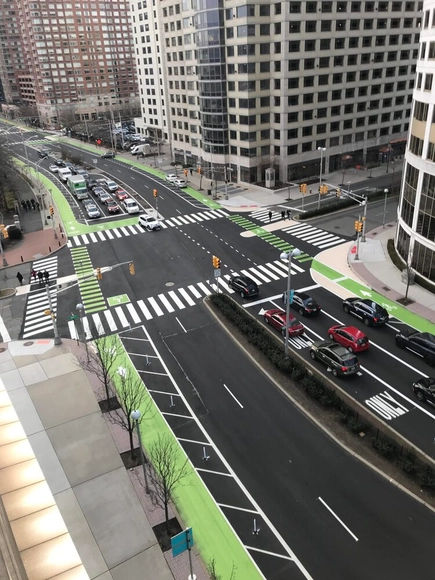
How Tactical Urbanism Helped Conquer the Streets of Jersey City

This article was originally published on Common Edge.

Covid has been particularly hard on cities: downtown business districts are still struggling due to the shift to remote work; some cities have seen population declines; and crime has spiked virtually everywhere. In addition, the pandemic pushed more people into cars, setting back the safe streets movement. After years of progress, cities like New York City saw big increases in pedestrian deaths. This is a nationwide problem—with one notable exception: Jersey City recently announced that no one died on its city streets in 2022, meeting its Vision Zero plan for the city. The milestone was the result of years of work by the city and its collaborator, Street Plans, a planning firm founded by Mike Lydon and Anthony Garcia. Lydon, a DPZ alum and co-author of the 2015 book Tactical Urbanism (currently being updated), began working with Jersey City on a whole raft of initiatives six years ago. I spoke with Lydon last week and asked him, specifically, how the city and he did it.

New York State of Wind: Future Looks Breezy for Offshore Empire

This article was originally published on Common Edge.

While approaching Wainscott Beach on Long Island’s South Fork in early December, one could see the most tangible aspect of offshore wind’s New York progress even before hearing the crash of waves: three pillars, each about as tall as the Statue of Liberty, jutting up from the ocean. They were the legs of the Jill, a liftboat from the Gulf of Mexico stationed about a third of a mile off the coast of Long Island’s South Fork.

A City's Trash is Not It's Treasure: How is New York Tackling its Garbage Issues?

Subscriber Access | 

The scene is almost identical, no matter which borough of New York City you’re in. Narrow sidewalks are lined by mountains of trash bags and other large objects, waiting for their turn to be taken away by the fleet of sanitary workers and trucks who will dispose of them. Large rodents seek shelter in their temporary plastic homes, feeding on discarded scraps, becoming a regular sighting for New York City residents. The City That Never Sleeps has a bigger problem than the flashing lights and noisy streets- it’s all of the trash that’s left to sit out on the sidewalks.

A City's Trash is Not It's Treasure: How is New York Tackling its Garbage Issues? - Image 1 of 4A City's Trash is Not It's Treasure: How is New York Tackling its Garbage Issues? - Image 2 of 4A City's Trash is Not It's Treasure: How is New York Tackling its Garbage Issues? - Image 3 of 4A City's Trash is Not It's Treasure: How is New York Tackling its Garbage Issues? - Image 4 of 4A City's Trash is Not It's Treasure: How is New York Tackling its Garbage Issues? - More Images

Snøhetta Announces Design for Library in The Bronx, USA

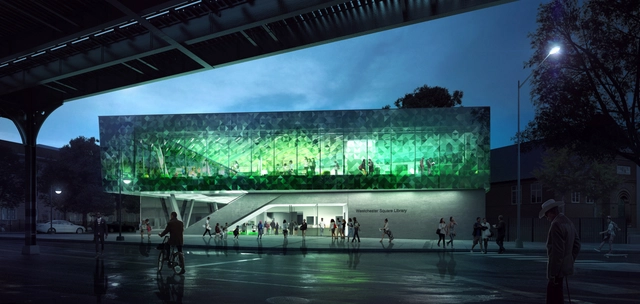
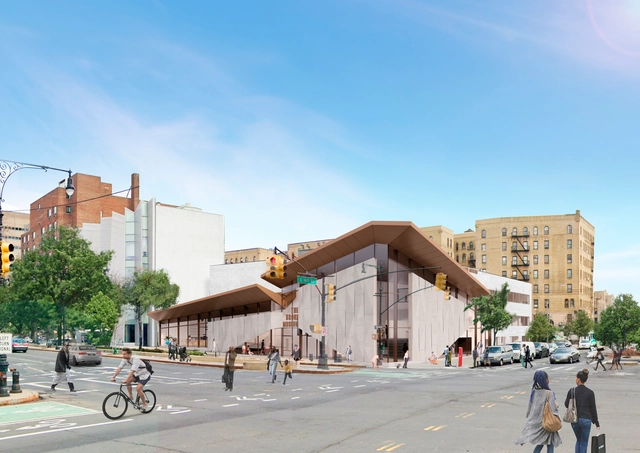
Snøhetta, the New York City Department of Design and Construction (DDC), and the New York Public Library (NYPL) unveiled designs for a new 12,000-square-foot branch library in the Westchester Square neighborhood of The Bronx, NYC. Inspired by the surrounding greenery, the energy-efficient building will be wrapped in pastoral print fritted glass, defining the new structure as an important economic and educational node within the neighborhood. Construction on the new Library is anticipated to start during mid-to-late 2023.

Form Follows Fun: The New Paradigm

Subscriber Access | 

If street culture is the glue that holds together an urban environment, what happens when its denizens no longer need to go outside? This is one of the fundamental questions faced by architects today, decades after the New Urbanist movement first popularized, or rather brought back, the concept of mixed-use streetscapes—and more than sixty years since Jane Jacobs famously championed walkable streets as essential to building vibrant urban communities.

Long gone, of course, are the days when city streets were our only outlet or option for access to retail and other services. Now, the internet gives us all that and more: remote shopping, banking, education, and even healthcare. Meanwhile, social media has transformed the way we communicate with friends and neighbors. All of which is to say: we no longer need to go out for social interaction or to procure services, we choose to.

Form Follows Fun: The New Paradigm - Image 1 of 4Form Follows Fun: The New Paradigm - Image 2 of 4Form Follows Fun: The New Paradigm - Image 3 of 4Form Follows Fun: The New Paradigm - Image 4 of 4Form Follows Fun: The New Paradigm - More Images+ 4

ODA Designs Mixed-Use District to Revitalize the Astoria Neighborhood, in New York City

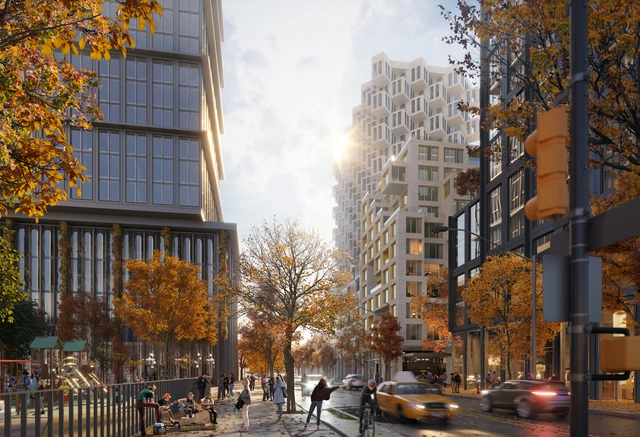
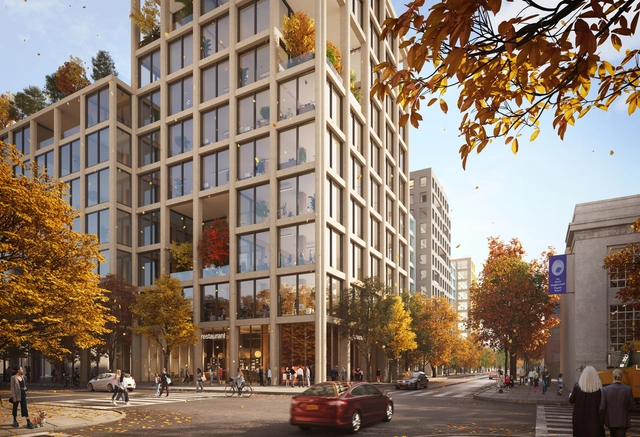
New York City Council has approved Innovation QNS, a neighborhood-focused initiative in Western Queens, designed by ODA. The five-block master plan generates two acres of open space, community health & wellness facilities, hundreds of affordable apartments, and thousands of jobs. The project was initiated in 2020 as part of New York's effort to recover from the impact of the COvid-19 pandemic, and it aimed to revitalize a largely dormant block area in Astoria, Queens, and transform it into a vibrant, walkable, and diverse creative district.

ODA Designs Mixed-Use District to Revitalize the Astoria Neighborhood, in New York City - Image 1 of 4ODA Designs Mixed-Use District to Revitalize the Astoria Neighborhood, in New York City - Image 2 of 4ODA Designs Mixed-Use District to Revitalize the Astoria Neighborhood, in New York City - Image 3 of 4ODA Designs Mixed-Use District to Revitalize the Astoria Neighborhood, in New York City - Image 4 of 4ODA Designs Mixed-Use District to Revitalize the Astoria Neighborhood, in New York City - More Images+ 14

When the American Dream Became the Urban Planning Nightmare

Subscriber Access | 

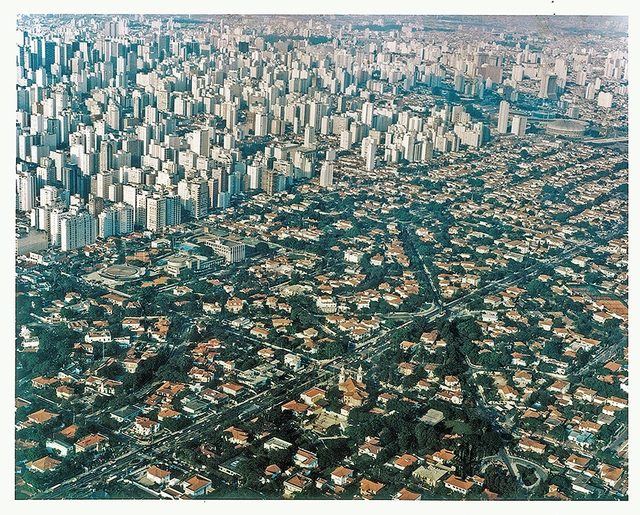
For nearly a century, the areas of urban sprawl where every single-family home has its own yard, garage, and white picket fence represented the peak of life aspiration. Homeownership and the idea of claiming space away from the hustle and bustle of the city core was once considered the ideal lifestyle and the pinnacle of the American Dream. But as time went on, and socio-economic conditions shifted, cities that were once filled with these single-family homes realized that perhaps these zoning regulations were outdated, and new solutions needed to be created to prevent the current housing crisis from growing even more out of control.

Cultivating “A Certain Warmth” Inside 550 Madison, One of Manhattan’s Quirkiest Towers

Subscriber Access | 

550 Madison Avenue (née the AT&T Building, more recently Sony Plaza) is among the more recognizable figures on New York’s skyline. Designed by architect-provocateur Philip Johnson, the 37-story skyscraper stands out thanks to its curious headgear: a classical pediment broken by a circular notch, inviting frequent comparisons to the top of a Chippendale grandfather clock. A singular, if largely inoffensive presence on today’s icon-heavy streetscape, the design was positively shocking on its debut in 1979, when Johnson himself appeared on the cover of Time holding a model of the project, then still four years from completion. The image heralded the arrival of something new in American architecture: the fading of the flat-crowned Modernist towers of the midcentury and the onset of the Postmodernist wave.

Cultivating “A Certain Warmth” Inside 550 Madison, One of Manhattan’s Quirkiest Towers - 1 的图像 4Cultivating “A Certain Warmth” Inside 550 Madison, One of Manhattan’s Quirkiest Towers - 2 的图像 4Cultivating “A Certain Warmth” Inside 550 Madison, One of Manhattan’s Quirkiest Towers - 3 的图像 4Cultivating “A Certain Warmth” Inside 550 Madison, One of Manhattan’s Quirkiest Towers - 4 的图像 4Cultivating “A Certain Warmth” Inside 550 Madison, One of Manhattan’s Quirkiest Towers - More Images+ 2

Marvel Architects Reveals Design for The Bronx Museum of Art's Renovation

New York-based firm Marvel revealed schematic designs for The Bronx Museum's new multi-story entrance and lobby, as part of the museum's revamp for its 50th anniversary. With a budget of USD $26 million and slated for completion in 2025, the renovation will relocate the access on the Grand Concourse Street, one of the most iconic The Bronx boulevards, and focus on the cohesion of the multiple sections for a fully accessible route through all of the galleries. Coinciding with this announcement, the Museum reinvented its brand identity and website for the first time in over two decades to reflect its ethos as a vital space at the intersection of art and social justice in New York City.

Place Branding: Reviving Cities through Brand Strategy

Subscriber Access | 

The 1970’s were a dark time for New York City. While the economy was down, crime rates were at an all-time high. The negative public image also kept tourists away, driving the city into a financial crisis. To change perceptions about The Big Apple, the New York State Department for Economic Development approached advertising firm Wells Rich Greene to create an inviting marketing operation. After 45 years, the resulting I Love NY campaign remains fresh in the minds of locals and tourists, successfully revamping New York City’s brand. Cities across the world like Paris, Amsterdam and Jerusalem have similarly invested heavily in constructing magnetic brands for themselves.

Place Branding: Reviving Cities through Brand Strategy  - Image 1 of 4Place Branding: Reviving Cities through Brand Strategy  - Image 2 of 4Place Branding: Reviving Cities through Brand Strategy  - Image 3 of 4Place Branding: Reviving Cities through Brand Strategy  - Image 4 of 4Place Branding: Reviving Cities through Brand Strategy  - More Images+ 1