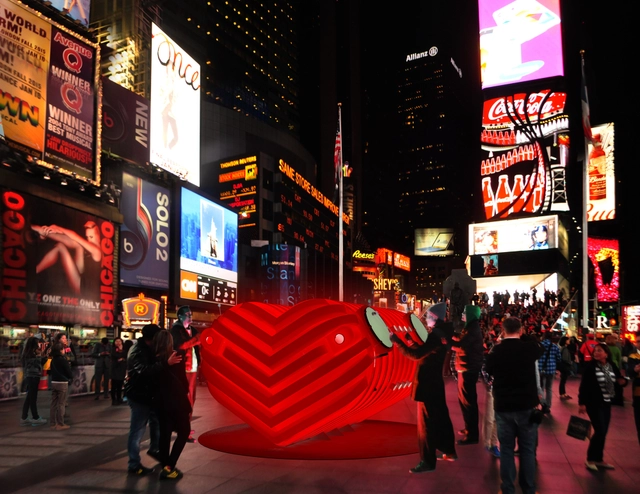
Come February 9, New York City will be celebrating the opening of its seventh annual Valentine’s Day installation in Times Square. As part of Times Square Alliance’s heart design competition, Brooklyn- based and Venezuelan-born firm Stereotank will be constructing a heart-beating urban drum in hopes that it will bring together New Yorkers through music.
This year there was a cultural shift that saw landscape architecture and its practitioners achieve an unprecedented level of visibility and influence.
This year the single most notable development came courtesy of the New York Times architecture critic Michael Kimmelman who wrote: "Great public places and works of landscape architecture deserve to be treated like great buildings."
Landscape architecture and architecture on equal footing. Let that sink in.
https://www.archdaily.com/577280/2014-a-great-year-for-landscape-architectureCharles A Birnbaum
American Museum of Natural History. Image Courtesy of Wikipedia
Chicago’s Studio Gang Architects have been selected to design a new Center for Science, Education and Innovation for the American Museum of Natural History in New York. Named after its largest donor, the $325 million Gilder Center will include 218,000-square-feet of existing and new space. It is slated to open on Columbus Avenue at 79th Street on the west side of the Museum campus, in conjunction with its 150th anniversary in 2019–2020.
SHoP Architects have revealed a mixed use proposal to pedestrianize New York City’s historic Seaport District. Extending the Manhattan grid out into the waterfront, the scheme seeks to harmonize pedestrian infrastructure and increase access to the shoreline, while proposing a 500-foot luxury residential tower by developer Howard Hughes Corporation that would jut out into the harbor. More about the proposal, after the break.
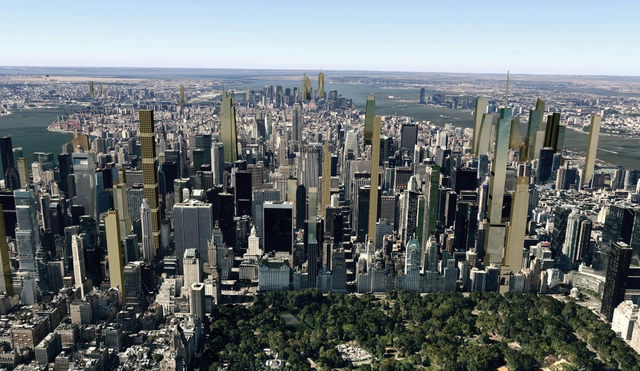
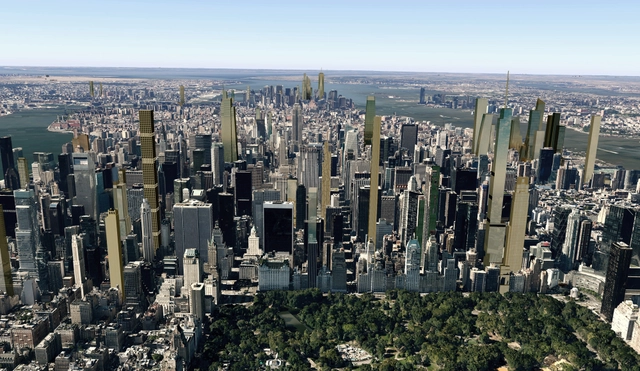
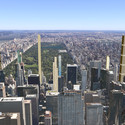
View above Central Park looking south towards “Billionaire's Row” towers, with Midtown towers in background and various Financial District and Downtown Brooklyn Towers in far background. Image Courtesy of CityRealty
What would a city owned by the one-percent look like?
New renderings for CityRealty get us part way there, illustrating how Manhattan may appear in 2018. The defining feature will be a bumper crop of especially tall, slender skyscrapers piercing the skyline like postmodern boxes, odd stalagmites, and upside-down syringes. What they share in common is sheer unadulterated scale and a core clientele of uncompromising plutocrats.
https://www.archdaily.com/577034/why-new-york-shouldn-t-be-a-city-for-the-one-percentJoshua K Leon
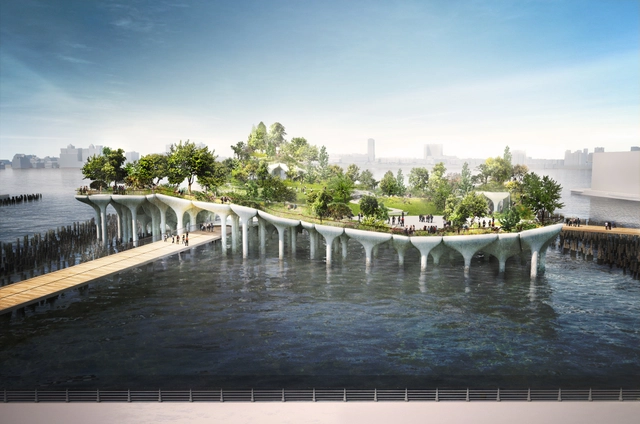
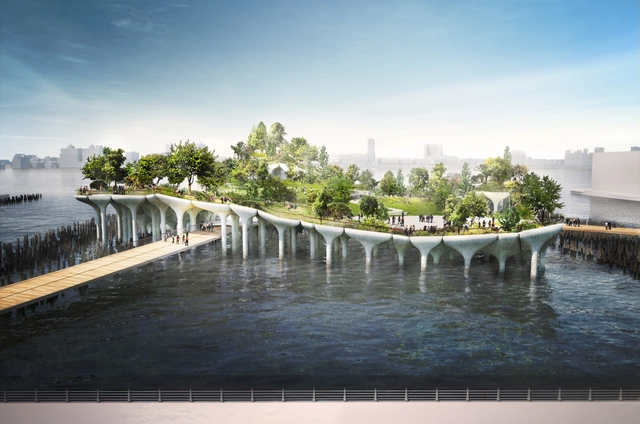
Last week, Thomas Heatherwick unveiled his fairytale-like designs for what will hopefully be New York's latest and most ambitious park, Pier 55 (with apologies to the High Line, New York's last "next big thing" in the public park arena). Envisaged as an undulating artificial landscape on a cloud of mushroom-like supports, Pier 55 has the internet buzzing. In this interview with FastCo Design, Heatherwick discusses the inspirations behind his latest project, explaining how everything including New York's street grid, the ruins of Pier 54 and yes, even the city's other recent global green space phenomenon, have manifested themselves in his latest madcap creation. Read the full article here for more.
View looking south above Central Park showing "Billionaires Row" towers visible in foregorund, midtown towers in background, and various Financial District and Downtown Brooklyn Towers in far background. Image Courtesy of CityRealty
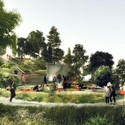
Billionaire Barry Diller, chairman of IAC/InterActiveCorp and former head of Paramount Pictures and Fox, has commissioned Thomas Heatherwick to design a $170 million “futuristic park” on Manhattan’s lower west side. Replacing the deteriorated Pier 54, the new “Pier55” will be a lush undulating landscape, raised atop 300 mushroom-shaped concrete columns placed 186 feet off of the Hudson River shoreline, that will host outdoor performances, act as a marine sanctuary for striped bass and guard the city against storms.
Heatherwick will be collaborating with landscape architect Mathews Nielson. Read on to learn more about the project.
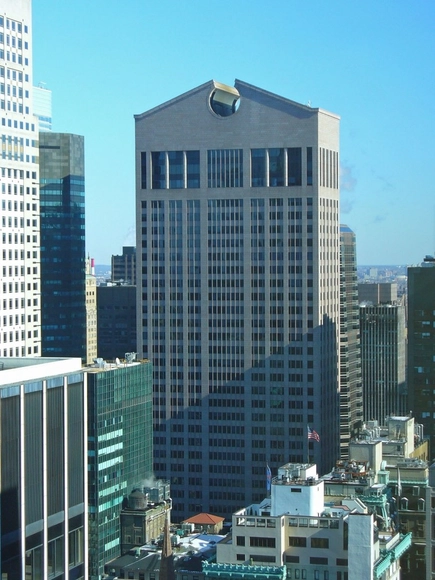
New York City is home to a plethora of Postmodernist designs — from the impressive Sony Tower to the diminuative Central Park Ballplayers' House — but most remain unprotected by traditional heritage registries. The New York City Landmarks Preservation Commission is at the threshold of its 50th anniversary but has yet to recognize the architectural successes of 1970 up to the most recent eligible year for landmarking, 1984. The commission has been unnecessarily slow to recognize Postmodernist structures in New York City, say Paul Makovsky and Michael Gotkin writing for Metropolis Magazine, who argue that the absence of historical recognition for Postmodernism has come at a high cost, citing the recladding of Takashimaya Building on Fifth Avenue as a "wake-up call" for the Commission.
Two years after the completion of Grimshaw and Dattner's acclaimed Via Verde ("Green Way"), no successors have even been proposed for this supposed model for the design and construction of new affordable housing. In this article, David Bench returns to the site, finding that the sustainable project's lack of impact is caused by a completely different type of "green."
Affordable housing is the quest of every New Yorker. The routes to finding it are mysterious and widely misunderstood, as they are made up of a myriad of buildings, programmes, and rules that have failed to keep pace with the production of luxury housing and gentrification of middle class neighbourhoods in the city. This apartment anxiety has led to such amusing and fateful reactions as the creation of the Rent is Too Damn High political party – whose name speaks for itself – and an economic narrative that propelled Bill de Blasio from a long-shot mayoral candidacy to an overwhelming majority on election day in 2013. Soon after taking office, de Blasio unveiled the most ambitious affordable housing program in generations, which aims to build or preserve 200,000 units in the next decade.
"Its an adventure, because it's a highly political, highly emotional, highly complicated process, to get something built on the site which is about memory," explains Daniel Libeskind. "It's a day that changed the world… and architecture responds in constructing something that has sense for people, that has spirit."
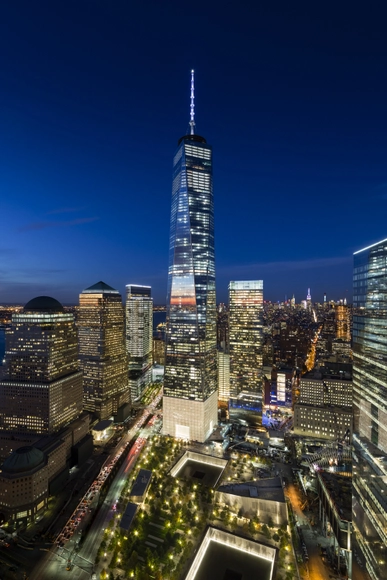
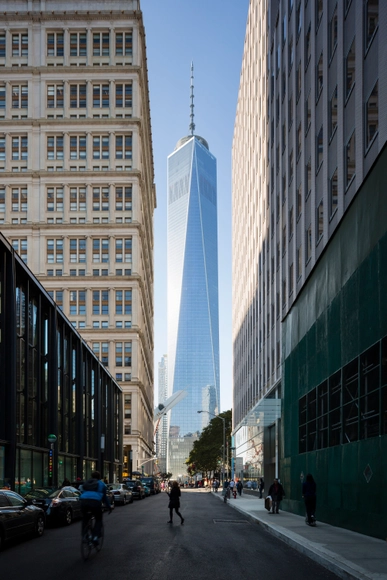
The first tenant has moved into the One World Trade Center, making Monday, November 3, the official opening of the (arguably) tallest building in the Western hemisphere 13 years after the tragedy of 9/11. The “extraordinary moment was passed in the most ordinary of ways,” described the New York Times, as employees of Conde Nast entered into the white marble lobby (taken from the same quarry that produced marble for the original twin towers) and headed straight to the elevators to start their work day.
To celebrate its completion, renowned architectural photographers Iwan Baan and James Ewing took it to the sky to capture the One World Trade Center in all its glory. The images, after the break.
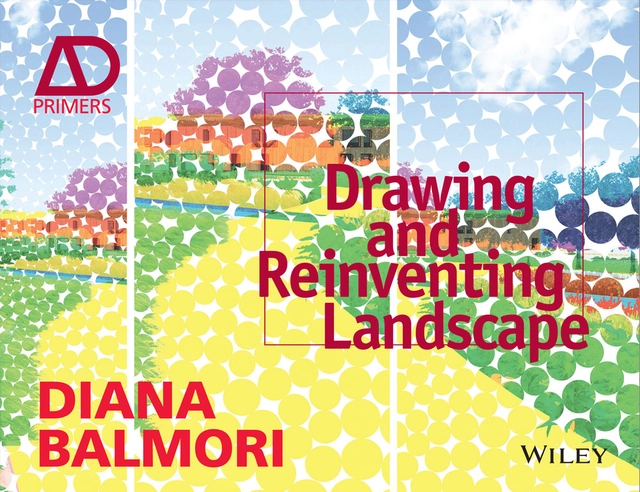
On Wednesday, November 5, Diana Balmori will visit the Strand to chat about Drawing and Reinventing Landscape with the MoMA's architecture curator, Barry Bergdoll. Diana's book examines digital, analog and hybrid methods of representing landscape and places the contemporary landscape architecture within its fascinating historical context. This exclusive Strand chat will investigate crucial aspects of the design process. Join as these two experts discuss this important design topic at a moment of increasing global environmental change. More information here.
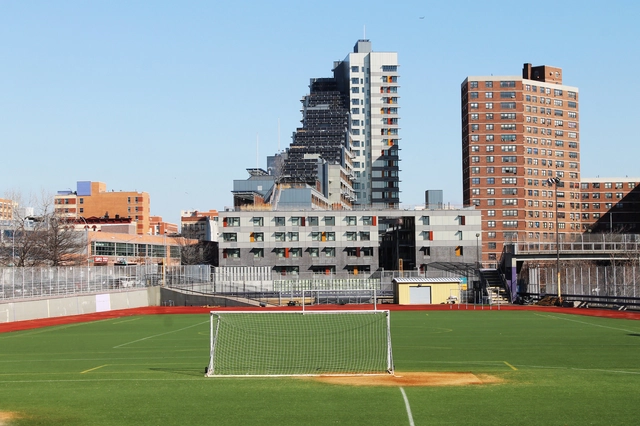
New Settlement Community Campus; NYC (2012) / Dattner Architects and Edelman Sultan Knox Wood
Judith Edelman, FAIA, an American architect and feminist who hoped to rid architecture of its “gentleman’s club” status, has passed away at 91. Starting her career in an era when hiring “girls” wasn’t the norm, Edelman’s work to elevate women in architecture has paved the way for many of today’s leading architects; She was the first woman ever elected to the executive committee of the AIA’s New York chapter and she helped co-found the Alliance of Women in Architecture in 1972. Edelman’s built work, also highly admired, ranged from affordable housing to schools and health clinics, mostly in the New York City area. You can read Edelman’s obituary here.
A little over a year ago, New York City-based graphic designer José Guizar started illustrating an obsession of his that had quickly grown since moving into the city: New York’s varied and eclectic windows. “A product of countless steps of journey through the city streets, this is a collection of windows that somehow have caught my restless eye out from the never-ending buzz of the city,” Guizar writes on his website. “This project is part an ode to architecture and part a self-challenge to never stop looking up.”
Ranging from Victorian and porthole windows to windows with security bars, planting boxes and the occasional cat, the windows are as varied as the cities and buildings they occupy.
Read on after the break for a journey through the windows of New York and São Paulo.












.jpg?1413546606 "Detail of the interior courtyard façade. Image © Field Condition")
