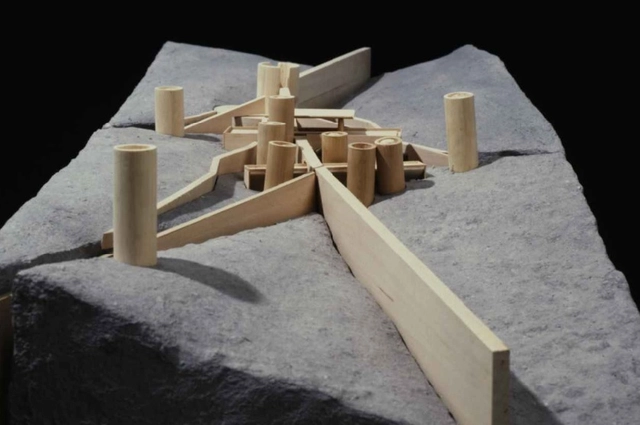
Minoru Yamasaki (December 1, 1912 – February 7, 1986) has the uncommon distinction of being most well known for how his buildings were destroyed. His twin towers at the World Trade Center in New York collapsed in the terrorist attacks of September 11th, 2001, and his Pruitt-Igoe complex in St. Louis, Missouri, demolished less than 20 years after its completion, came to symbolize the failure of public housing and urban renewal in the United States. But beyond those infamous cases, Yamasaki enjoyed a long and prolific career, and was considered one of the masters of “New Formalism,” infusing modern buildings with classical proportions and sumptuous materials.
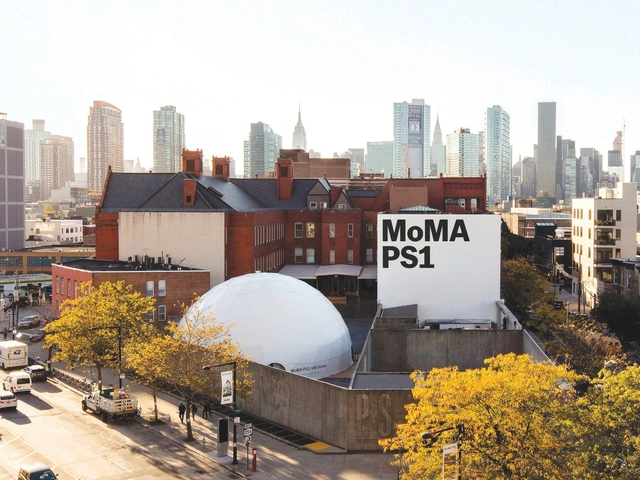
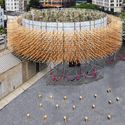
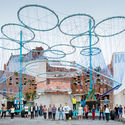
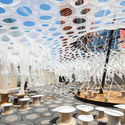
MoMA PS1 has announced that the Young Architects Program will be placed on a one-year hiatus. MoMA PS1, formerly P.S.1 Contemporary Art Center, is one of the oldest and largest nonprofit arts centers in the United States devoted to contemporary art. The Young Architects Program founded by MoMA and MoMA PS1 was made to offer emerging architectural talent the opportunity to design a temporary, outdoor installation in New York.
Courtesy of Sandra Donner, The Irwin S. Chanin School of Architecture
The Cooper Union’s Irwin S. Chanin School of Architecture has created a new digital archive of student work in a comprehensive online database. As one of the few online collections of a school of architecture's student work, the database represents over eight decades of work, dating from the 1930’s through the present.
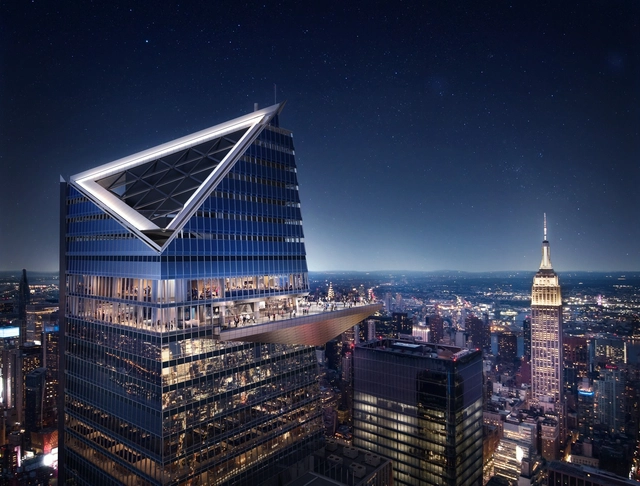
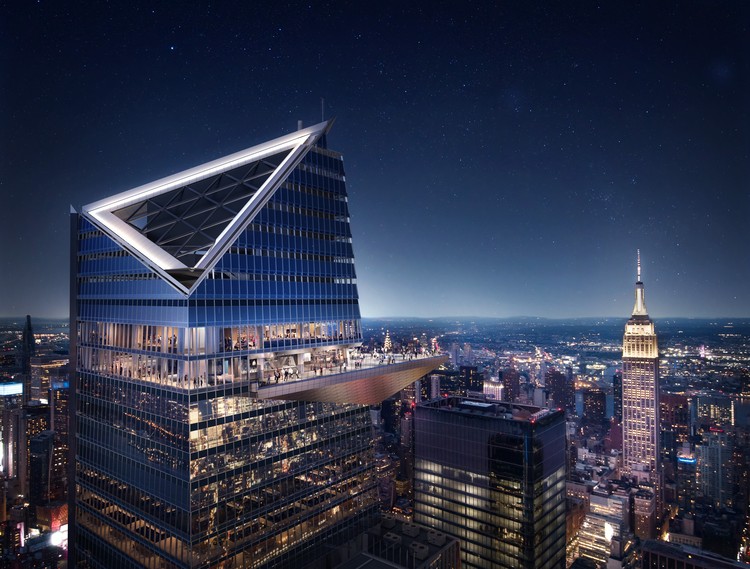
The highest outdoor observation deck in the western hemisphere is set to open in March of 2020 in New York City. Designed by Kohn Pedersen Fox (KPF), the Edge cantilevers 80 feet from the 100th floor of 30 Hudson Yards. At a record-setting height of 1,131 feet, Edge will reveal never-before-seen views of The City, Western New Jersey and New York State spanning up to 80 miles.
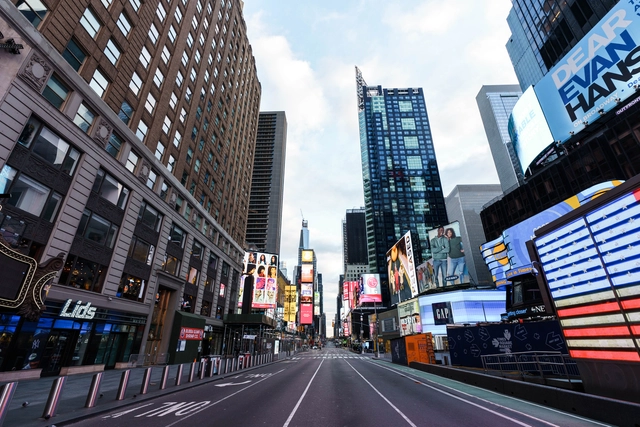
The Times Square Alliance has announced that Heart Squared by MODU and Eric Forman Studio is the winner of the 2020 Times Square Valentine Heart Competition. Curated by Cooper Hewitt, Smithsonian Design Museum, the competition celebrates its 12th anniversary creating proposals for a public art installation celebrating “Love in Times Square” during the month of February.
Artist Anish Kapoor will have his first permanent public work opening as part of 56 Leonard St. in New York. Located at the base of the residential tower by architects Herzog & de Meuron, the specially commissioned artwork is integrated into the architecture of the iconic New York tower. Marking the collaboration between artist and architect, the work aims to become a new cultural landmark in Tribeca.
The complete Museum of Modern Art expansion by Diller Scofidio + Renfro and Gensler is set to open in New York. The expansion adds more than 40,000 square feet of gallery spaces for exhibiting art. Launched in 2014, the first phase of renovations on the east end was completed in 2017, and the second phase of expansion on the west end is now complete and ready to open to the public.
The American Institute of Architects New York Chapter and the Center for Architecture have announced new and expanded programs for the ninth annual edition of Archtober, the official New York City Architecture and Design Month. The festival, now in its ninth year, brings together more than 80 partners throughout the city’s five boroughs to celebrate the importance of design and the built environment.
FXCollaborative has designed a church community space and 33 story tower overlooking Central Park in New York City. The project was made for Harlem’s La Hermosa Christian Church, though no developer has signed on for the project yet. The new project would serve the surrounding community and aims to embody and celebrate the neighborhood’s legacy of music and art.
A new film by Oscilloscope Laboratories and Stephen Wilkes explores photographer Jay Maisel’s move from his iconic six-story bank building he called home for 49 years. The landmark structure at 190 Bowery in the East Village of New York was locally known as The Bank, and considered by many New Yorkers to be abandoned. Wilkes tells the story of Maisel's move and documents the incredible structure that has housed a collection of countless objects for half a century.
American home services website Angie's List has released a series of commissioned images showcasing eight United States landmarks in cross-section. Dubbed Cutaway America, the project takes a new perspective on projects that people are used to seeing from the outside. From idealistic designs that attempt to become one with nature to complex infrastructure, these cutaways hint at a longer story of America and its history.
Studio Gang has broken ground on the American Museum of Natural History Expansion in New York. Called the Richard Gilder Center, the project held its groundbreaking ceremony on June 12 to kick off construction. Designed by Jeanne Gang, the $383 million Center was first proposed seven years ago. The project was made to link a range of museum buildings for better circulation throughout the campus.
The Studio Gang-designed 11 Hoyt has topped out in Brooklyn to its full height of 620 feet. Offering 481 luxury residential condominiums, with interiors by Michaelis Boyd Associates, 11 Hoyt features a scalloped façade comprised of exquisitely crafted, shimmering cast concrete and glass, animated by bays that appear to peel away from the building and change as sunlight moves across them throughout the day.
Archimatika has designed a modern high rise residential scheme for Manhattan. “The Snail” prioritizes slow living in the high-paced metropolis, providing residential amenities usually lacking in typical Manhattan housing. While proposing a departure from New York City’s fast-paced lifestyle, the scheme blends with the city’s urban fabric with mosaic concrete facades over a steel frame structure.
New York-based Jendretzki Design has created a proposal for an off-grid eco resort for New York’s Rat Island. Sited on the only isle off the city's Bronx borough that's privately owned, the project was made as prefab gabled cabins with large glass facades overlooking the ocean. Designed with zero-energy buildings, the site would run on solar and wind power with rainwater collection systems.