"Is a museum defined by its collection? Or by its architecture? In The Art Museum in Modern Times, Charles Saumarez Smith suggests it is both and still something more". Lauren McQuistion, an architectural designer and Ph.D. Candidate in the Constructed Environment at the University of Virginia School of Architecture discusses in her Architect's Newspaper piece, Saumarez's book, exploring the notion of a modern museum.
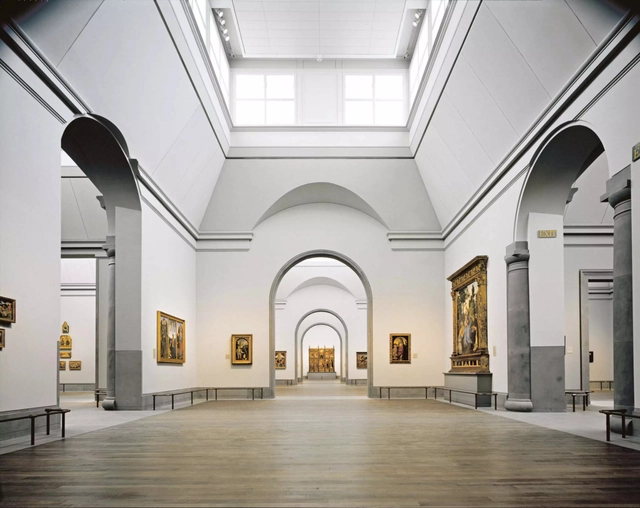
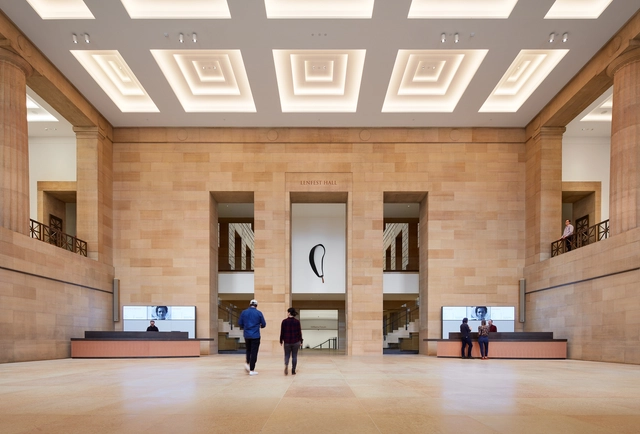
Philadelphia Museum of Art opened to the public earlier this month after completing an extensive four-year renovation and interior expansion project led by Frank Gehry. The intervention, dubbed the Core Project, focused on renewing the museum's infrastructure, creating galleries and public spaces while leaving the 1928 exterior untouched. The culmination of two decades of planning and design, the project led by the renowned architect creates a compelling vision for the future of the museum while honouring the landmark building.
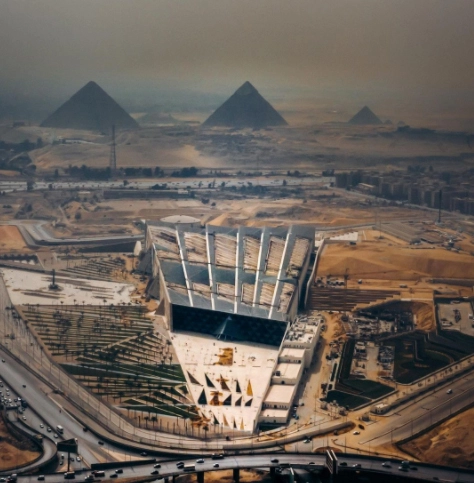
Designed by Irish architecture firm Heneghan Peng, the long-awaited Grand Egyptian Museum devoted entirely to Egyptology is set to open this summer, sitting on the edge of the Giza Plateau, 2 km away from the Pyramids. Considered as the largest museum in the world dedicated to one civilization, the cultural complex will accommodate about 100,000 ancient artifacts, and will include 24,000m² of permanent exhibition space, a children’s museum, conference facilities, educational areas, a conservation center, and extensive gardens inside and around the museum's plan.
Courtesy of Oyler Wu Collaborative and Ren Lai Architects
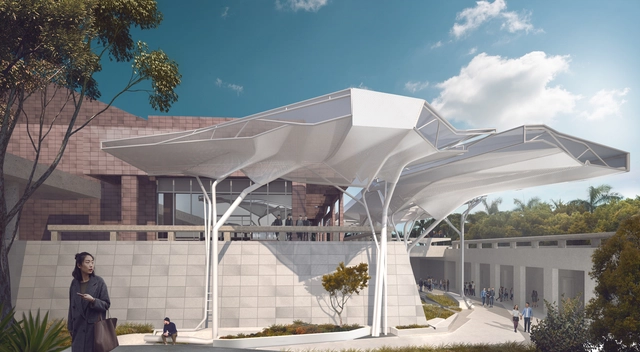
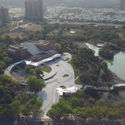
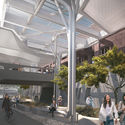
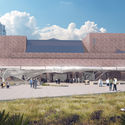
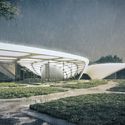
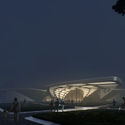
Oyler Wu Collaborative and Taiwanese partner Ren Lai Architects have won a competition to re-envision the Kaohsiung Museum of Fine Arts in Taiwan. Selected among finalists including Asif Khan with C.M.Chao Architects, Sou Fujimoto Architects with WSAA Design Team, and Liao Architects and Associates, the winning project proposes a newly renovated exterior that seeks to reconnect the building with its evolving context.
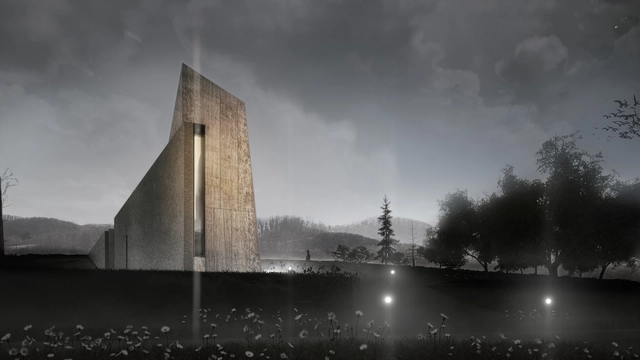
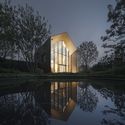
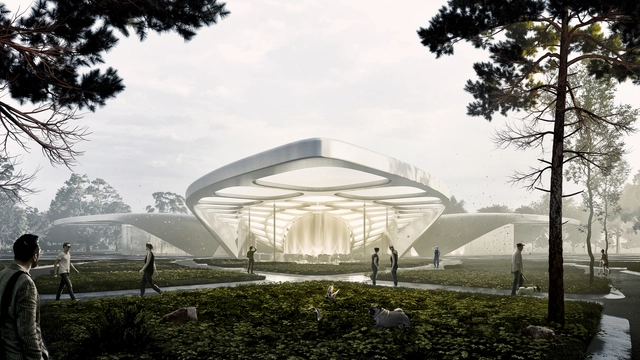
Zovik Chapel and Cemetery. Image Courtesy of Nenad Fabijanić
10 projects, 10 functions. Featuring a multitude of different programs, this week's curated selection of Best Unbuilt Architecture highlights diverse and innovative conceptual approaches. Submitted by our readers, this variety of proposals includes sports, religious, cultural, educational, and social purposes.
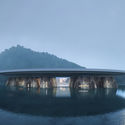
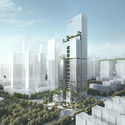
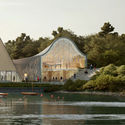
Compiling projects from all over the world, this article puts together a Buddhist temple in Bangkok, Thailand, a ring-shaped experience center and eco-tourism catalyst for Latvia, a cemetery in Bosnia and Herzegovina, and the biggest extreme sports park in Russia. Moreover, unconventional office spaces are underlined with an innovation start-up center in Vietnam, headquarters in Shenzhen, and Tirana's new municipality building.
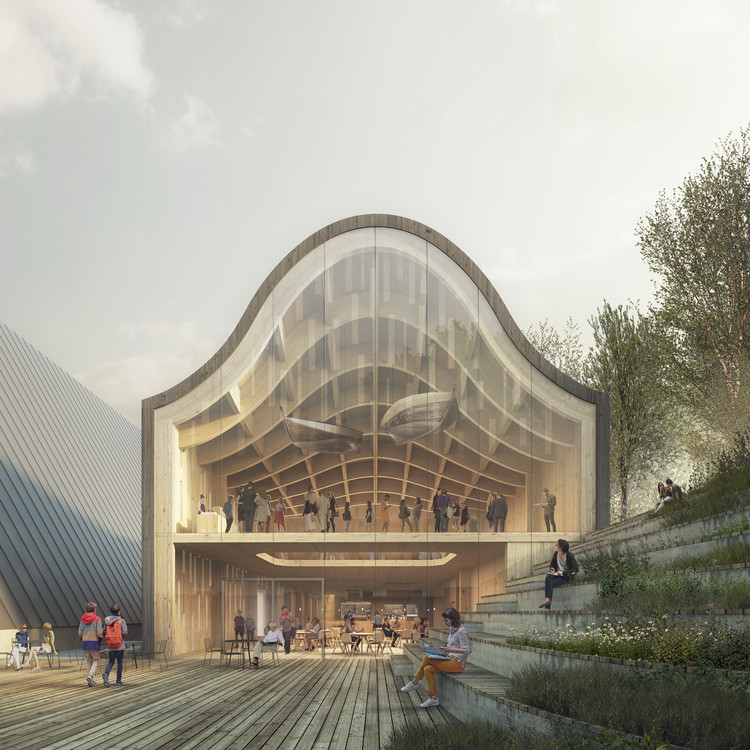
The FRAM Museum will take on a new extension dedicated to polar exploration and environmental education. Designed by Reiulf Ramstad Arkitekter, the winning proposal of the invited architectural competition,Framtid, or Future is centered on the idea that “architecture exemplifies how we care for our environment”.
This article is part of "Eastern Bloc Architecture: 50 Buildings that Defined an Era", a collaborative series by The Calvert Journal and ArchDaily highlighting iconic architecture that had shaped the Eastern world. Every week both publications will be releasing a listing rounding up five Eastern Bloc projects of certain typology. Read on for your weekly dose: Monumental Museums and Memorials.
Videos
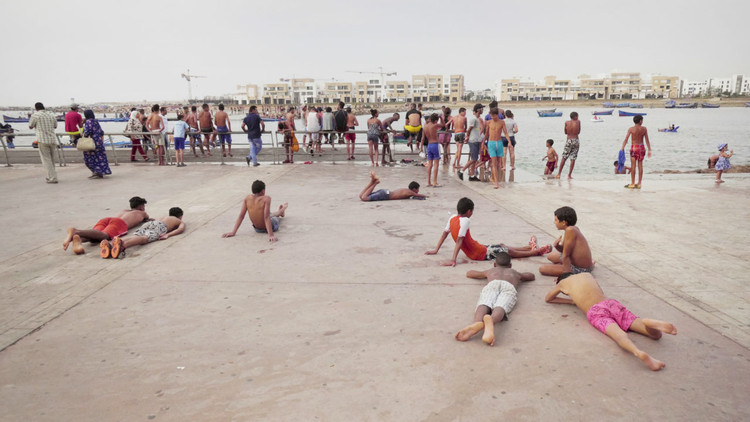
HOMO URBANUS Rabatius . Image Courtesy of Bêka & Lemoine
As the world is moving into a post-pandemic time, museums are finally resuming their work under strict social distancing and health measures. Arc en rêve d’Architecture in Bordeaux, France has reopened its main gallery with an exhibition by Ila Bêka & Louise Lemoine, entitled Homo Urbanus. Shown for the first time in its complete version, the exposition offers a vibrant tribute to public spaces.
Reimagining Museums for Climate Action. Design by Polytechnic
Reimagining Museums for Climate Action asks designers, architects, academics, artists, poets, philosophers, museum professionals and the public at large to radically (re)imagine and (re)design the museum as an institution, to help bring about more equitable and sustainable futures in the climate change era. The competition aims to explore how museums can help society transform to a low carbon future, adapt to the impacts of climate change, and safeguard ecosystems.
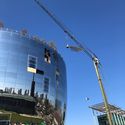
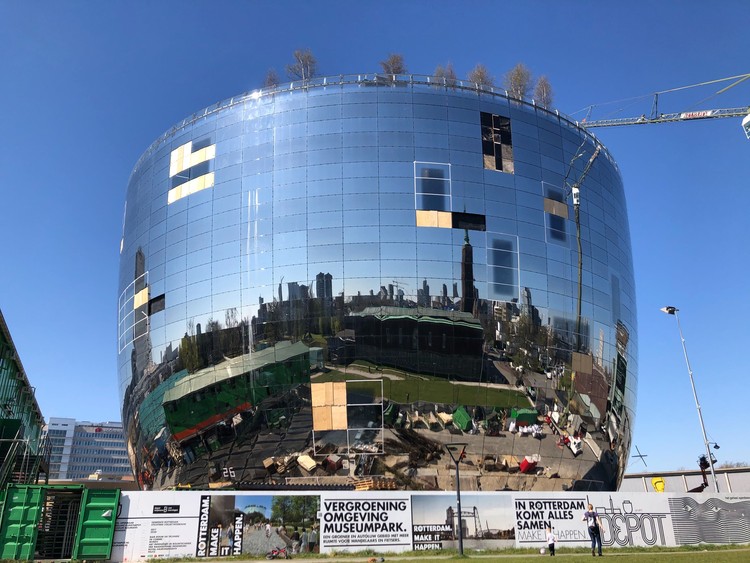
The public art depot for the Museum Boijmans van Beuningen, designed by MVRDV is nearing completion in Rotterdam. Scheduled for opening in September 2021, recent images showcase the installation of the first of 75 trees on the roof garden.
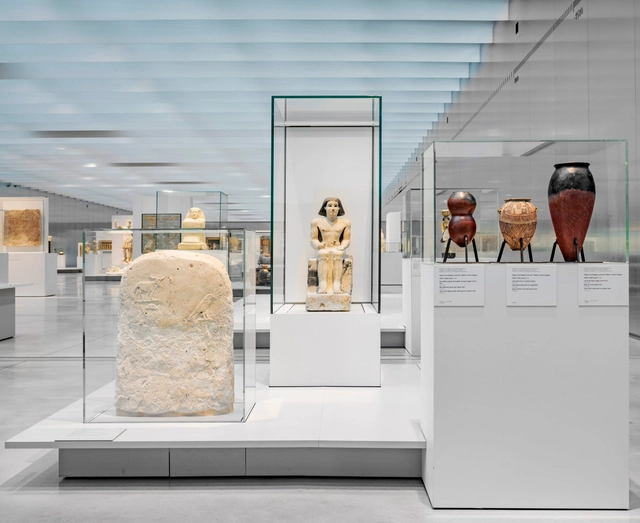
Museums are complex organizations: curators, exhibition designers, conservationists, editors, and marketers have to work together to ensure that artworks in galleries and exhibitions are properly displayed to the public. Instrumental to this process is the use of effective display cases, which must both protect the art and highlight it aesthetically. Below, we delineate some of these visual and practical considerations with photographic examples from Goppion, giving some indication how one should choose which display cases to use.
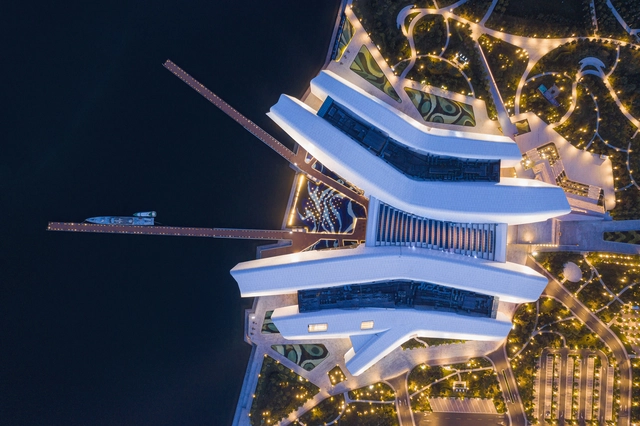
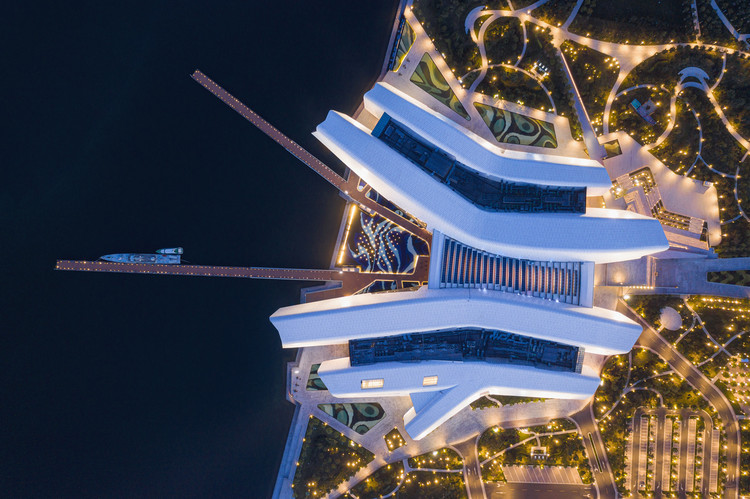
China’s latest landmark, the National Maritime Museum is now open to the public. 6 years in the making, the project is first of its kind. Designed by COX Architecture, after winning the international design competition back in 2013, the museum is located in the recently developed Binhai New Area, in the city district of Tianjin.
Ensuring a platform for everyone, ArchDaily is rounding up, every once in a while, a curated selection from our readers’ submissions. With proposals coming from all over the world, our aim is to feature the best Unbuilt Architecture out there.
In this article, we are highlighting proposals that were awarded the first prize in international competitions. Each one of these projects showcases a unique conceptual approach and responds to a different program. With a mixed-use project in France, a market in Helsinki, an aquarium in New York and a civic building in Norway, to name a few, the variety of these unbuilt interventions underlines the vast scope of the architectural field.
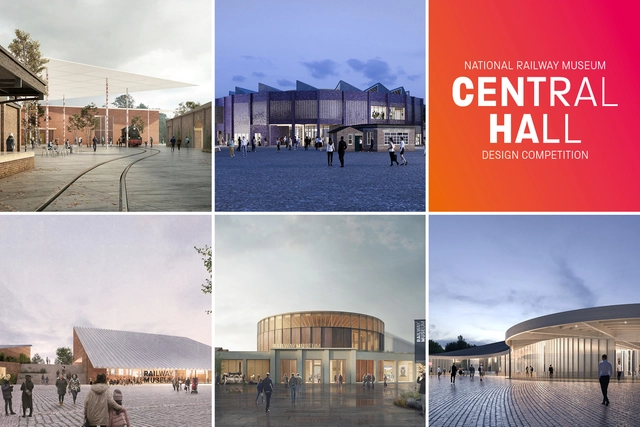
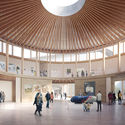
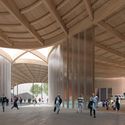
The National Railway Museum and Malcolm Reading Consultants revealed the final concepts for the new Central Hall, created by five small to medium-sized international and UK practices. Shortlisted in November 2019, the 5 teams include a collaboration between 6a architects from UK and OFFICE Kersten Geers David Van Severen from Belgium, Atelier d’Architecture Philippe Prost from France, Carmody Groarke from the UK, Feilden Fowles from the UK, and Heneghan Peng Architects from Ireland.
Located in Kannauj the perfume capital of India, the Perfume Park and Museum is designed by Studio Symbiosis. Under construction, the project will host a museum, shops, a cafe, a skill development center to exchange knowledge between experts and distilleries to produce the fragrances on site.
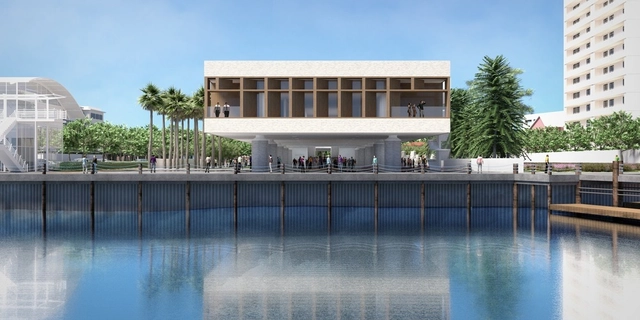
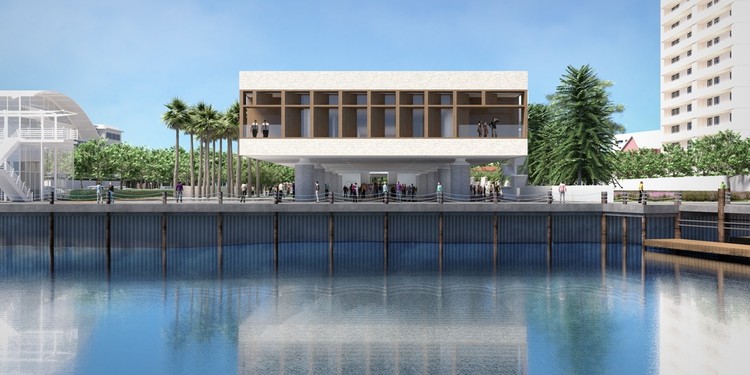
Views from the eastern end of the main level of IAAM are oriented slightly south across Charleston Harbor toward the Atlantic Ocean and the west coast of Africa.. Image Courtesy of Pei Cobb Freed & Partners
After 20 years in the planning, the International African American Museum is now under construction in Charleston, United States. Designed by Pei Cobb Freed & Partners, IAAM aims to honor the site where enslaved Africans passed away, by sharing narratives, previously overlooked by historians.
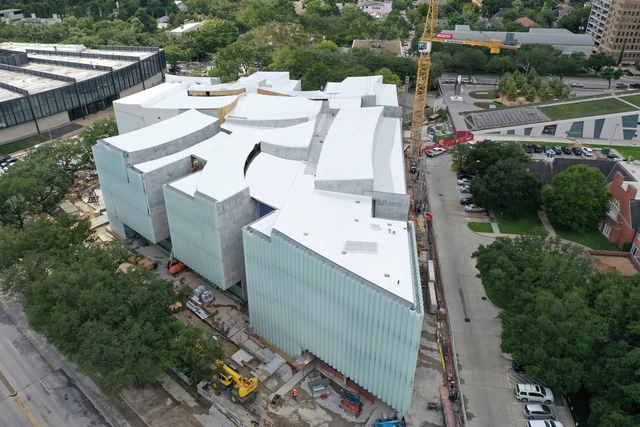
The Nancy and Rich Kinder Building for modern and contemporary art, part of the Museum of Fine Arts in Houston is scheduled to open for the public on November 1st 2020. The intervention was conceived for the “display of the important and rapidly growing MFAH collections of 20th- and 21st-century art”.