


-
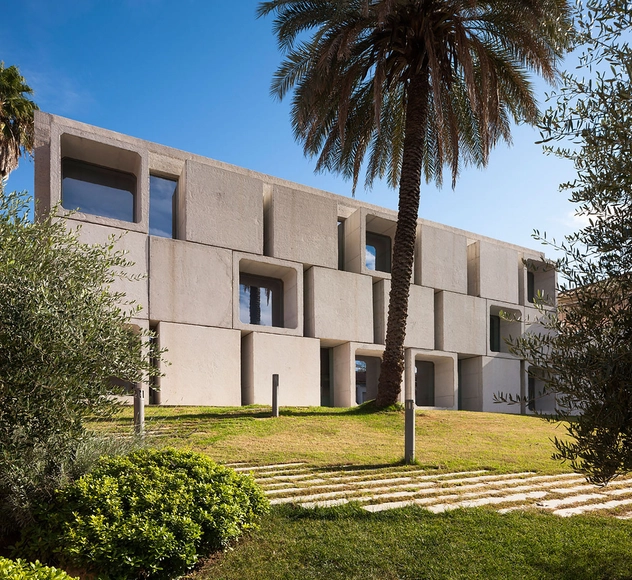
Architects: Francisco López, Gudula Rudolf
- Area: 414 m²
- Year: 2012
-
Professionals: Cooperativa Villanueva de Córdoba


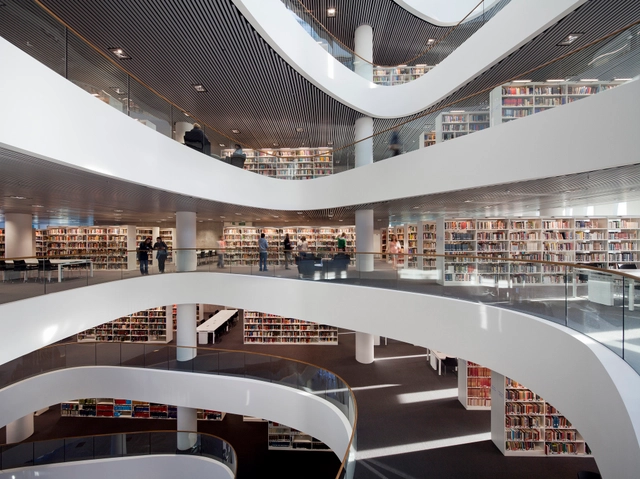
The Danish Agency for Culture has unveiled a new award for Library architecture as part of its Model Programme for Public Libraries project, a programme in association with Realdania which aims to generate new ideas about how the design of public libraries can change to meet the changing needs of today's society.
The award, which will be announced at the annual conference of the International Federation of Library Associations and Institutions (IFLA) in Lyon, France, is sponsored by Schmidt Hammer Lassen Architects and has a prize of DKK 25,000.
More on the award, and how to enter, after the break

Yesterday the Frick Collection announced its plans for a 6-story extension to its gallery in New York, designed by Davis Brody Bond. This article by Robin Pogrebin in the New York Times outlines the details of the extension, as the Frick adds itself to the list of post-recession cultural building projects - a list which includes the Museum of Modern Art, the Whitney Museum of American Art, and Miami's Pérez Art Museum. The article also outlines the challenges the Frick will have in expanding its landmarked 1914 building. Read the article in full here.
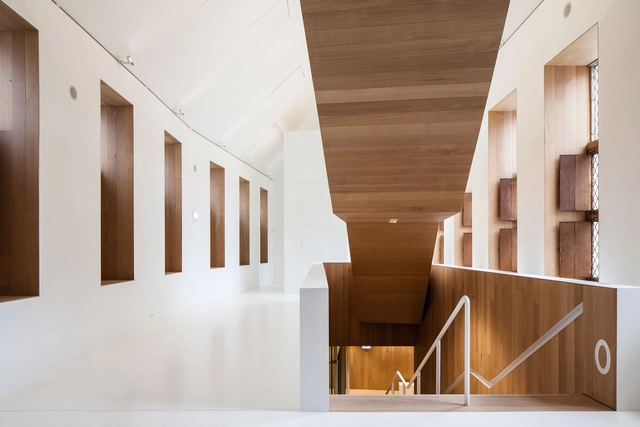
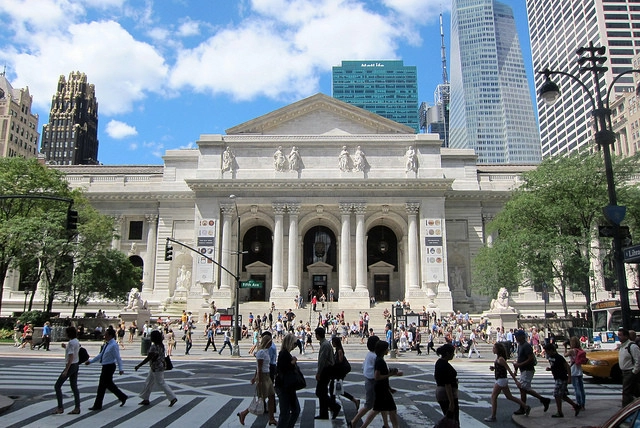
Details have been released on the New York Public Library’s (NYPL) plan to renovate its Mid-Manhattan branch, while creating more public space within its flagship Stephen A. Schwarzman Building. The news comes shortly after Foster + Partner’s redesign of the the Beaux-Arts landmark was scrapped due to concerns of a ballooning budget. The revised $300 million overhaul suggests a more affordable option of relocating Schwarzman’s main stacks beneath Bryant Park, while establishing a more campus-like connection with a fully renovated Mid-Manhattan branch. All the details, here.
_.jpg?1401660122&format=webp&width=640&height=580)
This year at the 2014 Venice Architecture Biennale, the Collateral Event M9 / Transforming the City will unveil an influential urban regeneration project planned for the heart of Venezia Mestre. Envisioned by British-Berlin practice Sauerbruch Hutton, the competition-winning design will be a new “multifaceted and encyclopedic” cultural center of “international appeal” that showcases the “fundamental” 100 years that “revolutionized the world."
The exhibition will pair a complete architectural presentation of the project alongside the political motives behind it and an overview of the site's history as an attempt to spark a “theoretical digression on the links between cultural institutions and urban-regeneration projects.”
More about the project, after the break...
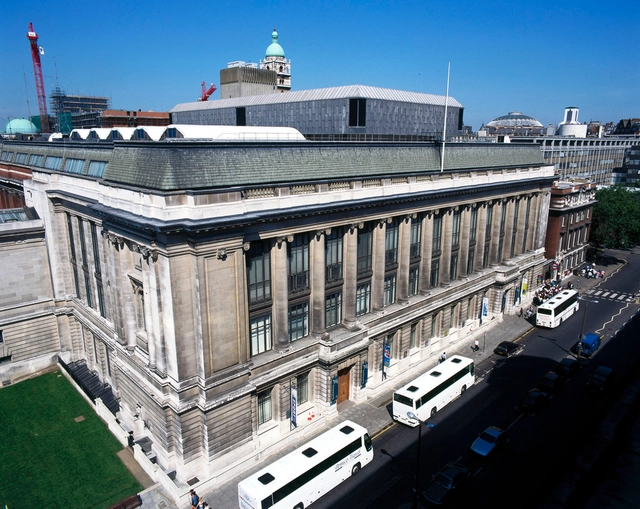
The Science Museum in London has announced plans to expand with three new galleries, launching three competitions to find designers. Two of the new galleries will house new permanent exhibitions about medicine and mathematics, while the third will host an interactive gallery. The three extensions combined will more than double the museum's current size.
The museum hopes to complete the mathematics and interactive galleries in 2016, with the larger medicine wing scheduled for a 2018 completion date.
Read on after the break for more on the competitions
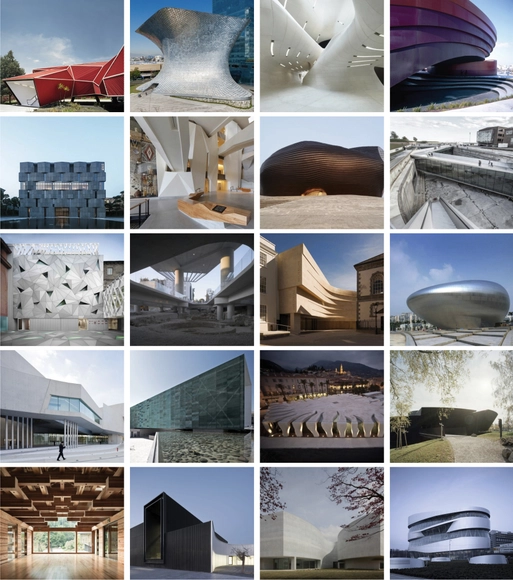
In honor of International Museum Day we’ve collected twenty fascinating museums well worth visiting again. In this round up you’ll find classics - such as Bernard Tschumi Architects' New Acropolis Museum and Zaha Hadid Architects' MAXXI Museum - as well as lesser-known gems - such as Waterford City Council Architects’ Medieval Museum, the Natural History Museum of Utah by Ennead, and the Muritzeum by Wingårdhs. See all of our editors' favorites after the break!

Originally published in Metropolis Magazine as "Possibilities over Prescriptions," this article by Marshall Brown suggests that we open up the conversation to a wider range of possibilities for the Barack Obama Presidential Library. Brown asks "Rather than narrowing the president’s choices based on race, what if the field of candidates could be expanded?"
The official process to build the Barack Obama Presidential Library has finally been launched. After years of gossip and rumors about architects and sites, this could be the moment for some intelligent and informed debate among the design community. Unfortunately, the conversation so far has been dominated by narrow prescriptions about what the library should be, who should design it, and where it should be located, as opposed to broader speculation about what it could be. So I propose that, rather than making prescriptions to the president based on a narrow set of perceived realities, we can help him by expanding the conversation and laying out a broader set of possibilities.

Rumor has it that Constructivist architect Konstantin Melnikov’s Bakhmetevsky bus garage may soon be transformed into Moscow’s prime modern art gallery. An “equivalent to London’s Tate Modern,” as the Calvert Journal describes, the historic 1927 structure has been said to be the most likely location for the new museum, dubbed “Pushkin Modern.”
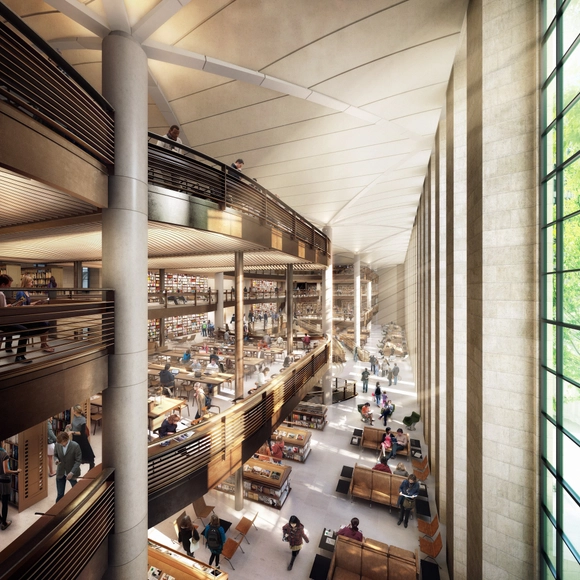
The New York Public Library (NYPL) has abandoned Norman Foster's controversial plans to transform part of its 20th century Carrère and Hastings “masterpiece” into a circulating library. The news doesn’t come as much of a surprise, considering the city’s new mayor, Bill de Blasio expressed skepticism towards the $150 million renovation earlier this year.
According to a report by the New York Times, Blasio does not intend on reducing the NYPL funding, however the money will now be allocated to other purposes.
Several library trustees have stated that in order to keep up with the cultural shift from traditional stacks to online resources, they now intend on completing the renovation of the library's mid-Manhattan branch on Fifth Avenue.
A response from Norman Foster, after the break...
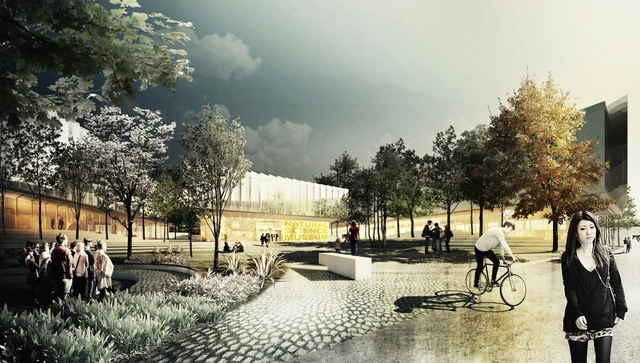
The winners of the international competition to design Berlin's new Natural Science Museum have been announced. The brief, which called for a large scale iconic building in the heart of the German capital, offered the opportunity for architects and students to design in a city founded in the 13th century.
Understanding that natural science museums are often simply seen as places for public spectacle, the organization behind the competition wanted to ensure that the "importance of the museum's specimen collections for documenting historical and present-day patterns of biological diversity cannot be overstated."
See the winning entry, along with the runners up, after the break.
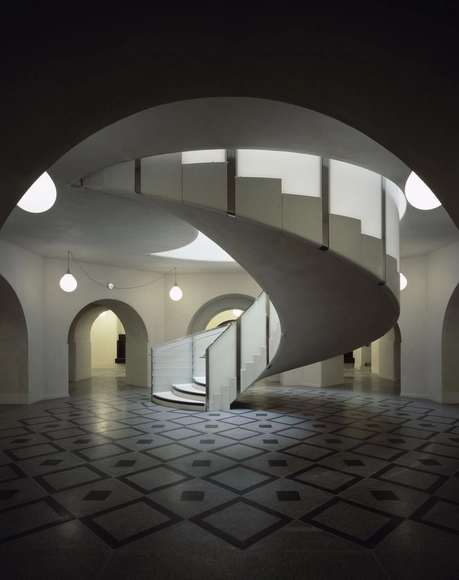
The Art Fund recently announced the six museums on the UK's 2014 Museum of the Year shortlist, its annual award for the outstanding museum of the year. The award celebrates every aspect of what makes a museum successful, but this year the list was highlighted by crucial work by architects, including renovations of the Tate Britain and the Ditchling Museum of Art & Craft, as well as the newly-constructed Mary Rose Museum in Portsmouth. The winner from the six museums will receive a £100,000 prize, and will be announced on July 9th.
Read on after the break for the complete shortlist

French culture minister Aurélie Filippetti has revealed that negotiations for a “pop-up” Pompidou in Mexico City are underway. “The Centre Pompidou is exploring the possibility of establishing a temporary space here, a ‘pop up’ Pompidou,” Filippetti told the Mexican newspaper Reforma. “It will come with their exhibitions, their expertise, not only the brand.”
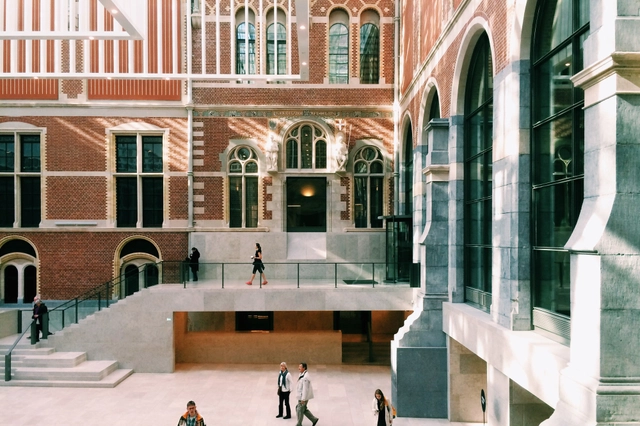
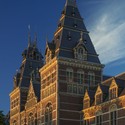
The Rijksmuseum, which reopened last year after a decade of restoration and remodelling, is a museum dedicated to “the Dutchness of Dutchness.” Pierre Cuypers, the building's original architect, began designing this neogothic cathedral to Dutch art in 1876; it opened in 1885 and has stood guard over Amsterdam's Museumplein ever since.
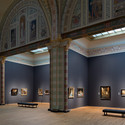
Over the centuries, the building suffered a series of poorly executed 'improvements': intricately frescoed walls and ceilings were whitewashed; precious mosaics broken; decorative surfaces plastered over; and false, parasitic ceilings hung from the walls. Speaking in his office overlooking the Rijksmuseum’s monumental south west façade, Director of Collections Taco Dibbits noted how the most appalling damage was incurred during the mid-20th century: “everything had been done to hide the original building […but] Cruz y Ortiz [who won the competition to redesign the Rijks in 2003] embraced the existing architecture by going back to the original volumes of the spaces as much as possible.”
For Seville-based Cruz y Ortiz, choosing what to retain and what to restore, what to remodel and what to ignore were, at times, difficult to balance. Cruz y Ortiz found their answer in the mantra: 'Continue with Cuypers'. They threw the original elements of the building into relief but did not act as aesthetes for the 'ruin'. In contrast to David Chipperfield and Julian Harrap's restoration of Berlin's Neues Museum, for instance, Cruz y Ortiz rigorously implemented a clean visual approach that favoured clarity over confusion. What is original, what is restored, and what is new mingle together in a melting pot of solid, understated architectural elements. Sometimes this approach contradicted Cuyper's original intentions; however, more often than not it complements them in a contemporary way.








01.jpg?1397081768&format=webp&width=640&height=580)
06.jpg?1397081796 "Courtesy of Sunlay")
05.jpg?1397081795 "Courtesy of Sunlay")
04.jpg?1397081781 "Courtesy of Sunlay")
02.jpg?1397081766 "Courtesy of Sunlay")
01.jpg?1397081768)