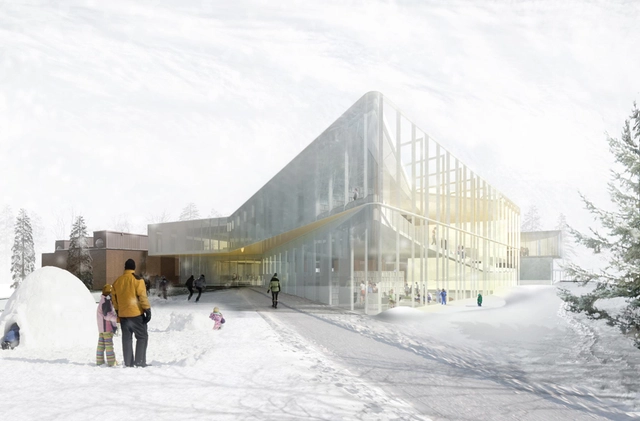
Chevalier Morales Architectes, in collaboration with DMA Architectes, has won the competition for the design of the Pierrefonds Library in Quebec. The project called for a complete renovation of the existing building to achieve LEED Gold certification and a 2,316 square meter extension that would include new document management technologies. The team's building design was inspired by Pierrefonds' old master plans as well as the economic pragmatism of shopping malls.
Written by James WP Campbell and featuring stunning photography by Will Pryce, "The Library: A World History" (published by Thames & Hudson 2013) explores the evolution of libraries in different cultures and throughout the ages. It investigates how technical innovations as well as changing cultural attitudes have shaped the designs of libraries from the tablet storehouses of ancient Mesopotamia to today's multi-functional media centres.
Read on for some insights from the book and more of its beautiful photography
Zadie Smith recently suggested that libraries are “the only thing left on the high street that doesn’t want either your soul or your wallet." Michael Kimmelman has put forward the argument in the New York Times that local libraries could be far more important than we think in the aftermath of large storms, suggesting that "places that serve us well every day serve us best when disaster strikes" by fostering congregational activity and offering well-needed warmth, power and friendly faces. You can read the full article here.
National Centre for Contemporary Arts. Image Courtesy of Calvert Journal
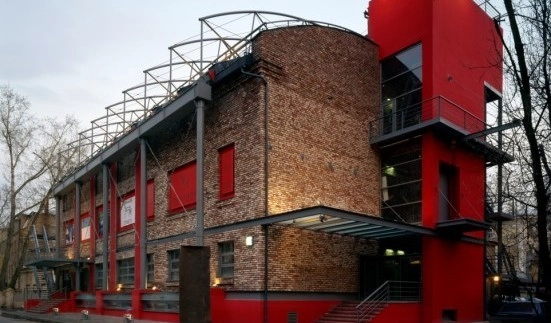
The Russian Ministry of Culture has announced the shortlist of 10 architecture firms who will compete to design the museum and exhibition complex of Moscow's new National Centre for Contemporary Arts (NCCA). The NCCA, currently housed in a former factory in central Moscow, will be moved to Khoydynskoye Pole, a former airfield in northeast Moscow, as part of a larger urban planning project to develop the area.
Ten firms were selected to advance to the second stage of the competition: five on the merit of their experience and portfolio; five on the merit of the preliminary architecture concepts submitted to the jury. See the shortlist, after the break...
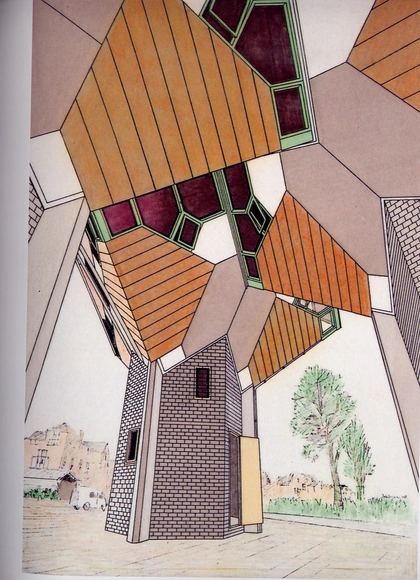
"Architecture is more than creating a place to live," stated the late Dutch architect, Piet Blom, "you create a society." Till his death in 1999, Blom designed homes and urban schemes as if to reject the stern, coldness of post-war Modernism in light of a warmer, more human architecture. His drawings, diagrams and homes portray an affectionate commitment to reconcile elements of culture with the architecture around us. Characterized by his use of lively colors and equally expressive architectural geometries, project's such as the "Kasbah" and the cube houses in Rotterdam stand as testaments to his belief that architecture serves the people, not the other way around.
A true "People's Architect," Blom's work has endeared a growing number supporters, among these are residents who have lived in his houses and are hoping to garner donations to share these artifacts with the public. Ingeborg van der Aa, secretary of the Piet Blom Foundation, mentions that the initiative's mission is to promote recognition, new insight and appreciation with the hopes of encouraging a younger generation to be active creators of their society.
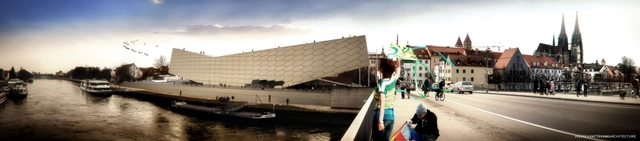
Designed by AVA (Andrea Vattovani Architecture), their proposal for the Museum of Bavarian History not only creates an icon for the city, but their intervention is able to emphasize and further develop the city structure. Since a box-like form didn‘t seem to be the best solution for integrating the museum in its surroundings, they took special notice of the urban surroundings and protected monuments in the development process. More images and architects’ description after the break.
With ever-expanding traveling exhibitions attracting over 35,000 yearly visitors from around the globe, the Aspen Art Museum (AAM) has outgrown their cozy 9,000 square foot facility in which they have called home since their established in 1979. Japanese architect Shigeru Ban has been commissioned to design the new museum, being the first museum he has constructed in the U.S. The project is set for completion in August 2014. Continue reading for more information.
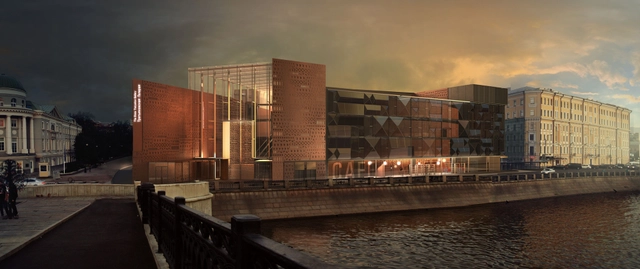
Designed by PAPER | TOTEMENT, their competition proposal for the architectural and visual image of the frontage of the new building of the State Tretyakov Gallery encompasses conceptual, imaginary and compositional aspects as well as its relation with the environment (city and the existing complex of the gallery), history and designation of the building. The current space planning design decision also implied some particular limitations and framework. And of course, the main objective was to combine all these decisions in an integral image of the Modern Russian, Moscow art museum. More images and architects’ description after the break.
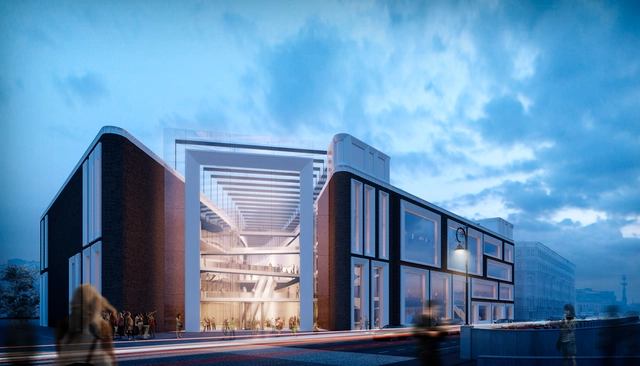
Designed by SPEECH Architectural Office, their winning proposal for the Tretyakov Gallery in Moscow supports the philosophy established by the museum: preserving the national heritage and engaging in relevant dialogue with the society. This dynamic dialogue is expressed in the architectural concept of the building’s façade, decorated by white picture frames of various sizes placed according to the pattern of the original hanging of the pictures in the City Art Gallery of P. M. Tretyakov and S. M. Tretyakov, forming the image of a wall with pictures. These are living pictures created by the visitors to the museum. More images and architects' description after the break.
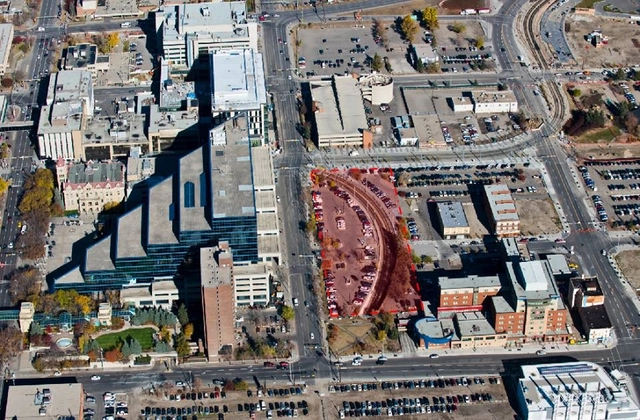
Four shortlisted teams have been asked to design proposals for a new central library in the Canadian city of Calgary. Selected from 38 submissions, the competing teams of local and international architects will harness the power of platemaking to envision a 280,000 square-foot “landmark” for the East Village Calgary.
The Jewish Museum is just as emotionally moving and utterly disorienting today as it was when it first opened. Taking a fresh reflective look, Spirit of Space has produced a short film capturing moments of this singular architectural experience. The soundscape is jarring. Shots linger with trepidation. Perceptions waver with marks of appearance and disappearance. And in cinematic form, the film attempts to express the uneasy sequential essence of Daniel Libeskind’s work.
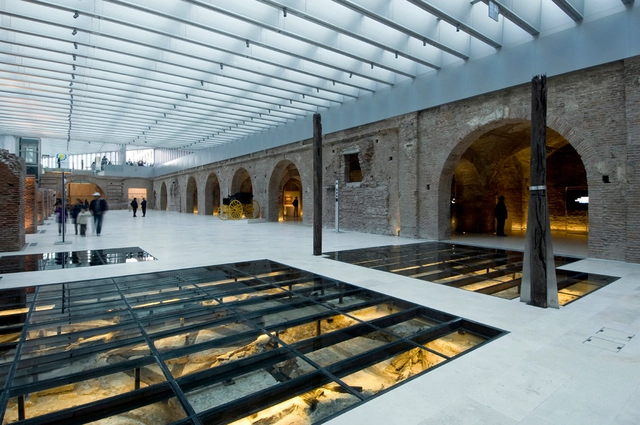
On September 28, 2013, Zaha Hadid Architects will be celebrating the completion of the Serpentine Sackler Gallery. An extension to London’s famous Serpentine Gallery, the new innovative arts venue will be housed in a 208-year-old, Grade II-listed building, formerly known as The Magazine, in Kensington Gardens just north of the main gallery.
This project will be Zaha Hadid’s first permanent structure in central London and second commission from the Gallery, as she designed the inaugural Serpentine Gallery Pavilion in 2000.















_SDL-02.jpg?1375047504)
_SDL-02.jpg?1375047366 "Courtesy of Studio Daniel Libeskind")


_SDL-02.jpg?1375047504)
