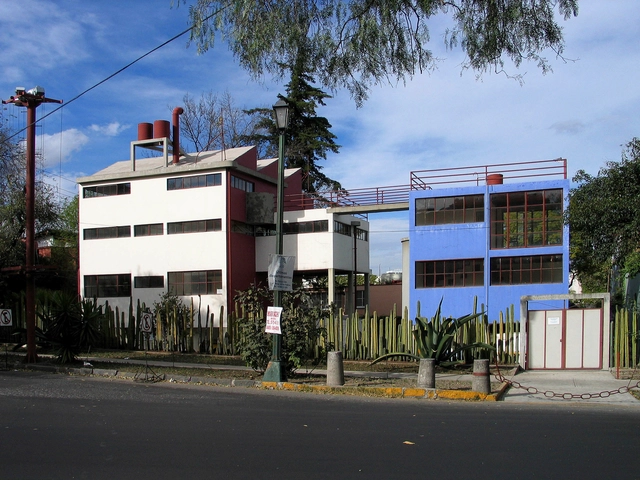
Diego Rivera and Frida Kahlo house. Via: Wikimedia, CC BY-SA 3.0 license
Geometric shapes, exposed reinforced concrete walls, visible electrical installations, large windows that prioritize natural light and ventilation, gardens that value native plants. The first works by the Mexican architect Juan O’Gorman, built between 1929 and 1932, bring an aesthetic that can be seen today, but in reality they are the pure expression of one of the currents of the 20th century modernist movement, functionalism.
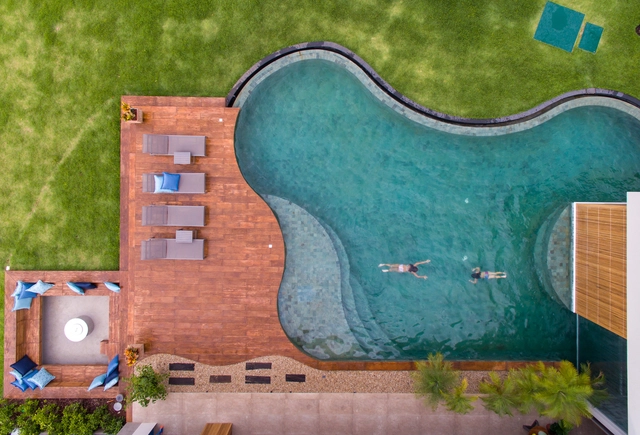
Few architectural typologies have the power to invoke a sense of being dual-natured quite as the modernist swimming pool can. The design of pools themselves implies that there are moments of activity both above and below the water. Above, and in the more obvious and visible sense, pools act as a space for leisure and athletic training. But underneath the surface, swimming pools have a long-standing history of acting as symbols of surveillance, death, and social conditions associated with an economic class.
Historic art movements and their visual characteristics have considerably paved the way for modern day architecture. For years, architects have been borrowing techniques and stylistic approaches to create their own architectural compositions, merging both disciplines together. Cubism, one of the most influential styles of the twentieth century, and heavily criticized for its experimentation with its non-representational art approach, is perhaps the most significant architecture inspiration. Just as the radical art movement rejected the then-rooted concept that art should mimic nature, architects found themselves following suit and designing structures that borrow Cubism’s avant-gardist features, creating buildings that, to this day, stand as iconic landmarks of the practice.
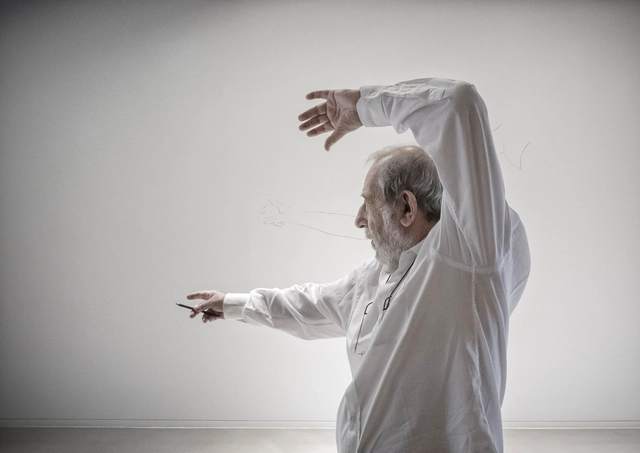
Álvaro Joaquim de Melo Siza Vieira, or simply Álvaro Siza, was born in Matosinhos, Portugal, on June 25, 1933. His first work – four houses in Matosinhos – was built in 1954, even before completing his studies at the School of Fine Arts from the University of Porto (current Faculty of Architecture of the University of Porto – FAUP), which happened a year later.
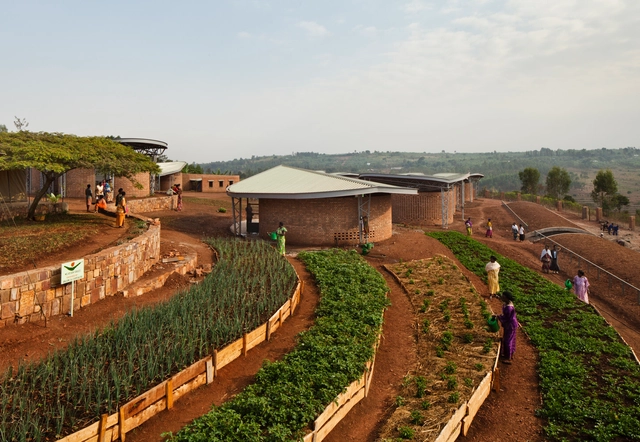
Participatory design is a democratic process that aims to offer equal input for all stakeholders, with a particular focus on the users, not usually involved directly in the traditional method of spatial creation. The idea is based on the argument that engaging the user in the process of designing spaces can have a positive impact on the reception of those spaces. It eases the process of appropriation, helps create representative and valuable spaces, and thus creates resiliency within the urban and rural environment.
Located amidst the vegetation, almost invisible to those who see it from the street, a jewel of modern Brazilian architecture is hidden in the São Paulo neighborhood of Jardim América. Casa Zalszupin, designed in 1960 by the Polish architect based in Brazil, Jorge Zalszupin, combines traces of local modernism with influences that the architect brought with him from Europe, notably Scandinavian architecture. In a recent photo series, Paul Clemence sought to capture through this house, "the architect's and designer's essence".
"The details are not the details. They make the design." – Charles Eames. Creating attractive spaces that anticipate the needs of users relies on several factors: scale, circulation, functionality, and comfort. However, the past few decades have proved that the visual appeal of a project is also greatly important, and can make or break the interior space. In this interior focus, we will explore the aesthetic side of interior design, looking at popular styles across the world and how architects and designers use elements such as color, furniture, accessories, and finishes to define their spatial identity.
Selected the European Capital of Culture in 1994 and Ibero-American Capital of Culture 2017, Lisbon has been the destiny of tourists from many parts of the world over the past years. With thriving cultural programming, the city hosts important events related to art, music, movies and architecture. The Lisbon Architecture Trienniale and the Open House – event that coordinates free guided tours to remarkable buildings in cities around the world – are some of these relevant events in the architectural field, responsible to disseminate, discuss and reflect on issues of the area.
Besides programs related to architecture, in recent years, Lisbon has seen the emergence of new facilities, like museums, cultural centers and theaters, besides the requalification of public spaces. The construction or regeneration of these structures, directly or indirectly related to the cultural city movement, can be controversial, raising issues such as gentrification and the increase of mass tourism.
The early 20th century saw the birth of Modernist architecture. It brought with it a central architectural movement that in turn birthed off-shoots of its own. A figure often seen as the defining face of this movement is Le Corbusier, whose 1923 treatise Toward an Architecturewas influential to his Modernist contemporaries – a manifesto including the phrase “a house is a machine for living in” where good architecture would have to be intrinsically linked to function and the demands of industry.
Capturing an image has become spontaneous and immediate. While mobile photography maintains quality, it loses the ritual of taking a picture, i.e. thinking about an image while walking through a new city or the framing possibilities for a building from your point of view. In short, each image is the result of focus, aperture, exposure and the characteristics of the space. Travelling with a 35mm camera sets your limits, some say it is the closest lens to the human eye, others say it is too narrow to capture a building from the outside, but no doubt it all depends on your judgement and the capabilities of the equipment at your disposal.
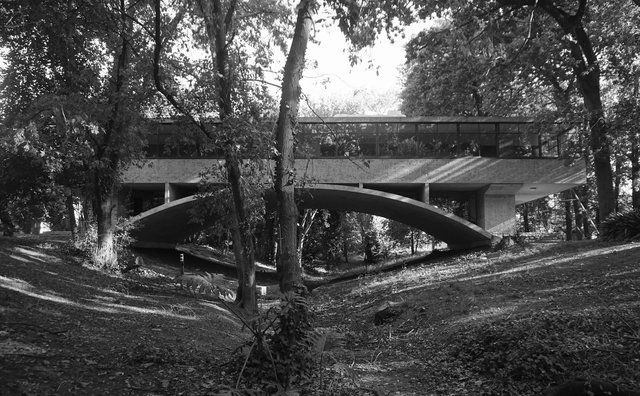
It was designed and built between 1943 and 1946 by Amancio Williams and Delfina Galvez Bunge over the Las Chacras Stream in the city of Mar del Plata. It eventually became known as "The House on the River" or "The Bridge House". However, it ceased to have a stream, and thus to be a bridge, in 1957 when the watercourse on which it rested was interrupted for sanitation reasons. It was used as a radio station between 1970 and 1977, but the last military dictatorship in Argentina ended up shutting it down. It remained closed, maintained by its owner until their death in 1991. Studied by all, but cared for by none. It suffered two major fires, in 2004 and 2008. Abandoned during the whole succession process, it was recovered by the Municipality of General Pueyrredón in 2012.
Located in a particularly natural setting in the city of Mar del Plata, the "Casa sobre el Arroyo" (House on the River) - known as the "Casa del Puente" (The Bridge House) - is considered a paradigmatic component of 20th-century architecture and an obligatory reference of the Modern Movement in Argentina and Latin America.
The house designed by the Argentinean architect Amancio Williams, commissioned by his father, the musician Alberto Williams, is constructed evidence of the capacity to establish a link between the modern rationality of human beings with nature and its topography.
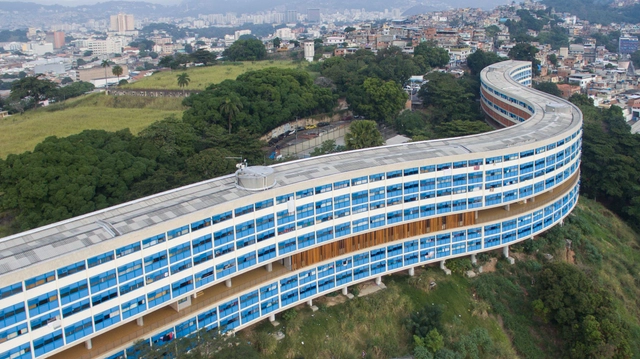
In the early 1920s, a time when women could not even work without their husband's authorization, Carmen Portinho started an engineering course at the Polytechnic School of the University of Brazil. At the vanguard of the profession, as one of the first three women to graduate as engineers in Brazil, she was opening up a field in a space dominated entirely by men.
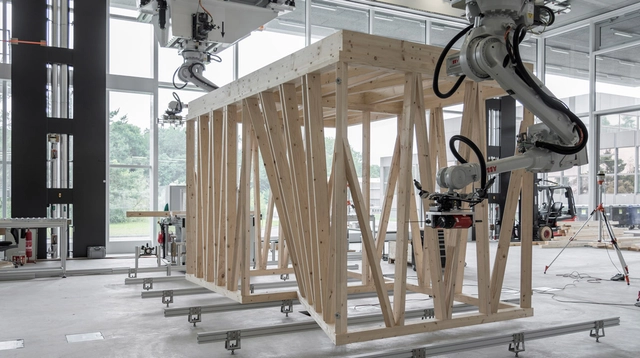
Robotic Collaboration. Image Courtesy of ETH Zurich
Digital spaces and fabrication technology have become as prominent as ever within the current state of our post-pandemic society, becoming increasingly more accessible and enabling quick and spontaneous acts of iteration and evolution. These technologies have resulted in the ability to mass-produce non-standard, highly differentiated building components within the same facility as their standardized counterpart, transforming how buildings and their respective components are conceived, designed, and represented, and how they are manufactured, assembled, and produced.
The beauty of digital fabrication is its ability to blend aspects of mass and artisanal production to the point where costs nearly disappear. Technology’s capacity to fabricate so simply and almost seamlessly raise the issues for its potential to significantly alter our current perception of architecture, thus producing the question: has the influence of mass production in architecture resulted in a loss of intentional design?
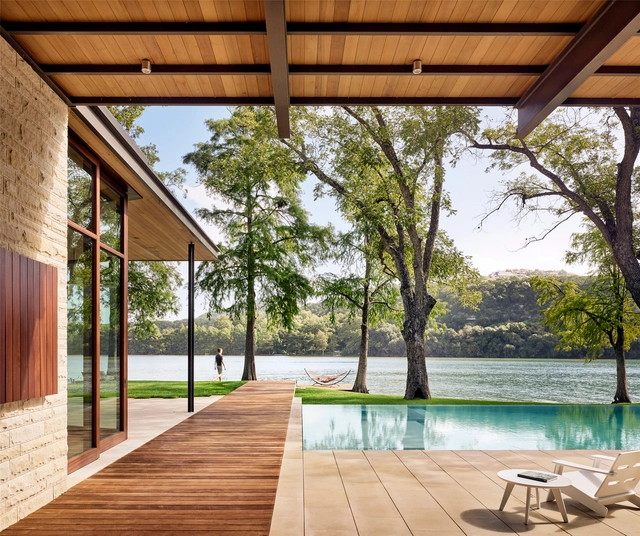
Few cities have a growing design culture like Austin, Texas. Ranked as one of the best places to live in the United States, the city is experiencing a building boom in recent years. With a wide variety of residential styles, architects are continuing a legacy of modernist design. With an emphasis on craft and detailing, these new homes use simple geometry and forms as they open up to hills, lakes and the urban fabric.
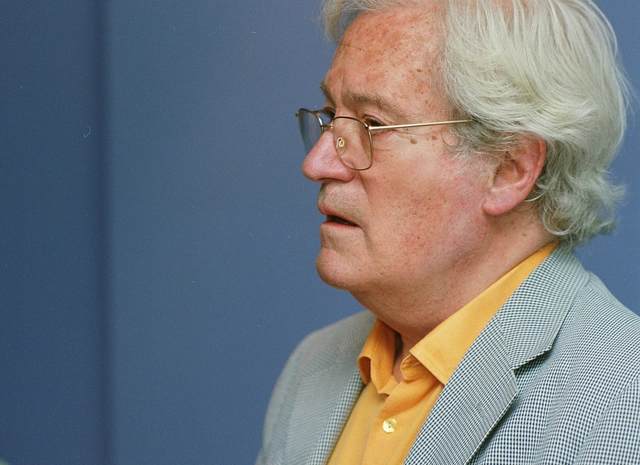
Oriol Bohigas en el Museu d'Història de Catalunya, 2001. Image via Wikipedia: Museu d'Història de Catalunya (fotógrafo: Pep Parer). Licencia bajo CC BY 3.0
On the 30th of November, we received news of the death of Oriol Bohigas Guardiola (Barcelona, 1925), architect, urbanist, and one of the main drivers of Catalan's modern transformation.
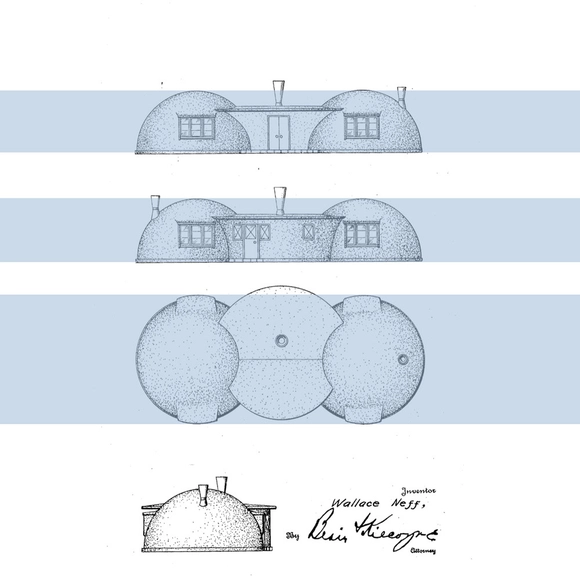
Following the Second World War, United States veterans and citizens were seeking a fresh start, a rightful place to live out their modern American dream. With a significant housing shortage looming around and fast-growing families, solutions had to be found to provide equitable living means for all. The development of new construction techniques and propagation of easy building materials promised an age of prosperity.
https://www.archdaily.com/969231/the-evolution-of-the-house-plan-in-the-united-states-post-war-eraAgustina Coulleri, Hana Abdel & Clara Ott
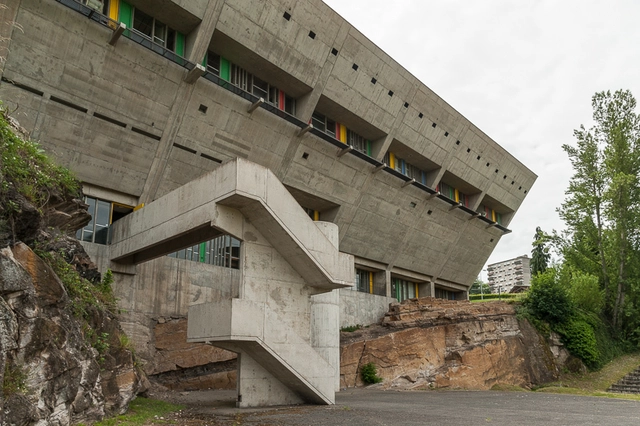
Le Corbusier was a pioneer of the Modernist Movement in architecture. Throughout his career, he undertook an array of projects all around the world. See below for 17 of his works that have been named World Heritage Sites by UNESCO, as well as many more of his other popular pieces. Hopefully, someday you get to go and see them yourself!




.jpg?1654436110 "Sanjaynagar Slum Redevelopment Project - Technical team holding a meeting with members of the Slum Committee. Image Courtesy of Community Design Agency")








.jpg?1643423986 "Villa Savoye, Le Corbusier, 1929. Image © Flickr User: End User")
.jpg?1643425181 "Villa Savoye, Le Corbusier, 1929. Image © Flickr User: End User")
_V%C3%ADctor_Pati%C3%B1o_George.jpg?1643424298 "Villa Stein, Le Corbusier, 1927. Image © Víctor Patiño George")