


-
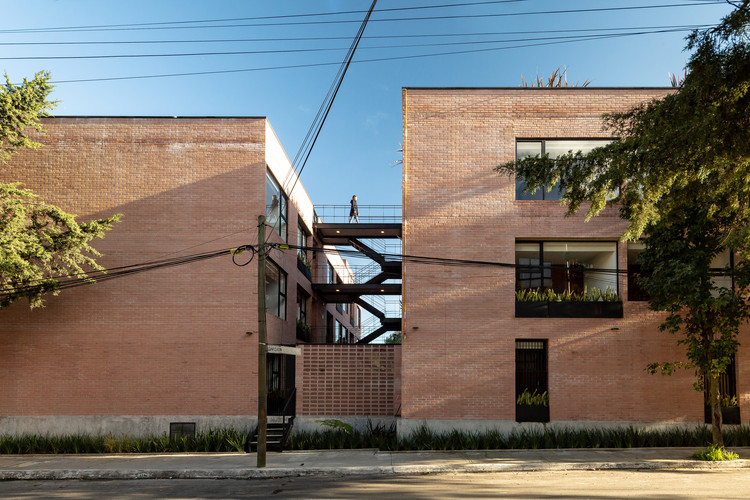
Architects: Alejandro Sánchez García - Taller 6A
- Area: 1360 m²
- Year: 2018
.jpg?1414606549&format=webp&width=640&height=580)

Born in 1969 in Mexico City, Michel Rojkind was educated in the 1990s at the Universidad Iberoamericana, while also performing as a drummer in Aleks Syntek’s popular rock band la Gente Normal. He opened his practice Rojkind Arquitectos in 2002. Among his most representative built works are Foro Boca for the Boca del Rio Philharmonic Orchestra in Veracruz, a newly expanded film complex Cineteca Nacional in Mexico City, a pair of factory additions for the Nestlé Company in Queretaro, and the Nestlé Chocolate Museum in Toluca, all in Mexico. We spoke about how his architecture engages with people, why architects should assume roles that extend beyond architecture, and the importance of generosity and not worrying about designing everything 100%.
The following excerpt from my interview with Rojkind completes a series of conversations that I conducted in Mexico City while preparing my exhibition “Something Other than a Narrative” from the Architects’ Voices and Visions series at Facultad de Arquitectura Universidad Nacional Autónoma de México, UNAM.


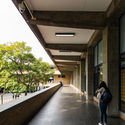
Although the National Autonomous University of Mexico (UNAM), south of Mexico City, is home to the well-known O’Gorman murals, it is, in fact, the campus itself, that is quite intriguing. Walking through UNAM, individuals find themselves in an architectural display of modernist buildings that date back 70 years, along with open courtyards, hidden walkways, and pavilions. Uniquely, the campus buildings have a little bit of everything: bold geometry, openness, abstraction, humanistic design, permeability with nature, decaying masonry walls, local lava rocks used as walls, and pavers throughout the campus.

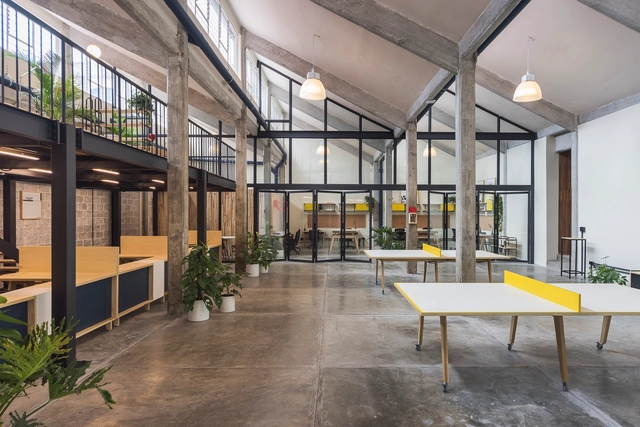
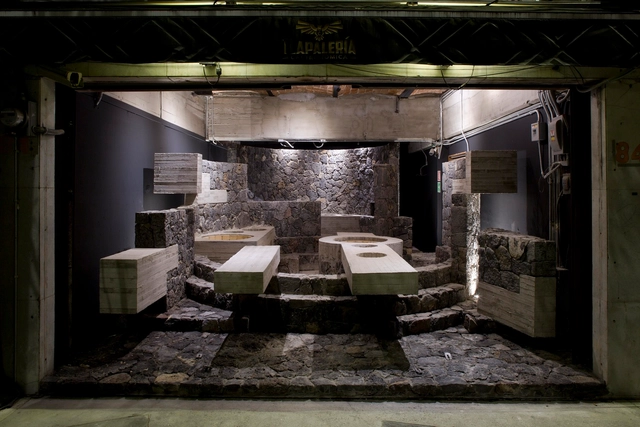

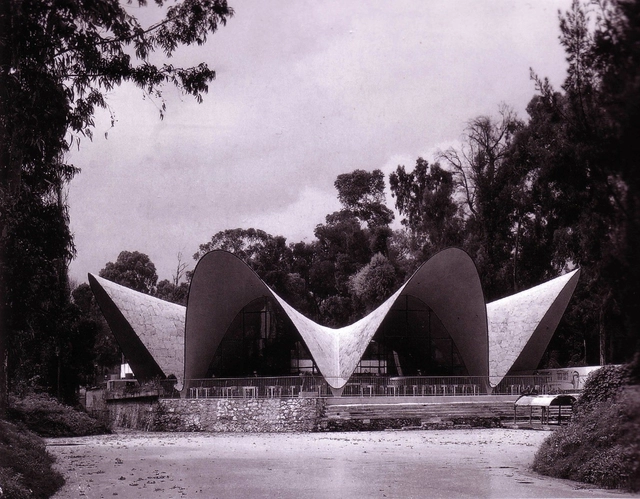
This article was originally published on April 14, 2014. To read the stories behind other celebrated architecture projects, visit our AD Classics section.
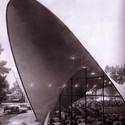
With the design for Los Manantiales, Felix Candela’s experimental form finding gave rise to an efficient, elegant, and enduring work of structural art. Comprised of four intersecting hypars, a strikingly thin roof surface creates a dramatic dining space. Built as Candela was establishing an international reputation as the foremost shell building, he demonstrated to the world his masterful combination of artistry and technical virtuoso.
.jpg?1414606492 "© Jaime Navarro")
.jpg?1414606523 "© Jaime Navarro")
.jpg?1414606538 "© Jaime Navarro")
.jpg?1414606519 "© Jaime Navarro")
.jpg?1414606549)
-2-72dpi.jpg?1549753958 "© The Raws")





























.jpg?1397104743 "via wikiarquitectura")

.jpg?1397104702 "via wikiarquitectura")