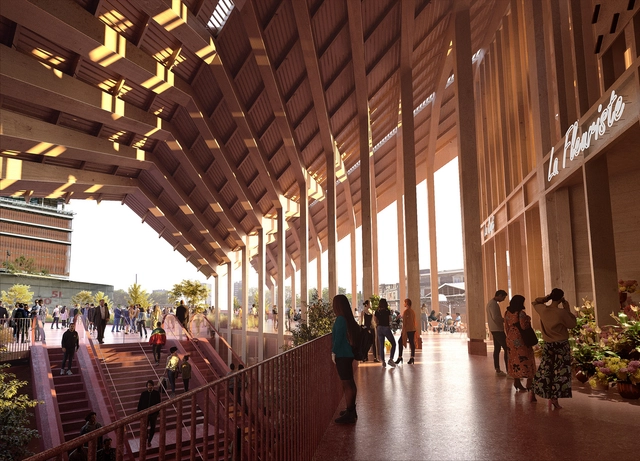
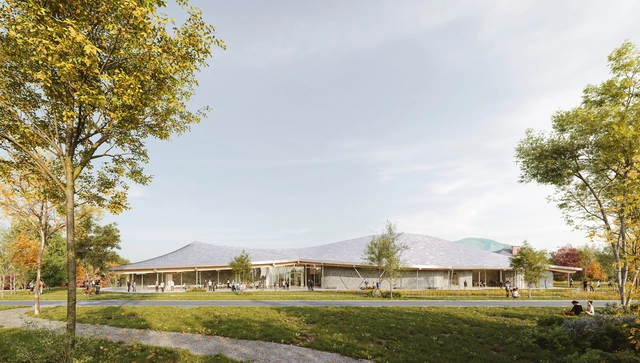
Bjarke Ingels Group and A+Architecture have revealed the design for the 12,000-square-meter Marengo Multimodal Transport Hub in Toulouse, France. The project will expand the functionality of the city’s central station, Gare Matabiau, strengthening the area’s public transport networks by creating a hub for bus, railway, and metro, all connected under one roof. The design of the new hub takes cues from the city’s distinctive roofscape and the traditional use of the rose-colored “foraine” brick, employing a mass timber structure and low-carbon concrete to ensure a sustainable intervention adapted to its environment. The Hub is set to begin construction in 2026.
Brooklyn-based firm SO-IL has revealed the design for a new campus art museum at Williams College in Massachusetts, created to become a primary teaching resource for the institution renowned for its art history program. Since its inauguration in 1926, the Williams College Museum of Art has gathered an expansive collection of over 15,000 works. Through the design of SO-IL, the museum will be able to move into its first freestanding purpose-built home. In May 2024, the museum will present an exhibition on SO-IL’s design.
Mass timber is an innovative construction solution that is gaining prominence worldwide due to its sustainability and technological benefits. In 2020, the opening of the first Dengo concept store, located in São Paulo, marked the debut of the brand's first interactive factory and the pioneering use of CLT (Cross Laminated Timber) in a high-rise building in Brazil. Developed by architecture firm Matheus Farah and Manoel Maia, the project faced several challenges precisely because of its use of this new technology, which was just beginning to emerge in the construction sector.
The choice of CLT as the project's main building material reflects a commitment to sustainability and to reducing its environmental impact, as it helps mitigate carbon in the atmosphere. In addition, its use allows for cleaner, lighter, and faster construction compared to traditional building methods. However, it is important to keep in mind that mass timber construction requires special care in the handling, storage, and assembly of materials, in order to preserve their integrity and aesthetic details throughout the construction process. Using the right methods is therefore essential to guarantee a high-quality result, which include practices such as not leaving the wood exposed to weather or using wedges to prevent the wood from coming into contact with the ground.
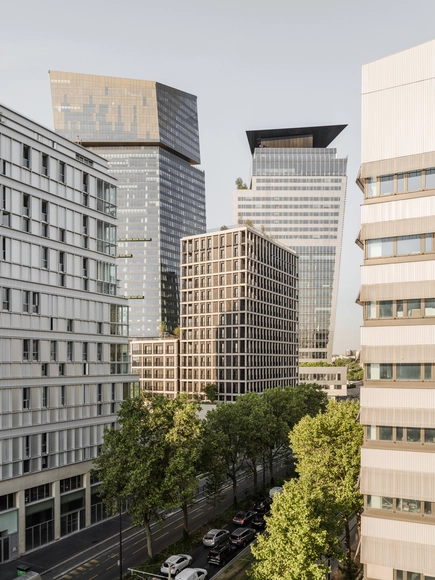
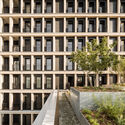
In Paris’ thirteenth arrondissement, the architecture office Moreau Kusunoki has completed Le Berlier, a 50-meter-tall timber tower housing residential units along with various other amenities. Situated at the intersection of multiple urban flows, networks, and scales, the project aims to find the middle ground between innovation, monumentality, and domesticity. The new residential center expresses its structural system through the grid of the façade, rendered in charred and pre-weathered wood.
Housing is a fundamental aspect of architecture, providing shelter, which is essential for everyone. In urban environments, addressing the housing challenge is both urgent and complex. Social housing initiatives aim to provide a substantial portion of the population with access to this fundamental architectural concept: a home.
The Farmhouse / Studio Precht. Image Courtesy of Precht
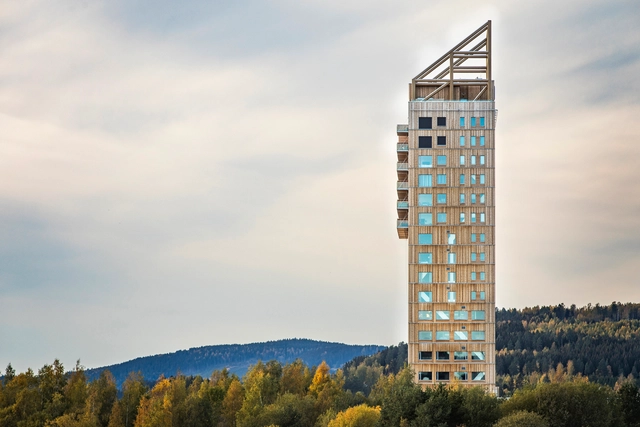
Wood, an age-old building material, has left its mark on the history of architecture. Structures like townhouses and ancient cathedrals have seen usage and innovation with wood as a primary material. As technology evolves and urban landscapes grow skyward, wood has emerged as a strong contender to steel and concrete in the area of skyscraper design. Recent advances in engineering, materials science, and construction techniques have welcomed a new era of experimentation, enabling the construction of timber skyscrapers across the world. Timber skyscrapers signify a departure from traditional construction methods, seamlessly blending aesthetics, functionality, and ecological consciousness. Wood as a material, with its inherent strength and impressive fire resistance, presents hope to an industry in pursuit of a more sustainable future.
Timber has been a popular source of construction material for thousands of years. Through sawing, milling, and other engineered wood conversion processes, various wood forms have been created and applied in products, furniture, and architecture. However, these processes can sometimes alter the basic lines of wood structure. The stems can be split, grain patterns changed, and some woods, such as oak and cedar, are easily reduced while others can become intractable. This led to the exploration of whole timber forms in ancient structures, such as log cabins, which layered timber in different cross-sections to form home profiles. Through design, the use of trunks or branches of trees in their entirety can accentuate their innate mechanical properties for structural sustainability. Although these practices are fairly absent in contemporary building techniques, new technological innovations expand the prospects of timber construction in architecture.
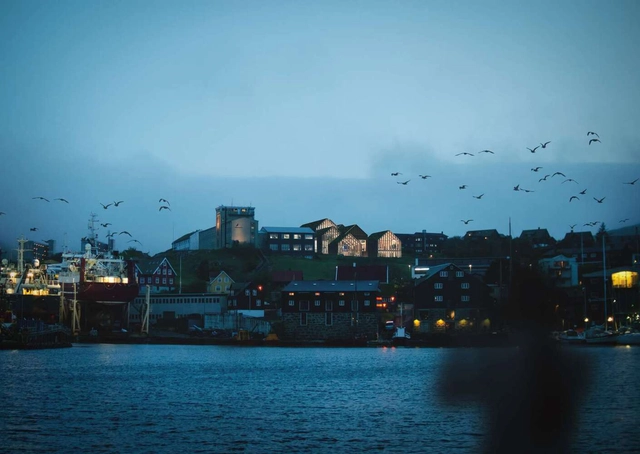
Henning Larsen Architects has just won the competition to design a new university campus building in Torshvan, Faroe Islands. The 8000m2 campus is primarily inspired by the Faroese settlements and indigenous lands, drawing on various ancient methodologies of building for extreme weather conditions. The new design “extends the comfortable outdoor season by 150 days each year,” transforming the campus into an ideal space for learning.
Timber is a natural, renewable material, easy to fabricate, and with low-carbon emissions. As a construction material, however, when put under enough directional force along its grain, sawn timber is structurally unstable, so deemed unsuitable under higher loads. In comparison, the manufacture of cross-laminated timber (CLT) involves simply gluing multiple layers of timber together at right angles. By crossing the direction of the grains, CLT achieves a far higher level of structural rigidity along both axes. CLT boards start with a minimum of three layers but can be strengthened further with the addition of more. Simply put, due to the complex physics involved in the perpendicular lamination, the strength of CLT board is similar to that of reinforced concrete, and has proven performance under seismic forces.
So what’s new? Wood’s been around for long enough now, and we’ve been using it as a building material for centuries. Surely this isn’t the first time someone’s realized it gets stronger the more you use it? Well… as you’d expect, the changing popularity of cross-laminated timber in construction does coincide with a greater understanding and focus on environmental causes, but the relationship hasn’t always been positive.
Wood is the concrete of the future. As timber construction becomes increasingly popular, you have probably heard this phrase. However, we are not talking about traditional construction techniques using timber, but rather about this well-known material combined with cutting-edge technology.
When it comes to seismic resistance, there are a number of myths that question the ability of wood to adequately perform in the event of an earthquake. However, its ductility allows it to deform plastically without breaking, absorbing and dissipating the energy generated by movement and vibration. Furthermore, unlike steel or concrete, wood is a lightweight material with a good strength-to-weight ratio, enabling it to withstand seismic forces without adding excessive load to the construction. This has been extensively verified in smaller-scale structures around the world, but how does a high-rise mass timber building behave in the face of an earthquake?
To dispel doubts, the Tallwood Project recently erected a 10-story building made of cross-laminated timber (CLT) at the University of California, San Diego (UCSD). The structure was tested on a shake table that simulated the 1994 Northridge earthquake in Los Angeles, magnitude 6.7, and the 1999 Chi-Chi earthquake in Taiwan, magnitude 7.7.
1 De Haro / Perkins&Will. Image Courtesy of Quebec Wood Export Bureau
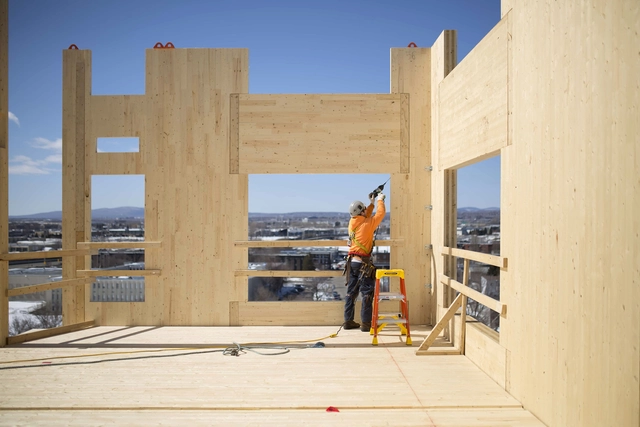
Mass timber is emerging all across North America. Beyond the benefits of natural materials and visible structures, the capabilities of industrialized offsite construction are beginning to change the model of delivery for an increasing range of buildings. When a California owner-developer proposed the first mass timber building in the state, they chose the experience, scope, and qualifications carefully, and the entire mass timber package was delivered on a train from Quebec, Canada.
Urbanization and the evolution of modern cities have led to the development of high-rise building constructions, but what is the real environmental impact of these buildings? Traditionally designed with concrete as the main structural material, their construction implies an increase of CO2 emissions released into the atmosphere, air pollution and a rise in energy and water consumption. These consequences call for the development of new sustainable strategies outside of the industry’s comfort zone, such as the incorporation of wood as a structural element. Cross Laminated Timber (CLT) has emerged as a new structural strategy that Chilean architects have begun to incorporate into the country’s architecture, adapted to local conditions and norms.
The ‘Tamango Project’ by Tallwood architects is an example of the challenges and opportunities of wood construction in the country and the region, as it might potentially be the first 12-storey building with an engineered timber structure. Changing the traditional construction paradigms of the area, Tamango represents a step into sustainable solutions that follow an integrated design process through all the stages of an architectural project.
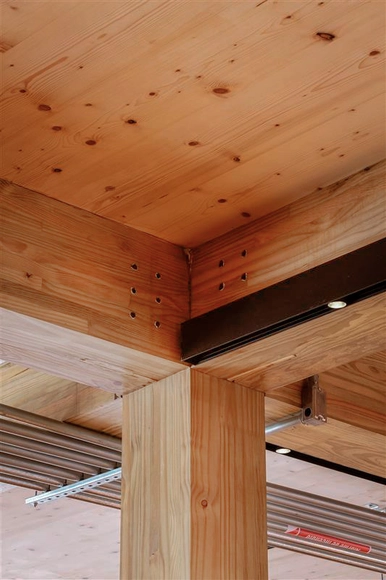
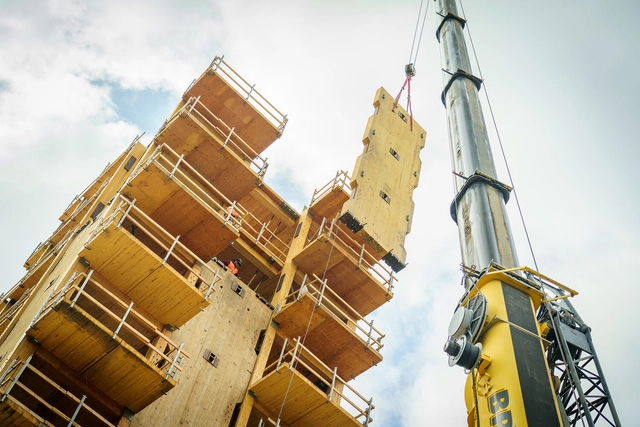
Adidas North American Headquarters Expansion in Portland, OR. South Building under construction showing the timber and steel system. Image Courtesy of LEVER Architecture
The family of products that encompass mass timber –including Cross-Laminated Timber (CLT), Glue-Laminated Timber (Glulam), and Mass Plywood– is increasingly becoming a viable construction alternative for the AEC industry. Timber has been a structural material for thousands of years, but these engineered wood products have broadened the field of options and provided a solid basis for architectural designers to work with, expanding upon their range of materials and finishes.
Wood Innovation Design Centre / Michael Green Architecture. Image
Concrete, an essential building material, has for decades offered us the possibility of shaping our cities quickly and effectively, allowing them to rapidly expand into urban peripheries and reach heights previously unimagined by mankind. Today, new timber technologies are beginning to deliver similar opportunities – and even superior ones – through materials like Cross-Laminated Timber (CLT).
To better understand the properties and benefits of CLT, we talked with Jorge Calderón, Industrial Designer and CRULAMM Manager. He discusses some of the promising opportunities that CLT could provide architecture in the future.
Oregon has become the first state in the U.S. to allow timber buildings to rise higher than six stories without special consideration. The recent addendum to the state's building code is the result of Oregon’s statewide alternate method (SAM), a program that allows for alternate building techniques to be used after an advisory council has approved the “technical and scientific facts of the proposed alternate method.” The decision stands as a precedent for future construction across the United States.
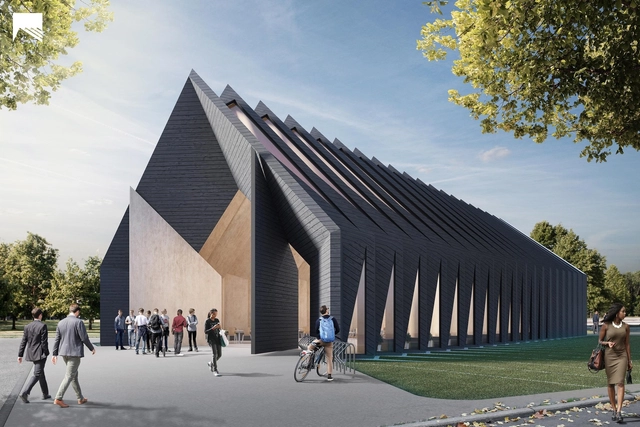
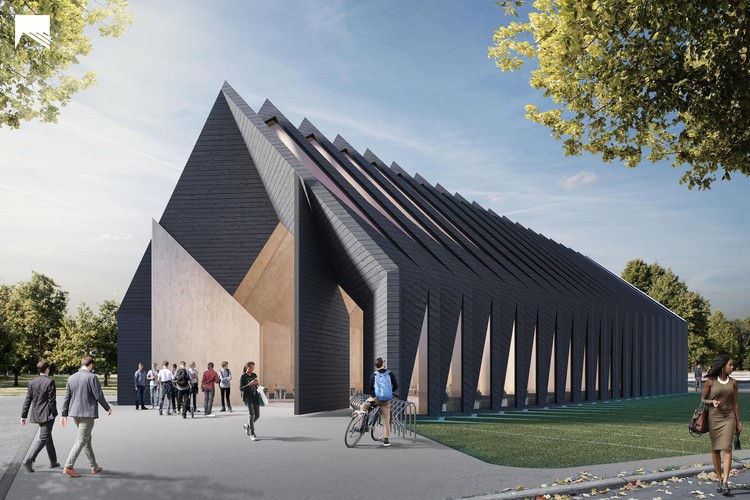
MIT Mass Timber Design, a cross-disciplinary design workshop at the Massachusetts Institute of Technology, have developed a building prototype that aims to tackle the world’s growing energy crisis, “one of the biggest challenges of the 21st century.” Extensively using the wood-based building design and construction technology mass timber - a method growing in popularity within North America - the project utilizes the “efficiency, speed, precision and versatility” of prefabricated timber construction elements to realize a multi-functional, sustainable building. The longhouse typology, often one of the first permanent structures of a civilization, is a common across the world, but in adapting its construction to face modern-day issues, the team hopes to create a space that “builds upon this rich cultural icon.”
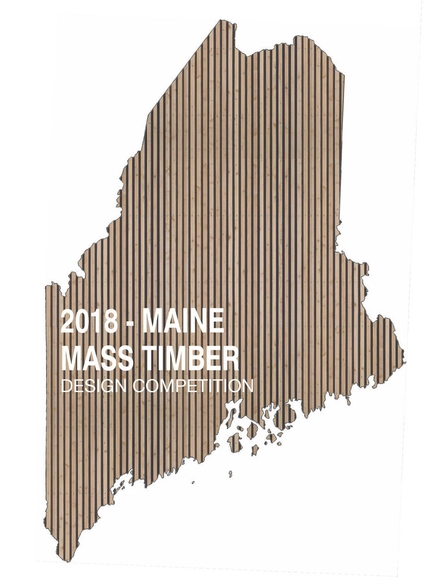
This year’s Maine Mass Timber Design Competition is intended to generate design ideas and test implementation of an emerging technology that hold specific promise for the state economy.
DESIGN ABSTRACT
Remote Mass Timber Wilderness Lodge - Open Ideas Competition
Maine Huts & Trails maintains a network of backcountry trails and remote wilderness lodges woven through the woods and mountains of western Maine that provide a unique opportunity to explore and discover this beautiful region. The goal of this year’s competition is to study and develop a design concepts for a new hut on a established backcountry site, as









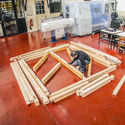
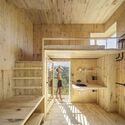

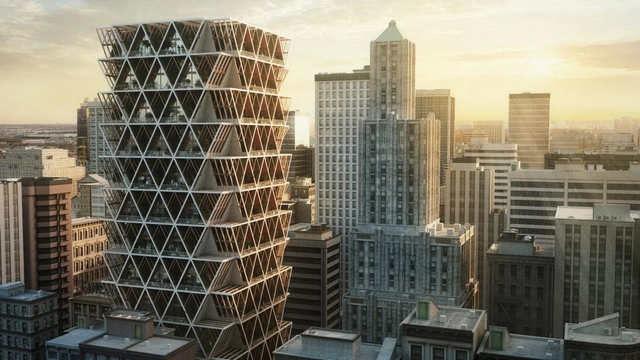


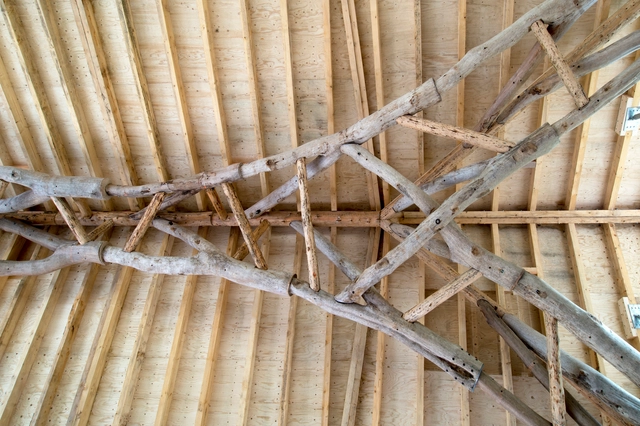








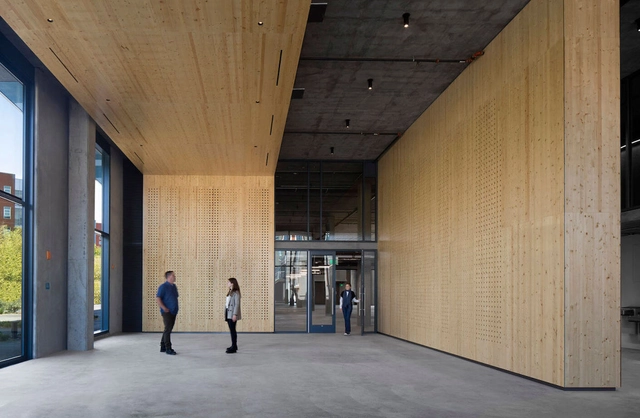
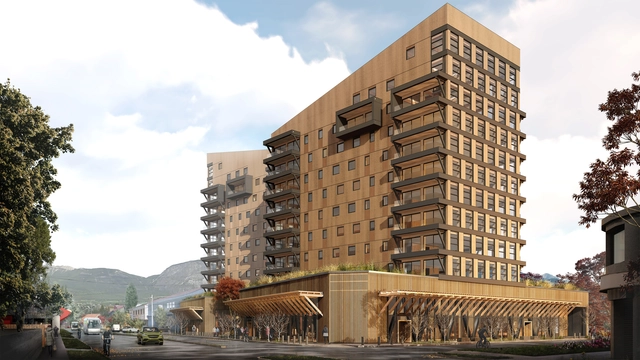
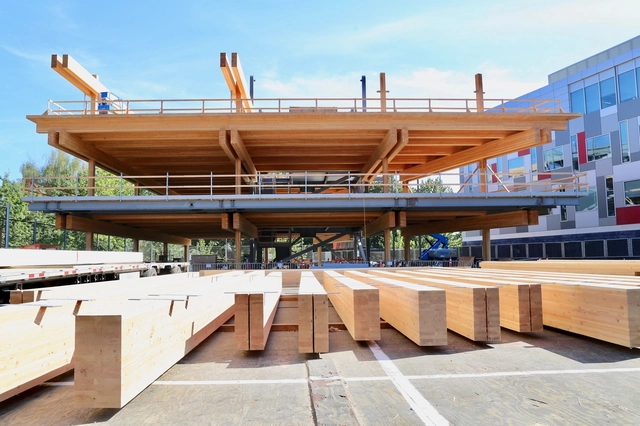
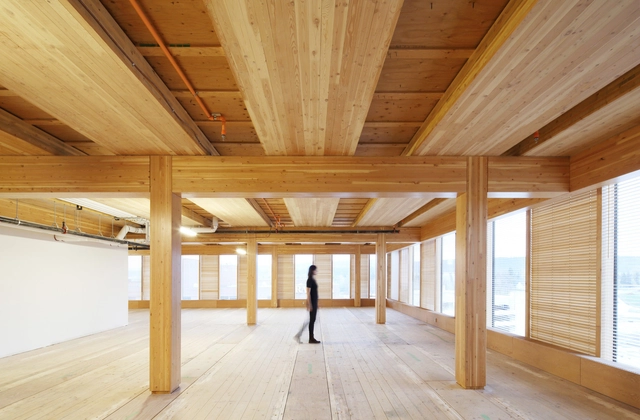
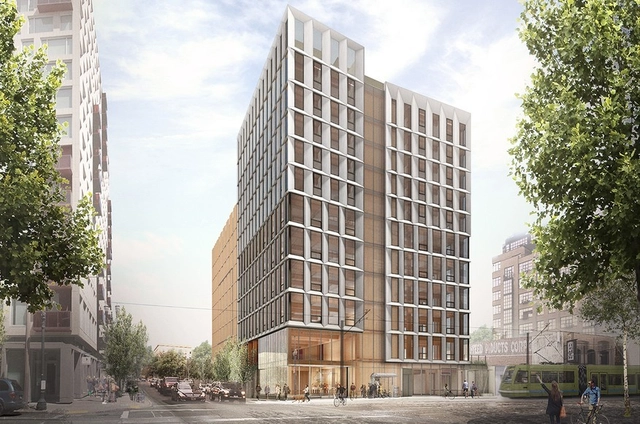

.jpg?1534475975 "Framework. Image Courtesy of LEVER Architecture")
.jpg?1534475968 "Framework. Image Courtesy of LEVER Architecture")
.jpg?1534475960 "Framework. Image Courtesy of LEVER Architecture")