
-
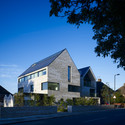
Architects: Allford Hall Monaghan Morris
- Area: 8000 ft²
- Year: 2012
-
Professionals: Atelier Ten, Elliott Wood Partnership, Equals Consulting, Pavehall PLC, BBUK Landscape Architecture


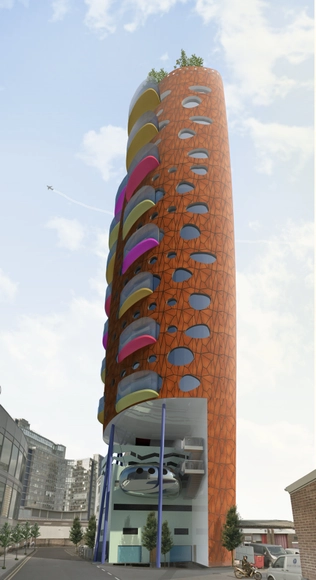
Led by Will Alsop, aLL Design’s funky apartment tower will soon add a whole lot of interest to London’s south bank. The tubular building, which tapers at the bottom and top, will rise above an existing four-storey building on purple stilts and be adorned with corten steel cladding, brightly colored balconies, and irregular rounded windows. Each apartment will include two balconies overlooking the River Thames and the neighboring heliport – bringing about the name “Heliport Heights.” To learn more about the lively design, keep reading after the break.

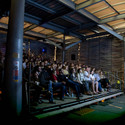
One of the latest installations at London's Serpentine Gallery, where Smiljan Radic recently unveiled an ethereal pavilion, is Marina Abramović's performance installation entitled 512 Hours. Creating what has been described as "the simplest of settings" in one of the gallery's large spaces, the artwork employs Abramović's most frequently used material: herself. Coupled with the audience and a selection of common objects, the constantly changing sequence of events on display is the very first live installation by the artist displayed in the UK. Upon arrival, visitors are asked leave their baggage (including mobile phones, cameras and any other electronic equipment) behind in order to enter the exhibition. Find out more about what you can expect from it here.

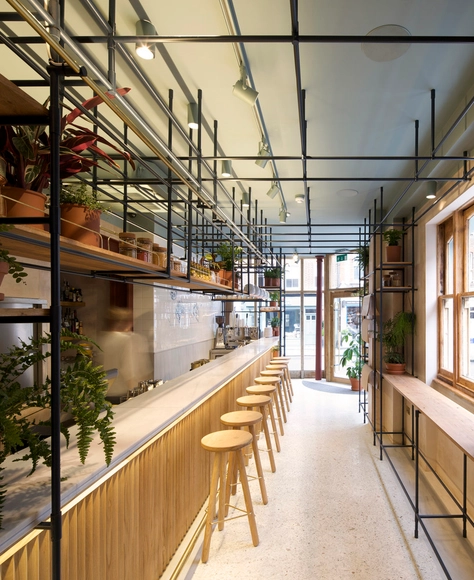
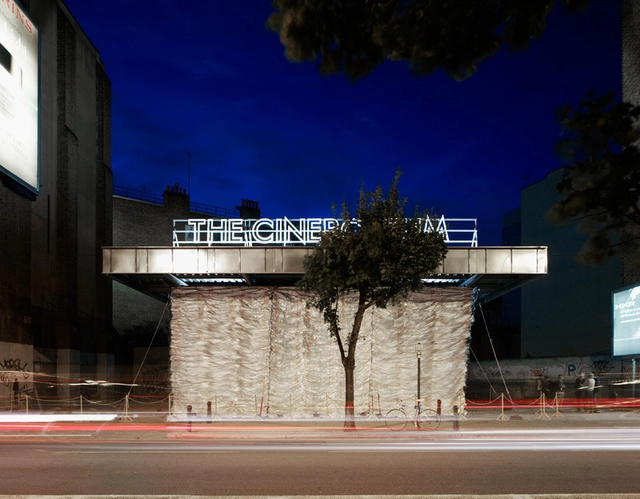
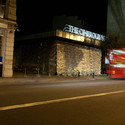
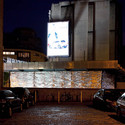
The Cineroleum, a self-initiated project built in 2010 by London based practice Assemble Studio, transformed a derelict petrol station into a "hand-built" cinema on one of capital's busiest roads. Aimed at raising awareness to the wider potential for reusing the 4,000 empty petrol stations across the UK for public use, the adapted structure on Clerkenwell Road was "enclosed by an ornate curtain" strung from the "roof of the petrol station's forecourt. Described as an "improvisation of the decadent interiors that greeted audiences during cinema’s golden age," classic infusions of cinematic iconography were integrated into a space built from only cheap, reclaimed or donated materials.

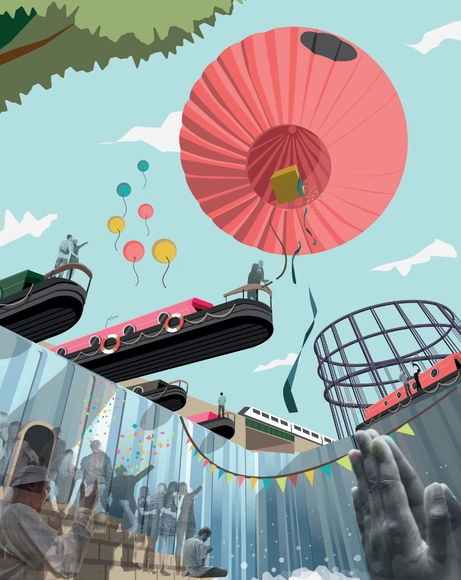
Faith!, the latest ideas-based challenge organised by Combo Competitions, asked participants to design a place of worship in London. In spite of the beguiling simplicity of the title, coupled with a typically open brief, the placed winners and three honourable mentions exhibit a diverse, exciting collection of conceptual drawings and visuals. With an interesting balance of playful interpretations and more grounded proposals, all start to address relevant socio-political issues - such as the mutual acceptance and peaceful co-existence of different religions - in some way. The competition asked participants first and foremost to seek to merge two concepts: religion and knowledge.
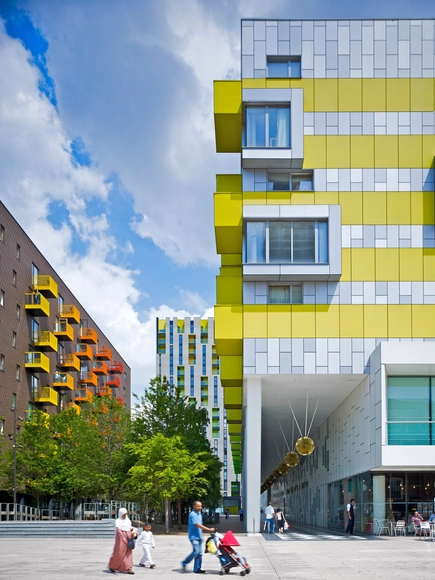
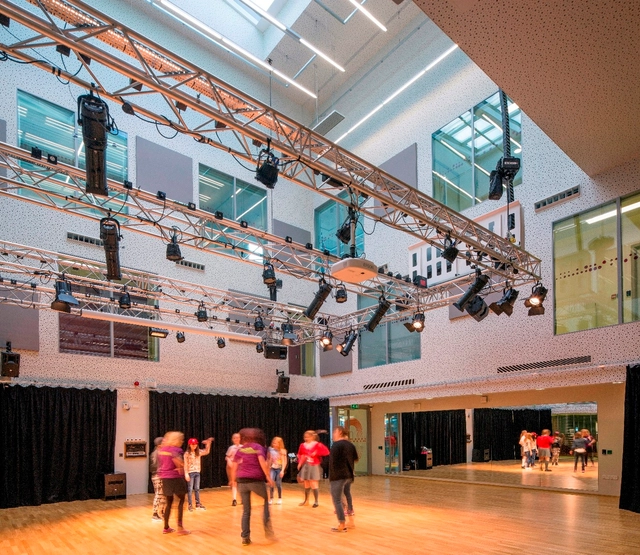
British practice Astudio have recently completed a large youth space in Poplar, East London, featuring a gym, recording studios and performance hall alongside multiple social and learning spaces. Designed with the input from other 1600 young people and stakeholders, the four year project has been part of a wider initiative to address the inadequate provision of existing youth facilities in the London borough of Tower Hamlets. As the team's second youth space completed in the last year, Spotlight has recently been shortlisted for a World Architecture Festival Award.


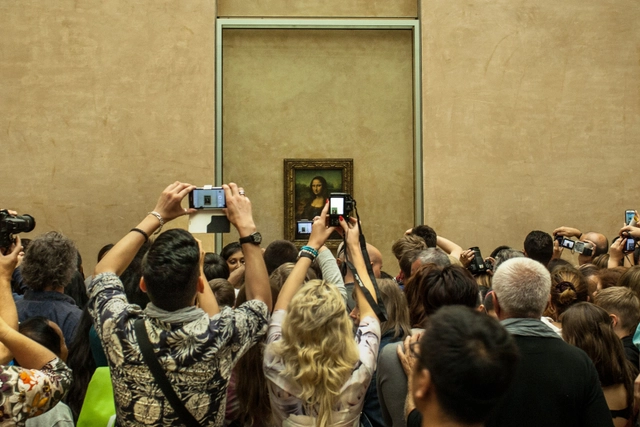
In an article for the New York Times Rachel Donadio examines Masterworks vs. the Masses. From the Louvre in Paris to London's British Museum, Florence's Uffizi to the Vatican Museums, the increasing surge of visitors to these international cultural nodes "has turned many museums into crowded, sauna-like spaces." Balancing everyone's right to be "nourished" by cultural experiences with protecting and preserving the works of art in question is a very real problem. According to Donadio, "even when the art is secure, the experience can become irksome." With some museums seeing annual visitors of up to 6.7 million visitors (British Museum), addressing the issues faced by institutions that are a victim of their own success is becoming more and more pressing. Read the article in full here.
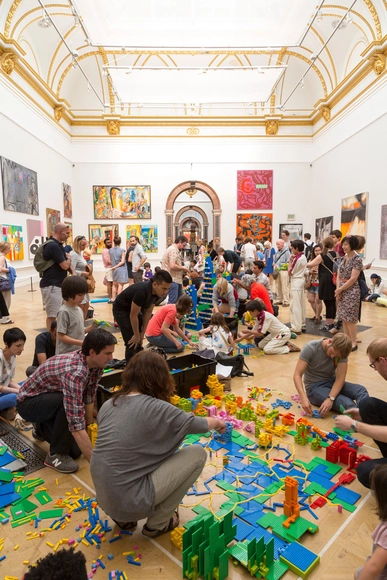
As part of the 2014 London Festival of Architecture, teams of architects from the four of the most recent Stirling Prize winning British practices were challenged with creating the most imaginative piece of a city - out of LEGO. Each team began with a carefully laid out square on the floor of the largest gallery of the Royal Academy Summer Exhibition, at which point they were given just one hour and 45 minutes to create an urban masterpiece out of blocks. Each group of architects worked alongside students from the Royal Academy’s attRAct programme, which offers A-level art students the chance to engage with art and architecture. An esteemed panel of judges ultimately selected the team from Zaha Hadid Architects as victorious, who "considered London on a huge scale and used curving buildings of different typologies which echoed the shape of the Thames."
Read more about the brief and the other participating entries after the break.
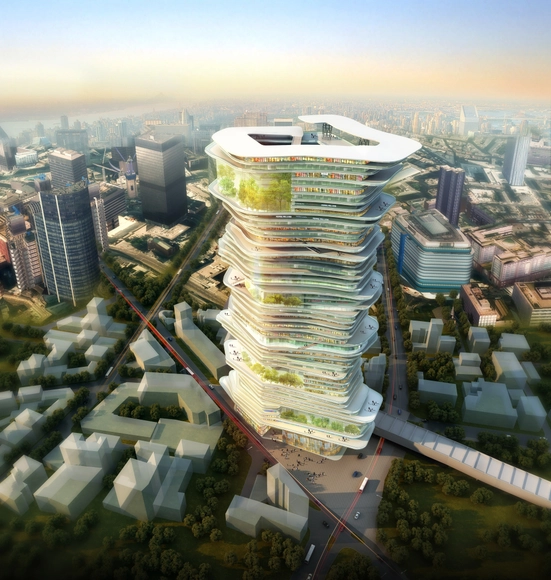
Recently winning first place in a Skyscapers and SuperSkyscapers Competition, SURE Architecture has put forth a daring new proposition for a London skyscraper design. Their proposal, titled "The Endless City in Height," does away with the traditional notion of stacking floors on top of each other. Rather, this innovative design incorporates two street-sized ramps that wind their way up the exterior of the tower, creating extensions of the city streetscape that rise and coil vertically into the London skyline.
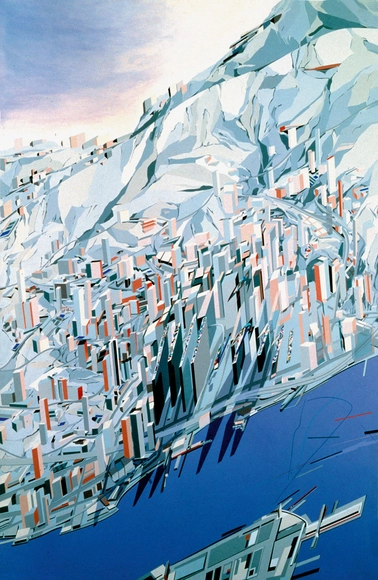
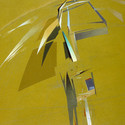
In an article for London's Royal Academy of Arts Magazine entitled Plane Sailing, Zaha Hadid discusses the influence of Russian Suprematist painter Kazimir Malevich on her own design work. In Hadid's early work, such as The Peak Blue Slabs (1982/83), the visual connections to Malevich's strict, regular shapes and lines are evident.