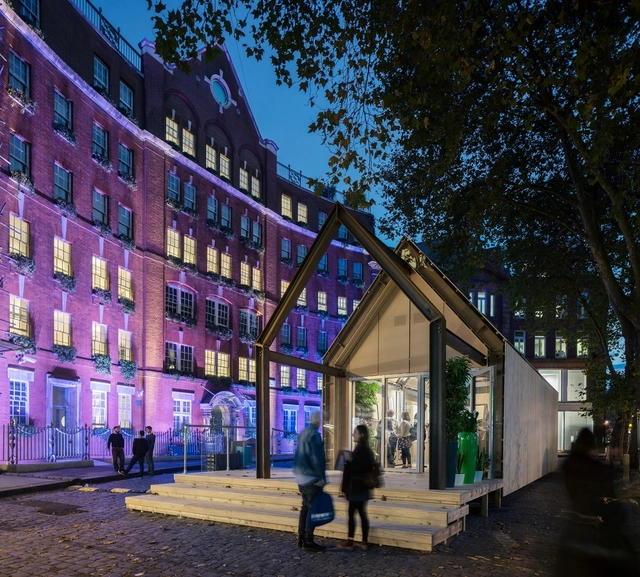
The Built Environment Trust along with the Mayor of London are seeking ideas that could help cities work better at night. Built environment professionals and the public are encouraged to show policy makers and developers how we might think differently by entering Night Time is the Right Time ideas competition. £2,000 in prize money is on offer and the best entries will be featured in a major exhibition. Amy Lamé, the new Night Czar for London is amongst the high profile judging panel.
A total of 85 buildings from the British capital have been shortlisted for the 2017 RIBALondonAwards, including projects from Wilkinson Eyre, AHMM, Allies and Morrison, Herzog & de Meuron, and Rogers Stirk Harbour. All 85 buildings will now be visited and carefully assessed by one of four regional juries, before the regional winners are selected in June of this year. Winning projects will continue on to compete for the RIBA Stirling Prize - the UK's highest honor for architecture.
See a complete list of shortlisted buildings after the break.
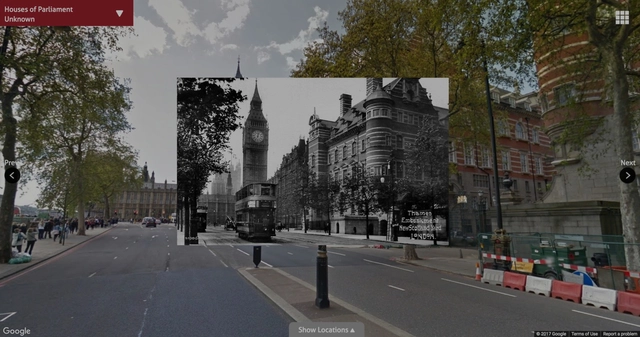
Houses of Parliament – Then and Now. Image Courtesy of Expedia
Go on a virtual stroll through century-old London, with this new interactive map produced by Expedia. Named “Historic London,” the app takes you through 14 notable sites throughout the British capital, from Buckingham Palace to a view of St. Paul’s Cathedral from Fleet Street. Archival images of the sites from the late 1800s and early 1900s are overlayed onto the streetview of today, so you can easily compare what has and hasn’t changed over the last 100 years.
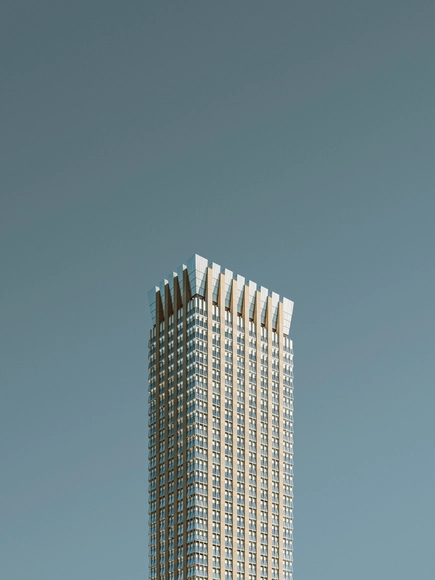
Florian W. Mueller's Singularity series is, in the photographer's own words, "just the building – reduced to the max." These deceptively simple shots of the summits of skyscrapers from around Europe and North America, each set against in infinite gradient of sky, are symbols of architecture's effort to reach ever higher in evermore unique ways. For Mueller, who is based in Cologne, they are an attempt at abstraction. In isolation—and especially when viewed together—they are remarkably revealing as studies of form and façade.
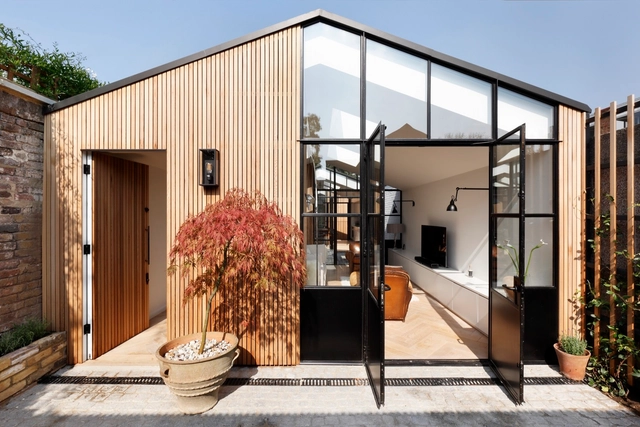
In a prototype developed for the 2016 London Design Festival, Arup Associates designed The Circular Building, one of the first buildings in the UK built to satisfy Circular Economy principles, in which “all components need to be implemented and utilized to their full potential and to the duration of their life cycle, while creating a comfortable and aesthetic environment for the user.”
In order to achieve these goals, designers and engineers worked together to refine the application of prefabricated construction techniques, producing details that utilize finely tuned engineering rather than mechanical fixings. Through this methodology, the team was able to create a low-waste, self-supporting, and demountable structurally integrated panel (SIPs) wall system (which used cladding provided by Accoya) with reusable clamp connections between the wall and recycled steel frame elements, as well as sustainably sourced, heat treated timber for the cladding and decking.
In this essay by the British architect and academic Dr. Timothy Brittain-Catlin, the very notion of British postmodernism—today often referred to as intimately tied to the work of James Stirling and the the thinking of Charles Jencks—is held to the light. Its true origins, he argues, are more historically rooted.
I grew up in a beautiful late Victorian terrace with ornamental brickwork, shaped ‘Dutch’ gables and pretty arts and crafts stained glass windows – and so I didn’t think then, and I don’t think now, that I had much to learn from Las Vegas. It turns out that I wasn’t the only one. Of British architects who made their names as postmodernists in the 1980s, not a single one would say now that they owed much to Robert Venturi, the American architect widely considered to be a grandfather of movement.
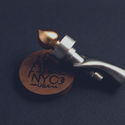
Russian designer Konstantin Kolesov has created a collection of finely-crafted souvenirs celebrating iconic architectural landmarks from around the globe. The Jsouv Collection consists of 15 pieces, depicting landmarks from New York, London, Tokyo, Dubai and more. Crafted from solid aluminum, the souvenirs are accompanied by a natural walnut base engraved with a 2D emblem of the city in question. With the souvenirs currently being crowdfunded on Indiegogo, Jsouv is also offering a t-shirt collection with unique prints of each city and landmark.
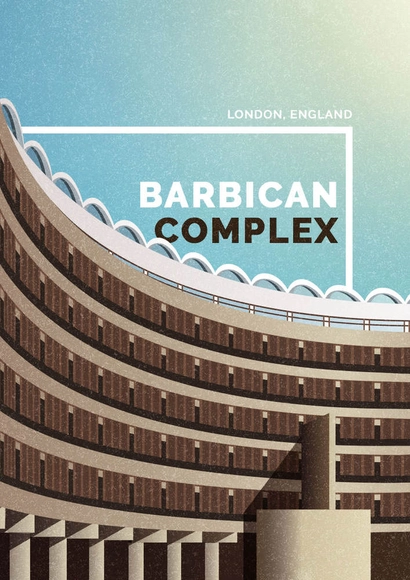
Barbican Complex, London. Image Courtesy of GoCompare
The Barbican Centre in London is celebrating its 35th anniversary. Widely regarded as the pinnacle of the Brutalist movement, the mixed-use development is home to 4,000 residents, the Guildhall School of Music & Drama, and the London Symphony Orchestra. Located in the heart of London, the Barbican is just one example of how Brutalist architecture forms a central part of our cities. To celebrate this progressive, modernizing, sometimes controversial style, GoCompare has created an online gallery illustrating Brutalist icons from across the world.
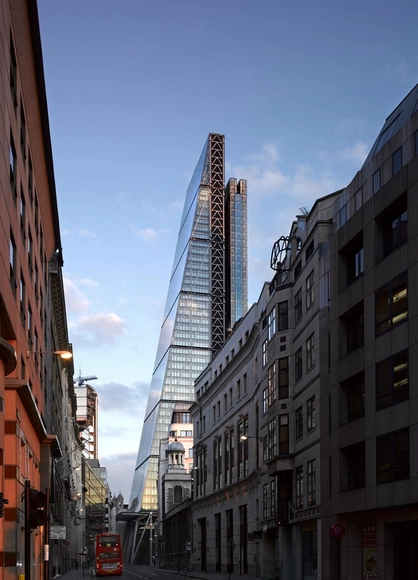
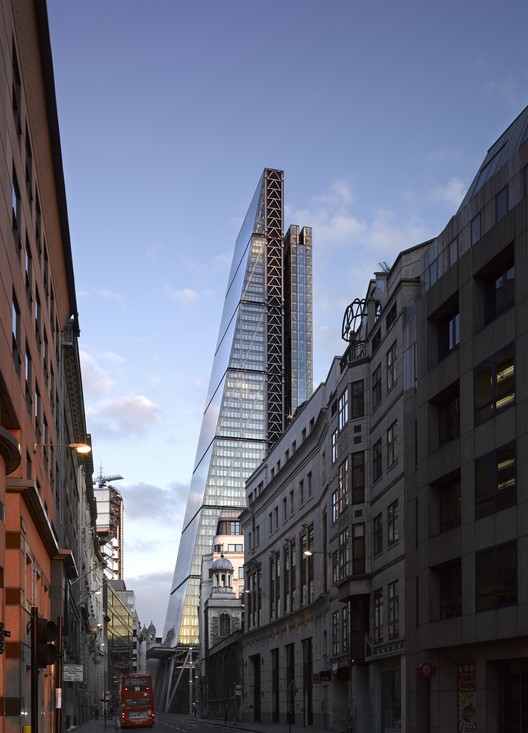
The Leadenhall Building, designed by Rogers Stirk Harbour + Partners, has been sold to a Chinese property magnate for a price of £1.15 billion, in what has become the second-biggest sale of a UK building in history, as well as one of China’s largest acquisitions of UK real estate. The transaction involved developer British Land and its partner Oxford Properties, who sold the tower to CC Land, a Hong Kong based company.
Tim Roberts, head of offices and residential at British Land, said: “British Land and Oxford Properties took a bold step at the early stages of the UK’s economic recovery to develop the Leadenhall Building to generate a high-quality, long-term income stream,” said Tim Roberts, head of offices and residential at British Land. “This sale shows continued investor appetite for best-in-class, well-located property in London.”
Earlier this month, Hong Kong-owned developer Knight Dragonrevealed plans for an billion-dollar urban-development scheme that will completely transform London’s Greenwich Peninsula. In this edition of Section D, Monocle 24's weekly review of design, architecture and craft, the team speak to Santiago Calatrava—who will be designing the core of this grand new project—about this and his public-spirited design philosophy. Why, they ask, has he’s always wanted to leave a mark on the "Big Smoke?"
https://www.archdaily.com/806495/santiago-calatrava-ground-zero-design-philosophy-greenwich-peninsula-project-monocleAD Editorial Team
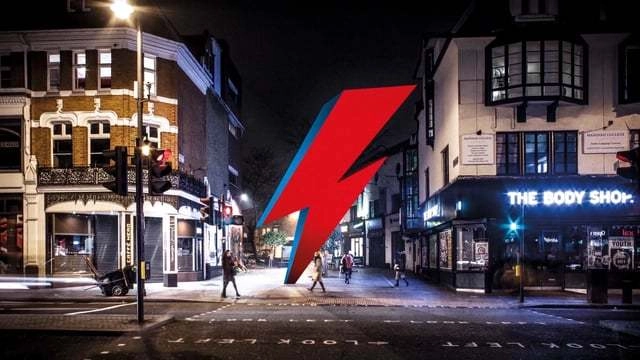
A year since the passing of David Bowie, one of music and pop culture’s greatest icons, fans have launched a fundraising campaign to support the erection of a permanent memorial statue in London, in honor of the late musician.
“We’re taking the lightning flash from the cover of Aladdin Sane, and turning it into a three-storey tall sculpture,” explains Charlie Waterhouse of This Ain’t Rock ‘n’ Roll, one of the organizations behind the campaign, working in conjunction with David Bowie’s team.
https://www.archdaily.com/805983/this-campaign-envisions-a-three-storey-lightning-bolt-in-honour-of-david-bowieOsman Bari
It's common knowledge that China has "at least 10 White Houses, four Arcs de Triomphe, a couple of Great Sphinxes and at least one Eiffel Tower," report the New York Times. But now photographs of a copy of London’s famous Tower Bridge (a Victorian riparian gateway to the city) in the Chinese city of Suzhou have emerged – and it's been adapted to suit a five-lane highway. Almost identical—from a distance, at least—to its British counterpart the new structure, which was completed in 2012, has been doubled – a feat which has also required some spectacular architectural additions.
https://www.archdaily.com/806431/twice-as-nice-suzhou-china-architectural-homage-copies-copy-london-tower-bridgeAD Editorial Team




.jpg?1492100907&format=webp&width=640&height=580)


.jpg?1492100907)