Jiakun Architects: The Latest Architecture and News
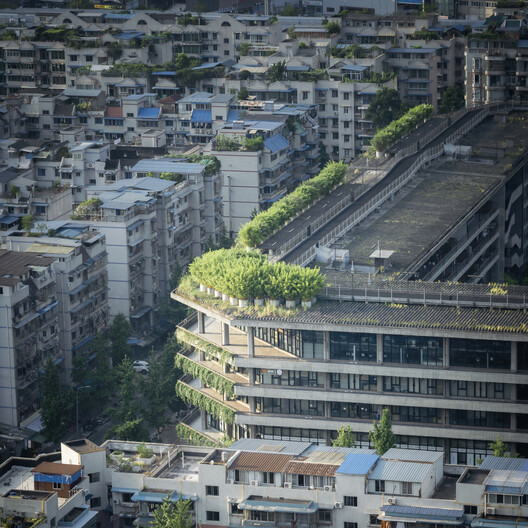
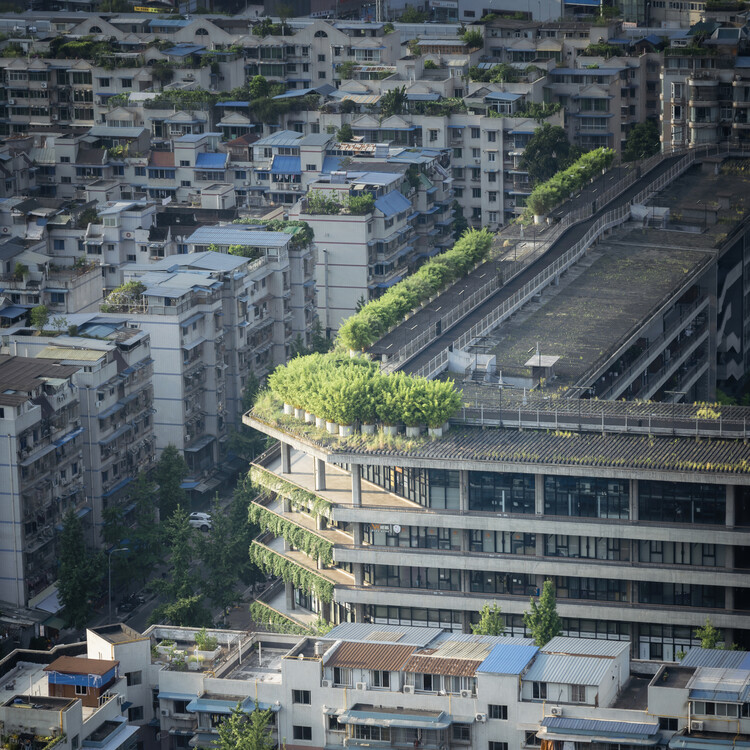
Chengdu Jobs | Jiakun Architects Recruitment



https://www.archdaily.com/1185280/chengdu-jobs-jiakun-architects-recruitment韩爽 - HAN Shuang
2025 Pritzker Architecture Prize Ceremony Video Released Honoring Liu Jiakun
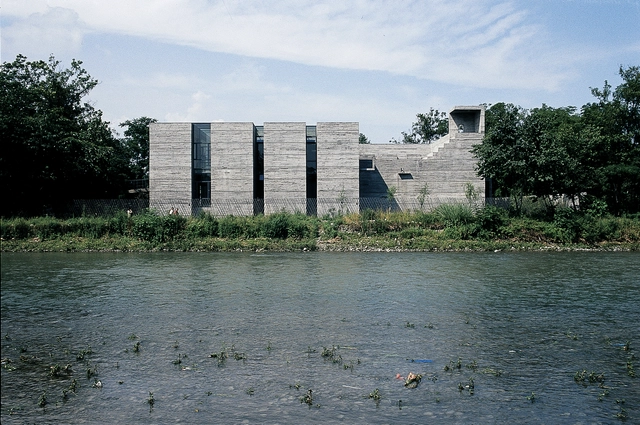
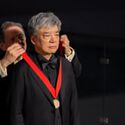
The Pritzker Architecture Prize has released a special video honoring Liu Jiakun, the 54th Laureate of the award. Filmed at the Louvre Abu Dhabi, the ceremony celebrates Liu's architectural vision, characterized by a deep engagement with civic life, cultural continuity, and the human condition. The film captures moments from the event and offers insight into Liu's broader practice, emphasizing architecture's capacity to reconcile tradition and modernity while addressing social and environmental challenges. The release of the ceremony video marks the culmination of the 47th edition of the Pritzker Architecture Prize. The 2026 Laureate will be announced in March, continuing the award's legacy of recognizing architects whose work advances the discipline and its role in shaping human experience.

https://www.archdaily.com/1035919/2025-pritzker-architecture-prize-ceremony-video-released-honoring-liu-jiakunReyyan Dogan
Rethinking the Flat Datum: Designing Space with Incline and Intent
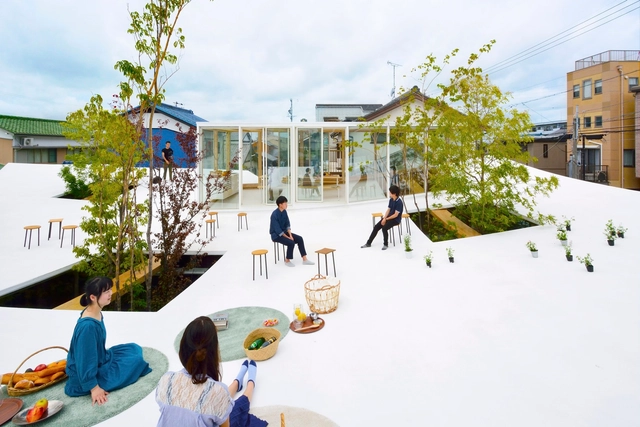
Historically, architecture and the built environment have insisted on creating flat, hard surfaces. In earlier eras, walking without paved ground meant mud-caked shoes, uneven footing, tripping hazards, standing water after rain, and high maintenance. Hence, as we shaped cities, we prioritized a smooth, continuous, solid horizontal datum. The benefits are real: easier walking, simpler cleaning, and straightforward programming—furniture, equipment, and partitions all prefer a level base. This universal preference for building on flat ground remains the norm and, for many practical reasons, will likely continue to be.
What's less recognized is that making a truly flat surface is surprisingly difficult—and many well-executed "flat" floors aren't perfectly flat at all. They are often gently sloped, calibrated to precise gradients for drainage. While interior spaces do not always require this, many ground floors and wet areas do incorporate subtle inclines as a safeguard—whether for minor flooding or to manage water that overflows from the street or plumbing when one of the discharge systems is malfunctioning.


https://www.archdaily.com/1035411/rethinking-the-flat-datum-designing-space-with-incline-and-intentJonathan Yeung
Chinese Architect Liu Jiakun Receives the 2025 Pritzker Architecture Prize
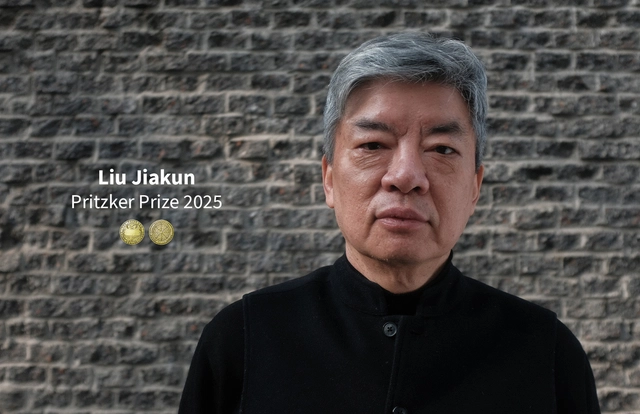
Chinese architect and educator Liu Jiakun has been announced as the laureate of the 2025 Pritzker Architecture Prize, the highest honor in the architecture field. This prestigious award recognizes Jiakun, founder of Jiakun Architects (established 1999), for his ability to blend traditional Chinese elements with contemporary design and for his commitment to social equity in the built environment. Born in Chengdu, China, where he continues to live and work, he becomes the second Chinese architect to receive the accolade, following Wang Shu (2012). Jiakun joins a distinguished list of previous laureates including Riken Yamamoto in 2024, David Chipperfield in 2023, and Francis Kéré in 2022. The award ceremony will be held this spring at the Jean Nouvel-designed Louvre Abu Dhabi, with a global video release of the presentation this fall, followed by the 2025 Laureates' Lecture and Symposium in May.



https://www.archdaily.com/1027571/chinese-architect-liu-jiakun-receives-the-2025-pritzker-architecture-prizeMaria-Cristina Florian
Liu Jiakun: Get to Know the 2025 Pritzker Winner's Work
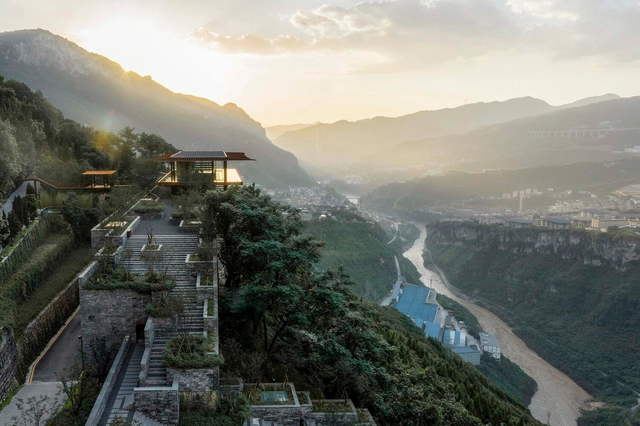
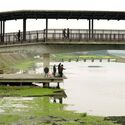
The 2025 Pritzker Prize has been awarded this year to Chinese Architect Liu Jiakun. Born in Chengdu in 1956, he grew up in the densifying city, before attending and graduating from the Chongqing Architecture and Engineering College (Chongqing University) in 1982 with a Bachelor of Engineering degree in Architecture, and becoming one of the first college graduates to be tasked with rebuilding the country during the Chinese transition period. However, it wasn't until many years later that the architect understood that "the built environment could be used as a medium for personal expression". It was then that his endeavors and career took off, with Liu Jiakun starting his practice in 1999, and participating in more collaborative works across China and Europe. Based on his experiences, his works are anchored in his understanding of reality and a respect towards China's multi-traditional history and internal diversity; all while achieving a seamless balance between architecture and nature, tradition and modernity.
These concepts do not obstruct his consciousness of human needs and the importance of community spaces. Through his projects, Liu Jiakun proves that spaces can affect human behavior and become positively evocative. A public space such as those he's created can be conducive to a benevolent atmosphere that provides rest and collaboration. "such as my pursuit of narrative and poetry in design." The comprehensiveness of Liu Jiakun's works makes it easy not to be constrained by stylistic or aesthetic limitations or requirements. He just follows what the site, natural landscape, pre-existing urban frame, and citizen needs might require. The physical result is a mix of all of these with the predominant vernacular traditions.

https://www.archdaily.com/1027566/liu-jiakun-get-to-know-the-2025-pritzker-winners-workHana Abdel
Who Is Liu Jiakun? 10 Things to Know About the 2025 Pritzker Architecture Laureate
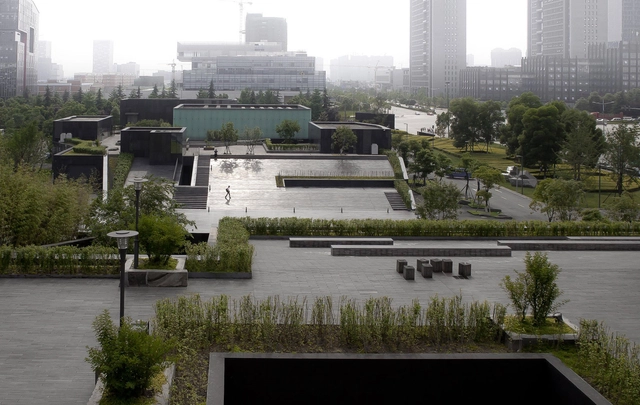
Liu Jiakun, the 2025 Pritzker Prize winner, has spent decades redefining Chinese architecture by combining utopia with function and social engagement with personal memory. His buildings are reflections of the everyday lives of ordinary people, crafted with an understanding of place, culture, and materiality. Rejecting the pursuit of a fixed architectural style, Jiakun believes in a strategy rather than a signature aesthetic, tailoring each project to its specific context and needs. His work integrates history with contemporary urban needs, collectivism with individual experience, and density with openness, offering timely solutions to the challenges of rapid urbanization.
Jiakun's approach is deeply rooted in Chinese philosophy, common sense, and local craftsmanship, ensuring that architecture grows naturally from its surroundings rather than being imposed upon them. His buildings reflect an authenticity that speaks to both past and present, avoiding grand gestures in favor of spaces that foster interaction, spirituality, and human connection.



https://www.archdaily.com/1027570/who-is-liu-jiakun-10-things-to-know-about-the-2025-pritzker-architecture-laureateNour Fakharany
On the Work of Three Pioneering Chinese Architects: Wang Shu, Yung Ho Chang, and Liu Jiakun
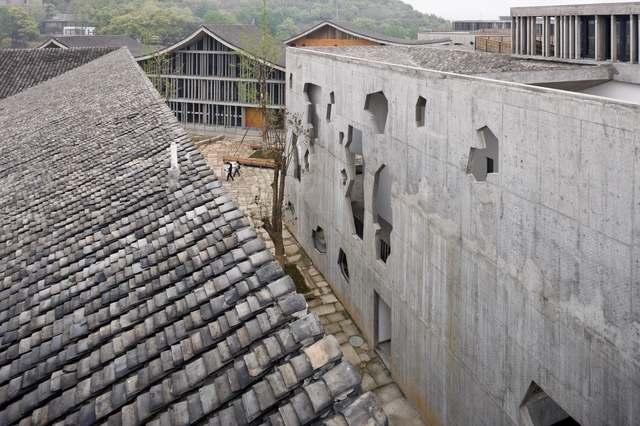
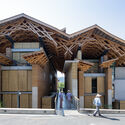
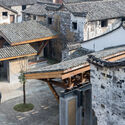
I first went to China in 2002, a year after the International Olympic Committee awarded the 2008 Summer Games to Beijing. That initial trip was about exploring nature, cuisine, ancient temples, archeological sites, and, in general, experiencing lifestyles in China, mainly outside of its major cities. I was motivated by the pure curiosity of a Western tourist driven to an Eastern country in search of the old world, the exotic, hoping to catch a glimpse of a rich traditional culture on the cusp of its inevitable radical transformation. At the time, there was no modern, or rather contemporary, architecture in China to speak of. There were only the promising first hints of the development of a potentially new architectural language being undertaken by just a handful of independent architects almost entirely under the radar.



https://www.archdaily.com/1001014/on-the-work-of-three-pioneering-chinese-architects-wang-shu-yung-ho-chang-and-liu-jiakunVladimir Belogolovsky
Reading Architecture as a Book
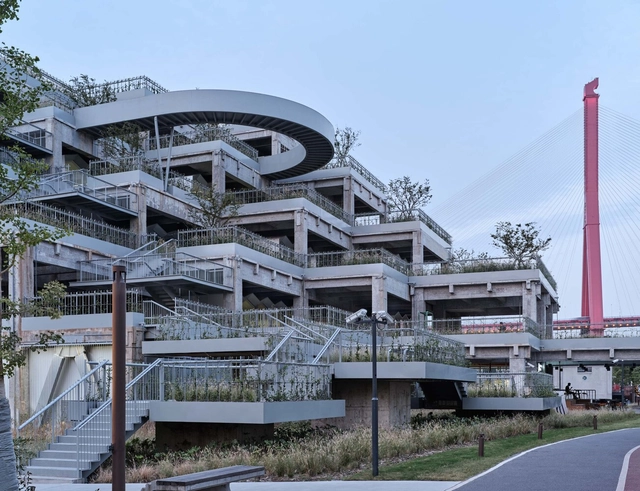
The standards for classifying good or terrible architecture are usefulness and beauty, or what we commonly refer to as practicality and aesthetics. However, practicality might quickly direct us toward functionalism, which is the only viable option, or toward the design of sculptural structures. The architect Le Corbusier once stated, "If you create a house with stone, wood, and concrete, that's just a building; if you touch my heart, that's architecture." However, perhaps the readability of architecture might serve as a criterion for good architecture: Reading architecture as a book with complete words and sentences that stand up to careful consideration.


https://www.archdaily.com/989737/reading-the-architecture-as-a-bookXiaohang Hou
“It's All About Continuing Our Cultures": In Conversation With Wang Shu On Designing Chinese Cities For Humanity

People are the purpose and scale of the city. What does a people-oriented city look like? On April 8, 2021, sponsored by "LIFE WEEK ", the first Sanlian “City for Humanity Award” Ceremony was held in Chengdu. It takes "Rebuilding Connections" as its first theme, and hopes to promote a discussion on social values and humanistic care in Chinese cities through a professional and communicative approach, such as awards at this special moment after the epidemic.
https://www.archdaily.com/960584/its-all-about-continuing-our-cultures-in-conversation-with-wang-shu-on-designing-chinese-cities-for-humanityScarlett Miao
“In The 1990s, We All Became Free”: In Conversation with Jiakun Liu of Jiakun Architects
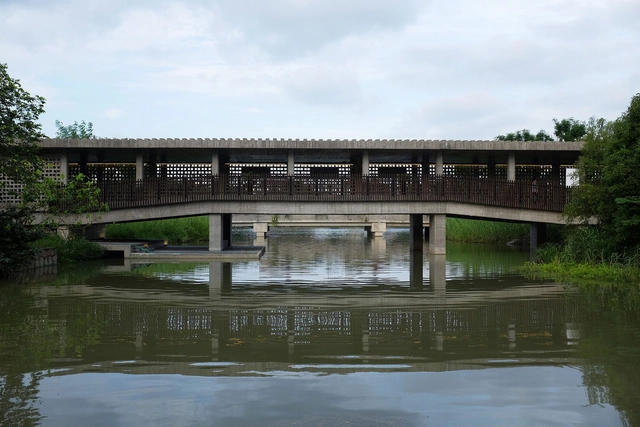
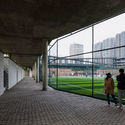
Jiakun Liu was born in 1956 in Chengdu, China. Architecture was not his first choice to pursue at school, as he originally wanted to be an artist. He heard that architecture had something to do with drawing, so he applied to Chongqing Institute of Architecture and Engineering, not fully understanding what his role as an architect would be. After his graduation in 1982, Liu worked at the Chengdu Architectural Design Academy for two years, the experience he did not enjoy. So, he set out on a self-searching journey that lasted for over a decade, spending time in Tibet and Xinjiang in West China where he practiced meditation, painting, and writing, producing several works of fiction, while officially working at the Literature Academy as a writer.

https://www.archdaily.com/941076/in-the-1990s-we-all-became-free-in-conversation-with-jiakun-liu-of-jiakun-architectsVladimir Belogolovsky
First Serpentine Pavilion Outside UK Opens with Design by JIAKUN Architects
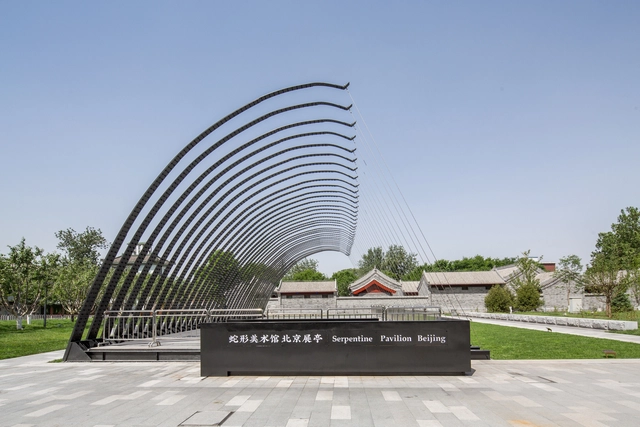
A new Serpentine Pavilion has opened in Beijing, China, marking the first time the prestigious program has been implemented away from its usual home at the Serpentine Gallery in Hyde Park, London. Designed by JIAKUN Architects, the pavilion was commissioned by The Serpentine Galleries working in partnership with WF CENTRAL, and is located just 600 meters away from Beijing's Forbidden City.
https://www.archdaily.com/895619/first-serpentine-pavilion-outside-uk-opens-with-design-by-jiakun-architectsRory Stott
JIAKUN Architects Selected to Design First Foreign Serpentine Gallery Pavilion in Beijing
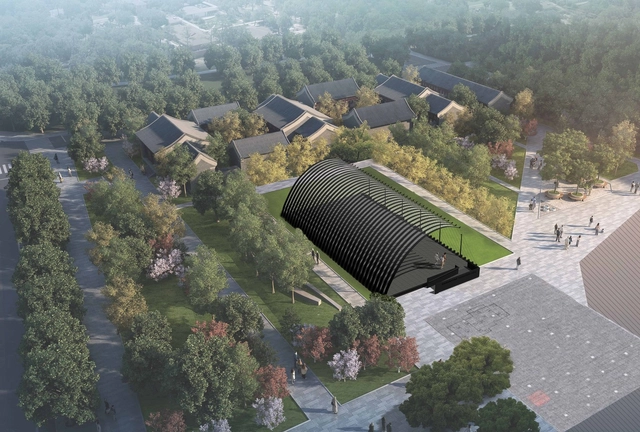
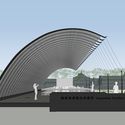
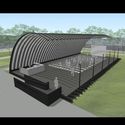
The Serpentine Galleries has announced the expansion of their popular summer pavilion program, collaborating with Beijing’s WF Central to commission the inaugural Serpentine Pavilion Beijing. The first Serpentine Pavilion to be built outside of the Galleries’ Kensington Gardens home in London, the Beijing Pavilion will be located just 600 meters away from the historic Forbidden City in the Dongcheng District, where it will host a program of cultural activities and events.
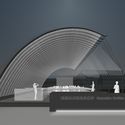
The inaugural pavilion has been designed by emerging Chinese studio JIAKUN Architects, led by architect Liu Jiakun. Drawing both from the historical and social of Beijing and from the storied 17-year history of the Serpentine Pavilion commission, the design features an arched form that balances forces of tensions and compression.


https://www.archdaily.com/888170/jiakun-architects-selected-to-design-first-foreign-serpentine-gallery-pavilion-in-beijingPatrick Lynch
World's First Bicycle Architecture Biennale to Debut in Amsterdam
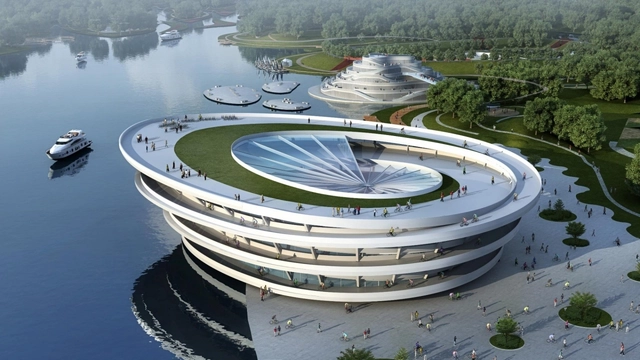
The world’s first international Bicycle Architecture Biënnale - a showcase of outstanding built environment solutions around cycling - will take place this month in Amsterdam.
The event - organized by leading cycling innovation agency CycleSpace - takes place on Wednesday 14 June and will celebrate the cutting edge and high profile building designs that are facilitating bicycle travel, storage and safety around the world.
https://www.archdaily.com/873332/worlds-first-bicycle-architecture-biennale-to-debut-in-amsterdamPatrick Lynch