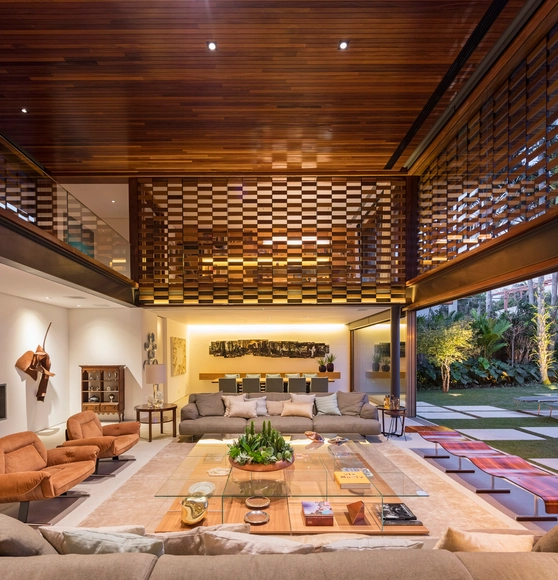
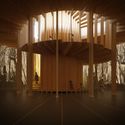
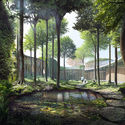
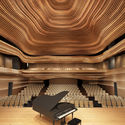
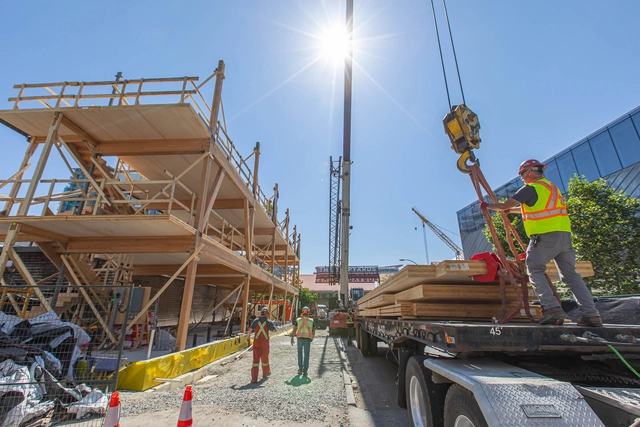
Mass timber components for this project were prefabricated offsite which not only aids in the ability for on-site assembly but also aids in the disassembly of projects in the future if needed. Timber's versatility allows it to be disassembled and then reassembled into other buildings and furnishings, sequestering carbon for longer so long as it stays out of the landfill. Photo: PH1 construction by Naikoon Contracting, KK Law. Image Cortesia de naturallywood.com
The first Shikinen Sengu was held in the year 690, in the city of Ise, Mie Prefecture, Japan. It consists of a set of ceremonies lasting up to 8 years, beginning with the ritual of cutting down trees for the construction of the new Ise Shrine and concluding with the moving of the sacred mirror (a symbol of Amaterasu-Omikami) to the new shrine by Jingu priests. Every 20 years, a new divine palace with exactly the same dimensions as the current one is built on a lot adjacent to the main sanctuary. Shikinen Sengu is linked to the Shinto belief in the periodic death and renewal of the universe, while being a way of passing on the ancient wood construction techniques from generation to generation.
The idea of creating a building that will have an expiration date is not a common one. In fact, the useful life of a structure is often given little consideration. When demolished, where will the materials go? Will they be disposed of in landfills or could they be reused in new projects? There are certain construction methods and materials that make this process easier. Others make reuse unfeasible, due to several factors.
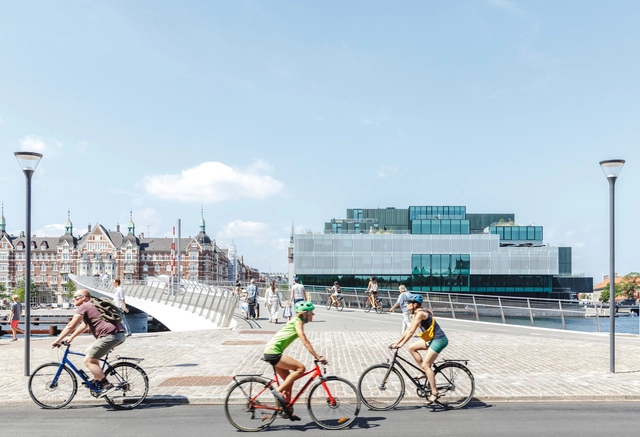
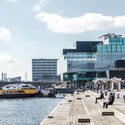
Following Rio de Janeiro’s inaugural hold of the title, Copenhagen has been named World Capital of Architecture for 2023 by UNESCO and will host the International Union of Architect’s World Congress 2 years from now. At its second edition, the initiative supported by UNESCO in partnership with UIA is meant to highlight the role of architecture and urban planning in shaping a sustainable future and tackling global challenges. Designated triennially, the city World Capital of Architecture will become an international forum for debate around issues related to the urban environment.
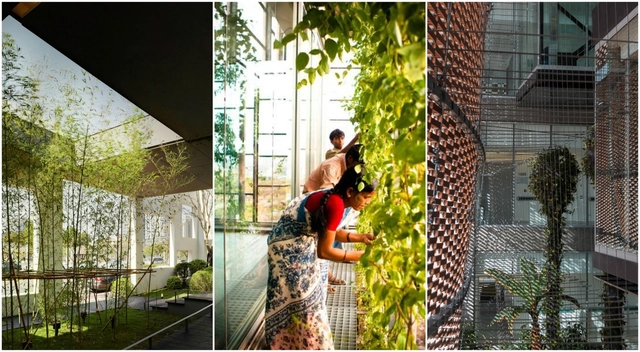
Bringing the weather inside is usually the opposite of what you want from a building envelope. However, new research from the University of Oregon, described in an article by The Washington Post, aims to show the physical and psychological benefits of letting nature inside. Signs of nature and change are both beneficial to our well-being, yet we don’t always have access to them when inside buildings—and humans are now spending 90% of our lives inside. But even in an urban setting, where nature may be hard to come by, there’s no escaping the weather. When researchers found ways to bring things like wind and dappled reflections of the sun inside, they found that exposure to these natural movements lowered heart rates, while being less distracting than similar artificially generated movements.
By now, green buildings are a familiar concept, but the article in The Washington Post proposes moving beyond green buildings as we know them today. While green building can be great in new construction, that excludes a lot of existing buildings that could and should also benefit from an intervention of nature. Ideally, buildings should actively demonstrate their relationship with nature, moving beyond simply “doing no harm.”
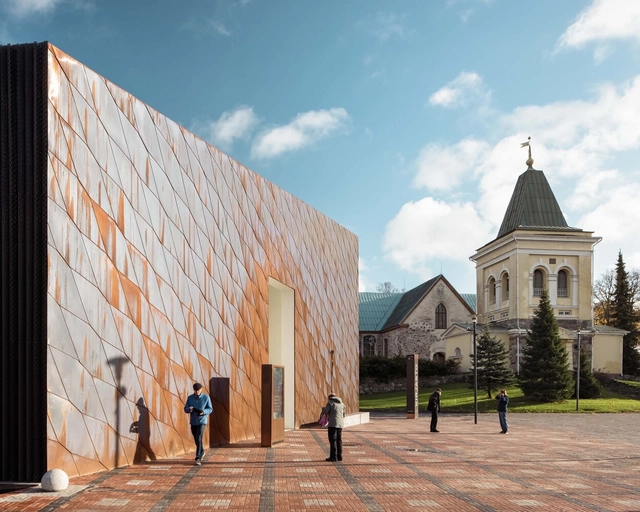
It is believed that copper was the first metal to be found by men and used in the manufacture of tools and weapons. This occurred in the last period of prehistory, more than 10,000 years ago, in the so-called Metal Age, when groups, until then nomadic, started to become sedentary, developing agriculture and starting the first urban settlements. Copper has since been used in diverse ways. Used for decorative objects, jewelry, automotive parts, electrical systems, and even for dental amalgams, the material has had huge demand. In architecture, copper coatings are greatly appreciated for their aesthetics and durability. But a factor worth mentioning is that copper can be recycled infinitely, practically without losing its properties.
Vertical Glass House / Atelier FCJZ. Image Cortesia de Atelier FCJZ
When water runs down the drain or we flush it down the toilet, we usually don't care where it ends up. This is because with adequate basic sanitation, wastewater shouldn't be a concern. Yet, although humanity has already taken man to space and plans to colonize Mars, it continues to fail to provide basic living conditions for a large part of its population. A comprehensive study estimates that 48% of global wastewater production is released into the environment untreated. The UN, in turn, presents a much less encouraging figure, citing that 80% of the world's sewage is released without treatment. But returning to the question of the title, there are basically two destinations for sewage if it is not being released directly into the natural environment: it can be treated locally through septic tanks, or connected to a sewage treatment plant through the sewage network, eventually returning to nature after a series of treatment processes.
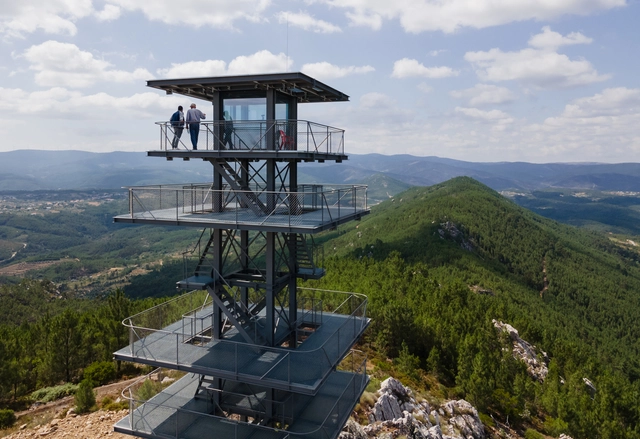
Álvaro Siza's latest project in Portugal is a 16-meter high watchtower built with a lightweight steel structure featuring photovoltaic panels on the roof. This project is very different from most of Siza's works, both in terms of scale and materials. The watchtower is located in Serra das Talhadas, in the municipality of Proença-a-Nova, and is part of a larger project comprising several structures dedicated to ecotourism in the area, including the still unbuilt Miradouro do Zebro.
Caius Sergius Orata is credited, by Vitruvius, with inventing the hypocaust. The word, from the Latin hypocaustum, in a literal translation, means access from below. The hypocaust is a raised floor system on ceramic piles where, at one end, a furnace—where firewood is burned uninterruptedly—provides heat to the underground space, which rises through walls constructed of perforated bricks. Hypocausts heated, through the floor, some of the most opulent buildings of the Roman Empire (including some residences) and, above all, the famous Public Baths.
With a similar function, but in the East, there existed the ondol. It is estimated that it was developed during the Three Kingdoms of Korea (57 BC-668 AD), but researchers point out that the solution was used long before that. The system also manipulated the flow of smoke from agungi (rudimentary wood stoves), rather than trying to use fire as a direct heat source like most heating systems. It even caught the attention of Frank Lloyd Wright, as pointed out in this article, who adapted the system to use it in heating homes in the United States and in his important Imperial Hotel in Tokyo. How do radiant floor heating systems currently work?
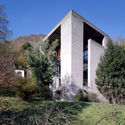
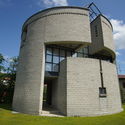
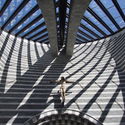
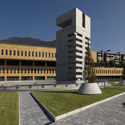
Swiss architect Mario Botta is known for his geometrically imposing, spatially captivating structures that are invariably dressed in zebra-like horizontal stripes in either black and white or red and white combinations. These both traditional and strikingly modern villas, chapels, wineries, schools, libraries, museums, company headquarters, banks, and residential blocks are scattered throughout towns and mountainous villages in the architect’s native Ticino region in southern Switzerland, extend all over Europe and can be encountered in places as far away as China, India, South Korea, Japan, and the USA.
Residência GAF/Jacobsen Arquitetura. Image Cortesia de Jacobsen Arquitetura
When designing homes, architecture is constantly evolving and adapting to environmental conditions. Each climate has specific needs and requires different solutions in terms of comfort. Hot and humid environments require a very different design from cold and dry environments. Natural ventilation, for example, is very important in projects located in warm climates.
Automation is everywhere around us - our homes, furniture, offices, cars, and even our clothing; we have become so accustomed to being surrounded by automated systems that we have forgotten what life was like without them. And while automation has noticeably improved the quality of interior spaces with solutions like purified air and temperature control, nothing compares to the natural cool breeze of mother nature.
But just like everything else in architecture, there is no one size fits all; what works in Tanzania cannot work in Switzerland or Colombia. This is due to several reasons, such as the difference in wind direction, average temperature, spatial needs, and environmental restrictions (or lack thereof). In this article, we take a look at natural ventilation in all its forms, and how architects have employed this passive solution in different contexts.
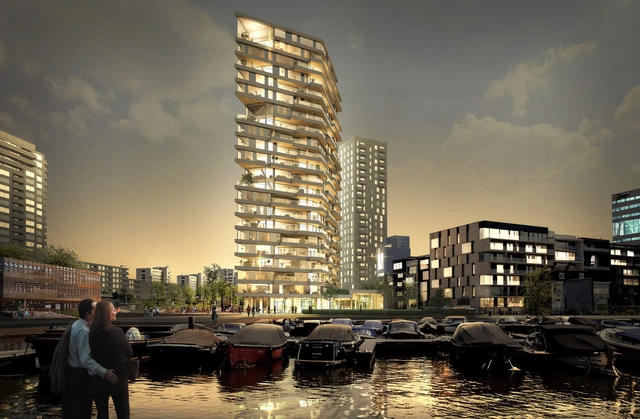
Rendering of HAUT. Image Courtesy of Team V Architectuur
Across the globe, tall wood structures have begun transforming the world of skyscrapers and high-rise buildings, ushering in an important shift to an architectural practice that has traditionally been dominated by steel and concrete. Typically defined as wood-constructed buildings over 14 stories or 50 meters high, the past six years have seen over 44 tall wood buildings built or underway around the world. Notable examples include Michael Green Architecture and DLR Group’s T3 and Team V Architectuur’s upcoming 73 meter residential tower HAUT.
https://www.archdaily.com/924341/could-tall-wood-construction-be-the-future-of-high-rise-buildingsLilly Cao
Energy codes around the world get stricter every year, architects need to prepare for various challenges ahead. The first step is to understand the key metrics needed to conduct early-stage analyses and collaborate across various teams. With buildings responsible for 39% of total carbon emissions, the design practice is evolving to bake in data-driven energy efficiency. This change is leading architects to quickly become building performance experts and create spaces that are high performance and healthy for occupants.
https://www.archdaily.com/963003/sustainable-building-design-top-5-metrics-every-architect-should-knowSponsored Post
The 17th Venice Architecture Biennale is currently unfolding, revealing a wide range of answers to the question "How will we live together". With 60 national pavilions, numerous contributions of invited architects from all around the world and several collateral events, this year's edition restates the Biennale's role as a platform for inquiry, exploration, and disruptive thinking in architecture. Curator Hashim Sarkis' original statement called upon architects "to imagine spaces in which we can generously live together." Recent circumstances have made the question even more relevant, prompting a holistic re-evaluation of how the world as a collective can face changes and challenges of an unprecedented scale from the disrupting role of technology, to inequality, mass migration and climate change. The following national contributions reflect on "how will we live together" amidst climate change, exploring ideas for a more sustainable future.
Talking to the Louisiana Channel, iconic Japanese architect Kengo Kuma discusses the many influences that have shaped his work - and also delves into the impact that the ongoing pandemic has had on the architectural field. In the interview, Kuma describes how influential his early upbringing was to his architectural career. Growing up in a small wooden house in the 1950s - originally built in 1942, would go on to guide his architectural perchance of using wood in his projects. Kuma also mentions Japanese architect Kenzu Tange as a key inspiration and cites Tange's Yoyogi National Gymnasium - constructed for the 1964 Summer Olympics in Tokyo - as a project that would influence him towards an architectural career.
In a Design and the City episode - a podcast by reSITE on how to make cities more liveable – Mexican architect Michel Rojkind talks about running, coming from a musical background, and the responsibility of architects to create buildings that can “give something relevant” back to the community. The interview delves into Rojkind’s philosophy of making sure that architectural conversations are not insular, but instead conversations that take place within a multi-disciplinary context.
Popularly known as the lotus, the aquatic species Nelumbo nucifera has a useful particularity. Its leaves are self-cleaning, or ultra-hydrophobic. This means that no particles of dirt or water adhere to its leaf, which is especially useful in the humid and muddy environments where the plant typically grows. However, this effect does not derive from a perfectly smooth surface or a resinous layer on the leaves. The lotus is, in fact, full of tiny folds that reduce the area of the contact surface and repel all the particles that try to adhere there. The lotus effect has been studied by nanotechnologists in order to apply this same effect to products, such as surfaces, paints, fabrics, and tiles that can easily clean themselves. As trivial as this may seem, when we think of the resources applied to cleaning skyscraper glass or even of the reduction in photovoltaic energy generation due to dust on solar panels, we can get a sense of the infinite possibilities that hydrophobic surfaces could represent.
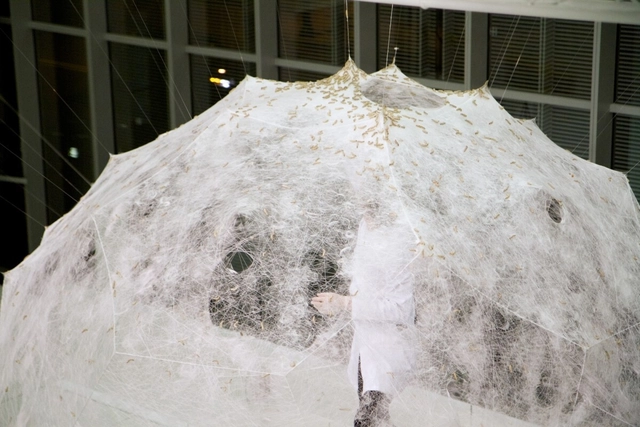
Nature, over billions of years, has developed adaptive solutions that are beginning to be understood by us with new technologies applied to the needs of areas such as the construction industry. When professionals such as scientists, biologists, engineers, architects, and others join forces and focus on understanding aspects of nature, with an empathetic and respectful view, the results can be impressive.
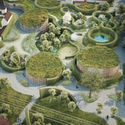
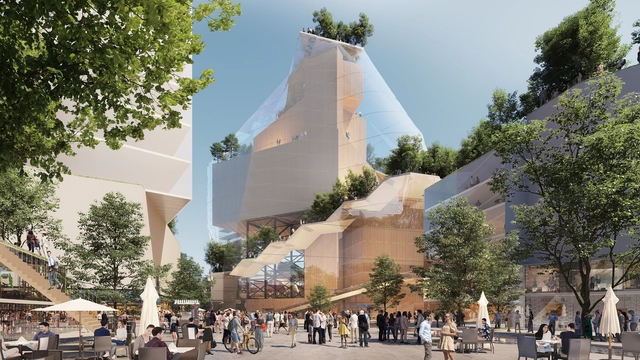
Reflecting on the future of shopping centres and addressing their decline in visitors, MVRDV's Heuvelkwartier design proposes converting Eindhoven's Heuvel shopping venue into a green cultural quarter. The project brings together retail, culture and recreation, expanding the existing buildings while transforming the roofs into a park. The proposal also expands the Muziekgebouw with a stacked cultural building encased in a "glass mountain", creating a new landmark for Heuvel.
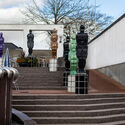
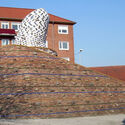
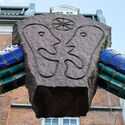
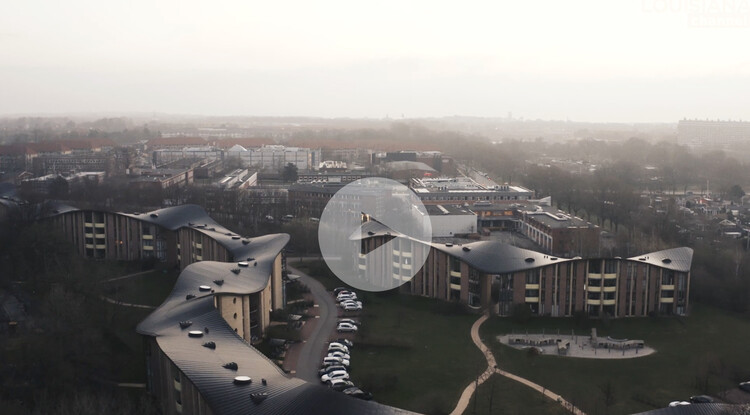
Talking to the Louisiana Channel, Danish professor, sculptor, and artist Bjørn Nørgaard outlines the philosophy that underpins his work and reflects upon his architectural projects. Nørgaard describes in the film, a co-production with Munkeruphus, the strong influence of his mentor in the 1960s - German artist Joseph Beuys - whose theories formed a key part of Nørgaard's evolution and ethos as an artist. The concept of "die soziale Plastik", or social sculpture, would go on to shape Nørgaard's approach to architecture and other forms of art - its main philosophy being that every part of life can be approached creatively.





.jpg?1503108285 "© Alejandro Arango")