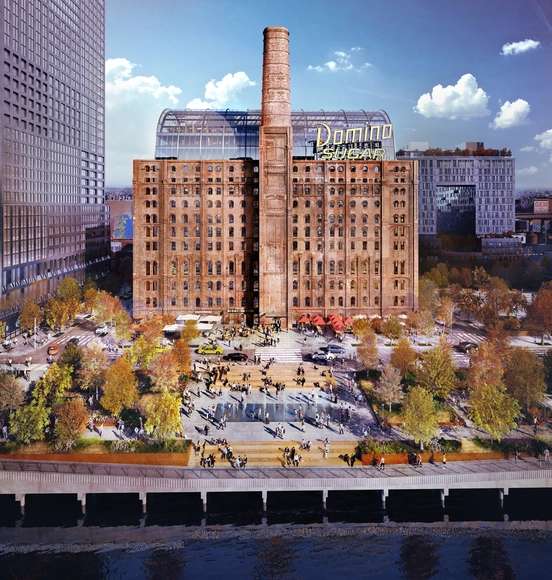
Domino Refinery. Image Courtesy of Practice for Architecture and Urbanism (PAU)
Adaam James Levin-Areddy and Vanessa M. Quirk, the hosts and producers of the Uncertain Things podcast, interview people from diverse backgrounds and a wide range of expertise to ask the question: “now what? What is happening and how did we get here?”. In this episode, they talk with urbanist, architect, and professor Vishaan Chakrabarti, founder of Practice for Architecture and Urbanism, to seek to understand how the cities got so expensive. Together they delve into the affordability crisis, the detrimental effect of progress, and what we need to do to have better cities.
When the first commercial planes took flight, so did architecture. Like many other moments of technological advancement, the fascination with soaring through the skies heavily influenced the design movements of the last fifty years- not only in terms of how we design airports and think about the airline passenger experience, but the aesthetics of aviation and how the fabrics, textures, and high-end details would influence our lives on the ground.
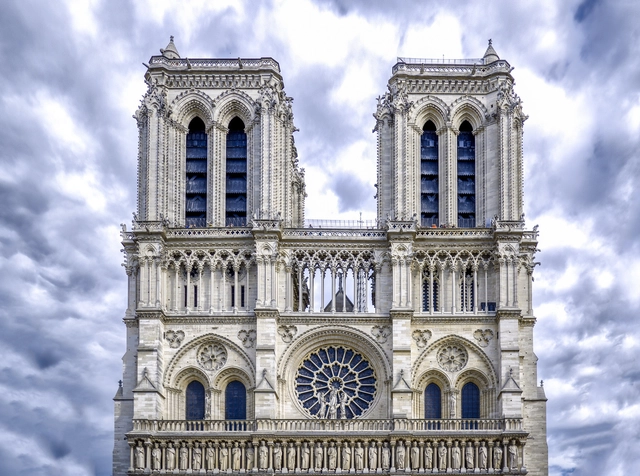
The word “Gothic” often envokes a description of mysterious homes, or a modern-day group of people who have an affinity for dark aesthetics, but what the gothic architectural style historically brought to the built environment could not have been more opposite. Gothic designs were actually created to bring more sunlight into spaces, mainly churches, and led to the design and construction of some of the world’s most iconic buildings.
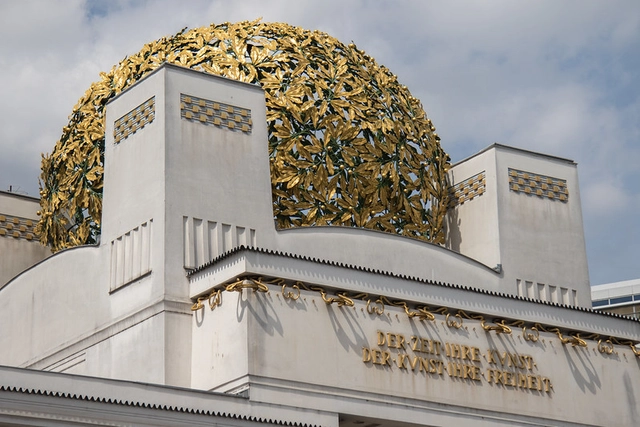
All architecture movements throughout history spur from shifts in society that demand a new style that better reflects the way that technology has advanced the practice and how people express their political, religious, and moral beliefs and practices. While some shifts occur over a period of several years, others are experienced as a sudden revolt. The Vienna Secession was undoubtedly the latter. At the end of the 19th century, a group of artists and architects aimed to explore what art should be as it pertained to filtering global influences in a way that could introduce new modernism.
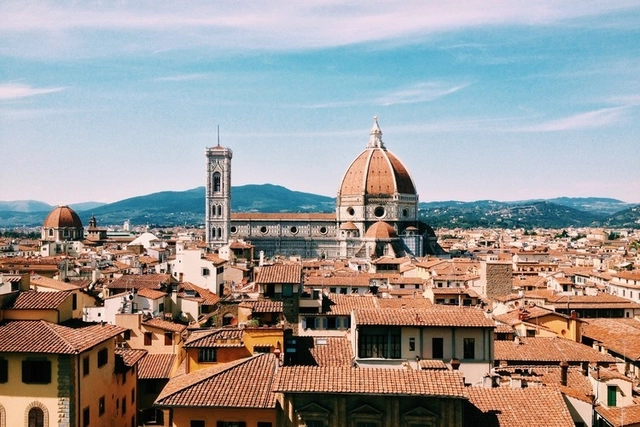
After a prolonged period known as the Middle-Ages, a growing desire to both study and mimic nature itself began to emerge, with an inclination to discover and explore the world. Between 1400-1600 A.D. Europe was to witness a significant revival of the fine arts, painting, sculpture, and Architecture. The ‘Renaissance’, meaning ‘rebirth’ in French typically refers to this period of European history, although most closely associated with Italy, countries including England and France went through many of the same cultural changes at varying timescales.
Prior to the dawn of the Renaissance, Europe was dominated by ornate and asymmetrical Gothic Architecture. Devoured by the plague, the continent lost approximately a third of its population, vastly changing society in terms of economic, social and religious effect. Contributing to Europe’s emergence into the Renaissance, the period ushered in a new era of architecture after a phase of Gothic art, with the rise of notions of ‘Humanism’. The idea of attaching much importance to the essence of individualism. The effect of Humanism included the emergence of the individual figure, greater realism and attention to detail, especially in depictions in art.
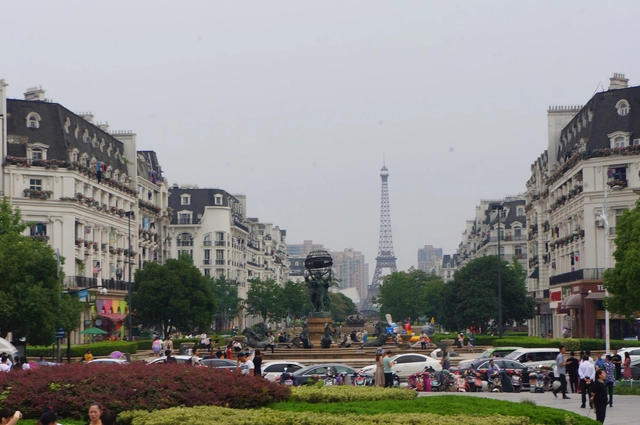
Chinese Champs-Élysées, named Xiangxie Road. Image by MNXANL, via Wikipedia. Licença CC BY-SA 4.0
CopyCat is the act of emulating something that's already been created and using it in a different context. Copycats can exist in music, arts and design; but they are not exactly a design inspiration or a style reference, but rather a literal copy with almost no modification of the original work.
In architecture, it is as if you were inspired by an emblematic work from another space-time and placed it somewhere unconnected with the original roots of the work-style.
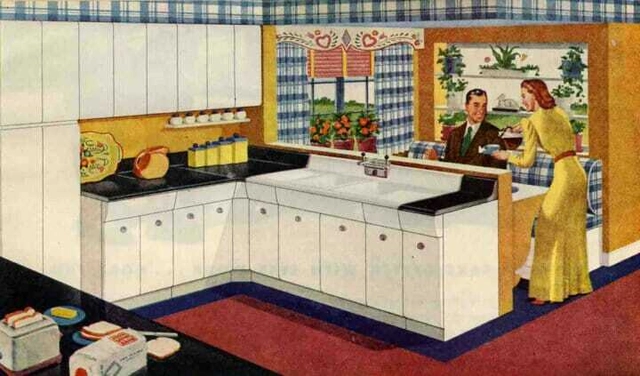
Cozinha Americana, 1946. Autor: Harris & Ewing, fotógrafo. N STREET, KITCHEN. [Entre 1905 e 1945] Fotografia. Recuperado da Biblioteca do Congresso dos EUA [www.loc.gov/item/2016861773/]. Imagem em Domínio Público [PD US Government]. Image via Wikimedia Commons
The discovery of fire was one of the great events that changed the social organization of human agglomerations, which gradually passed from nomadic to sedentary lifestyle. Fire, which in that context served to keep people warm and protect the group, was also being explored as a source for cooking food, which not only changed human eating habits, but also made it possible to conserve food, changing the social organization of communities. The preparation and meals were collective acts, which brought people together to feed, warm up and protect themselves. It is from this habit that we inherited the practice of large banquets and the appreciation of food and meal times. Food preparation, on the other hand, was gradually marginalized.
While the Egyptians, Assyrians, Phoenicians, Persians, Greeks and Romans shared the habit of holding large banquets, the preparation gained less and less prestige, losing its collective social dimension until it was physically segregated in a specific room: the kitchen.
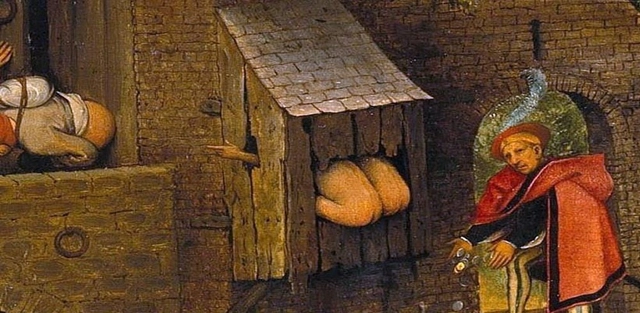
Latrinas medievais. Image Cortesia de Geopizza, usada sob os termos de "fair use"
The bathrooms that we usually have in our homes are legacies of European colonization around the world. Its current form, however, dates back millennia and would not have been possible without investments and the evolution of basic sanitation.
The health of a population is directly related to the physical environment it inhabits, as stated by Hippocrates in his text “Ares, waters and places”, written during the 5th century BC, in which the Greek thinker known as the 'father of medicine', states that in order to properly investigate health and the cause of disease it is necessary to observe and understand the inhabited environment from the seasons, the wind, the water, its geographical position, the land and the landscape and also the habits of the people who live there. Each civilization has developed a way of dealing with what we understand by sanitation today, depending on its time and also on its geographical, cultural, political and economic context.
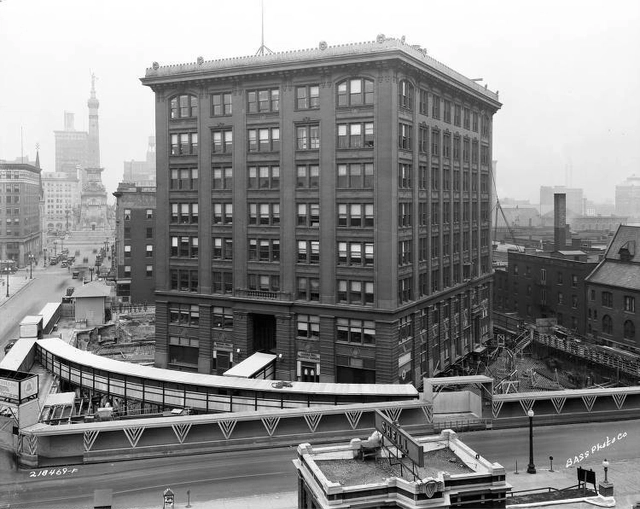
In November 1930, in Indiana, United States, one of the great feats of modern engineering was executed: a team of architects and engineers moved an 11,000-ton (22-million pound) telephone exchange without ever suspending its operations either basic supplies for the 600 employees who worked inside.
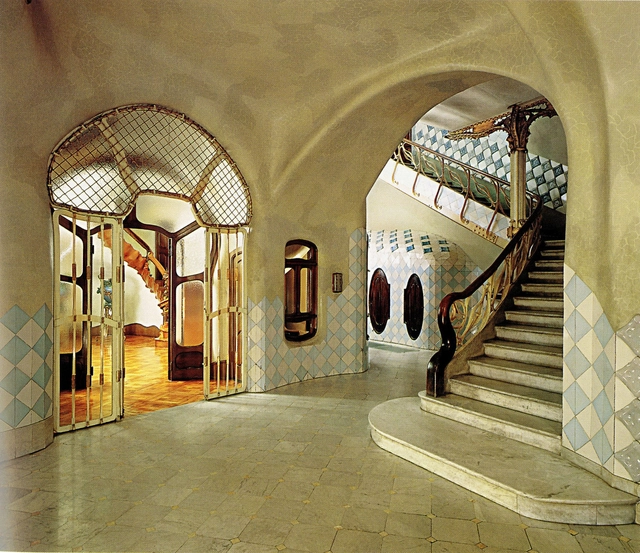
Emerged in a period marked by the development of the industry and the experimentation of new materials, the Art Nouveau artistic movement was opposed to historicism, favoring originality and a return to handicrafts. In this context, it is portrayed as an attempt at dialogue between art and industry, revaluing beauty and making it available to everyone through series production.
What’s so great about the oldest continuously inhabited cities in the world? Probably the fact that their societies have been evolving in one unbroken series of eras, with ever-changing values and styles that have, among other things, given rise to architectural memories of their long histories. These cities aren’t like the archeological sites we visit to see how people lived thousands of years ago; they are the exact places people lived thousands of years ago, places where people are still living today, with their rich histories buried under layers of paint and concrete instead of earth.
With ancient cities found in regions around the world, the variety of architectural treasures that can be found in these cities is vast. To give you a taste of their diversity, here is a selection of 18 of the oldest continually inhabited cities from various regions of the world, ranging from youngest to oldest, with a small snippet of their various architectural puzzles.
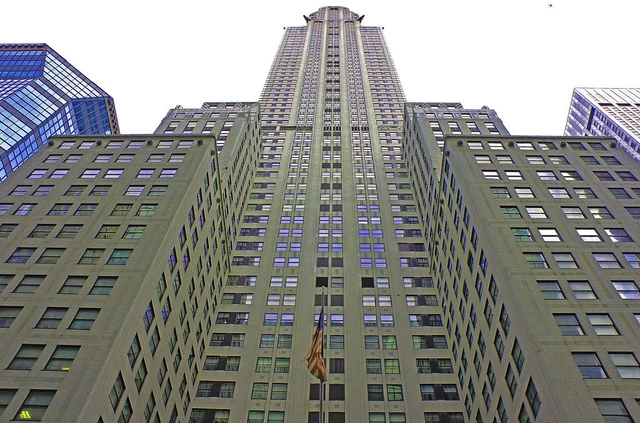
"Chrysler Building NYC NY" by dog97209 is licensed under CC BY-NC-ND 2.0
Art Deco architecture derives from a style of visual arts of the same name that emerged in Europe in the 1920s, which also influenced the movie industry, fashion, interior design, graphic design, sculpture, painting, and other forms of art, in addition to architecture. The milestone of this style was the International Exhibition of Modern Decorative and Industrial Arts held in Paris in 1925, from which it took its name.
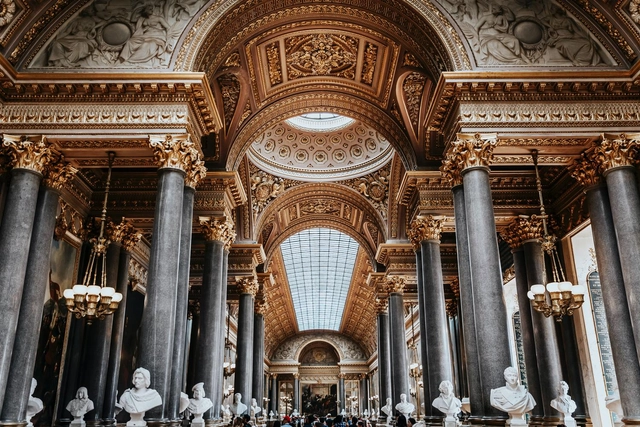
Architecture is perhaps the most expressive forms of culture, representing the zeitgeist of a particular location, and telling the story of how it evolved over time. It allows visitors to transport themselves back in history to understand the influences that shaped the world we once lived in. Baroque architecture, in particular, was one of the most ornamental and decorative architectural styles. Translating to “curious or strange” in French, it was once used as a derogatory word, meaning noisy, eccentric, and excessive- and Baroque architecture was truly just that.
Children's furniture is all furniture –fixed or mobile– that is designed according to the ergonomic guidelines and anatomical dimensions of children specifically. Following this definition, we can identify two types of furniture: (1) those that facilitate a relationship between the caregiver and the child, and (2) those that allow the child to use them independently.
The big difference between these two types is that the first has dimensions that mainly adapt to the ergonomics of the adult, while the second is designed to meet the ergonomic needs of the child at each stage of their development. Since the growth of children occurs relatively quickly, it is common for the furniture of this second group to be multifunctional or even extendable.
As far as written records report, “prehistory” dates back between 35,000 BCE and 3000 BCE in the Middle East (2000 BCE in Western Europe). Ancient builders had a profound understanding of human responses to environmental conditions and physical needs. Initially, families and tribes lived together in skin-covered huts and bone structures. Thousands of years later, human settlements evolved into fortified mud-brick walls surrounding rectangular volumes with pierced openings for ventilation and sunlight.
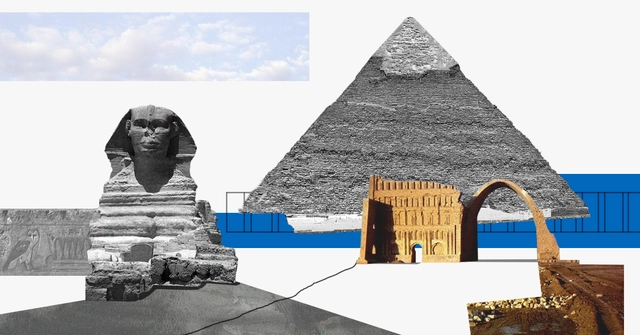
During the upcoming months, we will be publishing short articles on the history of architecture and how it evolved to set the fundamentals of architecture we know today. This week, we are going back to some of the earliest civilizations known to mankind: Megaliths, Mesopotamia, and Ancient Egypt.
Tour extraordinary historic homes as Pasadena Heritage presents Wallace Neff, Master Architect.
The Dr. Allan B. Kavanel House was commissioned by Dr. Kavanel from Chicago in 1921. It incorporates fine Mediterranean details that were popular during the Golden Age of Southern California architecture.
The Morse & Gates (Mrs. Ethel Guthrie) House was commissioned in 1925 by the Morse and Gates Company, a real estate, insurance and building firm. The house is a beautifully simple Spanish Colonial revival home typical of Neff's designs.
The Mr. and Mrs. Edwin D. Neff House is a Tuscan style villa designed for Neff's parents in 1927. The interior
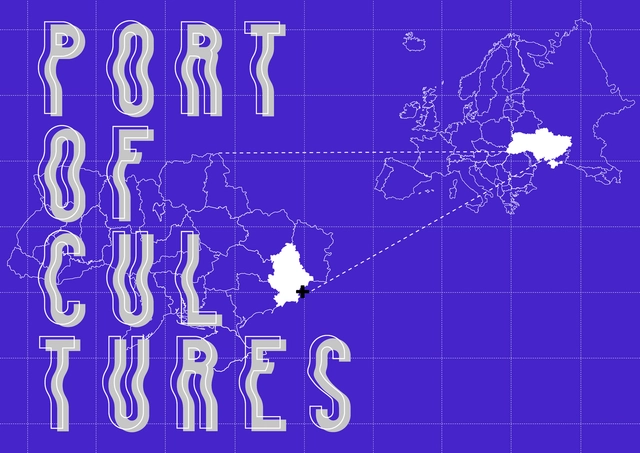
Municipality of Mariupol (UA) invites architects, designers and interdisciplinary teams to submit architectural ideas for a new multifunctional center that will be devoted to the subject of migration, a process that has shaped the city throughout the centuries, becoming an integral part of its identity. The Port of Culture will uncover and explore the less known traits of Mariupol city, and contextualize its local history within larger regional and global processes related to migration.
We are looking for bold and authentic architectural idea for the Port of Culture, that will represent the values and the main themes of the new center,

















.jpg?1639596820 "Escadaria Victor Horta. Via Victor Horta The Architect of Art Nouveau by David Dernie and Alistair Carew-Cox")









.jpg?1602872084&format=webp&width=640&height=580)

.jpg?1602872196 "Photo: 1931, Kaunas, Lithuania. Two children working on reading/writing words at Maria Varnienė's Children's House. The child on the left is Stasys Ragaišis, who later became a medical doctor.. Image via @montistory101")


.jpg?1602872084)