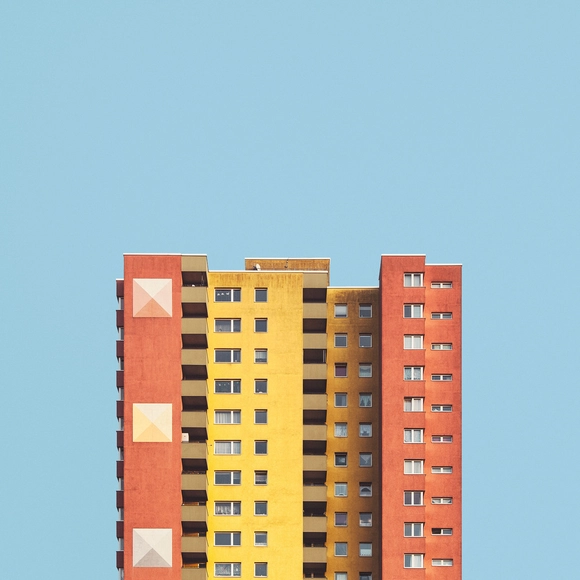
In this series, entitled Stacked, photographer Malte Brandenburg takes a closer look at the architectural merits of Berlin’s post-war housing estates. Captured against a flat blue sky, the images seek to strip away the historical and social burdens carried by the buildings, presenting them instead as pieces of pure architecture.
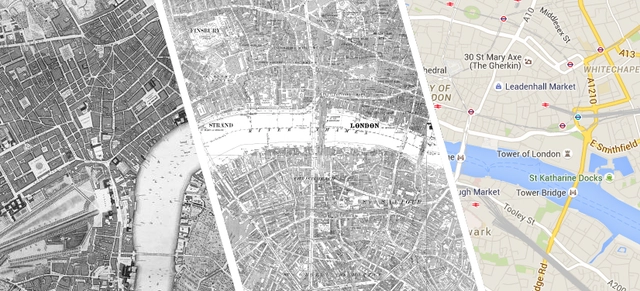
It's no secret that architects are often fascinated by maps, and in the age of Google - where access to accurate maps of almost anywhere in the world has become universal - maps have become one of the most powerful ways to understand our cities. Interestingly, Google has in a way enabled a new way to interrogate maps from the past, as historic maps can be more easily overlaid with the Google interface to make comparisons to the present day. That's just what the website Locating London's Past has done, creating a tool to compare three maps: the current version of Google Maps, the first Ordnance Survey map from 1863-80, and John Rocque's 1746 Survey of London, allowing web users to see the growth of the UK capital over the past 270 years.
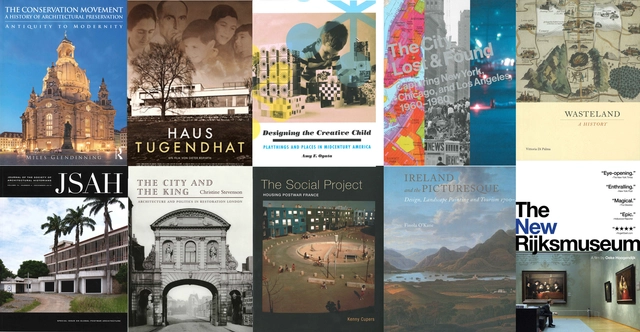
The Society of Architectural Historians (SAH) has announced the winners of the 2016 Publication Awards and SAH Award for Film & Video as part of their annual International Conference Awards ceremony in Pasadena, California.
Awarded annually, the SAH Publication awards honor excellence in "architectural history, landscape history, and historic preservation scholarship," alongside outstanding architectural exhibition catalogs. Eligible publications must have been published in the two years immediately preceding the award, with nominations for the 2017 Publication Awards and SAH Award for Film & Video opening on June 1, 2016
Learn more about the winning publications after the break.
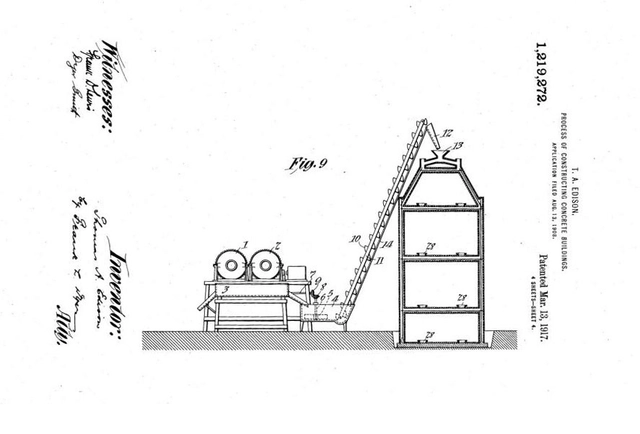
Initial Blueprints for Edison's 1908 Patent.. Image via Slate
Concrete is one of the most widely innovated and improved upon building technologies in the world. With applications in both pre-fabrication and continuous pouring, the material has become a hot-bed for applications in fabrication techniques, from incredible, monolithic forms, to 3D-printing.
But behind all of the successes, there have been countless failures, including a well-intended innovation by famous American inventor Thomas Edison. Filed on August 13, 1908, Edison’s ill-fated patent was a home that could be built with a single pour of concrete, reports Slate. Although Thomas Edison had previous ventures in concrete, including a cement plant in Stewartsville, New Jersey, as well as several patented improvements in the cement-making process, his venture into concrete construction may have just been too ambitious.
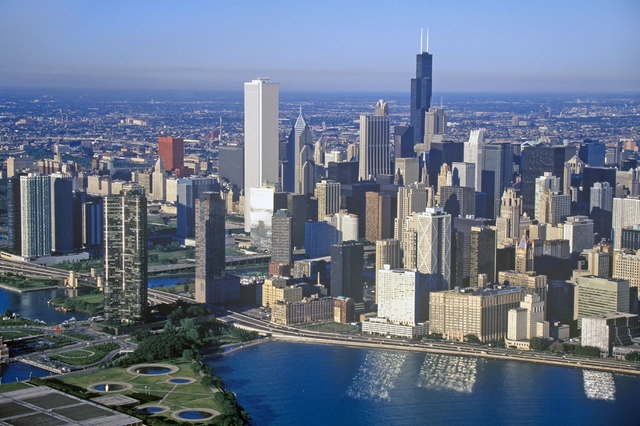
Chicago is one of the most architecturally rich cities in the world with the history of modernism embedded in its skyline. From the Willis Tower to the Aqua Tower, the skyscrapers of Chicago have led the development of tall buildings, the city becoming a breeding ground for innovations in structure and design. The Windy City has solidified itself among other metropolitan giants like New York and London as having one of the most recognizable skylines in the world.
This new infographic by Chicago Line Cruises offers a look at some of the most visible figures in Chicago’s skyline, with embedded information on each of the buildings. View the infographic after the break.
Darkness, light, warmth, cold, silence and sound – the ground zero of creating space – are the focus of a mystical experimental exhibition currently open at the Museum of Estonian Architecture in Tallinn.
An attempt to speak about space, its creator and its user as a coherent whole, the exhibition acts as an intimate meeting with professionals who create the environments we inhabit. "Expedition Wunderlich: 11 Interior Architects" is only open on Saturdays and Sundays, 1 hour at a time (12 pm – 1 pm).
Historic preservation activism in New York City did not begin in the 1960s with the fight to save Penn Station and the effort to pass the Landmarks Law—it began in the late 19th century. Little-remembered preservation pioneers like Andrew H. Green and Albert Bard, as well as various women's garden clubs, and patriotic and civic organizations laid the groundwork for the generations of preservationists that would follow. Join us to recount the triumphs, failures, and tactics of these early preservationists, and discuss what they might teach us moving forward.This program delves into the themes of our exhibition Saving Place: 50 Years of New York City Landmarks, on view through January 3.
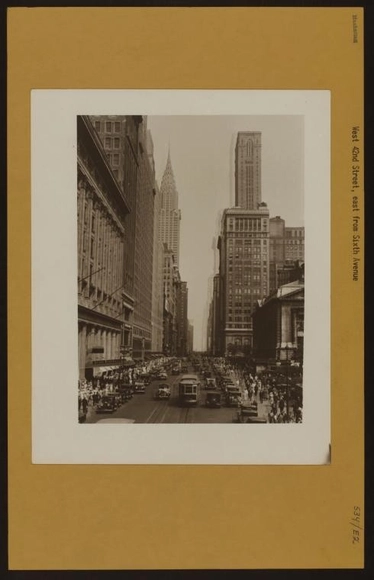
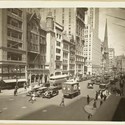
"Manhattan: 42nd Street (West) - 6th Avenue", Harold Kaye (1931). Image Courtesy of The New York Public Library http://www.oldnyc.org/
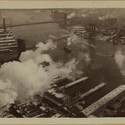
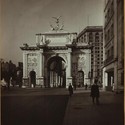
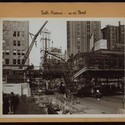
Discover historic New York with "OldNYC," a digital archive of the New York Public Library's "Photographic Views of New York City, 1870s-1970s" Collection. Bringing together an extensive catalogue of images from the library's Milstein Collection, OldNYC organizes photographs geographically, allowing users to view images specific to individual blocks and streets.
The project is also collaborative, asking visitors on the site to comment on photographs with "what's there now, what's changed, and what's stayed the same." Users can edit or add to captions on the back of each of the photos, creating a personal element in the latest retelling of New York's vibrant history.
Learn more about the project and view selected images after the break.
With no casualties, last week's fire at the Glasgow School of Art, which caused significant damage to parts of the building and gutted Charles Rennie Mackintosh's canonical library room, will be remembered as a tragic event that robbed us of one of the best examples of Art Nouveau of its time. The intention of the Glasgow School of Art is to restore the building in the hope that in generations to come, the fire will be all but forgotten, a strategy which has been largely well received by the profession.
However, in the case of other fires things have not gone so smoothly: for millennia, fire has played a big role in determining the course of architectural history - by destroying precious artifacts, but often also by allowing something new to rise from the ashes. Read on after the break as we count down the top 10 fires that changed the course of architectural history.
Produced by The Bartlett Centre for Advanced Spatial Analysis, this somewhat hypnotic video charts the development of London from its origins as the Roman settlement of Londinium to the present day. It maps the changes in the city's road network and built environment, and catalogs the thousands of historic structures which are now protected by either listing or scheduling. Among the fascinating thing revealed by the video is how historic events continue to have a profound effect on the city's built environment: for example a law passed after the Great Fire of London determined that new buildings had to be built from brick, resulting in the large number of Georgian buildings that have survived to the present day.
The following article originally appeared on Metropolis Magazine as "Five Architectural Highlights from the Pathé Newsreel Archive." It has been slightly adapted to fit ArchDaily's format. The video above, from 1930, shows the Empire State Building under construction.
Newsreel archives are a goldmine for design buffs—and when you have an archive of the size and scope of British Pathé's, there's hours of compulsive watching in store. The famous film and production company recently put up 85,000 of their videos on Youtube, in high definition, for free viewing.
The Parisian Pathé Brothers pretty much invented the newsreel format at the turn of the century, and established their London base in 1902. From 1910 to 1970 they produced thousands of films on events and trends around the world, including, of course, subjects of significance for architecture and design. It's an unparalleled opportunity to see some great classics in their context—with people using them, reacting to them, commenting on them.
Some videos, like a round-up of skyscraper-inspired hats from the 1930s, might not stand the test of time, but others, like a tour of Le Corbusier's Couvent de la Tourette, are priceless. The latter video seems even more precious because it is marked "unused material"—footage that Pathé shot, but never edited into one of their newsreels—meaning that very few people have had a chance to see it before you do now, on your screen.
More outstanding videos to get you started on your newsreel binge, after the break...
Andrew Carnegie once said, “Aim for the highest.” He followed his own advice. The powerful 19th century steel magnate had the foresight to build a bridge spanning the Mississippi river, a total of 6442 feet. In 1874, the primary structural material was iron — steel was the new kid on the block. People were wary of steel, scared of it even. It was an unproven alloy.
Nevertheless, after the completion of Eads Bridge in St. Louis, Andrew Carnegie generated a publicity stunt to prove steel was in fact a viable building material. A popular superstition of the day stated that an elephant would not cross an unstable bridge. On opening day, a confident Carnegie, the people of St. Louis and a four-ton elephant proceeded to cross the bridge. The elephant was met on the other side with pompous fanfare. What ensued was the greatest vertical building boom in American history, with Chicago and New York pioneering the cause. That’s right people; you can thank an adrenaline-junkie elephant for changing American opinion on the safety of steel construction.
So if steel replaced iron - as iron replaced bronze and bronze, copper - what will replace steel? Carbon Fiber.
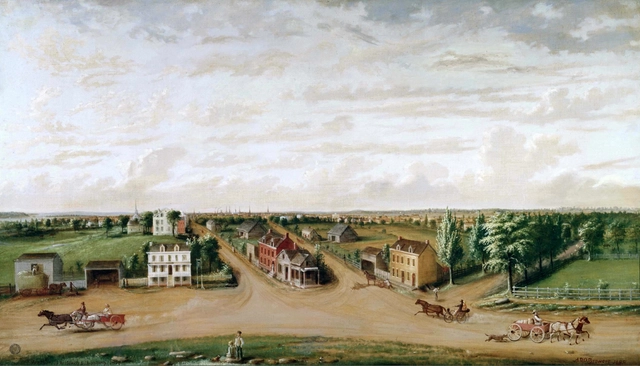
Can you imagine the intersection of Broadway and the Bowery in lower Manhattan as sparsely populated “Uptown” used as a burial ground for indigent people? Well, according to the the book Painting the Town by The Museum of the City of New York (via Ephemeral New York), this scene painted from memory by Albertis Del Orient Browere in 1885 depicts what Union Square used to look like back in 1828 - just 20 years before this area started to transform into the bustling, concrete jungle we know today.