Hey!Cheese

BROWSE ALL FROM THIS PHOTOGRAPHER HERE

Coffee or Tea: Third Places, Kiosks, and the Retail Architecture of Duration

Subscriber Access | 

"Coffee or tea?" is one of those phrases that follows you across contexts: asked on airplanes, after a meal, in hotel lounges, and in meeting rooms. It sounds like a small question—mere preference, a quick fork in the service script. Yet it also carries a quiet cultural inheritance. Tea arrives with the long history of ritual and domestic pacing, tied to older geographies of trade and everyday etiquette. Coffee arrives with a different lineage of circulation, later industrialized into the modern café and its public-facing rituals. In both cases, the drink is never only a drink; it is a practiced relationship to time and space.

In contemporary East Asia, however, "coffee or tea" increasingly reads as something else: imperceptibly or subconsciously, it is becoming more of a choice about where you want to be. Each beverage now carries a spatial expectation. Coffee implies a room you can occupy—often a place to pause, work, meet, or cool down. Tea, despite being culturally pervasive, appears more diffusely across the city—sometimes as a dedicated destination, sometimes as a high-frequency kiosk, and very often as an embedded default within dining typologies. The result is that a question posed as taste has begun to operate as a subtle indicator of spatial preference: whether you are seeking duration or velocity, enclosure or flow, a third place or a quick node on the street.

Coffee or Tea: Third Places, Kiosks, and the Retail Architecture of Duration  - More Images+ 28

Beyond Circulation: Stair Solutions for Small-Footprint Living in Asia

Subscriber Access | 

In many high-density cities across Asia, the staircase is often treated as a necessary evil. Whether in apartment buildings, private homes, or retail interiors, it is frequently hidden, tucked away, or pushed to the margins—an element to be minimized so more area can be given to "usable" space. Yet as density intensifies and square footage becomes increasingly scarce, architects and designers are forced to rethink this vertical puzzle.

The question shifts from how to conceal the staircase to how to make it work harder: can it become a productive addition to the interior—an architectural device that does more than connect levels, performing dual (or multiple) duties rather than simply consuming floor area?

Beyond Circulation: Stair Solutions for Small-Footprint Living in Asia - More Images+ 11

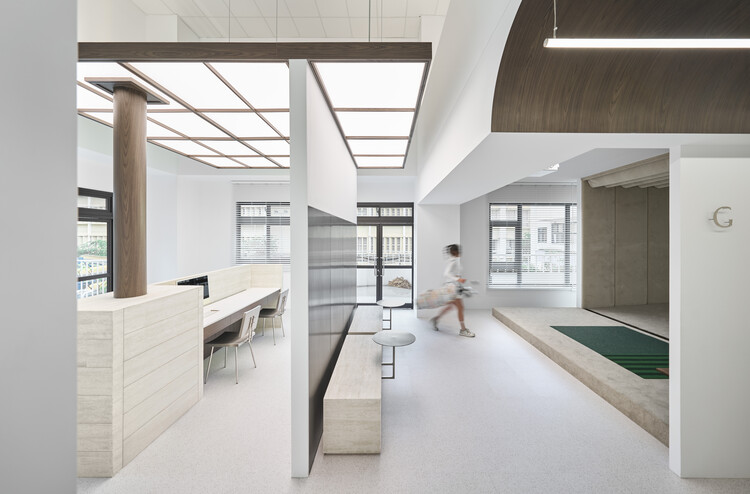
Traces of Light Indoor Golf Course / Degree Design

Traces of Light Indoor Golf Course / Degree Design - More Images+ 20

  • Interior Designers: Degree Design
  • Area Area of this architecture project Area:  161
  • Year Completion year of this architecture project Year:  2025

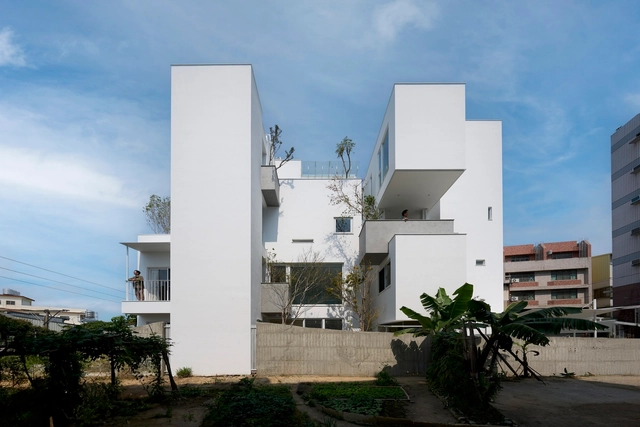
House Valley / Soar Design Studio + Ray Architects

House Valley / Soar Design Studio + Ray Architects - More Images+ 26

Taichung, Taiwan
  • Area Area of this architecture project Area:  338
  • Year Completion year of this architecture project Year:  2024
  • Manufacturers Brands with products used in this architecture project
    Manufacturers:  Carl Hansen and Son, MUJI, Republic of Fritz Hansen

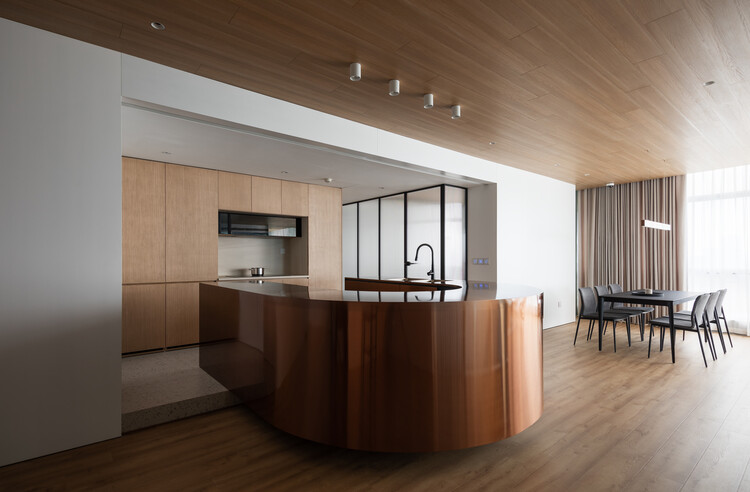
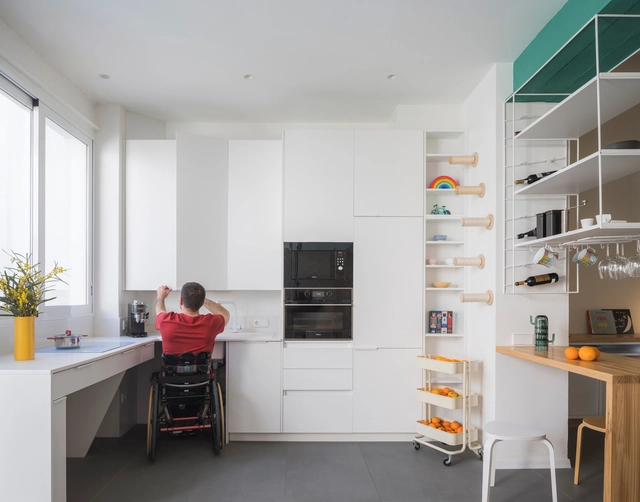
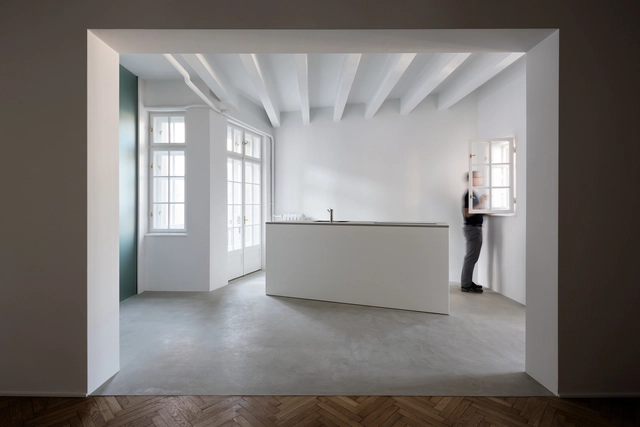
How to Size the Optimal Kitchen Island: 5 Essential Tips

A correctly sized kitchen island is more than just a functional architectural element—it's a key component of kitchen design. Beyond its primary functions, a well-sized kitchen island can serve as a versatile space adaptable to various household needs by enhancing workflow efficiency, providing additional storage, fostering social interaction, and contributing to the overall space aesthetics.

Whether utilized as a breakfast bar for quick meals, a study area for children's homework, or a hub for entertaining guests, its flexibility enhances the functionality and livability of any kitchen environment. Determining the appropriate size for a kitchen island, however, demands a meticulous approach, blending spatial considerations, workflow requirements, and design sensibilities.

How to Size the Optimal Kitchen Island: 5 Essential Tips - More Images+ 6

How to Virtually Enlarge Spaces Using Good Lighting

How to Virtually Enlarge Spaces Using Good Lighting - More Images+ 36

One of the most essential aspects of interior design is lighting – an element that can make or break an interior space of any size or material. Yet good lighting can be especially important for smaller or more crowded spaces, making them feel larger and more open even when their literal dimensions haven’t changed. In turn, larger spaces with poor lighting may feel smaller and less welcoming than they have the potential to be. To make interiors feel aptly large and well lit, designers can rely on several tried and true methods that make the most of a space, from using the right shades and types of lights to placing them in the best locations to integrating other elements that best complement existing lighting. These strategies, as well as several examples of their application, are listed below.

School Architecture: 70 Examples in Plan and Section

Subscriber Access | 

For architects, schools are often complex structures to design. They must provide a variety of spaces for education, and also consider sports and recreational activities. But beyond its size or surface, the greatest challenge is to design an area that fosters a positive pedagogical environment for children. Below, a selection of +70 school projects with their drawings to inspire your proposals for learning campuses.

School Architecture: 70 Examples in Plan and Section - More Images+ 210

Modern Tiânn House / HAO Design

Modern Tiânn House / HAO Design - More Images+ 26

  • Architects: HAO Design
  • Area Area of this architecture project Area:  250
  • Year Completion year of this architecture project Year:  2021
  • Manufacturers Brands with products used in this architecture project
    Manufacturers:  Ligne Roset, Original BTC, Panum Rover, Sigurd Ressell, d-Bodhi

Original BTC Taipei / Soar Design Studio

Original BTC Taipei / Soar Design Studio - More Images+ 30

  • Architects: Soar Design Studio
  • Area Area of this architecture project Area:  119
  • Year Completion year of this architecture project Year:  2022

House Plans Under 50 Square Meters: 30 More Helpful Examples of Small-Scale Living

Designing the interior of an apartment when you have very little space to work with is certainly a challenge. We all know that a home should be as comfortable as possible for its inhabitants, but when we have only a few square meters to work with and the essential functions of the home to distribute, finding an efficient layout is not easy. Following our popular selection of houses under 100 square meters, we've gone one better: a selection of 30 floor plans between 20 and 50 square meters to inspire you in your own spatially-challenged designs.

House Plans Under 50 Square Meters: 30 More Helpful Examples of Small-Scale Living - More Images+ 57

Soar Design Studio Office / Soar Design Studio

Soar Design Studio Office / Soar Design Studio - More Images+ 24

  • Architects: Soar Design Studio
  • Area Area of this architecture project Area:  223
  • Year Completion year of this architecture project Year:  2021

Multifunctional Stairs: 9 Options to Take Advantage of Vertical Circulation Space

On other occasions, we have written about how to design stairs and calculate their dimensions. We have also collected references from Portuguese projects that demonstrate the versatility of wooden staircases. Today, we present some of our best examples highlighting the multifunctional potential of staircases in interior spaces.

Multifunctional Stairs: 9 Options to Take Advantage of Vertical Circulation Space - More Images+ 12

Is Minimalism Dead?

The visual aesthetic of the past few decades could be defined as designing with the principles of ‘nothingness’. Whether it’s through art, lifestyle, fashion, industrial, or interior design, there has been an alleged need to keep things at a bare minimum, promoting the globally-loved-yet-highly-criticized trend of minimalism. Minimalism is this notion of reducing something to its necessary elements, but who is deciding what is necessary, and who is deciding what is too much? With those questions in mind, combined with radical changes in consumerism and the way people live seen during recent years, current trends have shown that minimalism might be here to stay, but with a twist.

Is Minimalism Dead?  - More Images+ 8

Wild House / Soar Design Studio

Wild House / Soar Design Studio - More Images+ 26

Taiwan, China
  • Architects: Soar Design Studio
  • Area Area of this architecture project Area:  760
  • Year Completion year of this architecture project Year:  2021
  • Manufacturers Brands with products used in this architecture project
    Manufacturers:  Kermit Chair, Nordisk, Original BTC英国手工灯饰, Vintage

How to Design Functional and Multipurpose Kitchen Islands

Islands are an essential part of any larger kitchen layout, increasing counter space, storage space, and eating space as well as offering a visual focal point for the kitchen area. Serving a variety of functions, they can be designed in a variety of different ways, with some incorporating stools or chairs, sinks, drawers, or even dishwashers and microwaves. To determine which elements to include and how to arrange them, designers must determine the main purpose or focus of the island. Will it primarily serve as a breakfast bar, a space to entertain guests, an extension of the kitchen, or as something else? And with this function in mind, how should it enhance the kitchen workflow vis-à-vis the rest of the area? These considerations, combined with basic accessibility requirements, necessitate that the design of the island be carefully thought out. Below, we enumerate some of the essential factors of kitchen island design.

How to Design Functional and Multipurpose Kitchen Islands - More Images+ 22

Sanitation in Modern Houses: 12 Projects that Explore Different Bathroom Typologies and Layouts

Subscriber Access | 

Despite being the smallest rooms of houses, bathrooms have always been one of the most challenging and critical to design, which often left them fairly simplified. The past few years, however, saw these spaces undergo significant change; what was once only limited to functionality, ease of maintenance, and privacy, is now being given a strong character with pops of color, classic fixtures, and patterned surfaces. Similarly for public bathrooms, where "functionality" and "ease of maintenance" are now complimented with aesthetics, technology, and high quality finishing. In this interior focus, we explore the three main bathroom typologies used in residential projects, and look at how architects have employed them through 12 examples.

Sanitation in Modern Houses: 12 Projects that Explore Different Bathroom Typologies and Layouts  - More Images+ 14

How to Divide Spaces Without Traditional Solid Partitions

Functionality, good ventilation, comfortable lighting, and access to views are some of the important required characteristics that make for human comfort in inhabited or occupied spaces. Nonetheless, those elements are becoming harder to achieve within smaller city dwellings. Architects and individuals, therefore, turn towards design solutions to create more agreeable and personalized settings.

An initial solution to upscale and widen spaces is to reduce the amount of standard solid partitions or walls and replace them with alternative means of spatial separation. 

How to Divide Spaces Without Traditional Solid Partitions - More Images+ 12

How Color Affects Architecture

How Color Affects Architecture - More Images+ 47

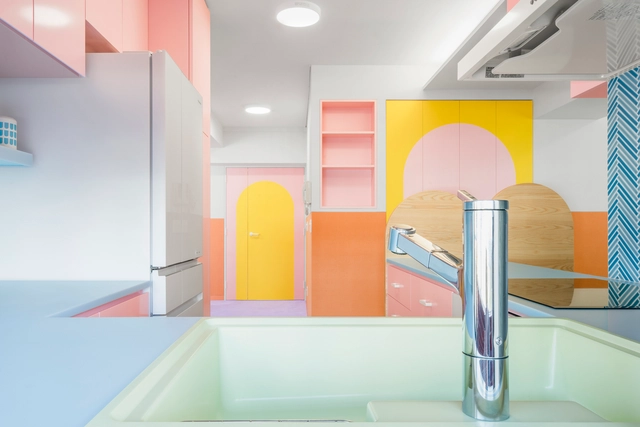
Just as the colors of an abstract painting or photograph can produce a certain mood, so can the colors of a building or room profoundly influence how the people using it feel. Physiologically, study after study has shown that blue light slows the production of melatonin, keeping people more alert or awake even at night. Psychologically, people associate certain colors with certain feelings due to cultural symbols and lived experiences – for example, they might perceive the color red as menacing or frightening because of its connection to blood.

Altogether, the way a room is colored can have complex effects on how its users feel, while a façade can be perceived in dramatically different ways depending on how it is colored. Below, we summarize the emotional associations of every color, assessing their differing effects as each is used in architectural space.